

Which ski brands do professionals use – a complete guide
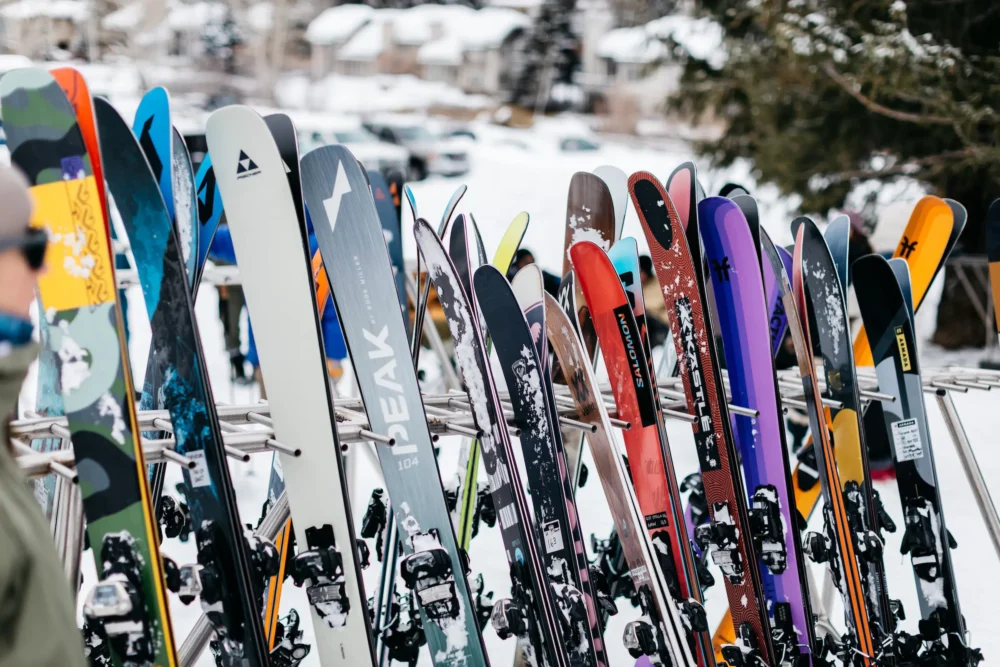
In the last season of the Alpine Skiing World Cup, over 80% of the top ten athletes competed on skis from just a few premium brands, mainly from Austria, France, and the United States. This is no coincidence. That’s why today I’ll try to answer the question: which ski brands do professionals use?
For them, skis are not accessories but work tools—literally like a violin for a virtuoso. Each pair is a prototype tailored to the athlete’s individual preferences, course conditions, and specific discipline. That’s why most of the elite remain loyal to one brand for years, and any equipment change is a risk that can cost hundredths of a second and a place on the podium.
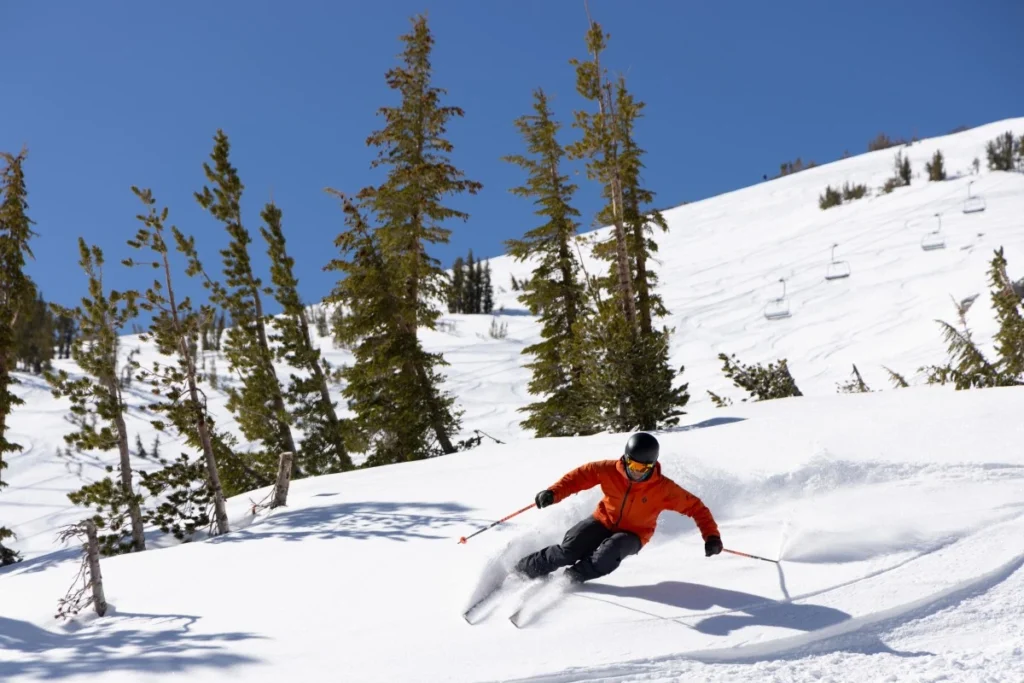
photo: outdoorgearlab.com
What brand of skis do professionals use? And why does it cost so much
But what does it mean for you if you ski recreationally? I believe that knowing the brands used by professionals helps you better understand the market and the technologies available in commercial models. Just be careful, because skis from the catalog are not the same constructions as World Cup equipment, so blindly copying the choices of professionals rarely makes sense.
In the following part of the article, we’ll take a closer look at which specific brands dominate in particular disciplines, how their development history looks, which technologies contribute to their success, and why sponsorship contracts aren’t everything. You’ll also see what trends are shaping today’s market and whether it’s worth being inspired by them when choosing your own skis. I love the thrill of winter sports, so I’m happy to share my own experiences!
How have professional skiers’ ski brands changed over the years?
Today’s professional skis are the result of nearly a century of evolution, from hand-glued planks to precision composites with ten layers of materials. Each decade brought a breakthrough that changed not only the equipment but also the athletes’ skiing style.
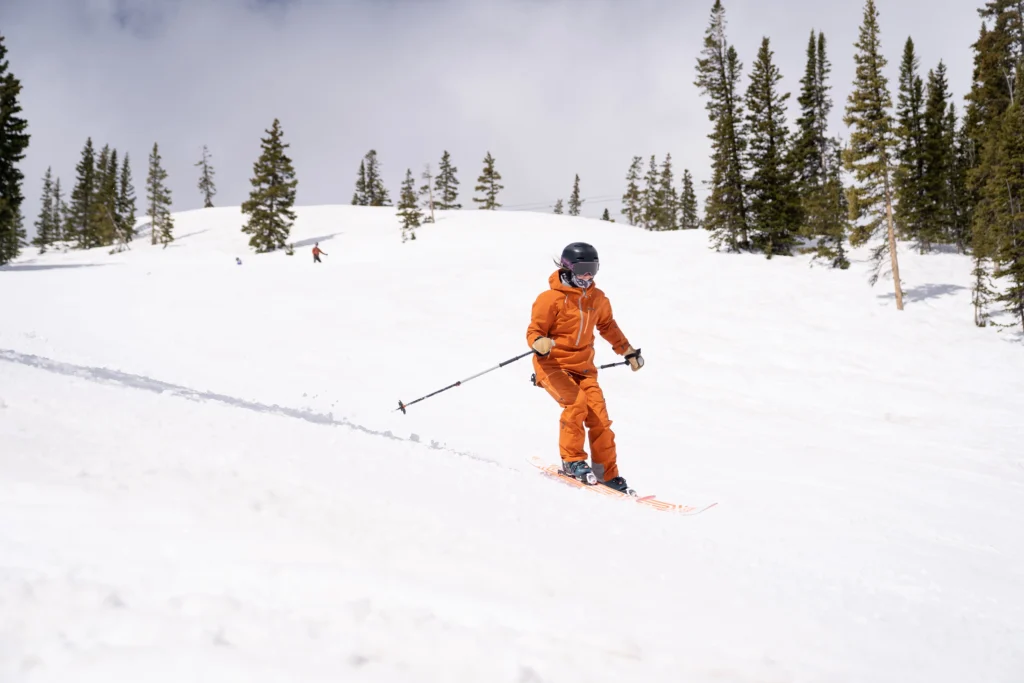
photo: gearjunkie.com
From wood to metal: the birth of pro brands
The 1930s–1950s were the era of wooden skis, produced in small batches in Alpine workshops. Head appeared around 1950 and was the first to introduce metal skis, a breakthrough that changed the giant slalom. Atomic started in 1958 and quickly caught up with the competition. The 1960s–1970s saw a leap to laminates: Head Metal Ski (1950), Atomic laminate skis (around 1970) — athletes suddenly reached speeds they had never dreamed of before.
Carving, composites, and FIS regulations — a revolution in equipment
The 1980s brought Salomon and the first carving skis (1985), featuring a narrower waist and turns that “made themselves.” Then came composites: fiberglass, carbon, titanal—each layer added either stability or agility. After 2000, FIS began to intervene: in 2007, slalom skis were shortened (for safety), later came the ban on fluorinated waxes, and a push toward sustainable materials. The result? Market consolidation, meaning brands disappeared, and the big ones ( Atomic, Rossignol, Head) took over the rest and still dominate today. Every technical or regulatory change reshaped the balance of power, and that’s exactly what led to the current state of affairs.
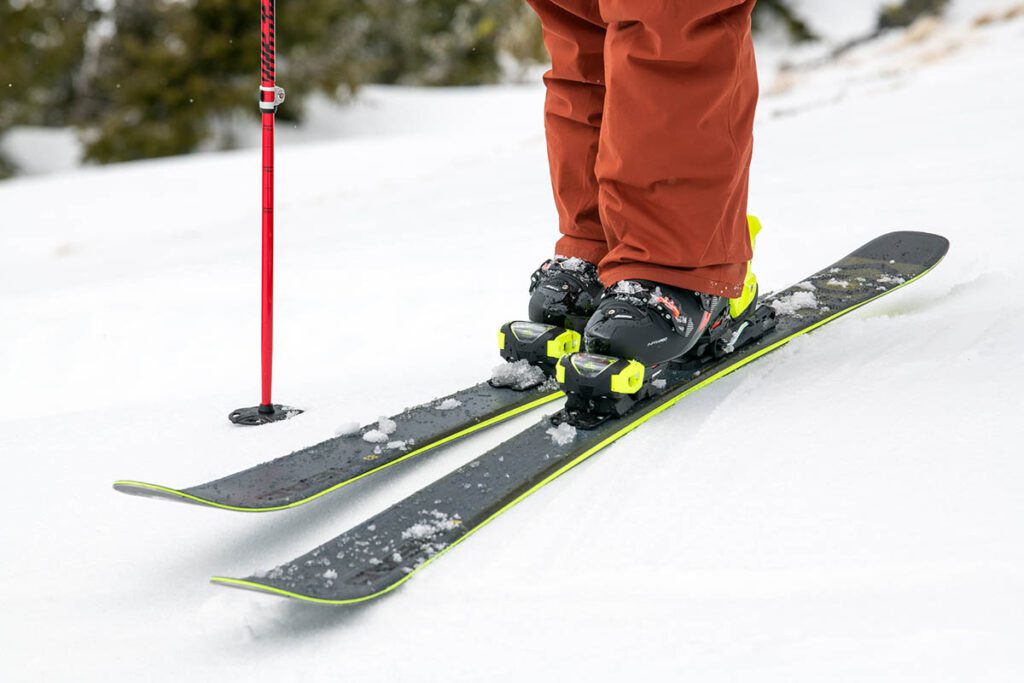
photo: switchbacktravel.com
FIS World Cup Leaders
When you watch a World Cup broadcast, you keep seeing the same logos on the podium. Atomic, Head, Salomon — they win almost everything. This doesn’t happen by accident.
Victory statistics: who dominates the World Cup?
In the 2024/25 season, Atomic claimed about 42% of victories in World Cup competitions, while Head added another 28%. This means that together, these two brands won seven out of ten events. After the first ten stages of the 2025 /26 season, the situation became even more pronounced — FIS data shows Atomic with around 45% of podiums, Head with 30%, and Salomon with 15%. The rest of the market ( Fischer, Rossignol, Nordica, Blizzard) is left to divide the remaining crumbs.
| Brand | % wins/podiums (2025/26) | Sample players |
|---|---|---|
| Atomic | ~45% | Marco Odermatt, Mikaela Shiffrin |
| Head | ~30% | Clement Noël, Lara Gut-Behrami |
| Salomon | ~15% | Federica Brignone, Lucas Braathen |
| Others | ~10% | Alexis Pinturault (Rossignol), others |
What skis do the stars choose: Shiffrin, Odermatt, Noël
Marco Odermatt races on Atomic Redster X9S, Mikaela Shiffrin uses Atomic Redster SL and GS sets. Clement Noël opts for Head Worldcup SL iSL RD, Federica Brignone for Salomon S/MIND 9 SC, and Alexis Pinturault uses Rossignol Hero Elite ST. These models have bent the professional reality: extremely stiff, heavy, tuned for a specific athlete, and… almost impossible to buy “off the shelf.”
Fun fact: the Norwegian national team skis exclusively on Atomic. Austria and Switzerland have a huge share of Atomic and Head. This is the result of long-term sponsorship contracts, but also efficiency, as the skis have to win—otherwise, the team changes supplier.
That’s why you keep seeing the same logos during broadcasts. And amateur skiers assume that if Odermatt wins on Atomic, they should too.
Different disciplines, different needs – choosing the right brand for the competition
A slalom skier and a downhill racer need completely different equipment! In alpine skiing, FIS imposes specific length and radius parameters, so brands have to adapt. And which one dominates depends mainly on the discipline.
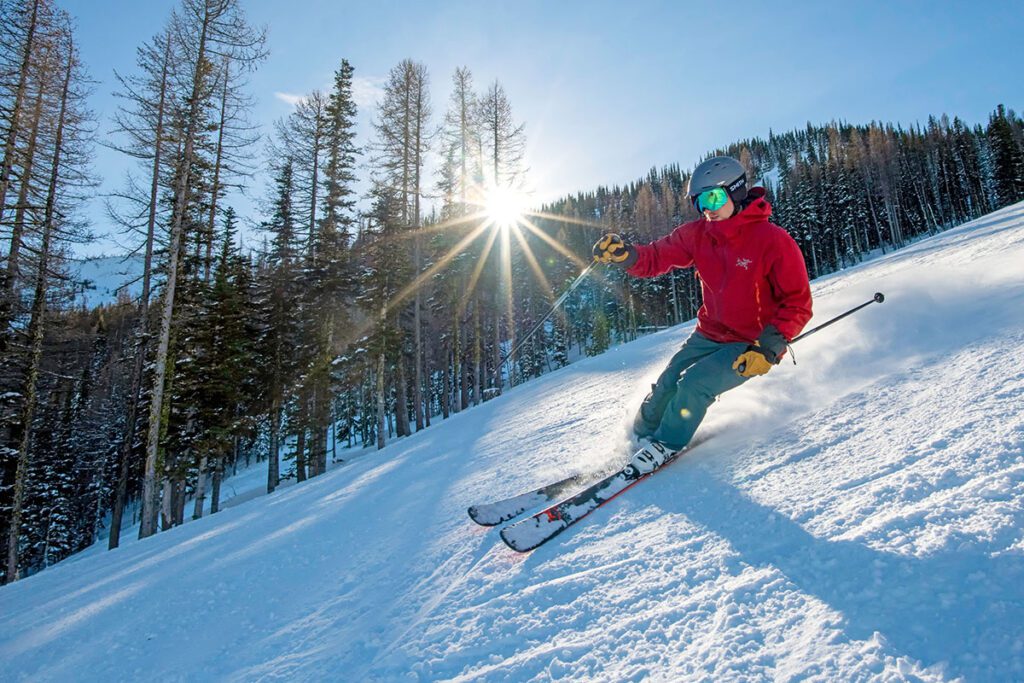
photo: switchbacktravel.com
Downhill and super-G are the domain of Atomic and Head
In speed disciplines, the balance of power is quite clear. Atomic holds about 40-50% of the market, Head around 30%. Why? Because the skis have to be the longest (downhill: 215 cm for men, 208 cm for women) and exceptionally stiff to maintain stability at speeds reaching 140 km/h. Coaches choose these brands because they have experience in building strictly downhill equipment. In practice, the average length is even 218 cm for men—something no recreational skier could handle.
Slalom and giant slalom are different brands, different parameters
This is where things get more interesting. In slalom, Head takes the lead, with Atomic and Rossignol also strongly represented. The skis are much shorter, meaning 165 cm (M) / 155 cm (W) — and more agile. In giant slalom (188/183 cm), the competition is more balanced: Atomic, Head, Rossignol, and Salomon share the podium more or less equally. Coaches select the model based on the athlete’s style, so someone who prefers aggressive carving will get different equipment than a technician who values smoothness. Take a look at the table.
| Discipline | FIS Length (M/F) | Leading brands |
|---|---|---|
| Slalom | 165 / 155 cm | Head, Atomic, Rossignol |
| Giant | 188 / 183 cm | Atomic, Head, Rossignol, Salomon |
| Congress | 215 / 208 cm | Atomic (40-50%), Head (30%) |
What sets pro skis apart from store-bought ones? Construction and technologies
Often prototypes not available for sale, designed specifically for a particular athlete and their riding style. The difference starts with the very construction itself.
Core, titanal, and carbon
Inside racing skis, you will always find a wooden core, most often poplar or paulownia, sometimes ash. But that’s just the foundation. Around the wood, manufacturers arrange:
- Titanal layers (0.5-2 mm) for stiffness and vibration damping
- Carbon or glass fibers that reinforce specific areas of the ski
- Special resins bind the whole into a monolith weighing 4-6 kg per pair when riding down.
It is this material sandwich that gives the skis stability at 140 km/h. Each layer has its own role: titanal responds to unevenness, carbon transfers forces, and wood absorbs resonance.
Geometry and flex — this is why race skis are so demanding!
Rocker-camber-rocker profile, turning radius of 20-40 m depending on the discipline, sidecut calculated in aerodynamic tunnels and tested in crash tests. Flex is a completely different world: pro skis have a value of 120+, while recreational models are usually 70-90. Atomic Redster 2026 (188 cm, about 2,320 g/ski, flex ~130) features Servotec technology that regulates edge performance in turns. Racing bindings with DIN 12-18 must hold the athlete securely, but also release at a critical moment—another element perfected through years of testing. This may sound very professional, but if we are making a choice, let’s follow wise advice.
Sponsorship contracts and business behind the scenes of professional skiing
Behind every pair of skis that has made it to the podium at the world championships stands not only the technician’s workshop, but also a sponsorship contract and a carefully planned marketing budget. In alpine skiing, reaching the peak of athletic achievement is also reaching the peak of business — and a very concrete one at that. That’s why brands pay close attention to the best athletes in the world.
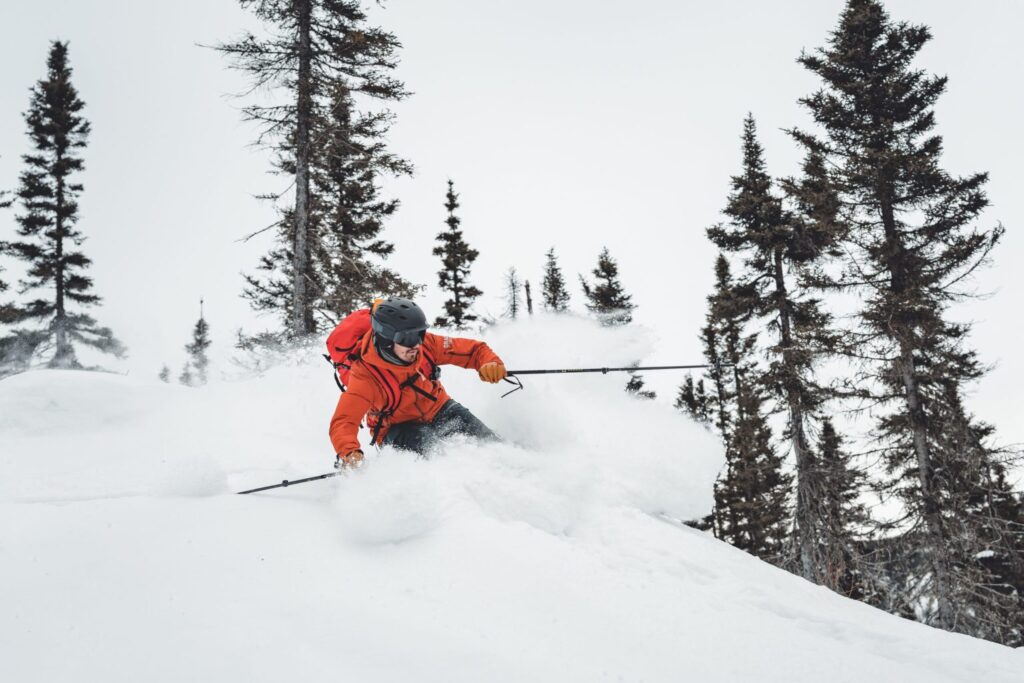
photo: bcomp.com
How much are a champion’s skis worth? Contracts and salary ranges
Professionals from the top thirty of the World Cup receive equipment as part of sponsorship and equipment agreements, the value of which usually ranges between 50,000 and 200,000 EUR per year, so the exact amount depends on the athlete’s recognition. The biggest stars, such as Mikaela Shiffrin or Marco Odermatt, can count on packages close to the upper limit. According to industry estimates, about 90% of athletes from the TOP30 have contracts with brands such as Atomic, Head, Salomon, Rossignol, Nordica, Fischer, or Blizzard. This is not only free skis, but also part of a complex financial ecosystem.
Who sponsors whom?
Sponsors make up about 20% of the national ski teams’ budgets, but their main role is visibility. The Norwegian team has been exclusively using Atomic for years, while Austria and Switzerland are dominated by Atomic and Head. Brands leverage every medal in their marketing communications, and it’s an extremely effective way to build prestige. The global ski equipment market is currently worth around 8 billion USD (2025), and forecasts for 2030 indicate growth to nearly 10 billion USD.
Ban on fluorinated waxes and disqualifications – a new era of ski waxing
FIS banned the use of fluorinated waxes (PFAS) starting from the 2021/22 season because these compounds permanently pollute the environment. The problem? Enforcing this ban is a nightmare. At Innsbruck 2026, several athletes were disqualified after traces of Toko waxes were detected on their skis, even though they claimed to have used only “zero-fluor” products. Are these residues from old maintenance, or deliberate rule-breaking? No one really knows. The tests are expensive and time-consuming, so in practice, inspections cover maybe 5% of all starts.
Equipment and injuries – where is the line between risk and safety?
The FIS 2025 report shows that about 30% of injuries in slalom and giant slalom are related to equipment: bindings that didn’t release at a critical moment, overly aggressive edges, or poorly chosen boot flex. Manufacturers are constantly balancing performance and safety, and skis need to be fast, but they can’t turn every mistake into a crash into the net.
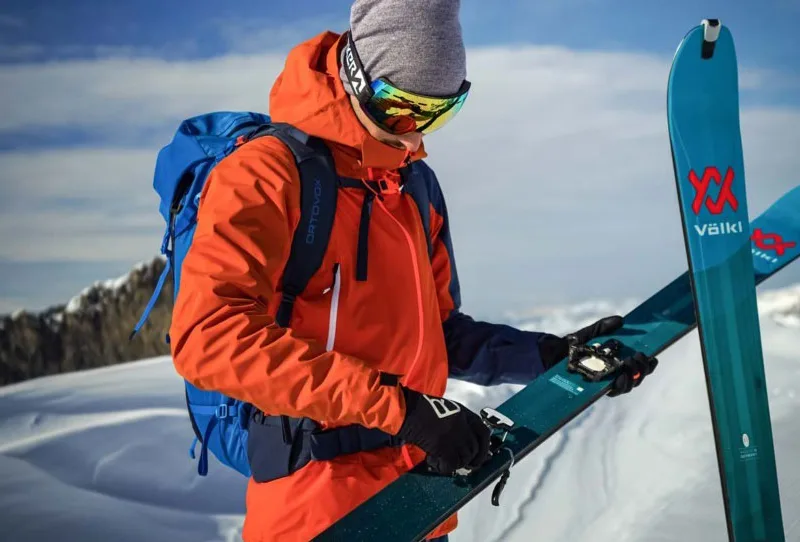
photo: themanual.com
Which brand should an amateur inspired by professionals choose?
You see Mikaela Shiffrin on the podium and think to yourself, “I want skis just like hers.” Sure, I get it, but hold on a second. Her skis are racing machines with a flex of 120+, prototypes tailored for a specific course and the world champion’s style of skiing. For an ambitious amateur, that’s simply too much equipment.
Why racing skis aren’t for everyone
Skis from the World Cup are brutal to handle—they require excellent technique and strength just to ride them safely. Fortunately, Atomic, Head, Salomon, Rossignol, and Fischer offer “race inspired” lines—models that use racing technology but have a flex somewhere around 80-100 and are much more forgiving. These are the ones you should be interested in.
Choosing a brand? It depends on your skill level and where you ski. For dynamic skiing on the piste, go for Atomic Redster, Head Supershape. For more all-mountain versatility, consider Salomon QST or Blizzard Rustler.
Get inspired by the pros, but before you buy, talk to an experienced bootfitter or a specialist at a ski shop. They’ll help you find the model that’s perfect for you—not for Shiffrin. You need to consider many factors and only then choose skis holistically.
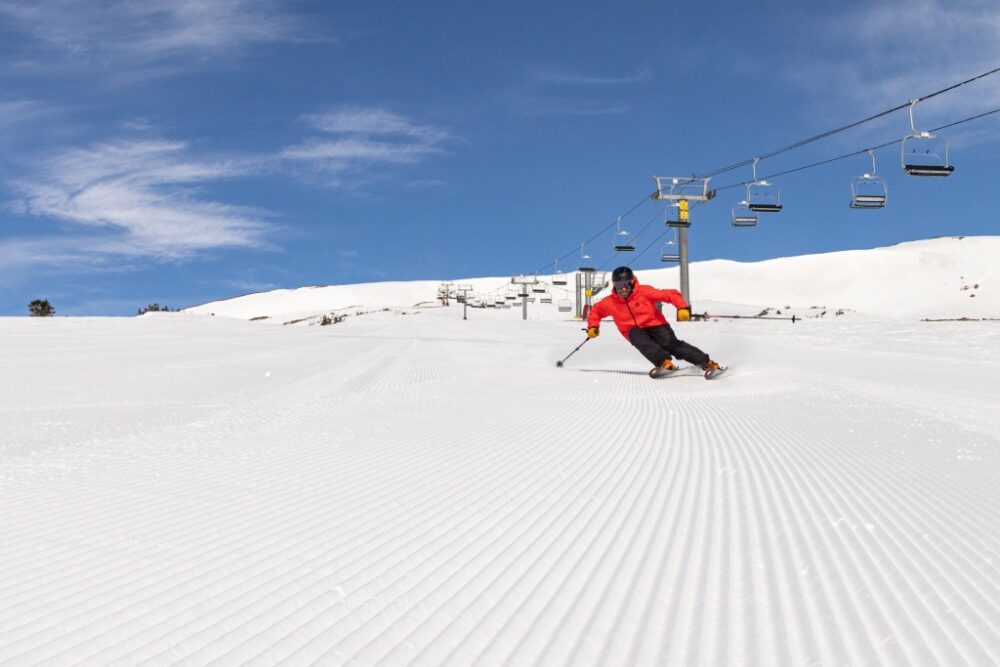
photo: powder7.com
Where is ski equipment headed?
The current dominance of Atomic and Head can be taken for granted, but what’s happening in the laboratories and design offices of major brands suggests that in the coming years, we may see quite a few changes. Technology is constantly evolving, EU regulations are driving material changes, and environmental awareness among professionals is growing. Personally, I often can’t keep up with the latest trends, so it’s worth following podcasts and specialist blogs.
Making an informed choice isn’t about copying the pros 1:1, but rather drawing from their experience while maintaining your own style and safety. After all, skis are meant to serve you, not the other way around.
Miki 90
sports & lifestyle editor
ski and karting enthusiast
Luxury Blog – a portal for luxury



Leave a Comment