

What is senior housing construction?
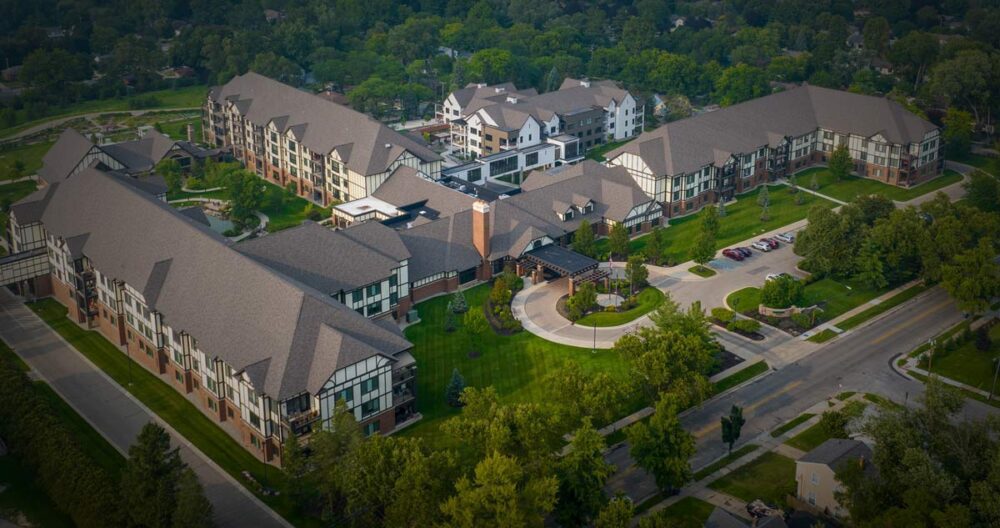
Senior housing is a specialized segment of the real estate market designed with older adults in mind—not only for comfort, but above all for safety, accessibility, and the ability to maintain independence for as long as possible. It is a response to one of the greatest demographic challenges facing modern Europe. In Poland, people over the age of 60 already make up more than a quarter of the population, and forecasts indicate that by 2050, seniors could account for as much as 40% of society.
This means one thing: classic residential construction is no longer enough.
Definition and key features of senior housing
Senior housing includes apartments and residential complexes designed to eliminate architectural barriers. Wide corridors, no thresholds, non-slip floors, grab bars and handrails in bathrooms, elevators, ramps, and appropriate lighting. For older people, this is a standard, not a luxury.
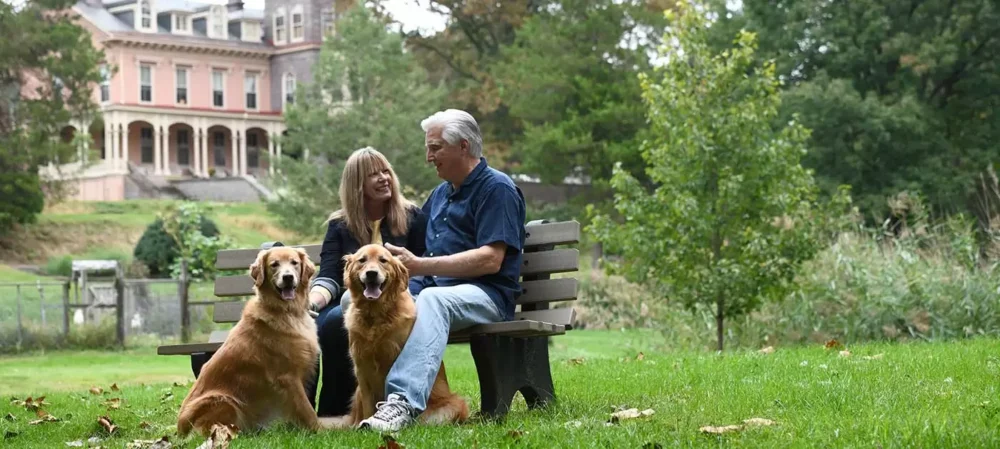
Modular and prefabricated solutions are increasingly being used, allowing spaces to be quickly adapted to the changing needs of residents. Access to medical and care services within the estate is also an important element. The Assisted Living model combines the independence of apartments with the option of assisted care when needed.
In Poland, the development of senior housing focuses on two areas: adapting existing apartment blocks—especially those built with large-panel technology—to the needs of older adults, and constructing new residential complexes equipped with senior clubs, concierge-style reception, and rehabilitation facilities.
Integration of technology is becoming the standard worldwide. Smartwatches monitoring health parameters, call systems, fall sensors, and intelligent home management systems enhance safety and the sense of control.
From almshouses to modern senior communities
The concept of housing designed for the elderly is not new. Its origins date back to the 17th and 18th centuries, when so-called almshouses were established in Europe and the United States. These were homes providing shelter for impoverished seniors. Even earlier, in 1521, the Fuggerei complex was established in Augsburg, Germany—considered one of the oldest social housing estates in the world. The complex, in a modified form, still operates today.
In the 20th century, development accelerated with the emergence of care homes. However, the real change came in the 1980s, when senior communities based on independent apartments, shared spaces, and social engagement began to appear in Denmark and the USA.
Inspiration can be found even in antiquity. Complexes such as Hadrian’s Villa show that designing autonomous spaces with adjustable privacy has a long architectural tradition.
Architecture that thinks several steps ahead
Modern senior housing is based on three pillars: flexibility, clarity, and safety.
Flexibility means the ability to transform an apartment without a major renovation – installations prepared for future needs, partition walls allowing for layout changes, bathrooms designed with extra maneuvering space. Modular prefabrication is increasingly being used, which shortens construction time and makes it easier to adapt buildings to new functions.
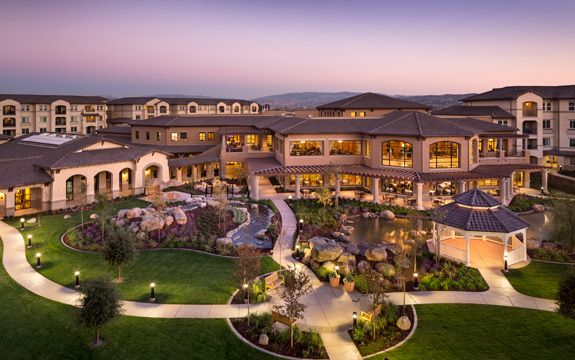
Spatial clarity is ergonomics in its purest form – intuitive communication, natural light, and contrasting finishes that make it easier for people with deteriorating eyesight to find their way. In projects in Norway and Finland, special color schemes are even used to support people with dementia.
Safety is not just about handrails and non-slip floors. It also includes intelligent health monitoring systems, fall detectors, telecare, and remote medical consultations. In Japan, robots that assist with daily activities are being tested, as well as systems that analyze movement patterns in the home and can detect concerning changes in behavior.
However, technology must not dominate. Its role is to enhance the sense of control, not to create an atmosphere of surveillance.
How does a city become an extension of life?
Modern senior housing estates do not operate in isolation. They fit into the concept of the “15-minute city,” where the most important services are available within a short walking distance. This is especially important for people with limited mobility.
In Germany, Mehrgenerationenhäuser projects are developing – buildings that combine residential, care, and educational functions. Seniors live next to families with children. Meanwhile, shared spaces foster natural relationships.
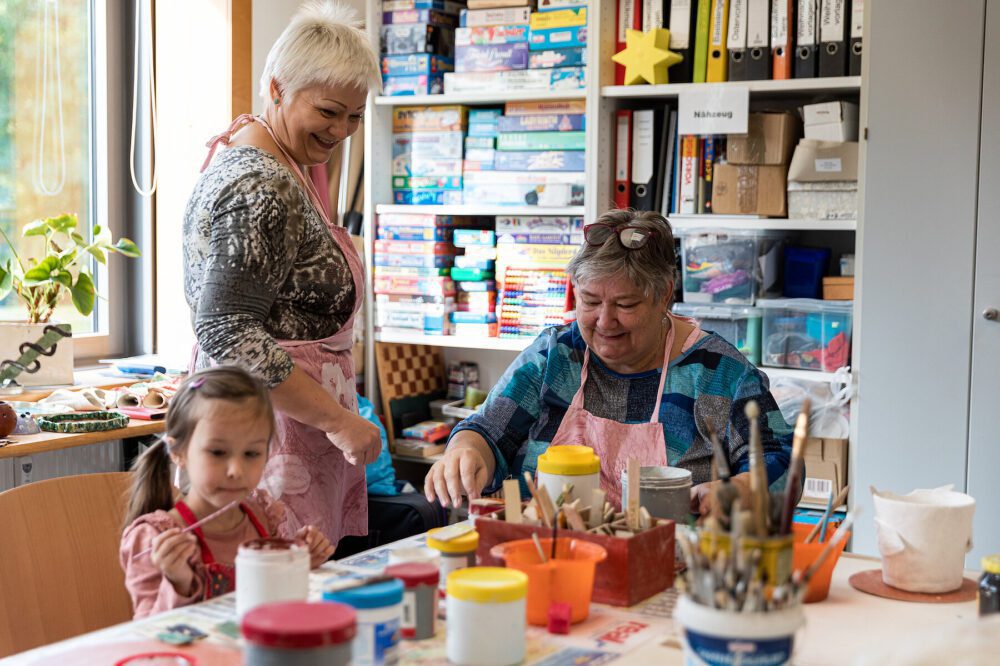
In Scandinavia, the integration of senior homes with kindergartens is popular. Daily intergenerational interactions reduce loneliness and improve the mental well-being of residents. These are solutions that deliver real health and social benefits.
Premium segment – a redefinition of luxury
In recent years, the premium senior segment has been developing dynamically. In the United States, Continuing Care Retirement Communities (CCRC) campuses are being established, offering several levels of care within a single complex—from independent apartments to round-the-clock medical care.
The standard includes restaurants with table service, fitness centers, swimming pools, concert halls, libraries, art galleries, and even golf courses. In Western Europe, there is a growing number of projects focusing on landscape architecture, high-quality materials, and locations in prestigious parts of cities.
This is an important mental shift. Old age is no longer associated with resignation. Increasingly, it is seen as a stage of life that requires the same high-quality spaces as youth.
Poland – potential greater than scale
In Poland, the development of senior housing is noticeably slower. Individual projects, such as Nowe Żerniki or Villa Romanów, demonstrate that it is possible to combine residential functions with communal spaces and elements of care support.
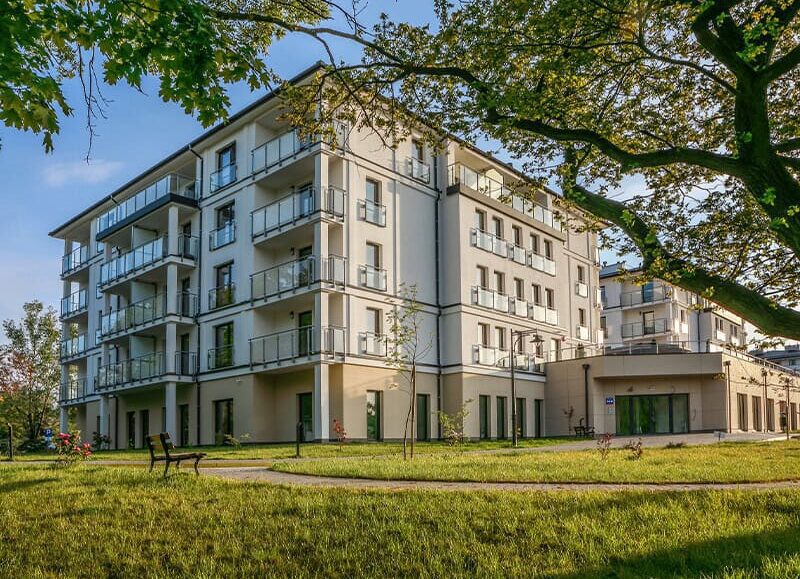
However, two main trends dominate: adaptation of existing apartment blocks (especially large-panel buildings) and private premium investments. There is a lack of a coherent housing policy that takes into account the aging of the population on a systemic scale.
It is a challenge, but also a great opportunity for developers and local governments.
Architecture of the future
Senior construction requires a different approach to design. It’s not just about technical standards and door width. It’s about understanding the psychology of aging, the need for privacy, but also for community.
The inspiration can come from the historical concept of a clear division between private and communal zones, as seen in complexes like Villa Hadriana. Contemporary senior architecture develops this idea further: the apartment is a safe enclave, while the communal space is an invitation to connect, not an obligation.
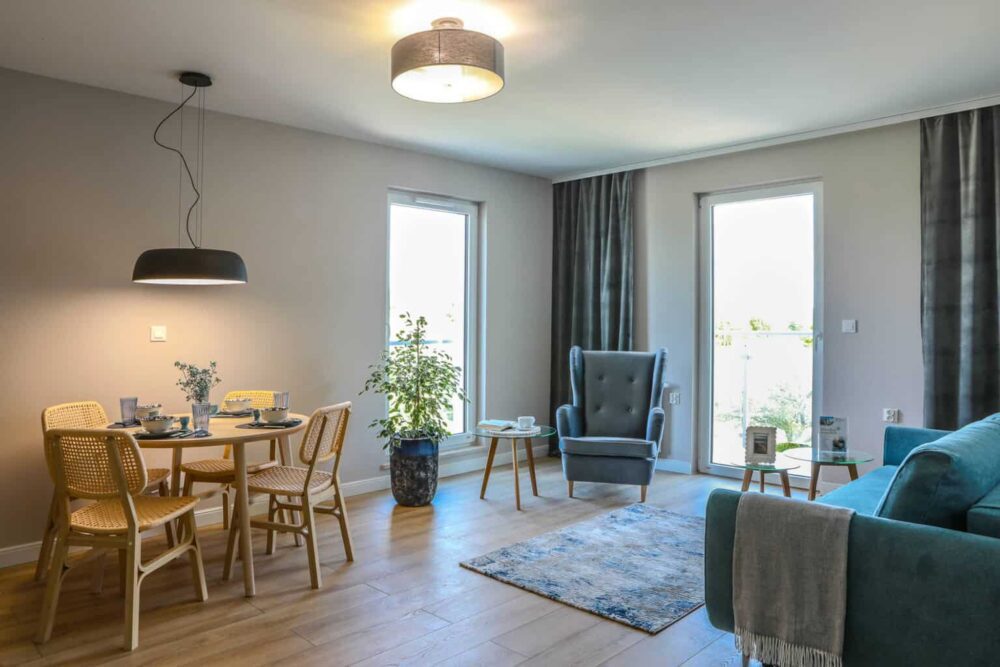
Longevity is changing the definition of the real estate market. As average life expectancy increases, a home must “work” longer and be more flexible. Designing for seniors is, in essence, designing for the future version of ourselves.
This is not a matter of trend. This is a matter of responsibility.
A truly modern city is one where people can age with dignity—without losing their autonomy, without isolation, and without compromising on quality. Architecture that understands this will win the future.

Leave a Comment