

What are premium skis – a luxury or an essential tool for champions?
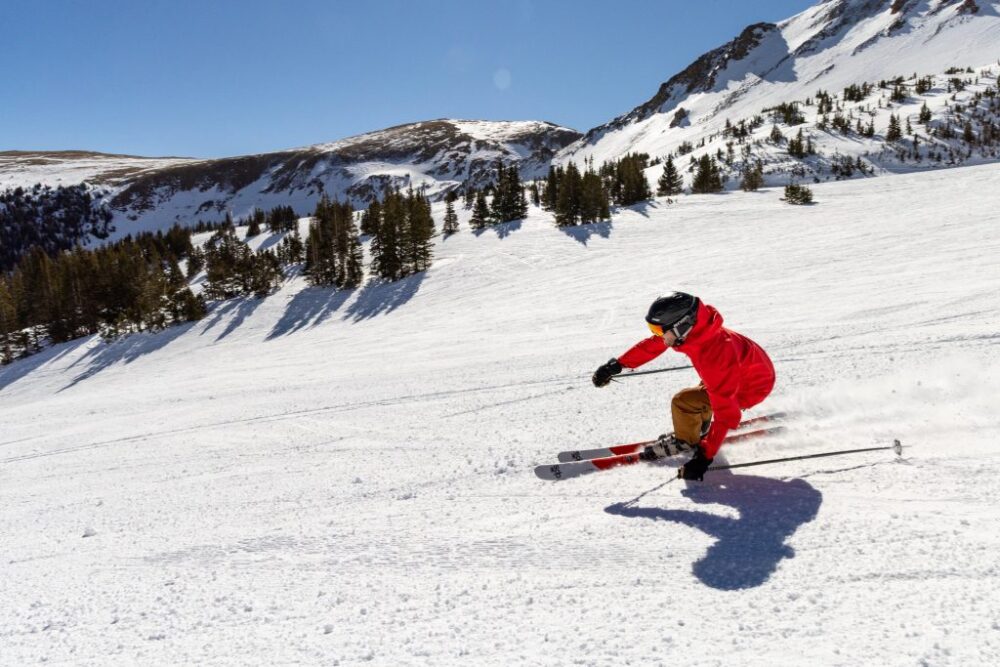
The premium ski market is growing by 5-7% annually, according to the latest 2023 data from Snowsports Industries America. That’s twice as fast as the budget segment, which is barely keeping up with inflation. I started wondering what exactly premium skis are, so I decided to write an in-depth article about it!
Why are more and more skiers choosing to invest in equipment that often costs over 2000 PLN, when you can find skis in stores for just 400?
Let’s imagine two skiers on the same slope. Marek, an amateur with ten years of experience, is riding on standard skis rented from his hotel. By the afternoon, his calves are sore, his skis “slip away” on ice, and every turn takes real effort.
What are premium skis? – from passion to precision!
On the other hand, Piotr, also an amateur with similar skills, has spent years investing in quality equipment. His skis respond to the slightest movement, grip the snow like they’re glued to it, and skiing brings him joy even after eight hours on the slopes.
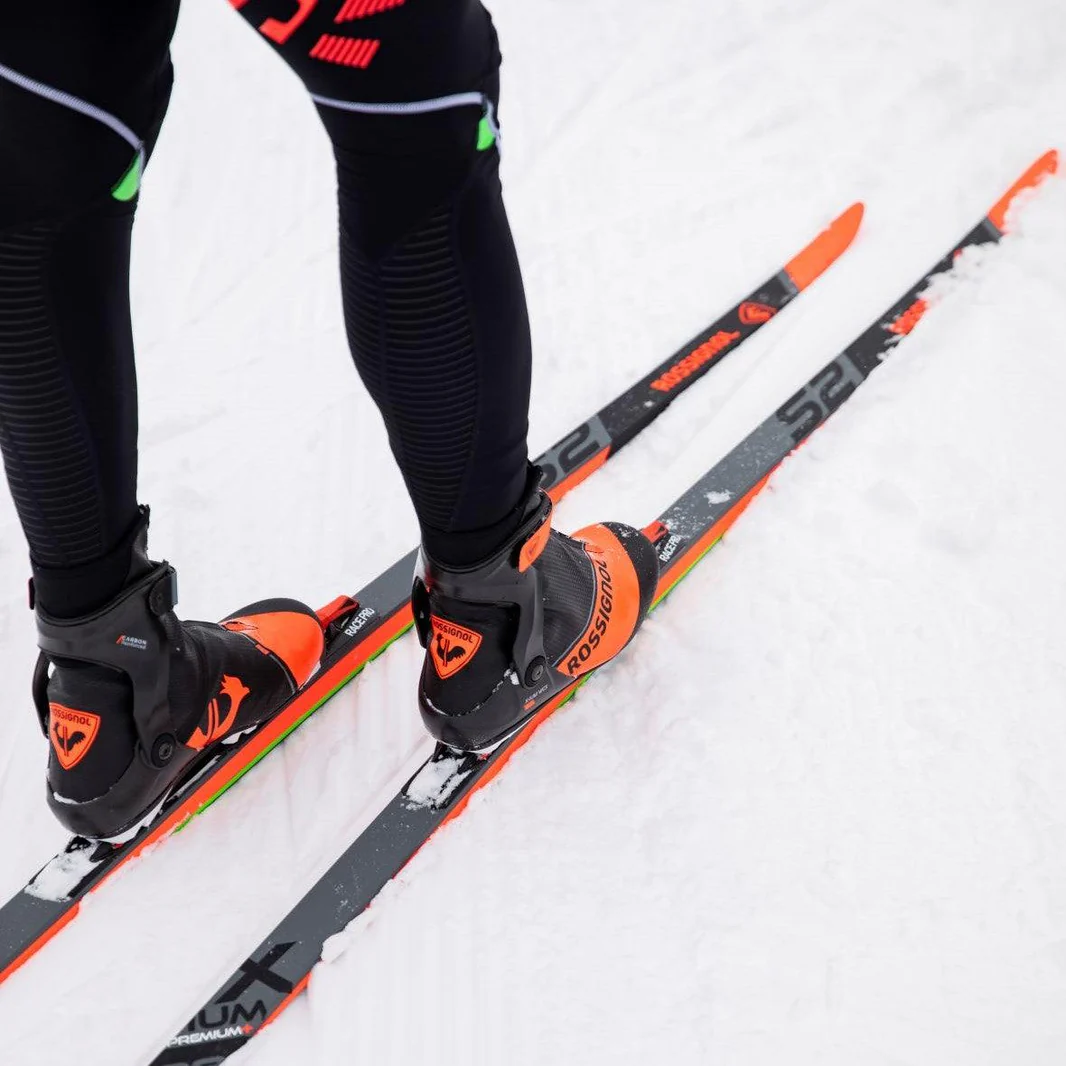
photo: gearwest.com
The difference isn’t in skill. It’s in the equipment.
The world of premium skis is about more than just marketing and prestige. These are precisely engineered tools that can completely transform your skiing experience. In this article, you’ll find answers to four key questions:
• What truly sets premium skis apart from standard models
• Why the price difference may be justified
• How to choose the right skis for your skill level
• What’s next – how to make the most of quality equipment
It’s not about everyone having to spend a fortune on skis. It’s about understanding when such an investment makes sense and how it can impact your skiing experience.
Before we dive into the construction details, let’s see what really sets premium skis apart—and whether they’re worth the investment.
What sets premium skis apart
Premium skis typically cost between 800 and 2,500 EUR per pair, but the price difference is just the beginning. It’s all about the materials, technology, and craftsmanship you simply won’t find in standard models.
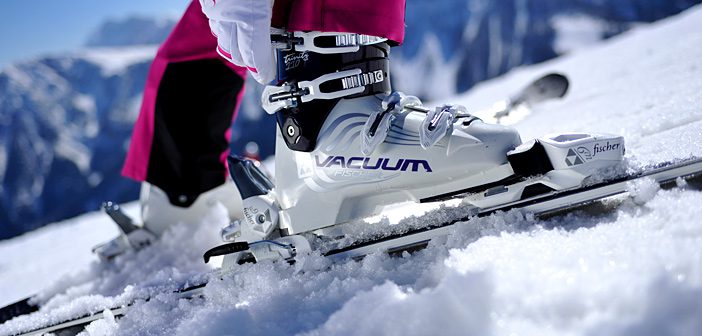
photo: skibansko.bg
Materials — this is where the gap between premium and the rest is most apparent
| Feature | Premium | Standard |
|---|---|---|
| Core | Paulownia wood, poplar | Polyurethane foam |
| Reinforcements | Carbon fiber, titanium, kevlar | Fiberglass, aluminum |
| Weight of the pair | 1.5–2.5 kg | 3.0–4.5 kg |
| Stiffness | Adjustable, progressive | Constant, uniform |
| Finish | Ceramic coatings | Standard nail polishes |
Carbon fiber in premium skis delivers stiffness while keeping things light—think of it like comparing a carbon bike frame to a steel one. Titanium used in the edges boosts durability, while Kevlar in the top layer absorbs vibrations better than any plastic.
Paulownia wood is an interesting topic—it grows fast, is as light as balsa, but much harder. Premium manufacturers use it in the core because it offers an ideal strength-to-weight ratio.
The technologies used in premium models are on another level. The Völkl 3D.Glass system uses three-dimensional shaping of fiberglass, which gives you better control over energy transfer. Rocker/camber profiles in premium skis are precisely tuned for specific riding styles.
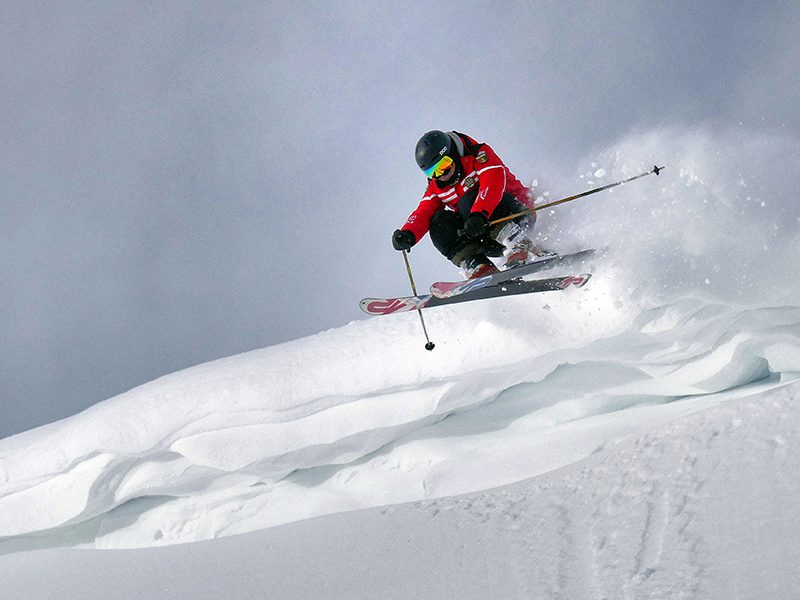
photo: travelstart.co.za
Integration with Marker Jester or Look Pivot bindings is standard in this segment. These systems offer better safety mechanisms and more precise adjustments than entry-level models. The big innovation for 2025 is AI stiffness regulation —sensors in the skis adapt their characteristics to snow conditions in real time.
Premium ski categories differ significantly from one another:
- All-mountain premium – for skiers who want one pair for everything. You mostly stick to the slopes, but occasionally venture off-piste? This is your pick. The perfect balance between stability and agility.
- Freeride premium – wide, with an aggressive front rocker. Designed for those who spend most of their time in powder and variable conditions. Requires solid technique and experience.
- Race premium – hard, fast, demanding. Short, sharper turns, high speeds on groomed slopes. Not for everyone – you really need to know how to ride.
- Touring premium – lightweight yet durable. Compatible with special binding mounts. Perfect for those who want to earn their ascent through their own effort.
The benefits of using premium skis go beyond marketing hype. Research conducted by the Swiss ski safety institute shows a 20% reduction in knee injuries when using high-end equipment. It makes sense—better control, more predictable ski behavior.
Durability is another factor. Premium skis last 5–10 seasons of intensive use, while budget models often need replacing after just 2–3 seasons. Suddenly, the cost amortization doesn’t seem so bad.
Weight matters too. 1.5–2.5 kg per pair instead of 4 kg means less fatigue, especially on longer days on the slopes. Your legs will feel the difference after just a few hours of skiing.
Of course, not everyone needs this kind of gear. If you ski five days a year on gentle slopes, the difference might be negligible. But for someone who takes skiing seriously, premium skis are an investment, not an expense.
photo: powder7.com
From history to future trends
I’ve been wondering lately if anyone ever thinks about how far skis have come. Especially the most expensive, premium ones. The history of this equipment is essentially the story of human ingenuity.
From the first tracks to the digital revolution
| Year | Event |
|---|---|
| 8000 BC | The first wooden skis in Scandinavia |
| 1850 | Sondre Norheim introduces modern bindings |
| 1958 | Fiberglass revolution – the first skis made of fiberglass |
| 1998 | Shaped skis are changing the way we ski |
| 2022 | Blizzard launches skis made from recycled materials |
| 2025 | AI-powered real-time stiffness regulation |
It’s fascinating that we’ve gone from simple birch bark planks to equipment that adapts itself to the conditions. Norheim’s bindings were a breakthrough—finally, skis could be controlled, not just used for transportation.
The numbers don’t lie – the current state of the market
┌─────────────────────────────────────┐
│ GLOBAL SKI MARKET 2024 │
├─────────────────────────────────────┤
│ Total value: USD 10 billion │
│ Premium segment: USD 2–3 billion │
│ Share in Poland: 20–30% of sales │
│ in specialist stores │
└─────────────────────────────────────┘
I remember the first time I saw the price of truly high-quality skis. I thought it was a mistake. But those numbers show that people are willing to pay for quality. In Poland, this segment is growing faster than anywhere else in Europe.
What’s ahead – the future is already happening
Forecasts predict the premium segment will grow by 8% annually until 2030. That’s a lot, but it doesn’t surprise me. The technologies emerging now were science fiction just a decade ago.
photo: skimag.com
Bio-composites are replacing traditional materials. 3D printing allows for the customization of every pair of skis. You no longer buy a model off the shelf—you design skis tailored to your needs, weight, and skiing style. Some companies are testing sensors that analyze snow conditions in real time and adjust the ski’s characteristics accordingly.
It’s also interesting how safety is shaping the market. In Italy, starting in 2025, helmets will be mandatory on all slopes. This might seem unrelated to premium skis, but it’s not. Stricter safety requirements mean higher standards for all equipment.
The ecological aspect can’t be ignored either. Younger skiers are increasingly paying attention to what their skis are made of. Recycling, biodegradable materials—this isn’t just marketing. These are real trends shaping the industry’s future.
Now that we know the past and what’s ahead, it’s time to turn that knowledge into concrete decisions…
photo: switchbacktravel.com
Riding Towards Perfection – What’s Next
Riding towards perfection. This is where we are after everything we’ve been through together—from history and technology to the future. Now the question is: what do we do with this knowledge?
Because knowing is one thing, acting is another. And honestly, I’ve seen too many skiers spend years deliberating over a purchase, all the while riding on gear that simply didn’t suit them.
Three things you need to remember from our conversation. Fit is everything—there’s no point in buying the most expensive skis if they don’t match your style. Maintenance is a long-term investment —premium skis without proper care are just a waste of money. Demo tests are your best friend—no review can replace real-life experience on the slopes.
So where are we headed? A look at 2030 reveals a fascinating reality. AI will analyze our skiing in real time, suggesting technique adjustments. Bio-composites will become the norm, not the exception. 3D printing will allow for the personalization of every element—from geometry to flex.
photo: outdoorgearlab.com
“Every run is a step towards perfection, but only the right equipment lets you take that step with confidence.”
It might sound like science fiction, but let’s remember—today’s carbon fiber skis were once science fiction too. Technology evolves exponentially.
Don’t wait for the perfect moment. A conscious investment in premium skis is an investment in years of enjoyment on the slopes and the development of your technique—no one can take that away from you.
Morgan
sports editorial
Luxury Blog





Leave a Comment