

Thoroughbred horse – the breed that created modern equestrian sport
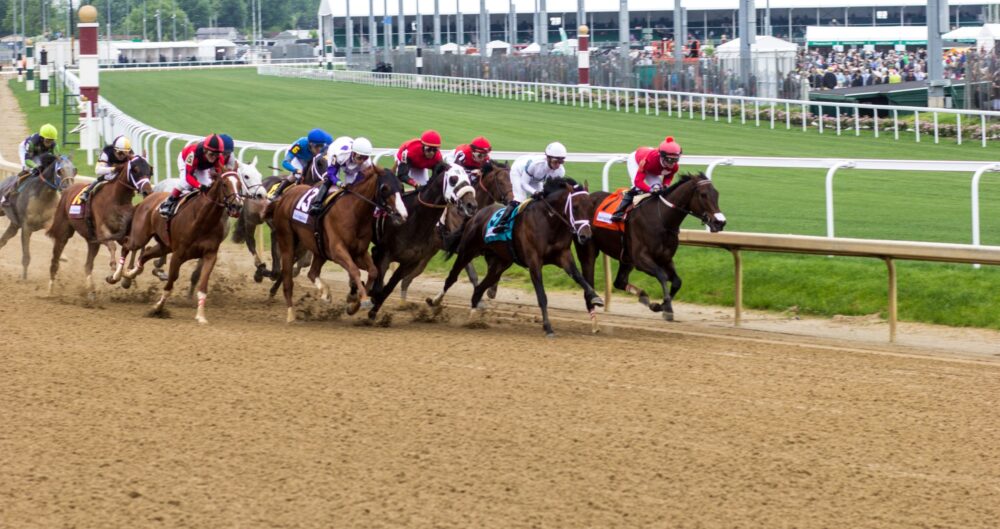
Speed exceeding 70 km/h at a gallop, auction prices reaching millions of dollars, and in the pedigree of every modern Thoroughbred, one of just three ancestors from the 17th century — the Thoroughbred horse is probably the most exclusive breed of livestock in the world. In Poland, it is commonly known as a ” folblut ” or “anglik,” although the official name is Thoroughbred. This is a closed breed, bred mainly for racing, with a studbook maintained with meticulous precision for nearly 300 years.
What makes the Thoroughbred stand out? In short:
- light, elegant build – long legs, slender neck, delicate head
- hot-blooded temperament – immense energy, sensitivity, sometimes nervousness
- extreme speed and endurance – no other horse achieves such results on the track
These are horses for experienced riders who know how to handle this explosive potential.
Folblut from Newmarket – why this horse still has no equal
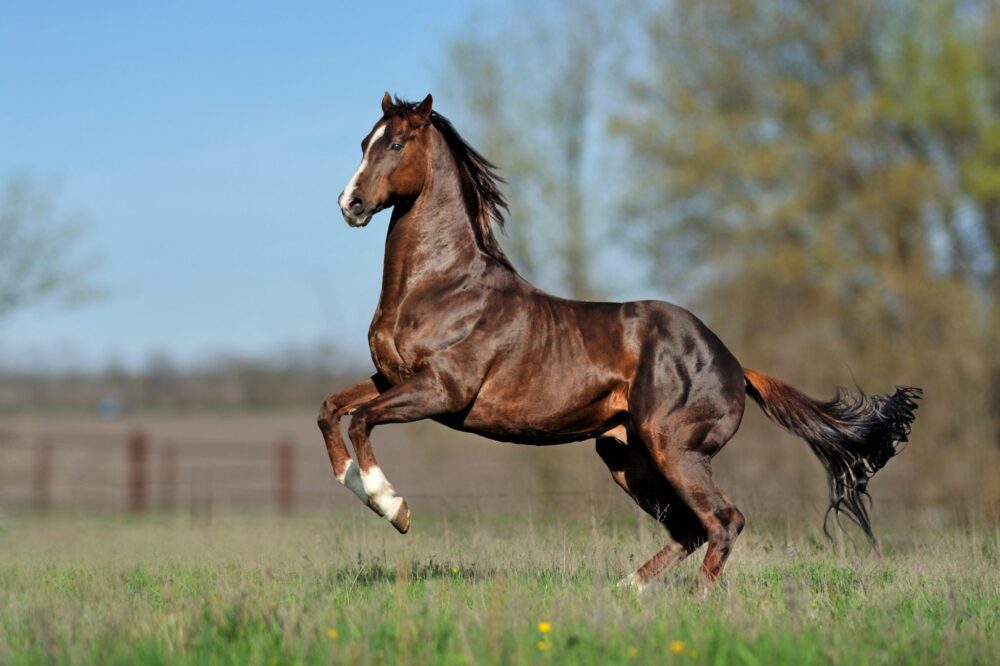
photo: equestrian.studio
Why is this topic still relevant? Because horse racing is a global business worth billions, and Thoroughbreds have a genetic influence on almost all modern sport horses—from show jumpers to eventing mounts. At the same time, the breed stirs controversy: the ethics of breeding focused solely on performance, injuries in young horses, financial pressures. Fascination here is mixed with questions about welfare. But before we move on to the debates, let’s explore the history —from the first gallops in Newmarket to today’s racetracks.
From Byerly Turk to the Kentucky Derby – the history of the Thoroughbred
Today’s Thoroughbred is the result of nearly four centuries of relentless selection—ever since seventeenth-century Englishmen came up with the idea to cross oriental horses with local mares worthy of galloping. In fact, this experiment was so successful that it became the template for the entire modern world of racing.
The three founding sires of the Thoroughbred: Byerly Turk, Darley Arabian, Godolphin Arabian
At the end of the 17th and the beginning of the 18th century, three oriental stallions arrived in England: Byerly Turk (c. 1680), Darley Arabian (1704), and Godolphin Arabian (c. 1729). They were crossed with English “running mares,” local mares known for their decent speed. The result? About 95% of all modern thoroughbreds are directly descended from these three male lines. It’s a bit like half of humanity carrying the genes of only three men—a genetic bottleneck, but from a breeding perspective, a spectacular outcome.
In 1750, The Jockey Club was established, which organized the rules of racing, and in 1791, the General Stud Book was published—the first closed studbook. From that time on, only horses with documented pure pedigrees were registered. Newmarket had already long been a racing center (the first public race was held in 1634), but it was at this point that the breed truly took shape.
| Year | Event |
|---|---|
| 1634 | The first public race in Newmarket |
| 1750 | The founding of The Jockey Club |
| 1791 | General Stud Book Edition |
| 1875 | Inauguration of the Kentucky Derby in the USA |
From Newmarket to the world – how the Thoroughbred conquered the globe
The 19th and 20th centuries marked an era of expansion. Thoroughbreds reached the USA, Ireland, Australia, and Japan. In 1875, the Kentucky Derby was inaugurated in Louisville—today the world’s most famous race. Triple crowns, group races, and million-dollar stakes emerged. After World War II, the racing industry grew at a cosmic pace—from the United States and Japan to Dubai.
In Poland, the first thoroughbreds appeared as early as the 18th century, but the breed never dominated breeding as, for example, Arabians did in Janów Podlaski. For the army, thoroughbreds were valued as fast and resilient horses; today, breeding is niche but prestigious—a few studs maintain racing lines, though we are far from the level of Kentucky or Ireland.
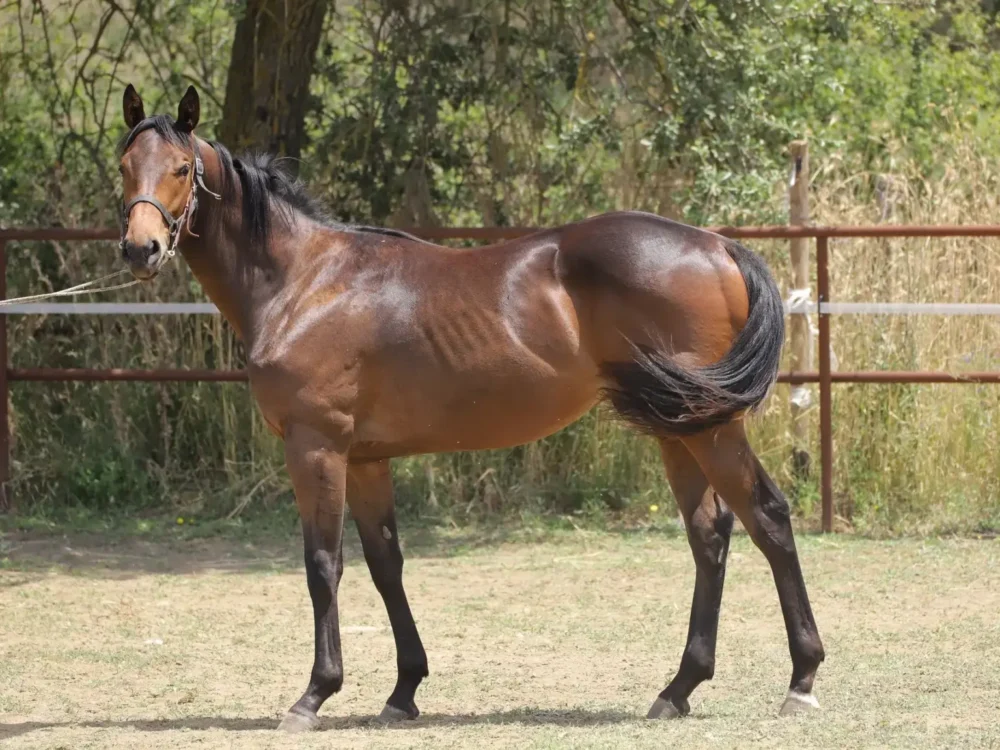
photo: theequinest.com
Build, temperament, and abilities – how to recognize a Thoroughbred horse
It may look like a fairy-tale horse—slender, harmonious, and shiny. But the Thoroughbred is, above all, a machine built for running. Every part of its body has been shaped over centuries of selection for a single purpose: maximum speed and endurance.
Sprinter’s physique: height, build, coat
A typical Thoroughbred horse reaches a height between 157 and 175 cm at the withers, most often 162-165 cm. Characteristic features include:
- a light, dry head with a straight profile (without the arched nose of Arabians)
- long, oblique shoulder blade set at a 45-50° angle – this is exactly what allows for such a long stride
- muscular limbs with hard, small hooves
- short, shiny coat in bay, chestnut, gray, sometimes black
The build translates directly into performance. Stride length? Around 7-8 meters. The heart? Proportionally the largest among all breeds—1.2-1.5% of body weight, and in some individuals even more. A powerful hindquarters generates the impulse that allows acceleration up to 70 km/h over a distance of one kilometer.
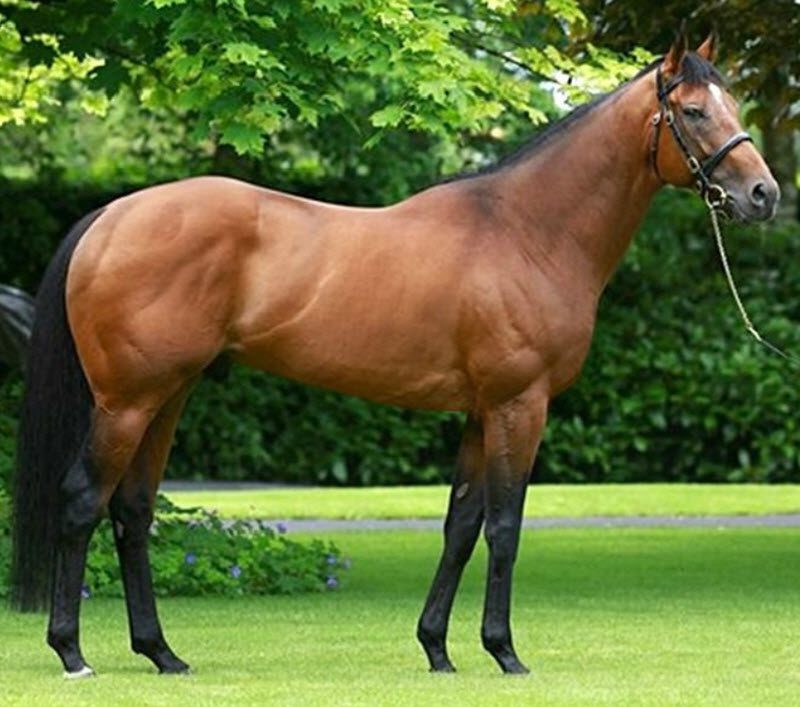
photo: horsemensguide.com
Thoroughbred temperament – a horse for the demanding rider
Energetic, intelligent, and sensitive to the extreme. The Thoroughbred is a classic “hot-blooded” horse—reacting to every stimulus, requiring an experienced hand and regular, intensive exercise. This is not a horse for beginners. Experts describe it as an “active breed for the experienced”—if you don’t give it a job, it will find something to do on its own. And you probably won’t like its idea.
A good choice for an ambitious sport rider. Definitely not for someone looking for a calm companion for Sunday rides.
Racing, sport, and recreation – where does the Thoroughbred work today
Running machine: flat and obstacle races
The Thoroughbred was born to run—and does it better than any other horse breed. It mainly competes in flat races (1,000–2,400 m) and steeplechases (2,000–4,000 m), carrying a jockey and saddle with a total weight of about 50–60 kg—the so-called weight handicap system levels the playing field in races.
The scale of this industry? Globally, over 100,000 races are organized annually, with around 50,000 in the USA alone. Prize pools total roughly 10 billion USD per year. Top events—Royal Ascot in the United Kingdom, Prix de l’Arc de Triomphe in France, or the Kentucky Derby in the USA—attract millions of viewers and enormous sums of money.
| Country | Races annually | Sample race |
|---|---|---|
| USA | ~50,000 | Kentucky Derby |
| United Kingdom | ~9,000 | Royal Ascot |
| France | ~6,000 | Prix de l’Arc de Triomphe |
From the tracks to the Olympic podium
Folblut is not just about racing. In Olympic sport, it accounts for around 70% of the winners in Eventing at the 2024 Olympics – its bloodline also dominates in show jumping. Legends like Frankel (14 wins, record earnings) or the Japanese Equinox (speed over 70 km/h) demonstrate what this breed is capable of.
In Poland? A small population – about 1,500 horses – mainly in private breeding. In 2024, there is a noticeable increase in imports from Ireland, folbluts race on tracks in Warsaw and Wrocław, and advanced riders eagerly use them for leisure riding. But this speed comes at a price – what kind?
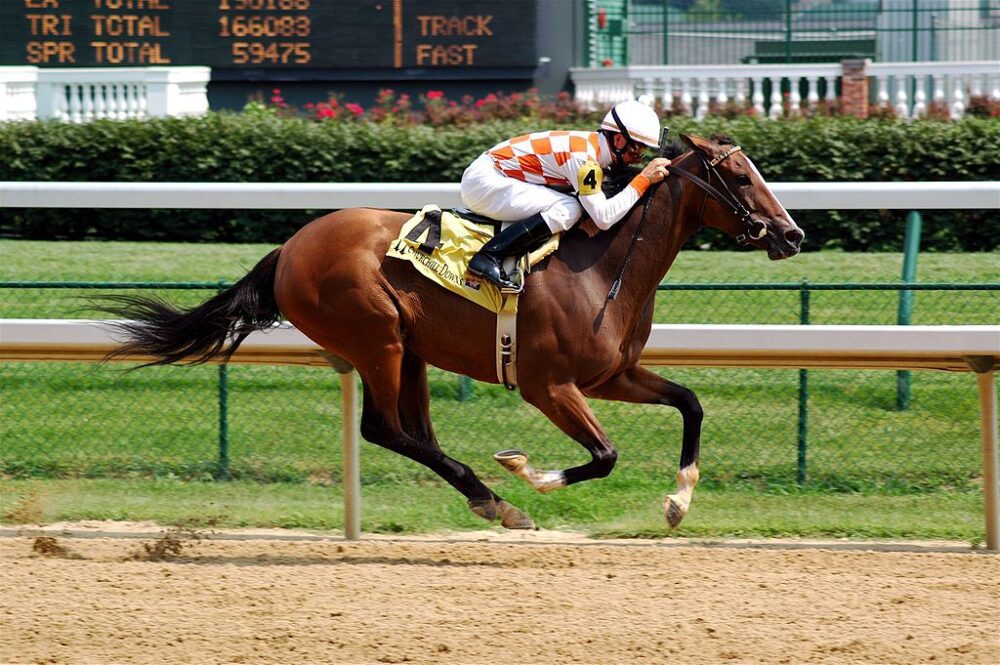
photo: royal-horse.com
The dark side of speed – health, doping, and debates about well-being
Every record comes at a price—and in the case of the Thoroughbred, it is often the horses themselves who pay it. Behind the spectacular results on the tracks lies an issue the racing industry prefers not to discuss openly: injuries, doping, the fate of horses after their careers end, and the consequences of extreme selective breeding.
Injuries and death on the track – what is the cost of a record?
Statistics are harsh. According to data from the American Veterinary Medical Association (AVMA), there are about 1.5 deaths on the racetrack for every 1,000 starts. Animal welfare organizations such as PETA estimate that in the USA alone, around 2 horses die each day—mainly due to injuries of the musculoskeletal system: fractures of the cannon bone, torn tendons, and damaged hock joints. The problem? Selection for speed does not go hand in hand with skeletal durability.
Doping, slaughterhouses, and inbreeding – main accusations against the industry
There are further controversies:
- Doping and painkillers – the high-profile scandal from 2018, when Triple Crown champion Justify tested positive for scopolamine, and the case was swept under the rug. Only the new IFHA anti-doping regulations (2025) are expected to change this.
- Fate after a racing career – it is estimated that around 10,000 Thoroughbreds end up in slaughterhouses in the USA each year, as the industry struggles to cope with the large number of “unwanted” horses after their racing days are over. Retraining programs exist, but they serve only a fraction of the population.
- Inbreeding – the inbreeding coefficient in Thoroughbreds reaches 15-20%, which leads to health and fertility issues. In Poland, the topic exploded between 2016 and 2020, when disputes arose over the management of state studs (such as Janów Podlaski) and breeding methods.
The industry is looking for solutions – but more on that in a moment.
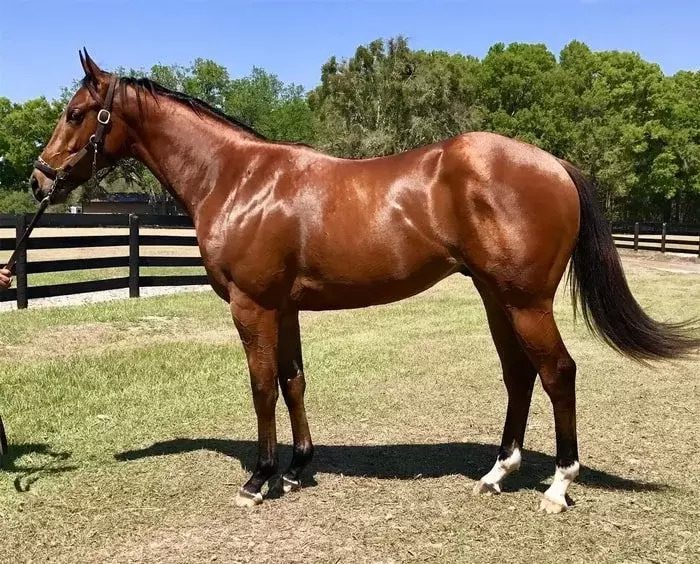
photo: madeupinbritain.uk
Breeding, genetics, and choosing a Thoroughbred – a practical guide for you
If you are thinking about buying a Thoroughbred, that’s good – but remember, this is not an ordinary horse. It’s a living investment, a blend of genes recorded in a single studbook for almost 300 years and governed by quite precise rules. Before you spend your money, it’s worth understanding how such a horse is bred and what to look for during an inspection.
From genes to the paddock – how a Thoroughbred horse is bred
Thoroughbred horses are a closed population – every individual must have ancestors recorded in the General Stud Book. There is no such thing as a “presumed thoroughbred” – either it is in the studbook, or it is not. Since the beginning of the 21st century, most countries (e.g., the USA since 2001) require DNA testing to confirm lineage. Horses have 64 chromosomes (not 66, as is sometimes mistakenly stated), but technically that’s a detail for the laboratory – all you need to know is that DNA verifies pedigree and detects certain hereditary diseases, such as MSTN mutations related to exercise distance.
Breeding? Pregnancy lasts about 340 days. Healthy twins are rare – most breeders remove one embryo because the risk of miscarriage is too high. A horse in training needs 20–30 kg of oats per day plus hay – that’s a considerable expense before it even sets foot on the track.
How much does a Thoroughbred cost and how to choose the right one for yourself
Prices? Yearlings start at $10,000 for a basic horse and go up to $500,000 for well-bred ones. The elite cost millions — Fusaichi Pegasus, after winning the Kentucky Derby, was sold to a syndicate for around $70 million. A Thoroughbred is an investment that requires careful consideration.
What to look for when buying:
- Purpose: racing, eventing, recreation – each use requires a different temperament
- Veterinary examinations (joint X-rays, heart, lungs)
- Pedigree – check the results of the ancestors, not just the father
- Genetic tests: MSTN (distance predispositions), disease markers
- Character – observe the horse in the stall and during lunging
Don’t buy on impulse. Prepare a budget for the veterinarian, trainer, and nutrition—because the horse itself is just the beginning.
The future of the Thoroughbred – what’s next for the world’s fastest horse?
From its 17th-century beginnings in England to today’s global racetracks, the Thoroughbred has undergone an impressive evolution. Today, it is a horse whose speed, endurance, and genetics have shaped most modern sport breeds, with the racing industry valued at around 50 billion USD annually. But what’s next? Where is the breeding of the world’s fastest horse headed, and what changes await us in the coming decade?
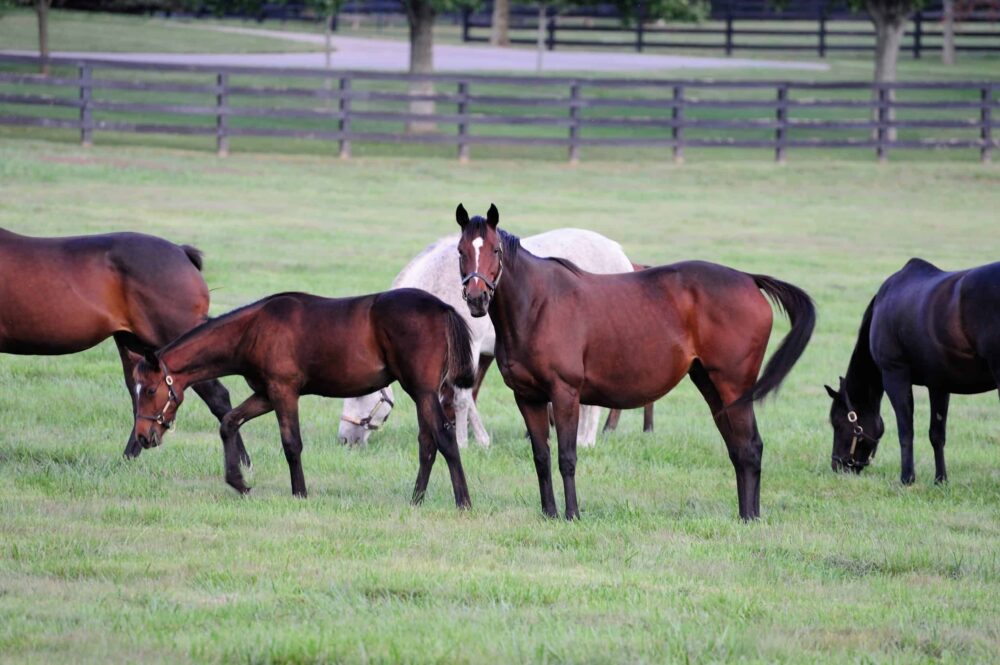
photo: ihearthorses.com
Genomics, CRISPR, and data – a new era in Thoroughbred breeding
The revolution has already begun. Research on the MSTN gene (responsible for muscle development) has opened up new selection possibilities for breeders, and after 2025, more and more centers are experimenting with gene editing (CRISPR) — although regulations are still trying to keep up with science. The International Federation of Horseracing Authorities (IFHA) states outright: “The future of the Thoroughbred lies in genomic data.” Even today, genomic horse profiles help predict not only speed but also injury resistance — a key aspect of welfare.
At the same time, training monitoring technologies (heart rate sensors, motion analysis) are developing, and forecasts suggest they could reduce injuries by about 20 percent by 2030. New IFHA anti-doping regulations are becoming increasingly strict, and retraining programs — a “second career” for horses after racing — are gaining popularity. All this means that the Thoroughbred of the future will be not only faster but also healthier.
Your role in the future of the world’s fastest horse
Globally, racing is gaining momentum: Asian markets (China, Dubai) offer prize pools exceeding 100 million USD, and legendary trainer Aidan O’Brien states outright: “The Thoroughbred is the pinnacle of sport horse evolution.” But the future also depends on you—as an owner, breeder, investor, or fan. What can you do?
- Choose stables and breeding farms with welfare certificates (e.g., HBLB, national welfare programs).
- Support horses after their racing careers – adopt, support retraining, promote organizations dedicated to “second careers.”
- When purchasing a horse, check genomic data and family history — smart selection is the key to healthy, fast generations.
In fact, the Thoroughbred doesn’t need a revolution – it needs our responsibility. Because what we do today will determine whether in 2030 we’ll have an even faster horse, or just a sad story about how we wasted a genetic miracle.
Tommy U.
sports & lifestyle editor
Luxury Blog





Leave a Comment