

The world’s most expensive furniture – which wood is truly worth the investment?

1,200,000 zlotys for city benches in one of Poland’s cities. Yes, you read that right—over a million for African seats. When I first saw the bill, I thought it had to be a mistake. But no—that’s the going rate for truly luxurious wood. I’ve gathered some insights for you about what the most expensive furniture in the world looks like.
Not every wood deserves to be called luxurious. It’s not about taste or marketing. I’m talking about materials that cost more per kilo than silver. Ebony, rosewood, mahogany—names that make a carpenter’s eyes light up.
I remember the first time I held a piece of real ebony. Heavy as stone, smooth as glass. That’s when I understood why people are willing to pay so much.
The world’s most expensive furniture – what drives prices up?
Rarity is the first reason. Some trees grow only in specific regions, and their numbers decrease every year. CITES, an international convention, restricts trade in many species. Without the right permits, you can’t even buy a small board.

photo: mydesignagenda.com
FSC certification adds another zero to the bill. Legal origin comes at a price. And the difficulty of processing? Ebony takes 10–15 years to dry. Oak? One year is enough, maybe two.
Why are we paying more right now?
2025 brought new challenges. Inflation hit the transport sector, and new EUDR regulations made imports more difficult. Polish furniture manufacturers are exporting less outside the EU, so demand for expensive raw materials has dropped, yet prices continue to rise.
Sounds like a paradox? That’s how the luxury materials market works.
And this is just the beginning. Which species are the most expensive? How can you spot a fake? And is it even worth investing in such wood? Since we know what we’re paying for, let’s see which trees drive the price up the most.
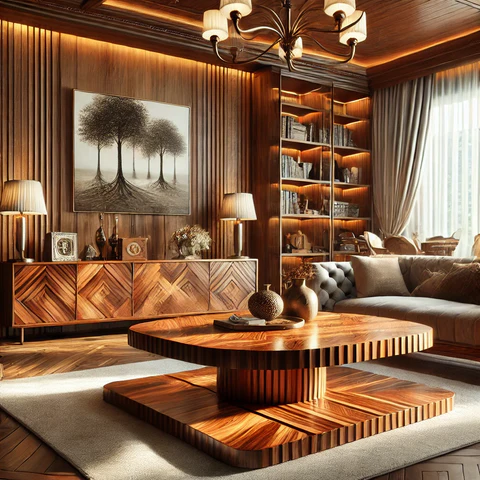
photo: prestige-affairs.com
Ebony, rosewood or teak – a ranking of the most expensive wood species
Have you ever wondered how much a cubic meter of real ebony costs? I checked recently and I was absolutely stunned.
| Genre | Price USD/m³ | Price PLN/m³ | Continent | CITES status |
|---|---|---|---|---|
| African ebony | 12,500-15,000 | 50,000-60,000 | Africa | Annex II |
| Brazilian rosewood | 8,000-12,000 | 32,000-48,000 | South America | Annex I |
| Burmese teak | 6,500-9,000 | 26,000-36,000 | Asia | Annex II |
| Mexican rosewood | 5,000-7,500 | 20,000-30,000 | North America | Annex II |
| Wenge | 3,500-5,500 | 14,000-22,000 | Africa | – |
These prices are as of 2025. Ebony came out on top, but the differences are huge even within the same species.
Three things determine the final amount on the invoice. First—geographical origin. The same species from Madagascar costs twice as much as from Cameroon. Don’t ask me why, but that’s how it is.
The second factor is visual grade. A board without knots or cracks can be 40% more expensive than one with minor flaws. I remember looking at a rosewood log at the sawmill—one side was perfect, the other had a tiny split. The price difference? Three thousand zlotys.
The third element—FSC or PEFC certification. It adds 15–25% to the price, but gives you peace of mind and certainty of legal origin.
The most expensive case in Poland? An auction in Gdańsk in 2023—one ebony log sold for 28,500 zlotys. That was something special, but it shows just how crazy prices can get.
I have to mention white ravens like agarwood. That’s a whole different price league—sometimes $50,000 per cubic meter. But that’s material for connoisseurs and collectors, not for regular furniture making.
Fun fact—prices can jump by 30% in just three months. It all depends on availability and current CITES regulations. I once saw teak prices soar after new export restrictions were introduced in Burma.
We already know who rules the price lists, but how do these boards make their way from the tropics to a Polish living room?
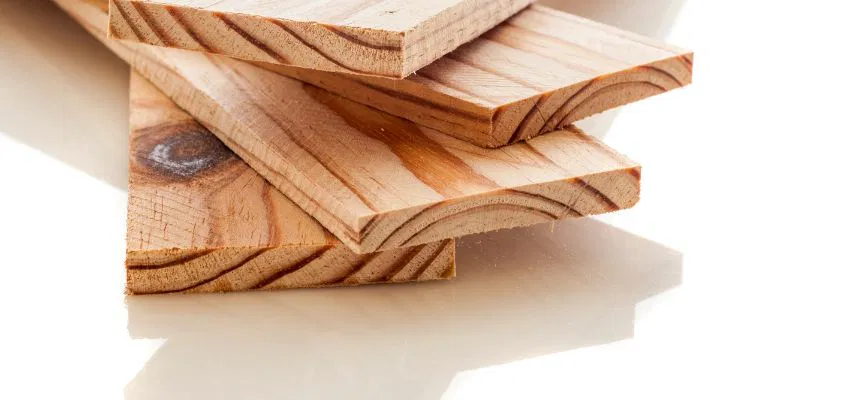
photo: usvintagewood.com
From Forest to Living Room – Supply Chain and Certifications
Sometimes I wonder if, when buying an expensive table made from exotic wood, anyone actually thinks about the journey that piece of timber has taken. I never really thought about it—until one day I saw my carpenter friend get fined for improper paperwork. That’s when I started digging deeper.
The supply chain for luxury wood looks like this: logging in the forest → legalization and initial paperwork → sea or land transport → importer’s warehouse → carpenter’s workshop → showroom → end customer. Each of these stages has its own pitfalls and requirements.
It all starts with logging. In the countries of origin—Brazil, Cameroon, Indonesia—the wood must receive a certificate of legality. This is no joke; without it, it won’t cross any border. Next comes transport—this is where owners often make mistakes with documentation. I’ve seen containers sit in ports for months because a single signature was missing.
In Poland, things got more complicated as of 30.12.2024, when the EUDR (European Union Deforestation Regulation) came into force. FSC (Forest Stewardship Council) and CITES (Convention on International Trade in Endangered Species) were already standard, but EUDR tightened everything further. Now every importer must provide the geolocation of the logging site—literally the GPS coordinates of each tree.
The State Forests in Poland have also changed their procedures. Tender submissions now require additional guarantees. This means a Polish furniture manufacturer can no longer simply buy wood “on trust.” The paperwork must be complete.
Let me show you a concrete example. I know a workshop in Krakow that sold a block of ebony wood for 28,500 PLN to an Italian luxury table manufacturer. Sounds simple? Not at all.
First, that block traveled from Cameroon to Hamburg. It sat there for three weeks because the importer lacked an FSC certificate. Then it was transported to Poland—another delay at the border, as customs officers checked compliance with CITES. Finally, it reached the Krakow workshop, where it was processed and prepared for further sale.
The Italian client wanted to be sure he was buying legally. The Polish seller had to provide a full set of documents: a certificate of origin from Cameroon, proof of transit through the EU, and his own processing certificate. The whole package was as thick as a phone book.
Transport to Italy took another week. At the Austrian-Italian border, there was another inspection. Everything was in order, so the block arrived at its destination a full two months after the order was placed.
The risks are real. In 2025, border confiscations increased by 40% compared to the previous year. Mostly due to missing CITES certificates or incorrect EUDR paperwork. A colleague in the industry lost a shipment worth 150,000 PLN this way. The wood was destroyed, because the appeal process would have taken longer than the entire business was worth.
Logistical delays are another plague. Ports are overloaded with inspections, and offices can’t keep up with document verification. What used to take a month can now take three. For a carpenter, that means frozen capital and unhappy customers.
All this bureaucracy does make sense—it protects tropical forests from plunder. But for a small business owner in Poland, it means cost and stress. That’s why more and more companies use intermediaries to handle the paperwork. It’s more expensive, but safer.
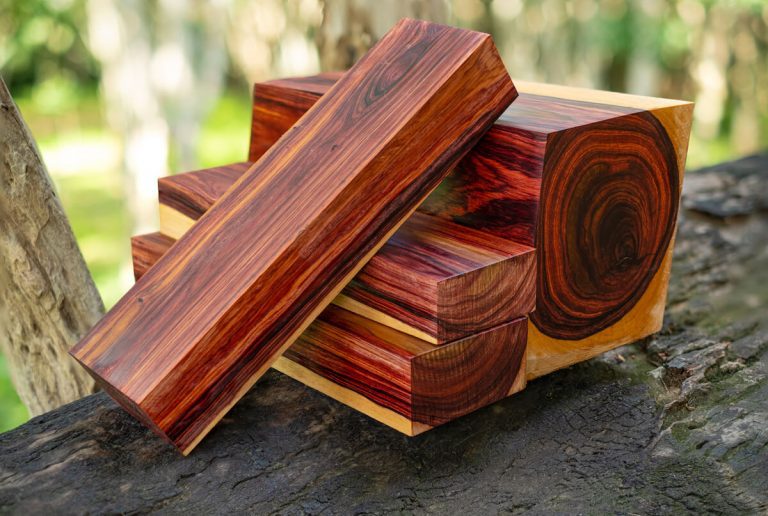
photo: kernigkrafts.com
Hardness, density, oils – technical properties of elite varieties
Just yesterday, I was holding a piece of ebony in my hand and thought—why is this wood so heavy? Turns out, it’s all in the numbers.
Hardness is measured by the Janka scale—it’s the force needed to drive a steel ball into the wood. Density is simply the mass per cubic meter. And the natural oils? Think of them as a built-in chemical factory in every cell.
Let’s look at some specific values:
| Genre | Density kg/m³ | Janka lbf | Special feature |
|---|---|---|---|
| Ebony | 1,200 | 3,080 | Extremely hard |
| Bubinga | 890 | 2,690 | High resistance |
| Text | 650 | 1,155 | Rich oils |
| Oak | 750 | 1,360 | Natural tannins |
These differences aren’t just random numbers. Ebony, with a hardness of over 3000 lbf, means furniture that lasts for decades. My grandfather had an ebony desk—after 60 years, it looked brand new. Oak at 1360 lbf holds up too, but the difference is massive.
A density above 1000 kg/m³ means the wood sinks in water. Ebony drops to the bottom like a stone. Pine, with a density of 500 kg/m³, floats easily. That’s why ebony pianos are so heavy—but also have an incredible sound.
Teak is a different story altogether. Its density is only 650 kg/m³, but its natural oils act as a built-in preservative. Teak yacht decks last a hundred years without maintenance. These oils repel water, fungi, and insects. It’s like having a self-renewing varnish built right in.
The problem is, these woods are a nightmare for carpenters. Ebony dulls blades like crazy. I had to slow the feed rate to half the normal speed. Bubinga doesn’t forgive either—cut too fast and it burns, leaving scorch marks. Teak, on the other hand, clogs sandpaper with its oils.
But the result? Steinway pianos made from ebony play like new after a century. Teak garden furniture never needs varnishing. Bubinga kitchen countertops withstand anything you throw at them.
These numbers have a long history—let’s look at where the fascination with exotics began.
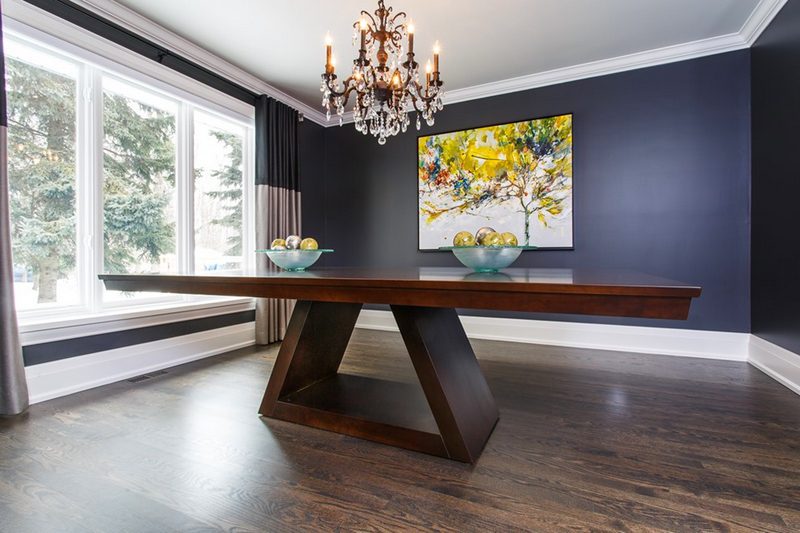
photo: 2luxury2.com
From Pharaohs to Chippendale – The Evolution of Luxury Furniture
I remember the first time I saw a photo of Tutankhamun’s throne in a museum. That ebony sheen, those golden inlays—it struck me instantly: this is where it all began. Pharaohs, 5,000 years ago, already understood what true luxury in wood meant.
• 3000 BC – Egypt, importing ebony from Africa for the pharaohs
• 1000 BC – Greece and Rome, the first marquetry with precious species
• 15th century – Renaissance explosion of rosewood and mahogany
• 18th century – Chippendale style and the triumph of American mahogany
• 19th century – British colonialism and the spread of teak
The Egyptians were true masters. They brought ebony all the way from distant Nubia because they knew their gods deserved only the best. There were no trucks back then, so every piece of this black wood was worth its weight in gold. Literally.
Then came the Renaissance, and everything changed. Columbus discovered America, and we discovered mahogany. Trade routes exploded like fireworks. Venetian merchants brought rosewood from Brazil, mahogany from the Caribbean. For the first time, ordinary wealthy people could afford what had once been reserved only for kings.
But the real revolution came in the 18th century. Thomas Chippendale—this man changed everything. His London workshop became synonymous with luxury. American mahogany was perfect—hard, polished beautifully, with that distinctive reddish hue. Chippendale crafted chairs from it that today fetch fortunes at auction.
It’s interesting that around that time, Americans began rebelling against the British. Yet the British calmly bought their wood and turned it into the world’s most beautiful furniture. History loves these kinds of paradoxes.
The 19th century was pure madness. The British Empire stretched across half the world, and with it, Burmese teak reached everywhere. Colonial officers shipped entire boatloads of this golden wood to England. It grew in Burma, and in London, it became furniture for the aristocracy.
I remember a conversation with an antiques dealer—he told me that back then, a ship loaded with teak was like a gold shipment today. Guarded, insured, sometimes even with a military escort.
Every era had its symbolic wood. Egyptians—ebony, Renaissance—mahogany, Victorians—teak. That was no accident. Each species reflected the mentality of its age. Ebony was as mysterious as the religion of the pharaohs. Mahogany—warm and accessible, like Renaissance humanism. Teak—practical and durable, like British pragmatism.
photo: larkwoodfurniture.com.au
Today, we face new dilemmas—does luxury have to cost the planet? That’s a question our ancestors never had to ask themselves.
Economic and environmental dilemmas: is it worth investing in exotic options?
Is it really worth spending a fortune on exotic wood? I found myself wondering about this recently when a friend showed me his new ebony dresser that cost 8,000.
| Pros | Cons |
|---|---|
| High resale value | Huge upfront costs |
| Prestige and uniqueness | Questionable environmental ethics |
| Durability that lasts for decades | Difficulty of repairs |
| Status symbol | Risk of declining demand |
When it comes to return on investment, the numbers are intriguing. Ebony furniture loses about 3-5% of its value per year, while solid oak drops by as much as 8-12%. I’ve seen mahogany antiques at auctions, over a hundred years old, still fetching higher prices than brand-new pieces made from local wood.
But there’s a catch. An October 2025 report showed that Polish furniture exports outside the EU fell by 47%. This means domestic demand for luxury exotics might rise—or people may simply opt for cheaper alternatives.
The real dilemma starts with environmental concerns. The FSC certificate is no joke—plantation management really does make sense. But how many companies actually have it? Maybe 20% of importers. The rest? Best not to ask where their wood comes from.
On the other hand, there are premium local alternatives. Thermally modified ash looks almost like an exotic wood, and larch oak has its own charm. Plus, shipping from Masuria instead of the Amazon makes a real difference in terms of carbon footprint.
There are no easy answers. Everyone has to decide for themselves whether prestige and potential profit outweigh the costs and environmental doubts.
If you’re considering your next move, take a look at what’s in store for this market in the coming decade.
On the horizon: the future of luxury wood and your next steps
One thing is certain after all this—the luxury wood market isn’t going anywhere. It may evolve, but it will stay. That’s the key takeaway I have from this whole discussion about price and sustainability.
photo: ltjarbor.com
Market forecasts for the coming years
Commodity analysts are fairly unanimous in their predictions:
• Prices will rise by 10.0–20.0% by 2030
• Reclaimed exotic wood will become the standard in the premium sector
• Engineered veneer is replacing traditional solutions
• Digital tools like KD Max are revolutionizing cut optimization
Honestly, these forecasts don’t surprise me. I can already see furniture manufacturers experimenting with reclaimed wood. It’s no longer just an eco trend—it’s simply good business.
Action plan for the reader
- Check for FSC or PEFC certificates with every luxury wood purchase
- Consider other alternatives – veneer on board can look identical
- Invest in digital cutting planning tools if you work with wood professionally
- Get in touch with reclaimed exotic wood suppliers in your area
- Set a budget for a 15.0% price increase over the next three years
The points may seem obvious, but most people don’t think about them. I myself only recently started checking the origin of the wood I buy for my woodworking projects.
photo: glamorwood.com
The future of luxury wood will look different than it does today. It will be more expensive, more digital, and—hopefully—more responsible. The question isn’t whether it will change, but whether we’ll be ready for that change. Sometimes, it’s worth simply stopping the complaints about prices and starting to think strategically.
Kazz
lifestyle editor
Luxury Blog





Leave a Comment