

The best engine in the Mercedes S-Class – a comprehensive guide
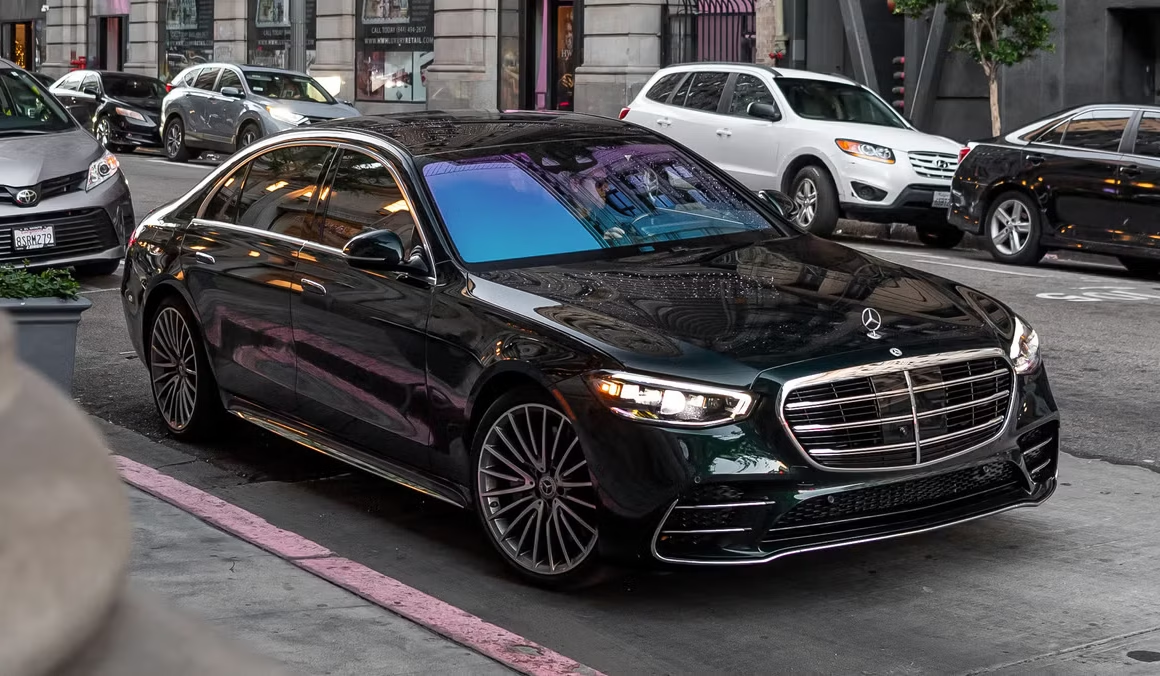
One in five premium limousines leaving showrooms in Europe is a Mercedes S-Class. This 2024 fact shouldn’t surprise anyone, but it raises a question that seemed much simpler just a decade ago.
Today, choosing an engine for the S-Class isn’t just a matter of preference. It’s a decision that will impact your wallet, the environment, and your everyday experience for years to come. And the differences between the options are huge.
To illustrate this: between the very first S-Class from 1991 and today’s top versions, there’s a difference of over 500 hp in power. Sounds like science fiction, right? But that’s just the tip of the iceberg. The technological gap also covers fuel consumption, emissions, ride comfort, and durability.
The best engine in the Mercedes S-Class – can the legendary diesel still compete with a hybrid today?
Let’s take an example. OM642 – that iconic diesel engine that powered thousands of S-Classes over the years. As reliable as a Swiss watch. But does it stand a chance today against the S 580e hybrid when it comes to ecology? And should we even be thinking about this as a head-to-head battle?
The truth is, in 2025, it’s no longer enough to look only at power or fuel consumption. We have to consider three key areas:
• Reliability – because the S-Class is an investment for decades, not just a few seasons
• Performance – both the measurable kind and what you feel every day behind the wheel
• Ecology – not just because of trends, but due to the real costs of ownership
Each of these aspects means something different today than it did five years ago. Emission standards have changed, new technologies have emerged, and the used car market now values different powertrains in new ways.
That’s why it’s worth looking at this story from the beginning. To see how S-Class engines have evolved and why some units achieved legendary status while others quickly disappeared from the lineup. This gives us the perspective we need to assess today’s options.
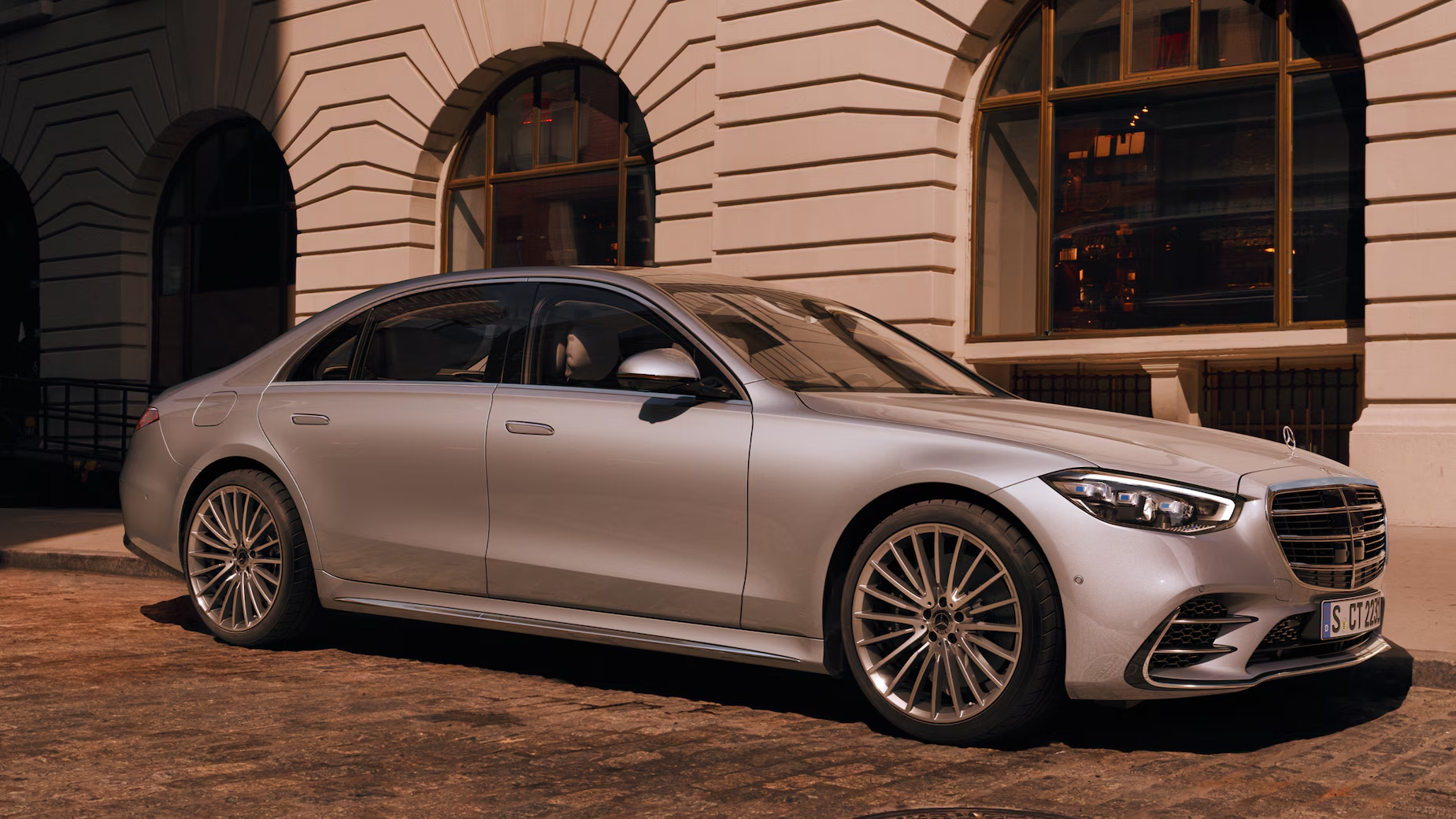
photo: mercedes-benz.co.nz
A legacy of reliability: the best classic diesel and petrol engines
I sometimes wonder why some S-Class models run like clockwork for 300,000 kilometers, while others require major repairs after just a hundred. The answer lies in the legacy of specific powertrains.
The reliability record reveals clear trends.
| Year | Key engine and feature |
|---|---|
| 1974 | OM617 – the “indestructible” diesel |
| 1991 | M119 5.0 V8 – a petrol classic |
| 1996 | OM606 – the last mechanical diesel |
| 2002 | M113 5.0 – solid V8 without supercharger |
| 2005 | OM642 – modern V6 diesel |
| 2005 | M272 – problematic V6 with a timing chain |
The legendary OM617 is truly an engineering marvel. Stuttgart taxis based on the W126 regularly surpassed a million kilometers without major engine interventions. One driver told me that his Mercedes with this diesel engine covered over 1,200,000 km. He only replaced the injection pumps and the turbocharger. Everything else remained original.
“OM617 was built back when Mercedes engineered for 40 years of use, not just 10,” says Hans Mueller, a former engineer from the diesel division.
A comparison of modern diesels leads to some interesting conclusions. The OM606 mechanical engine remains virtually indestructible, but the OM642 with common rail technology represents a different approach. However, the 2023 TÜV report confirms the solidity of this V6—breakdown rates are below 2% after ten years of use. That’s a truly respectable result by modern standards.
The situation is more complicated with petrol engines. The M113 5.0 V8 deserves to be called bulletproof—naturally aspirated, free from complex systems, and equipped with cast iron sleeves. The cost of a complete overhaul is around 10,000 PLN.
It’s a completely different story with the M272 V6. This engine has a fundamental design flaw—a timing chain that stretches over time. The problem usually appears between 150,000 and 200,000 kilometers. The repair? Around 25,000 PLN, since you basically have to take apart half the engine.
Owners of the W221 with the M272 know this sound all too well—the characteristic rattling at startup. It’s a sign your wallet is about to get lighter. That’s why many of us prefer to look for models with the M113, even though they’re older.
From a longevity perspective, it’s clear—Mercedes used to build engines to last for generations. Modern high-performance units follow a completely different design philosophy.
photo: oman.yallamotor.com
Power without compromise: modern V8 and V12 engines for enthusiasts
When the S 63 AMG E Performance rockets to 100 km/h in just 3.3 seconds, you feel uncompromising, raw power. This is exactly the kind of emotion we’re talking about when discussing modern V8s and V12s in the S-Class.
At the heart of this beast is the M177—a 4.0-liter biturbo V8 that, in its latest version, delivers 802 hp and a staggering 1,420 Nm of torque. These numbers may sound abstract, but the moment you press the accelerator… Well, then you truly get it. The 48V mild-hybrid system isn’t here for eco-credentials—it’s pure support for acceleration, eliminating turbo lag.
But there’s another side to the story. In the Maybach S 680, you’ll find a hand-assembled V12, with a single mechanic responsible for the entire unit. This is a different philosophy—not brute force, but silky-smooth refinement. This 6.0-liter engine produces 630 hp, but does so so quietly and smoothly that you sometimes forget it’s even there.
| Engine | Power (HP) | Torque (Nm) | 0-100 km/h | Fuel consumption (l/100 km) |
|---|---|---|---|---|
| M177 V8 biturbo | 802 | 1,420 | 3.3 s | 12-15 |
| M176 V12 | 630 | 1,000 | 4.4 s | 18-20 |
The difference in fuel consumption is obvious — the V8 drinks about 12–15 liters, while the V12 needs 18–20 liters per hundred kilometers. But honestly, who buys a car like this thinking about fuel costs?
The real issue lies elsewhere. Prices for these machines start at 800,000 PLN, and CO2 emissions exceed 300 g/km. This means more and more customers are looking for alternatives that combine power with greater social acceptance.
Legal restrictions in Europe aren’t helping either. Some cities are already introducing zones where such engines will have limited access. Maybe that’s why Mercedes is increasingly focusing on hybrid solutions as a compromise between passion and reality?
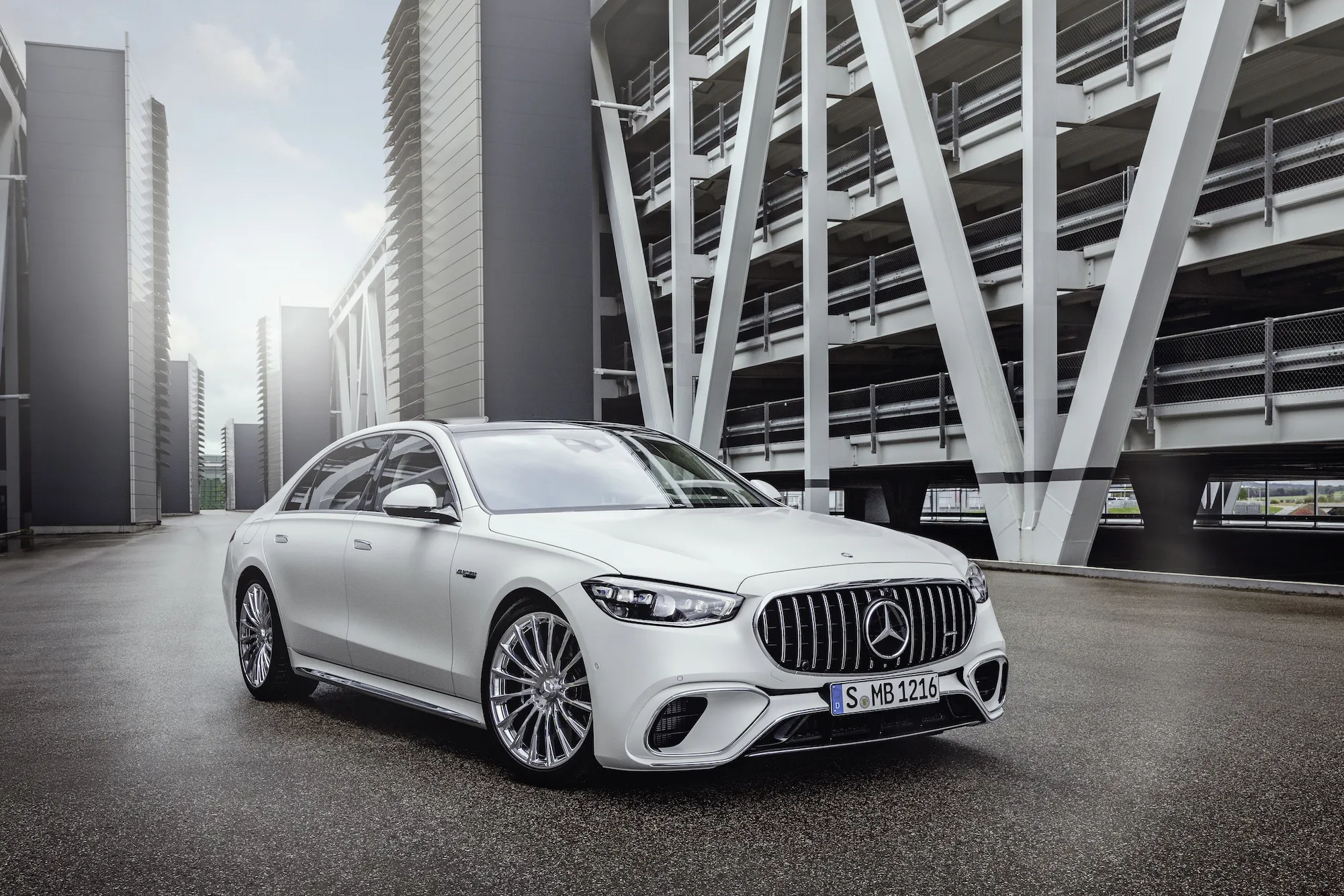
photo: thecarconnection.com
A sustainable future: plug-in hybrids and their advantages
In the morning, I get into the S 580e, plug in my phone, and check the computer—it shows 98 km of electric range. My office is 35 kilometers away, so the petrol engine won’t even turn on. I used to think that hybrids were a compromise. Now I know they just make sense.
The powertrain in the S 580e is an interesting story. There’s a 3-liter turbocharged inline-six plus an electric motor hidden in the automatic transmission. Together, they deliver a combined 510 hp. It sounds complicated, but in practice, everything works seamlessly. The battery has a capacity of 28.6 kWh—enough for the promised 100 kilometers of electric driving.
What surprised me most? The actual fuel consumption. With regular charging, you burn just 1–2 liters per 100 kilometers. A friend of mine has a diesel S-Class and averages 6.5 liters. The cost difference? At current prices, that’s about 400 złoty a month for 2,000 kilometers.
| Variant | Fuel consumption | CO2 emissions |
|---|---|---|
| S 580e (plug-in) | 1.2 l/100 km | 19 g/km |
| S 350d (diesel) | 6.5 l/100 km | 171 g/km |
| S 500 (petrol) | 8.9 L/100 km | 203 g/km |
⚡ Tip: Charge your car every night—even from a regular 230V home socket. A full charge takes about 5 hours, but who counts time while sleeping?
The tax aspect also makes sense. Emissions below 50 grams of CO2 per kilometer mean significant reliefs. Companies can claim depreciation up to 20,000 PLN per year. That’s not a small amount, especially when we’re talking about a car worth 600,000.
I remember when electrification used to mean Golfs and small city cars to me. Mercedes has shown you can combine luxury with responsibility. You’re sitting in leather massage seats, enjoying Burmester sound, and at the same time driving around the city with zero emissions.
Of course, it all depends on your charging discipline. If you forget, you’ll burn fuel like a regular petrol car. But for those who stick to the routine—it really works.
Now the question is different than it used to be. Not whether to choose a hybrid, but whether it even makes sense to buy anything else in this class.
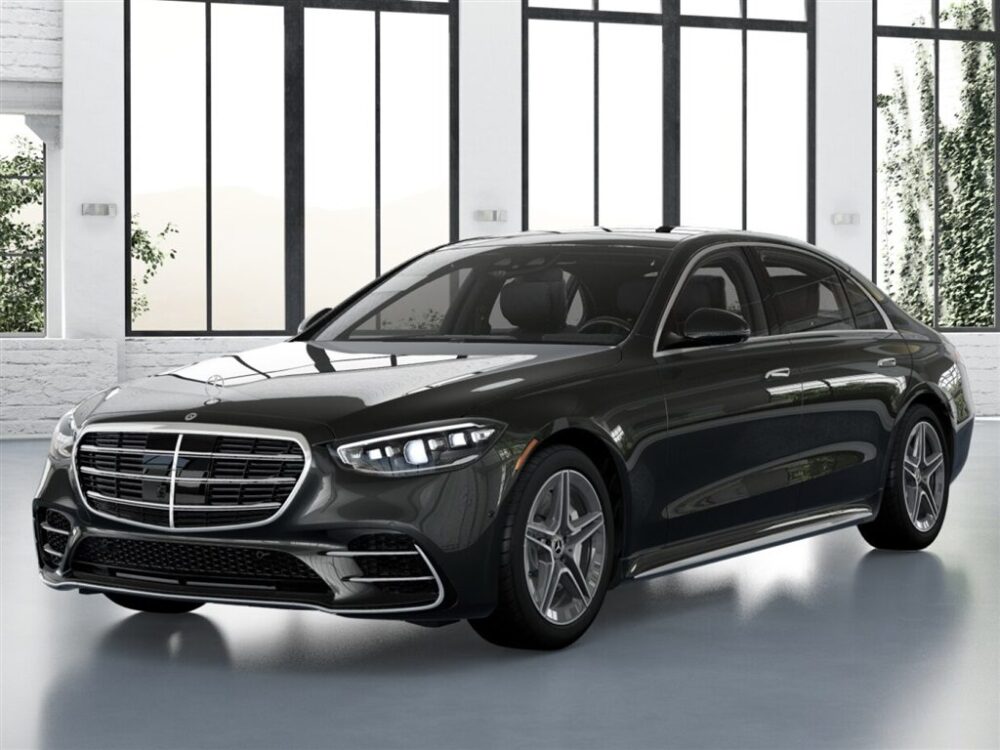
photo: mercedesbenzofnovi.com
How to choose the best engine for yourself – decisions for the future
Choosing an engine for the S-Class isn’t just a matter of taste—it’s a decision that will shape your driving experience for years to come. Many of us tend to postpone it endlessly, but regulations are changing faster than we think.
It’s best to look at this through the lens of three main driver profiles:
| Driver profile | Priority | Recommended engine | Justification |
|---|---|---|---|
| Business driver | Low operating costs | S 400d | Above 30,000 km per year – diesel pays off quickly |
| Enthusiast | Performance and comfort | S 580 | The V8 still delivers a unique driving experience |
| Eco-conscious individual | CO2 emissions | S 580e | Plugin hybrid – electric driving in the city |
| Pragmatist | Versatility | S 450 | A petrol mild-hybrid is the golden mean |
But beware—the automotive landscape is changing at lightning speed. Mercedes plans for half of its sales to be electric by 2030. These aren’t empty promises. At the same time, the European Commission may introduce a ban on new diesel registrations as early as 2035.
What does this mean in practice? That today’s S 400d might face resale challenges in a decade. On the other hand, who knows if the electric infrastructure will keep up with these plans. Personally, I’d bet on a hybrid—it’s the safest choice for the future.
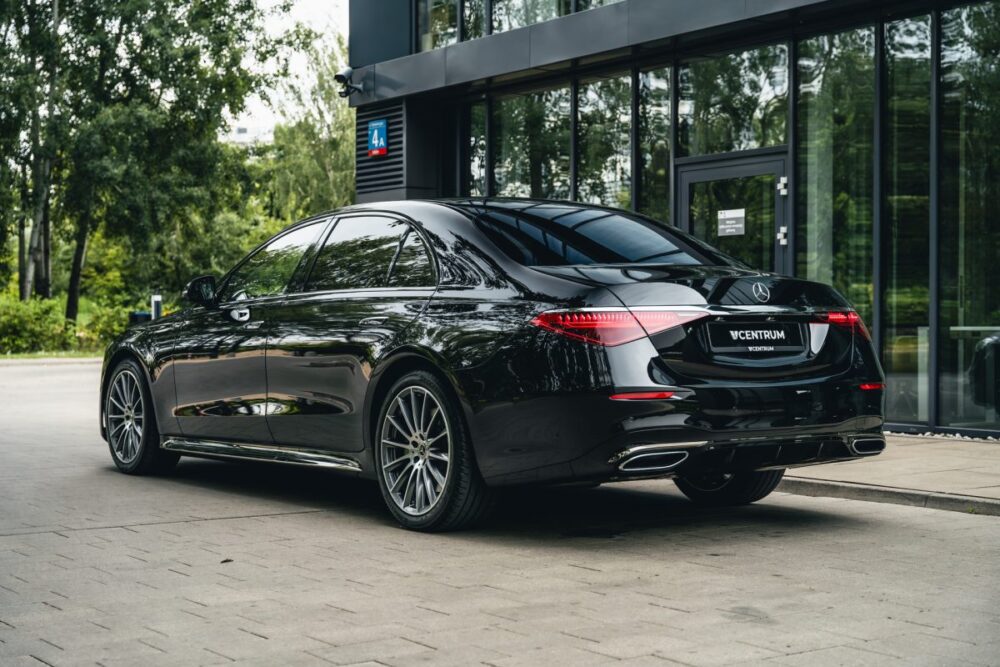
photo: vcentrum.pl
The truth is, every S-Class engine has its place in the market. Diesel for long-distance drivers, V8 petrol for classic car enthusiasts, hybrid for pragmatists with an eye on the future.
The automotive industry is undergoing a revolution comparable to the shift from horses to cars a century ago. You can resist it or take advantage of this transitional moment. The S-Class, in any version, will remain a symbol of luxury—the only question is, which path do you want to take next?
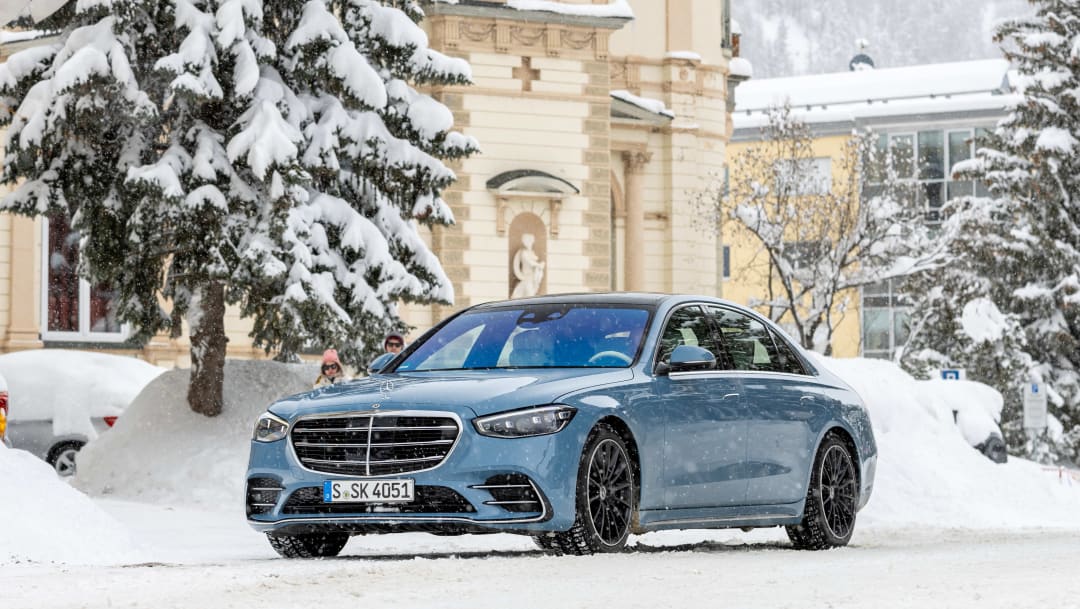
photo: autoblog.com
Stop hesitating and make your decision now.
Michael
moto editor
Luxury Blog



Leave a Comment