

Startup whisky distilleries in Scotland – a new wave of Scottish spirit
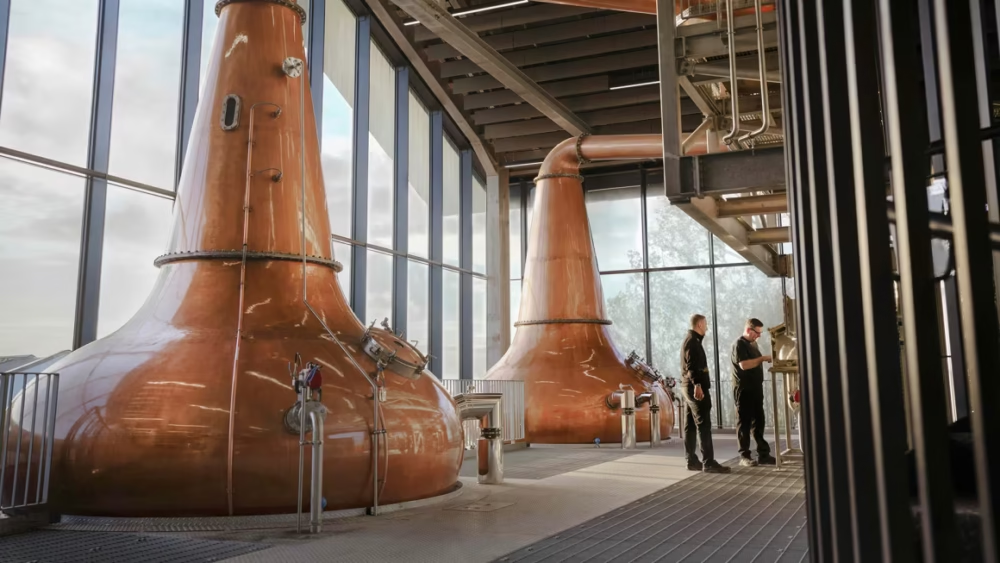
Scottish whisky is experiencing a true renaissance – in 2025, single malt exports exceeded £4.7 billion, and more than 2 million tourists visit Scotland each year to tour the distilleries. Interestingly, a large part of this boom is thanks to small, independent distilleries established in the last 10–20 years. It is these startup distilleries —producers who focus on small-scale production, experimentation, and sustainability—that are bringing fresh perspectives and energy to the world of Scotch whisky.
Startup whisky distilleries in Scotland are now having their moment in the spotlight
The global boom in premium spirits has led consumers to seek more than just a trusted brand. They want stories, authenticity, and even… a trip to the distillery. New, independent distilleries fit perfectly into this trend: they often produce on a micro scale, experiment with unusual barrels, grow their own grain, or install solar panels. And they’re not afraid to talk about their failures—which would be unthinkable for traditional houses.
In the following sections of the article, we’ll take a closer look at what these startup distilleries are, where they came from, where they operate, how they finance their activities, and what the future holds for them. But first, we need to clarify exactly who belongs to this group.
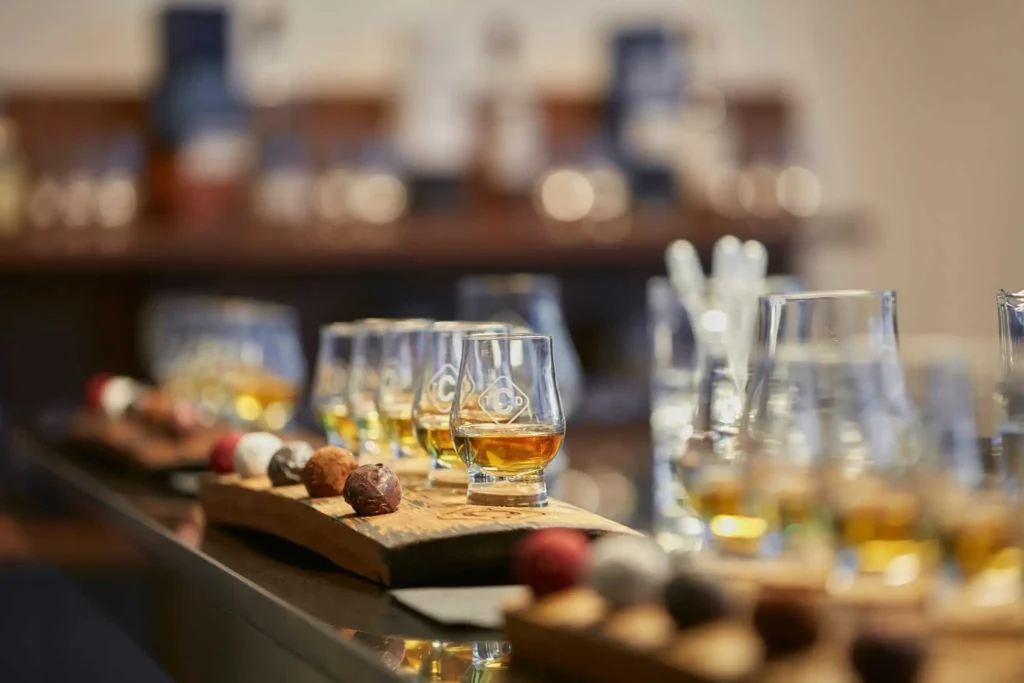
photo: visitscotland.com
What does “startup whisky distillery” in Scotland really mean
The word “startup” sounds a bit strange in the context of whisky, doesn’t it? We associate it with apps, SaaS, maybe fintech—certainly not with traditional craftsmanship that requires at least three years of waiting for the product. Yet in Scotland, over the past two decades, a group of distilleries has emerged that can indeed be described with this very term.
How to distinguish a startup distillery from a whisky giant
For the purposes of this text, let’s use the following working definition: a startup distillery is an independent distillery established after 2005, usually run by a small team (often fewer than 20 people), focused on single malt production, experimentation, and unconventional marketing. Key features include:
- Scale – production ranging from tens to several hundred thousand liters per year (not millions like the giants)
- Ownership – most often private, sometimes funded through crowdfunding or by local investors
- Flexibility – the ability to quickly modify recipes, test unusual barrels or grains without the need for approval from the global headquarters
- Philosophy – focus on storytelling, locality, and innovation instead of scaling volume
This is, of course, under the same legal requirements as Diageo or Pernod Ricard: a minimum of 3 years of aging in oak barrels, barley, water, and distillation in Scotland. The difference does not lie in the Scotch Whisky Association regulations, but in the approach to whisky as a product and a business venture.
Today, out of more than 140 active distilleries in Scotland, about 20-30 meet these “startup” criteria. Their production volume is modest, but their impact on the entire industry is much greater than the numbers alone would suggest.
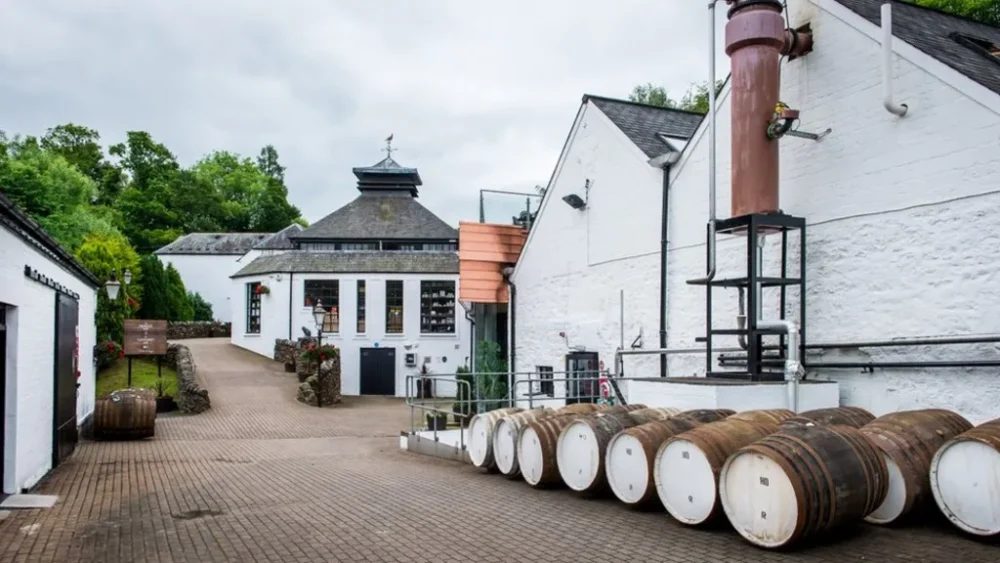
photo: bbc.com
From monk John Cor to Kilchoman: how history opened doors for startups
In 1494, the monk John Corr received eight bolls of malted barley “to make acquavitae”—this is the first documented trace of Scotch whisky. More than five hundred years later, in 2025, there are over 140 distilleries operating in Scotland, with several more under construction. How did an industry open to startups emerge from a small monastic still?
From monastic cauldrons to industrial columns
For centuries, whisky production remained in the hands of small, often illegal distilleries. It was not until nineteenth-century industrialization—the invention of the Coffey still in 1831—that mass production became possible. Large factories began to dominate the market, especially after Prohibition in the USA (1920–1933), which closed a key export market and ruined hundreds of small producers.
Consolidation and crises at the end of the 20th century
The 1980s and 1990s brought a wave of acquisitions: major corporations (Diageo, Pernod Ricard) were buying up traditional brands, and the number of operating distilleries dropped below 100. It seemed that the era of small distilleries had come to an end.
The boom of new distilleries after 2000
But something has changed. A few milestones show how the era of “small” has returned:
| Year | Event |
|---|---|
| 2004 | Resumption of Glengyle production (closed in 1925) |
| 2005 | The founding of Kilchoman – the first independent distillery on Islay in 124 years |
| 2014 | The first Glengyle whisky hits the market |
| 2017 | The McKenzie Smith family opens a distillery in a historic abbey |
| 2021 | Oran na Mara – the first distillery powered by tidal energy |
| 2025 | Bowmore tokenizes bottles; the Tailored Spirits project personalizes production |
Today, the number of distilleries has exceeded 140, with at least 15 more in the pipeline. The era of giants is not over—it’s just that garage players have appeared alongside them.
Where new flavors are born: a map of Scottish regions and their startups
Scotland is a piece of land only slightly larger than Małopolska, but in terms of whisky diversity, it surpasses entire regions of the world. Five main production areas – Speyside, Highlands, Islay, Lowlands, Campbeltown – have developed their own distinctive flavor profiles over the decades. And it is precisely in these regions that new distilleries are now emerging, drawing on the local terroir on one hand, while boldly experimenting on the other.
Five regions, five characters
Speyside is the traditional center of Scotch whisky – home to around 50 distilleries, the highest concentration in Scotland. The single malts from this region are renowned for their fruity and floral notes; for many, this is the “mildest” style. The Highlands are more versatile – ranging from light and grassy to intensely malty and rich. Islay (with just 8 distilleries) is the kingdom of peat, smoke, and sea salt – the most controversial and distinctive profile. The Lowlands offer light, grassy whiskies, often with hints of lemon. Campbeltown – once the “whisky capital of the world,” now with 3 active distilleries – produces salty spirits, often fruity and oily.
Where do new projects start?
Islay is a hub of innovation: Kilchoman (founded in 2005) proved that it’s possible to build a farm distillery there from scratch, while Port Charlotte revived Bruichladdich. Campbeltown is experiencing a renaissance—Glengyle/Kilkerran came back to life in 2004 after nearly 80 years of hiatus. In the Lowlands, urban distilleries have emerged: Glasgow Distillery Co. (Clydeside) and Tailored Spirits in Edinburgh. The Highlands boast Uilebheist near Inverness (using water from the River Ness), and southwest Scotland is home to Galloway Distillery.
It’s clear: new brands are seeking authenticity in the local terroir, but aren’t afraid to break with tradition—urban distilleries and Campbeltown 2.0 are proof that geography is a starting point, not a limitation.
People, organizations, and business models behind Scottish whisky startups
Behind every new distillery, there is a story of specific people—sometimes it’s a local family restoring a historic abbey, other times a celebrity searching for their own spirits brand. There is no single model for the founder of a Scottish whisky startup, but there are a few recurring types.
From family abbeys to whisky celebrities
The McKenzie Smith family opened a distillery in a historic abbey in 2017, combining tradition with a modern approach to business. Meanwhile, Sam Heughan—the star of the Outlander series—launched the Sassenach Spirit brand in collaboration with Galloway Distillery. This shows that Scotch whisky attracts a variety of profiles: from local enthusiasts to entrepreneurs from other industries who see potential in blending heritage with marketing.
Who regulates and supports new distilleries
The Scotch Whisky Association oversees legal frameworks and lobbies on behalf of the entire industry. Rolex Perpetual Planet partners in the sector’s commitment to achieving net-zero by 2040. Consulting firms (Stilnovisti) and tourism companies (Big Sky Campers) help create experiences for visitors, while UK Export Finance becomes an export financing option.
Crowdfunding, partnerships, and other sources of capital
Startups use various mechanisms:
- crowdfunding – raising capital from whisky fans
- private investors – often from other sectors
- technological alliances – e.g., collaboration with Nova Innovation (tidal energy) or MiAlgae (waste management)
Glasgow Distillery Co., Tailored Spirits from Edinburgh, and Galloway Distillery combine classic products with modern tools—from experimental series to engaging tourists. It’s a mix of local enthusiasts, global brands, and fresh sources of capital.
Technology and innovation: how Scottish startups are changing the way whisky is made
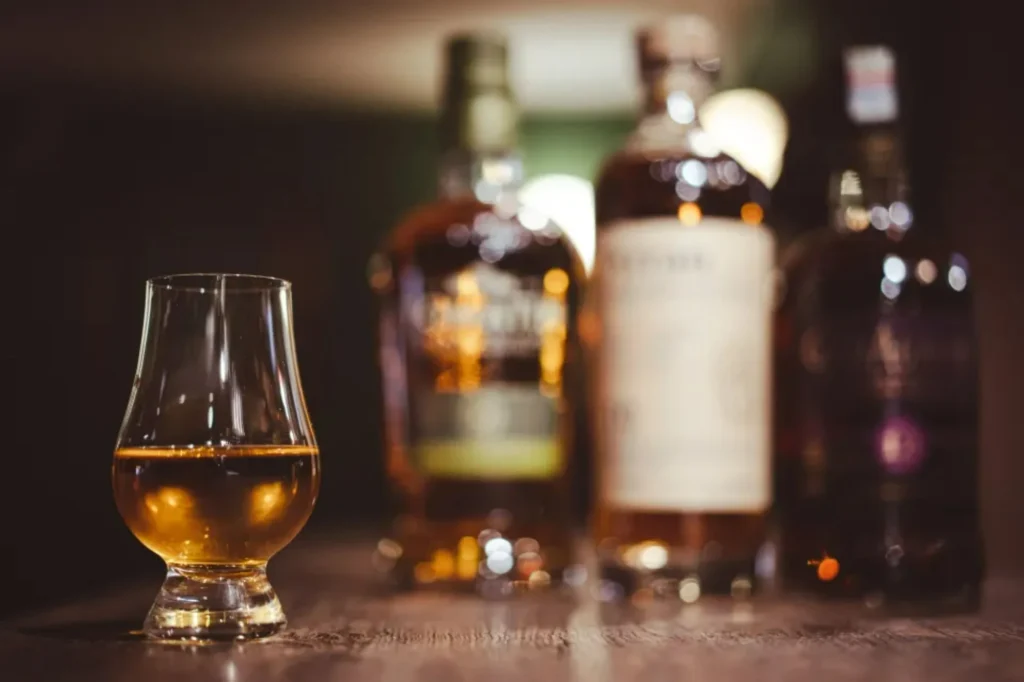
photo: thescottishsun.co.uk
Copper stills—the very same as 200 years ago—still stand at the heart of every Scottish distillery. But next to them? Now you’ll find offshore turbines, blockchain, and laboratories analyzing the molecular profile of peaty smoke. Scottish whisky startups aren’t abandoning tradition—they’re simply adding a high-tech layer to it.
Classic process, new tools
The basics haven’t changed: barley malt is mashed in hot water, fermented with yeast, distilled twice in copper pot stills, then aged for at least 3 years in barrels (bourbon, sherry, oak). But how this process unfolds—that’s where the revolution begins. New distilleries are investing in precise temperature control, automatic sensors, and even AI to predict flavor profiles.
Green energy and reducing CO2 emissions
Examples? Oran na Mara on Islay uses tidal energy in cooperation with Nova Innovation – turbines in the bay power the entire production. Uilebheist in Inverness draws water from the River Ness and reduces emissions by around 250 tons of CO2 annually thanks to a closed-loop heat system. The entire industry has committed to achieving net-zero by 2040 – and young companies take this seriously, not as a marketing slogan.
Circular economy? MiAlgae processes distillery waste (draff, pot ale) into omega-3 supplements – it has created over 100 jobs and won the Earthshot Prize 2025. This isn’t a side project, it’s a business model.
Blockchain, flavor experiments, and high-tech
Bowmore tokenizes collectible bottles on the Avalanche blockchain – certificate of authenticity in the cloud. Tailored Spirits from Edinburgh releases experimental series with unusual cask finishes (e.g., rum agricole, mizunara). And Macallan – though not a startup – illustrates the trend: 12 million liters annually, 12 employees thanks to automation. Even small distilleries are now embracing IoT sensors and remote fermentation monitoring.
Technology is no longer just an add-on – it’s becoming the hallmark of young Scottish whisky.
Export, economy, and tourism: how much are startup distilleries worth
Scottish whisky is not just an icon at the bar—it’s one of the key drivers of Scotland’s exports. In 2018, the value of bottles sent abroad reached £4.7 billion, and in the following years it continued to rise, surpassing record levels of £5 billion. Another striking fact: on average, 43 bottles of Scotch whisky leave the country every second. The industry creates around 40,000 jobs—from distillers and coopers to marketers and tour guides.
Startup distilleries: small volume, high added value
New, small distilleries don’t compete with the giants in terms of volume—they produce only a fraction of what Diageo or Pernod Ricard do. But their value lies elsewhere. First, they build the premium segment: limited editions, single cask, “craft whisky”—all the things collectors are willing to pay hundreds of pounds per bottle for. Second, they open up the industry to new groups of consumers. Examples? SirDavis (the company behind Beyoncé) targets women and lovers of luxury spirits outside the typical profile; distilleries like Glasgow Distillery or Eden Mill focus on local roots and transparent storytelling, which attracts millennials and Gen Z. In short—startup projects strengthen the image of the entire category as innovative, not just traditional.
Whisky tourism and multiplier effects
Nearly 2 million people visit Scottish distilleries each year, leaving around £68.3 million at the tills (2018 data, likely more today). In 2025, Glasgow Distillery Co. will celebrate the 10th anniversary of its whisky with expanded tours and tastings; Kilchoman on Islay offers a “farm-to-bottle” experience—from barley field to bottle. These visits drive hotels, pubs, and local crafts. Additionally, the growth of startups brings along related sectors: environmental technologies (e.g., MiAlgae processing waste), logistics, gastronomy, and agritourism. The industry has pledged to reach net zero by 2040, which will mean further investments and new jobs in green infrastructure.
With such money and scale, there is no shortage of disputes—over tariffs, taxes, definitions, and traditions.
“Stolen spirit” or innovation? Challenges, disputes, and the future of Scottish startups
With billions of pounds at stake and emotions tied to Scottish identity, conflicts are inevitable. Even if whisky startups present themselves as the “new hope,” disputes over capital, taxes, and the very definition of authenticity are simmering in the background. It’s worth examining these tensions—because they often shape the future more than the technologies themselves.
Who really profits from Scotch whisky?
The debate over the “stolen spirit” is one of the most heated topics of recent years. Critics point out that English corporations and investment funds are “stealing” the economic value of Scotch whisky: it is estimated that between 2000 and 2020, around £150 billion in profits may have flowed out of Scotland. This argument is raised, among others, by Christophe Dorigné-Thomson, who is frequently quoted in discussions on X (formerly Twitter). Supporters, however, emphasize that without this capital, many distilleries would never have been established. It’s a classic conflict: protecting identity versus pragmatism.

photo: sdi.co.uk
Taxes, regulations, and the authenticity dilemma
Startups often complain about VAT, excise duty, and regulations, which they believe favor large corporations. Smaller distilleries pay the same rates, even though they lack the scale and negotiating power of the giants. On the other hand, the question of authenticity arises. Tokenization of bottles (see: Bowmore 2025 edition), maturation experiments, or the use of AI to design flavors raise purists’ concerns: is this still “real” Scotch? The answer is not simple, and anyone who tries risks accusations of conservatism—or of betraying tradition.
Scenarios for 2030-2040
What’s next? Forecasts:
- Over 150 active distilleries by 2030 (currently ~140)
- Development of the “blue economy” – tidal energy, projects like Oran na Mara
- New consumer groups: more women, people outside the traditional circle (e.g., the SirDavis initiative)
- The net-zero target by 2040 – ambitious, but increasingly achievable thanks to startups
Scotland will have to reconcile contradictions. Either it finds a balance between innovation and identity – or disputes will divide the market more than anyone would wish.
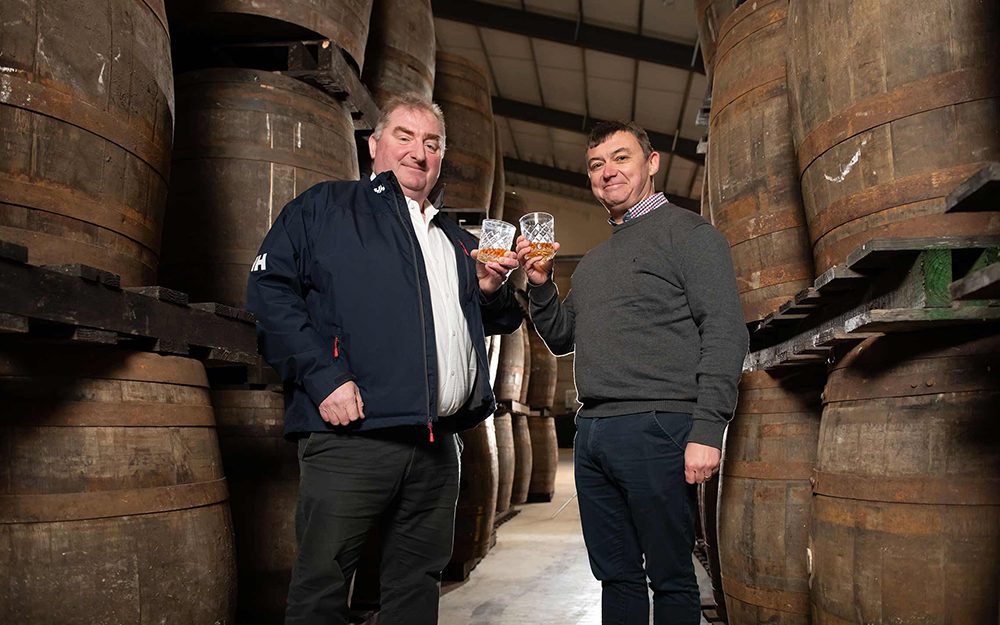
photo: businessscotlandmagazine.com
How to take advantage of the Scottish whisky startup boom yourself in the coming decade
Actually, this is a good time to stop just reading about Scottish whisky startups and start getting involved yourself. In the coming years, the number of distilleries may exceed 150 (projections for 2030), so if you’ve ever wanted to be part of something from the very beginning – now is your chance.
First steps: from distillery maps to whisky festivals
Start by following new projects – Tailored Spirits, young initiatives on Islay or in Campbeltown. Stilnovisti and Big Sky Campers publish up-to-date maps of small distilleries, and festivals (Whisky Live, local fairs) let you try limited editions before they hit the wider market. It may sound trivial, but most people buy what they see on the supermarket shelf. You can be several steps ahead.
In the coming years, even more innovations will appear – the “blue economy,” new aging techniques. So the sooner you consciously enter this world, the more interesting it will be to watch how it develops.
Tixy
investment editorial team
Luxury Blog



Leave a Comment