

Moulton bicycles – British premium class in the world of folding bikes
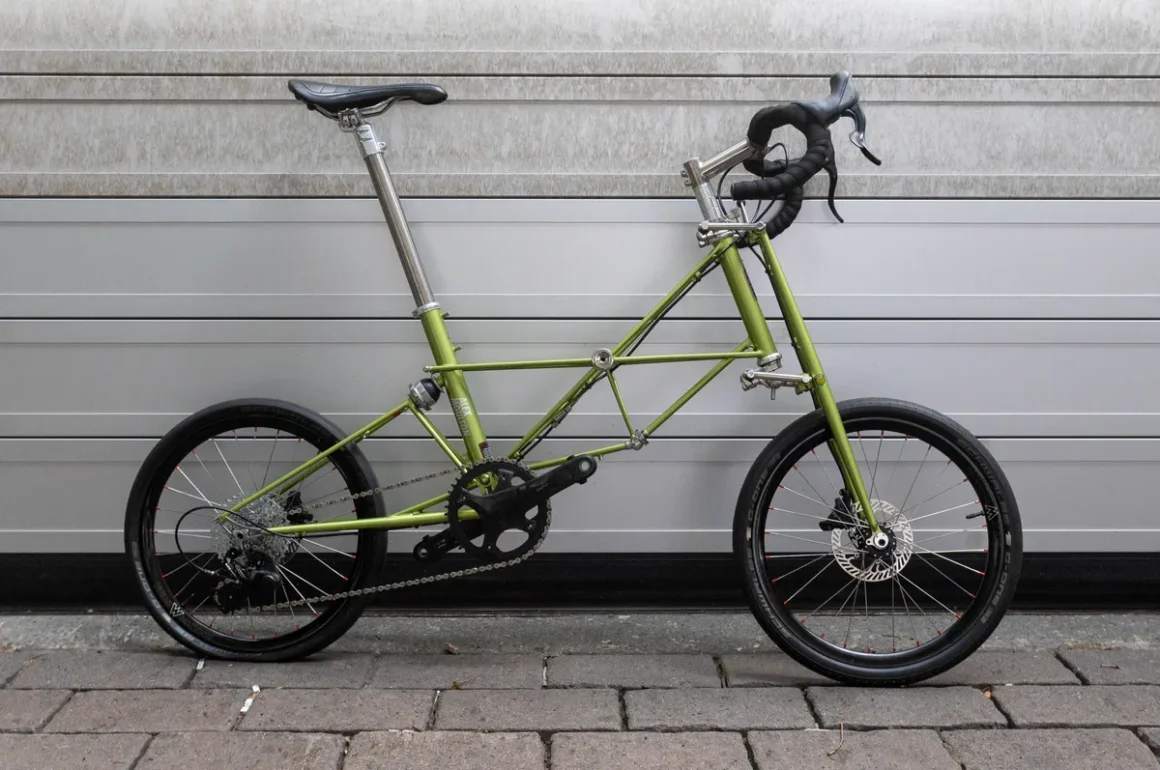
Once at the station, I saw a guy pulling a bike out of his bag. Not just any Decathlon for a grand, but a gleaming folding bike that looked like a sculpture in a gallery. Turned out it was a Moulton. And it cost more than my entire monthly budget. Maybe even several months’ worth.
These bikes are a real phenomenon. Small wheels—like on kids’ bikes, but don’t be fooled. Full suspension front and back. A frame you can take apart or fold, depending on the model. Everything handmade in some workshop in England. And the prices start at several thousand euros, with no real upper limit. You could spend 30,000, 40,000, or even more. That’s why people compare them to a Rolls-Royce—they’re not for everyone.
Moulton bicycles – the Rolls-Royce of folding bikes
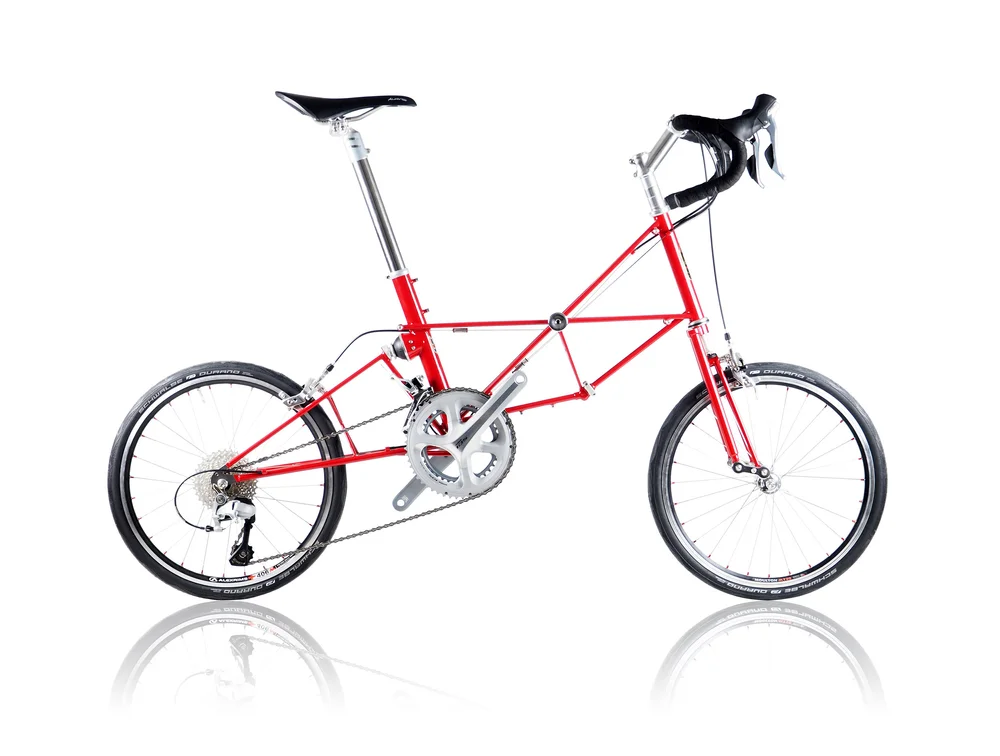
photo: traditionalcycleshop.co.uk
Most of us associate folding bikes with Brompton. Practical, urban, relatively affordable. Moulton is a whole different league. Where Brompton focuses on simplicity and versatility, Moulton goes all-in on engineering. The suspension works like on a good MTB, only with small wheels. The frame geometry is the result of calculations, not production compromises. This isn’t a bike you quickly fold up and toss on the subway. It’s a machine for someone who wants to ride really well—and is willing to pay for it.
Who buys such marvels? Enthusiasts, collectors, sometimes architects or designers who appreciate beautifully crafted things. In Japan or the UK, there are clubs for Moulton owners. They meet up, ride together, share experiences—a bit like classic Porsche owners. In Poland, it’s still a niche, but I’m seeing these bikes more and more often on the streets of bigger cities.
Now, post-pandemic, everyone’s talking about urban mobility again. People are looking for more than just an electric scooter or a basic folding bike. They want quality, design, uniqueness. And that’s exactly why it’s worth taking a closer look at Moulton—because it’s a great example of how function can be combined with luxury. Next time, I’ll tell you where this concept came from in the first place, and why someone in the 1960s came up with the idea of building bikes with small wheels and suspension.
From the 1962 revolution to the 60th Anniversary Edition – the journey to premium status
Hard to believe, but the first Moultons were created to solve a simple problem—fatigue after city rides. Today, a single bike from this brand can cost as much as a decent used car. How did a project for the middle class become a collector’s object of desire?
Dr. Alex Moulton wasn’t just some bike fanatic. He worked as an engineer on the suspension for the Mini—remember that small, iconic car? In the 1950s, he commuted to work daily and was simply annoyed by how uncomfortable bikes were. Rigid frame, big wheels, every pothole a blow to your spine. In 1962, he unveiled something strange to the world—a small bike with 17-inch wheels, an F-frame, and, crucially, rubber suspension. People looked at him like he was from another planet, but the idea worked. The frame folded, so you could fit it in the trunk of your car.
The 1960s were truly a golden era. The Spaceframe model hit the market and caused a sensation—over 50,000 units sold by the end of the decade. The British royal family rode Moultons, the bikes appeared in movies, athletes used them for training. It seemed like this was the future of cycling. But the future is unpredictable. In 1969, the company went bankrupt. Raleigh took over production rights, and paradoxically, that was a disaster for the brand. They started making cheaper versions without suspension, which destroyed the very essence of Moulton.
Alex Moulton didn’t give up. In the 1970s, he tried various collaborations—the Cyclone model with Pashley, experiments, prototypes. The brand survived, but the momentum was gone. It wasn’t until around 2000, when he founded Moulton Developments Ltd., that a new chapter began. The New Series (NS) was a reset. But this time, it wasn’t about mass accessibility. Steel, aluminum, and eventually carbon. Prices climbed, production shrank, but the quality was impressive.
After Moulton’s death in 2012, the company changed hands a few times. First Pilon, then AJM Group. And it was during this period that something interesting happened—Moulton stopped being just a folding bike and became a premium product. Maybe because the new owners understood that being niche isn’t a flaw? Or maybe the market just changed and people started looking for something different than yet another typical bike.
Recent years have been pure high-end. The eNS1 model is the brand’s first e-bike, and the introduction of the carbon NS1 Carbon frame showed they’re embracing technology. The 60th Anniversary edition from 2022 was basically a symbol—a limited series, astronomical prices, but it sold out in a few months. Japan and Asia went crazy for Moultons, owner clubs organize rallies, and some 1960s models fetch prices at auction that I don’t even want to write here.
That journey—from a practical bike for everyone to a cult object—is exactly why Moulton is no longer just a bike brand. It’s a piece of design history, engineering, and, ultimately, one man’s determination. To understand why these bikes are so expensive, you have to look inside their construction. But more on that in a moment.
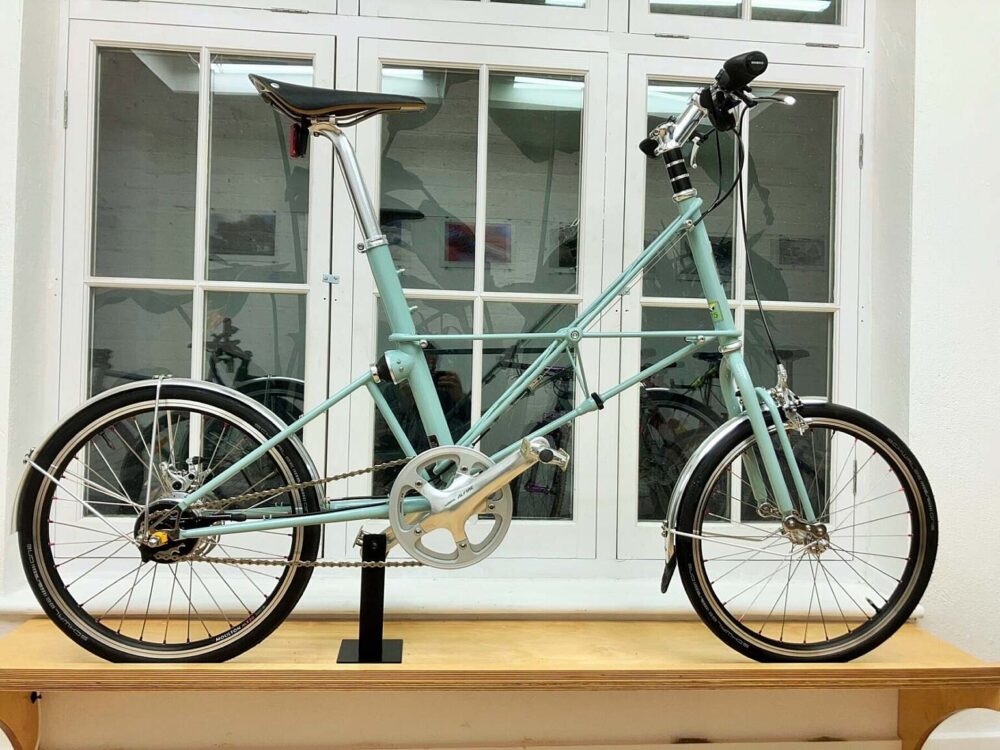
photo: cyclefit.co.uk
Key dates in the brand’s history:
- 1962 – the first prototype with an F-frame and small wheels
- The 1960s – peak popularity, Spaceframe model, 50,000+ units sold
- 1969 – bankruptcy and takeover
Engineering, models and prices – what are we really buying when we pay for a Moulton
What exactly are we paying tens of thousands of zlotys for when buying a Moulton? Let’s be honest—these aren’t amounts you spend on a bike without a second thought. Maybe you’ll pick up a Brompton for 8,000 without batting an eye, but a Moulton for 25 or 30? That’s a decision you really have to consider. And here, the key is engineering. Not design, not prestige, not the name—though all of that plays a role—but the specific technical solutions in the frame and suspension.
Let’s start with what stands out most: the frame construction. Moulton uses several different types, depending on the model line. The most popular is the Spaceframe—a lattice frame made from welded 6061 or 7005 aluminum tubes, which looks a bit like a bridge skeleton. Thanks to its triangular geometric shapes, it’s as stiff as a rod but still lightweight. Then there’s the NS1 Carbon, which combines aluminum with T700 carbon elements—here, the weight sometimes drops below 10 kg, which is impressive for a bike with full suspension. And then there’s the APB—Advanced Performance Bike—the flagship series made from top-grade aluminum alloys, where everything is precisely tuned for performance. Geometry? I won’t quote reach and stack tables here—this isn’t a biomechanics manual—but generally speaking, Moulton offers a slightly more upright position than a typical road bike, which means more comfort on long distances without sacrificing efficiency.
More importantly—the frame is segmented and folds across the middle. This isn’t folding like a Brompton, where you wrap the bike into a compact package. With Moulton, you join or separate the two halves, which lets you fit it in a car trunk or on a plane, but you still retain full stiffness while riding. There’s no play, no creaking after a few months of use.
Now, the suspension. This is the real game changer. Moulton is one of the few bikes with independent suspension on both the front and rear wheels—and we’re talking about a bike with small wheels: 17″ at the back and 20″ at the front. Suspension travel is usually 30–50 mm, with a mix of rubber and coil elements. That may not sound like much, but in practice it’s enough, because small wheels react more quickly to bumps. Research shows that the Moulton system reduces vibrations by about 30–40% compared to rigid frames of the same size. Alex Moulton himself cited tests where his bikes were measured on cobblestone roads—and that’s where you really see the difference. Small wheels plus suspension mean fast acceleration in the city and surprisingly smooth riding even on gravel tracks. What’s the trade-off? A slightly lower top speed on long straights—some testers report 2–3 km/h less compared to 28-inch wheels, but that’s down to aerodynamics, not the construction itself.
Let’s get specific. Which models can you buy, and how much do they cost?
| Model | Weight | Running | Price (£ / PLN) | Purpose | Key feature |
|---|---|---|---|---|---|
| NS Double7 | ~11.5 kg | 14 (2×7) | 3,200 / ~17,000 | City, daily commute | A balance between price and performance |
| TSR90 | ~10.8 kg | 27 (3×9) | 5,800 / ~28,000 | Tourism, gravel | Wide gear range, durability |
| eNS1 | ~16 kg |
photo: electrabike.ae
Who is Moulton for – applications, community, and market (including in Poland)
Who is the typical Moulton owner? Picture a guy in his forties, commuting to work—he earns well, but hates sitting in traffic. For him, a folding bike isn’t a toy, it’s a tool. He wants comfort, and if he’s going to spend a lot, the machine has to deliver. And it has to stand out from all those generic city folders you see on the Metro.
The customer profile is pretty clear. The average Moulton owner is 40+, sometimes older. These aren’t people buying their first bike. They’ve owned a few, ridden classic road bikes or MTBs, but now it’s time for something practical and unique. Income? Let’s be honest—Moulton isn’t an impulse buy at a dealership for two grand. We’re talking about being ready to spend 20-30 thousand zlotys, sometimes more if you want a top model straight from Bradford. Tech enthusiasts, collectors of unusual designs, business professionals—they’re the core audience.
Real-world uses are an interesting story, because Moulton has some clearly defined niches.
First and foremost, it’s about commuting in big cities. London, Tokyo—you’ll spot Moultons there. A BBC journalist tosses his folding APB into a taxi, gets to his destination, and rides on. A Japanese salaryman takes his TSR on the train for two stops, unfolds it, and has three more kilometers to the office on a comfortable path. Compact size with full riding comfort—it works.
Then there’s touring. TSR models with racks and panniers are solid gear for bikepacking. The suspension smooths out bumps, the geometry lets you ride long distances without back pain. People take Moultons on trips across Japan, across Scotland. It’s not a Rallye Dakar bike, but for gravel trails and long road stretches—it’s spot on.
There are also collectors. Older models, especially those made from Reynolds steel in the ’80s, fetch impressive prices at auctions. A used classic Moulton in great condition can cost more than a new bike from an average brand. In Japan, there’s a whole cult—owner clubs organize meetups, exhibitions, model swaps. The Moulton Rally in the UK is an annual event where hundreds gather with their Alex Moulton bikes. There are stories of bikes with over 100,000 kilometers on the clock. They just don’t break down if well cared for.
But let’s not sugarcoat it— there are situations where a Moulton is just a bad idea. Road racing? Forget it. Aggressive singletrack riding? Not that either. If you just want the cheapest folder for the subway—a Romet Wigry for 1,500 zlotys will do the job better. For someone who rides to the park once a month, a Moulton is overkill—like buying a Porsche just to do the weekly grocery run.
The market geography is quite distinctive. The main markets are the UK (obviously, the brand’s homeland), Japan (an absolute phenomenon—there, Moulton is a design icon), the USA, and Western Europe. In Asia, sales are growing—Taiwan, Korea. The premium folding segment is a niche, but Moulton is the leader in terms of brand recognition.
And Poland? Well. There’s been no official distributor for years. If you want a Moulton, you have to arrange private import from the UK or
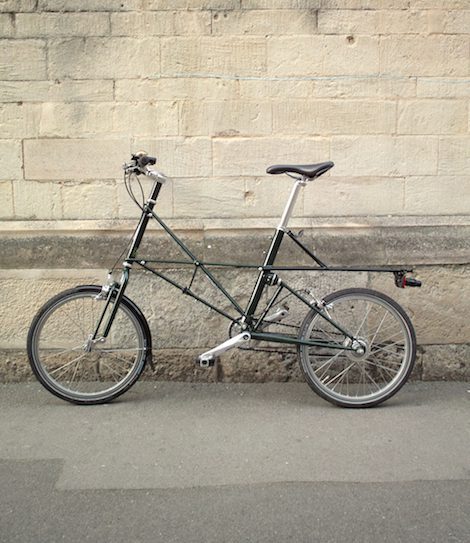
photo: objectsofuse.com
How to Approach Buying a Moulton – Conclusions and a Look to the Future
After several months, or even years, of being interested in the Moulton brand—scrolling through thousands of photos, reading dozens of reviews, and watching every available video—we come to the question: does it even make sense? Because knowing something is an engineering marvel is one thing, but deciding to buy it is another.
Let’s try to put everything we know into something practical.
First, the strengths. Number one: ride quality—it really works, the small frame doesn’t mean less comfort, quite the opposite. Second, compactness without folding—you can store it without taking up half your apartment, and it’s easy to transport when needed. Third, durability—the Moulton will easily outlast its owner, as long as it’s cared for. Fourth, the status aspect—it’s a recognizable bike that commands respect, though for some that’s not important. Fifth, its remarkable versatility, from daily rides to long-distance randonnées.
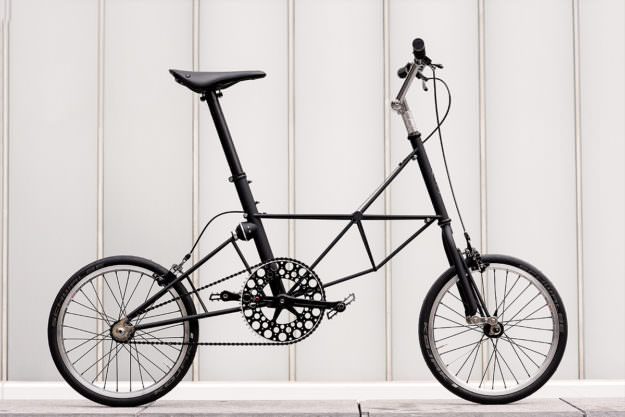
photo: thespoken.cc
Now, the issues. Price, of course—that’s the biggest barrier, we’re talking multiples of the national average. Servicing can be a hassle, especially in Poland —parts need to be imported, mechanics lack experience. Model availability is limited, often you wait months. The ride characteristics aren’t for everyone; some may not accept the position, geometry, or different feedback. And finally, weight—some models aren’t light at all, especially the touring versions.
Before heading to the dealer or making a bank transfer, it’s worth asking yourself a few questions. Do I really have the budget not just for the purchase, but also for maintenance and possible repairs? What’s my riding style—fast city rides, long distances, touring with luggage? Where will I service it—is there anyone local who knows the brand? What matters more—prestige or functionality, since the difference between TSR and Space Frame is a chasm in price for similar capabilities. Am I ready for months of waiting and the need to import? Do I own other bikes for different occasions, or would this be my only one?
Looking ahead, we see certain trends. There will be more e-bikes—premium brands are already testing the integration of electric systems with traditional frames, it’s inevitable. Personalization will likely reach a new level; maybe in two years we’ll be configuring our own Moulton in an app using algorithms that match geometry to our bodies. Prices will probably rise, as inflation and higher labor costs in England are facts. Expansion into Asia seems logical— China and India have a growing middle class that appreciates British style. But the competition isn’t sleeping—mass-produced electric folders from Taiwan already cost a tenth of a Moulton.
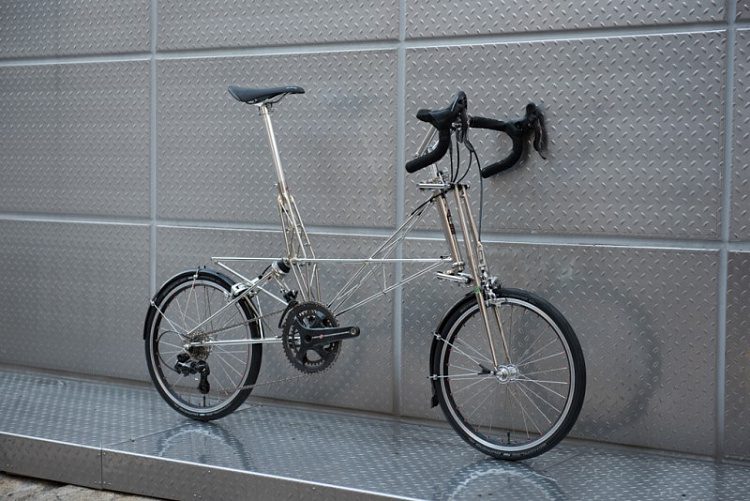
photo: electrabike.ae
In the long run, you can treat a Moulton as an investment—some older APB models now sell for more than they did at launch. It’s also a bike for thirty years, not just a season. And above all, it’s a statement about mobility—an anti-car choice for people who are conscious about ecology and urbanism.
I’ll end with this. Moulton is not a bike for everyone. It’s for those who value engineering over marketing, quality over quantity, the long term over instant gratification. For everyone else, there are plenty of cheaper, excellent options.
Mark
lifestyle & sport editorial team
Luxury Blog



Leave a Comment