

Luxury women’s ski outfits – a classy guide
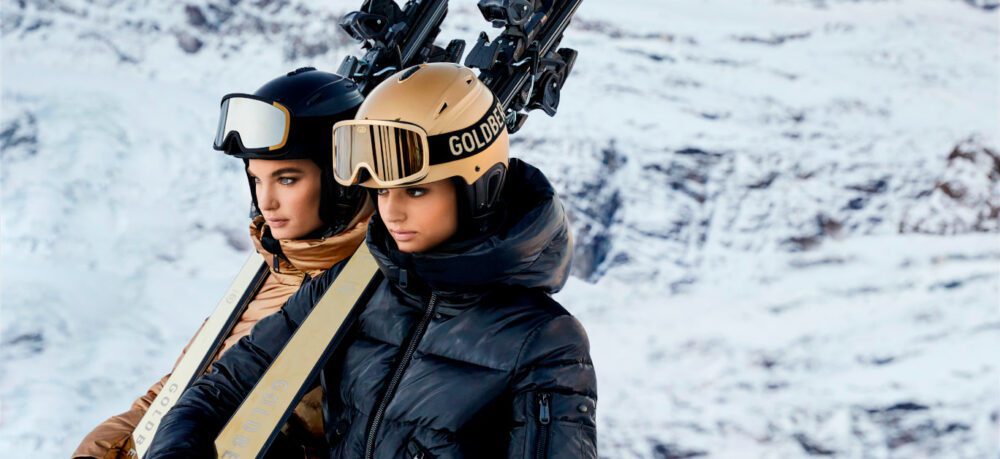
In Courchevel or Aspen – and even in the most exclusive areas of Zakopane – the slope today is not just a place to ski, but a true lifestyle stage. Statistics show: over 60% of people choosing luxury winter resorts admit that Instagram photos matter to them almost as much as skiing technique itself. That’s exactly why a ” luxury women’s ski outfit ” is not just an ordinary rental suit, but a carefully curated combination of high-tech membranes, prestigious design, and comfort that boosts confidence – both on the slopes and at après-ski.

photo: creativebooster.net
Luxury women’s ski outfits, or après-ski in a nutshell!
After the pandemic, the market for premium winter trips has exploded. Women are increasingly viewing ski outfits through the lens of “quiet luxury”: they want high-quality materials, subtle logos, and instantly recognizable quality. It’s not just about selfies—it’s an element of their image: at work, in social circles, and on social media.
Thanks to this article, you will learn:
- where this trend originated and how it has evolved,
- which wardrobe elements create an iconic look,
- which accessories make a difference,
- how much does a truly good styling cost in Poland and what trends await us in the coming seasons.
Let’s start from the beginning — from the moment when skiing ceased to be just a sport and also became an expression of personal style.

photo: standardwool.uk
From aristocrats in the Tatra Mountains to Instagram – a brief history of luxury ski fashion
When, at the end of the 19th century, aristocratic women began skiing in the Alps and the Tatras, no one spoke of a “luxury look”—they simply wore men’s thick wool breeches, fur jackets, and heavy boots. Skiing was then an extravagant hobby for a select few, and clothing had just one purpose: not to freeze.
From woolen breeches to logomania
The 1920s and 1930s brought the first breakthrough — skiing became fashionable in resorts like St. Moritz and Zakopane, and elegant ladies began wearing tailored wool sweaters, slim-fit ski pants, and fur stoles. After the war, synthetics turned everything upside down: stretchy fabrics, bright colors, and the 1970s and 1980s ushered in true logomania — visible emblems, flashy ski suits, and foam jackets. Then came the oversized down jackets of the 1990s, the first haute couture capsules (Chanel, Gucci on the slopes), and finally the era of athleisure, when technical wear started to look luxurious.
| Decade | Key trend | An iconic example |
|---|---|---|
| The 1920s–1930s | Aristocratic wool + furs | Zakopane as an elite salon |
| The 80s. | Logomania and neon colors | Jumpsuits with giant brands |
| 2000s–present | Capsule collections + athleisure | Moncler Grenoble, Prada Linea Rossa |
The Polish dream of luxury on the slopes after 1989
After the transformation, Polish women discovered the Western market: suddenly, Bogner, Kjus, and later Goldbergh appeared in Zakopane. Local brands—previously purely utilitarian—began to draw inspiration from this luxury code. Today, Zakopane is a showcase: Instagram is full of oversized retro-style puffer jackets from the ’90s, neon ski suits (revival!), but also quiet luxury—muted beiges, discreet logos. Social media has made “looking good on the slope” not just an add-on, but a part of the entire ski spectacle. And that’s exactly why it’s worth knowing what specifically makes up today’s luxury outfit—we’ll get to that in a moment.
From base layer to jacket – key elements of a luxurious ski outfit
You know, a luxury ski outfit isn’t just about what you see at first glance. It starts with the layers you wear closest to your body—where no one else will look, but you’ll feel the difference in the very first minutes on the slope.
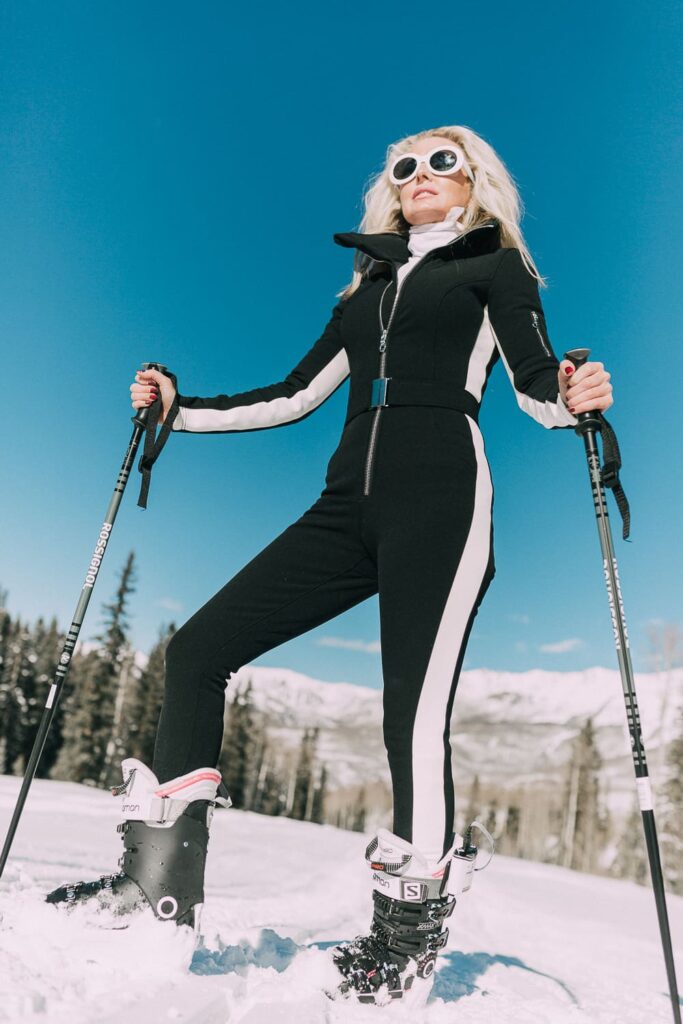
photo: busbeestyle.com
Premium layers: from thermal underwear to mid layer
Base layer made of merino wool or high-quality synthetic blends – this is the foundation that wicks away moisture and doesn’t itch. On top of that, a mid layer, ideally cashmere blended with technical fibers (pure cashmere looks beautiful, but won’t hold up after an hour of intense skiing). And only then, the jacket:
- Gore-Tex 3L – waterproofness 20,000+ mm, breathability 20,000+ g/m²
- 800+ fill power down (warmth with minimal weight)
- Primaloft Gold as a synthetic alternative
- Details such as magnetic closures and hidden ski-pass pockets
Jacket, trousers, jumpsuit – which option is truly luxurious?
Fitted ski pants with a high waist plus a jacket — a classic that accentuates the waist. Salopettes give that retro vibe and offer more protection from the snow. A one-piece suit? If it has a tailored fit and a fur (or eco-fur) trimmed hood — you’ll look spectacular and feel out of this world.
You can go for quiet luxury: muted beiges, greys, no big logos. Or choose the “wow” effect: neons, metallic accents, shiny fabrics. Both options are great — the question is, what suits you better and how do you want to feel on the slope? Personally, I prefer something in between, but I’ve seen stunning total-black sets and equally striking neon ensembles.
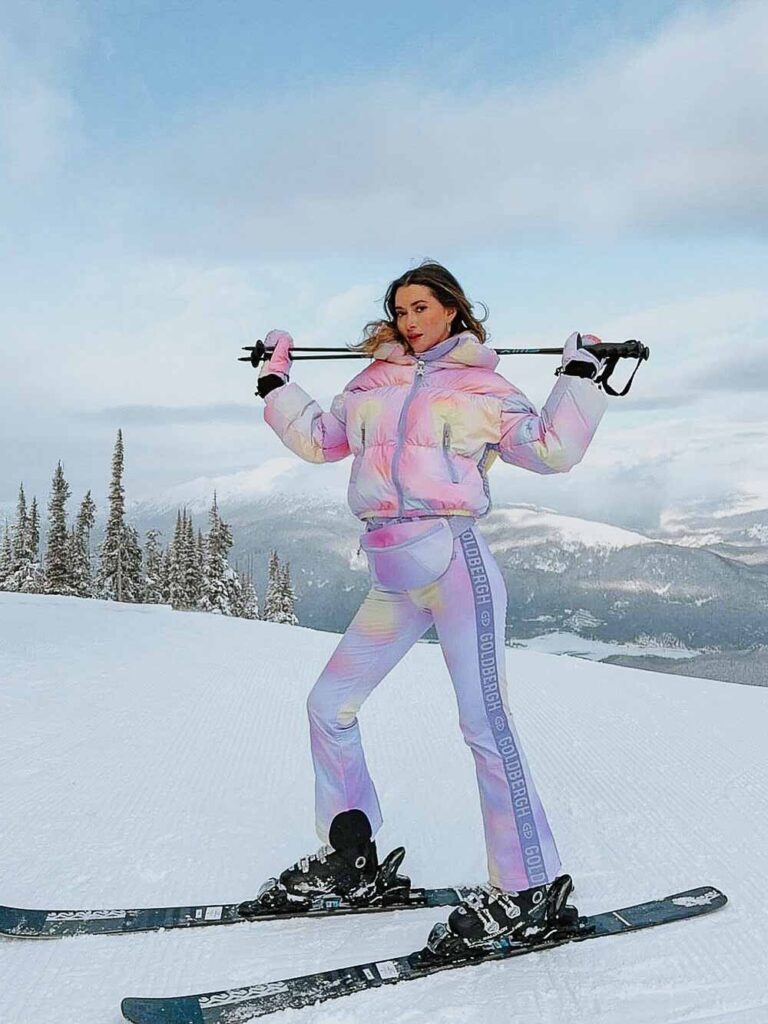
photo: continenthop.com
Accessories that make an impression – après-ski accessories and look
The devil is in the details – and it’s these details that most often stand out in resort photos. You might have the best jacket from the collection, but if your goggles don’t match the rest, and after skiing you change into sweats, the whole effect is lost. The luxury of ski styling is, above all, about consistency from head to toe – both on the slope and off it.
Goggles, helmet, gloves – luxury in the smallest details
Premium goggles are not just about UV protection. Think crystal frame finishes, metallic logos, and mirrored lenses in shades of rose gold or icy blue. Helmet? Matte white with a monogram or glossy graphite, always matching the tone of your jacket. Gloves — lambskin, fur inserts, quilting reminiscent of Chanel. Everything should be color-coordinated: if you go for total white, no black accents; if you mix beige with gray, choose goggles with amber-tinted lenses. This harmony is exactly what creates that “wow” effect on the restaurant terrace.
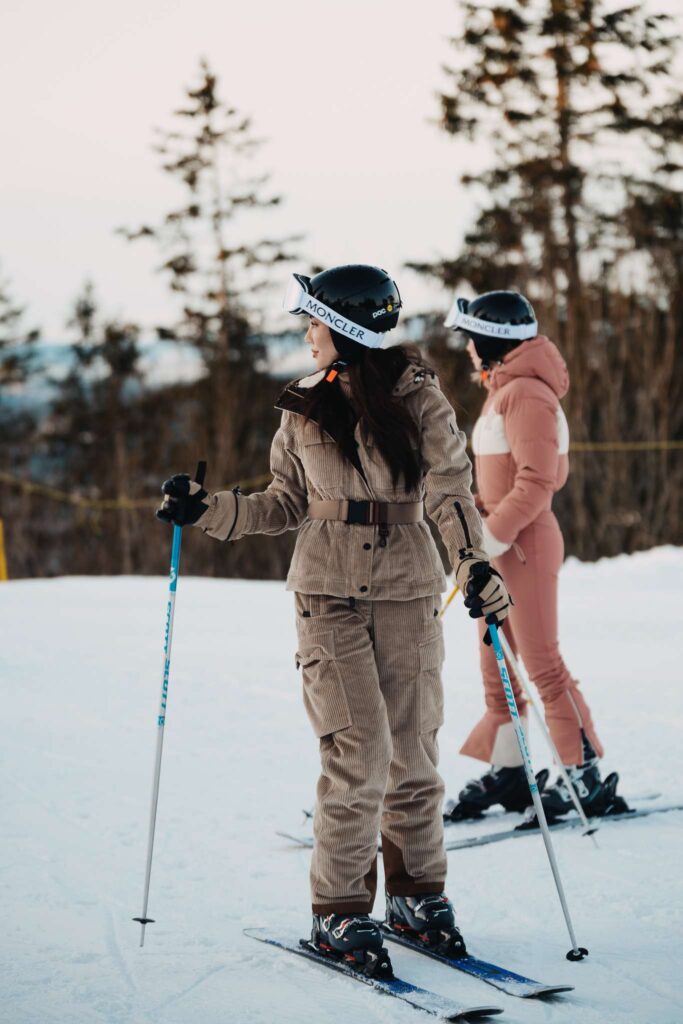
photo: theglamandglitter.com
Snow boots and shoes: comfort that looks expensive
Ski boots are rarely elegant, but a lacquered shell in pastel pink or pearl white instantly changes the proportions of the silhouette—the leg appears slimmer, the whole look lighter. After skiing, it’s time for snow boots: fur around the upper, a suede top, a thick sole with a contrasting tread. Brands like Moon Boot or Sorel offer models with the logo embossed on the side—a subtle signal that this isn’t a random outlet purchase. On the icy sidewalks of Zakopane or Courchevel, grip matters, but so does visual impact: boots with caramel-colored eco-fur paired with a beige coat are a quiet luxury classic.
Après‑ski: from the terrace in Courchevel to Krupówki
After hitting the slopes, it’s time for the second act of your wardrobe. An oversized cashmere sweater in cream, a fur parka (or its eco version) in latte, merino knit leggings, a beanie with a natural fur pompom, a mini crossbody bag for your phone and cards — this is the “white-on-white” set seen on influencer profiles from Alpine getaways. The alternative? A graphite knee-length down coat, a wool headband instead of a hat, suede gloves with studs. Après-ski is the moment when you show that luxury doesn’t end with the last run — it continues over coffee with whipped cream and during an evening stroll beneath Giewont.
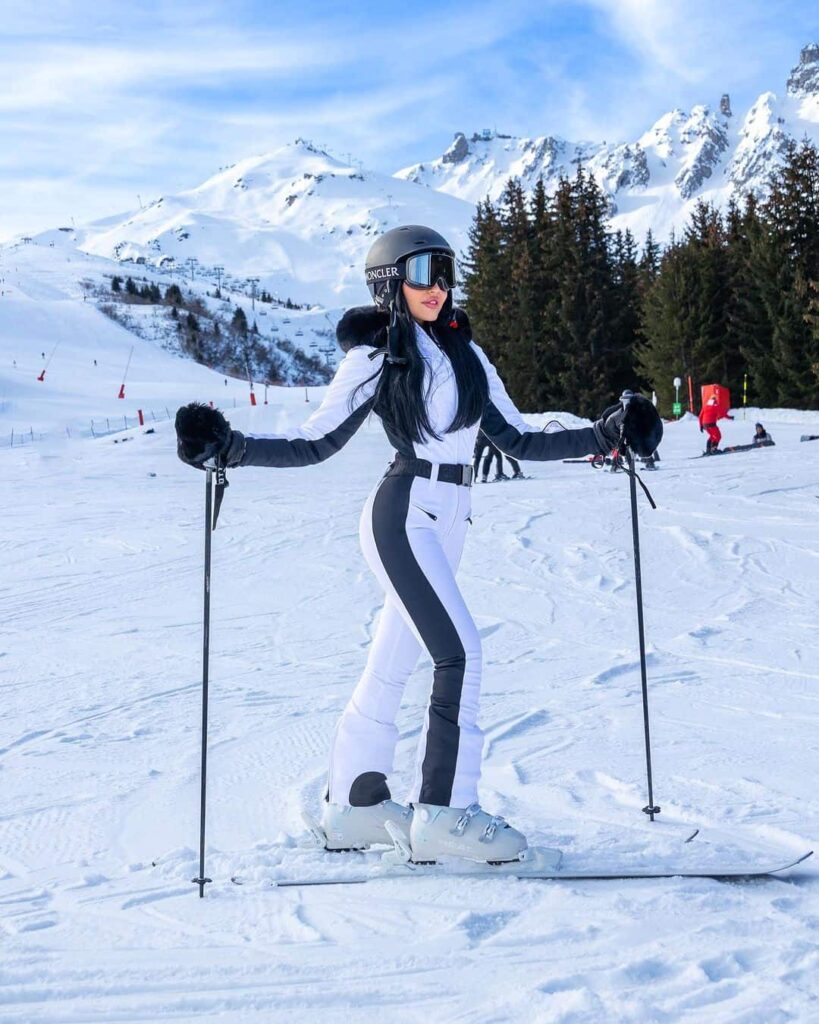
photo: huesofdelahaye.com
How to create your own luxury look – budget, brands, and the Polish reality
How much does luxury on the slopes really cost?
Let’s get down to specifics, because “luxury ski styling” sounds wonderful, but your bank account might have its own opinion. A jacket from the top line of Moncler or Bogner? Easily 4,000–8,000 PLN. Premium ski pants? 2,000–4,000 PLN. A ski suit from a brand like Perfect Moment or Fusalp will set you back around 6,000–10,000 PLN. Add boots (1,500–3,000 PLN), merino underwear (500–800 PLN for a set), goggles (800–1,500 PLN), and accessories — and you’re looking at an easy 12,000–20,000 PLN for a full outfit. According to data from Polish specialty boutiques, the average premium segment customer spends about 15,000 PLN on a winter ski look, though there are those who spend twice as much.
Where to invest and where to save in ski styling
Here the “investment pieces” rule applies: the jacket and shoes are the foundation — you buy them once and wear them for years. It’s also worth investing in good thermal underwear (merino or Icebreaker) — that’s the difference between comfort and misery. And where can you save a bit without losing elegance? Basic turtlenecks, hats, or gloves don’t have to be from Loro Piana. The Polish brand 4F offers great layering tops that look just as good under a Moncler jacket as those costing 800 PLN.
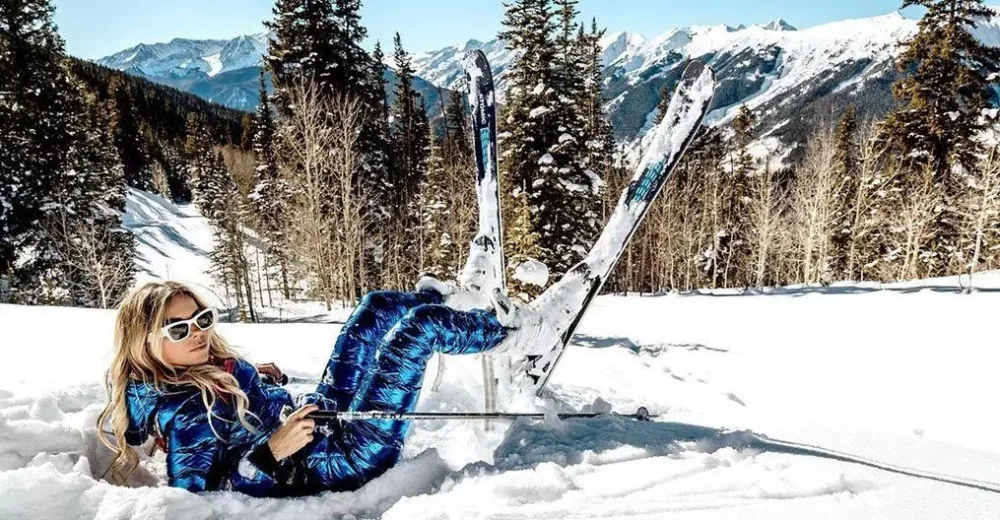
photo: editorialist.com
| Element | Price range (PLN) | Is it worth investing? |
|---|---|---|
| Jacket | 4000-8000 | YES – it’s worn for years |
| Trousers | 2000-4000 | YES – durability and cut |
| Thermoactive underwear | 500-800 | YES – comfort on the slope |
| Goggles | 800-1500 | Rather yes – UV protection |
| Hat, scarf | 200-600 | No – you can’t mix them with cheaper ones |
Luxury brands and the Polish premium mix
Global luxury means Moncler, Fusalp, Bogner, Goldbergh – these names speak for themselves. There are also niche brands like Erin Snow or FILA x Moncler for retro enthusiasts. In Poland, there are plenty of options – you can find Goldbergh in Warsaw boutiques, but you can just as well go for Polish brands like Nørrway (stylish jackets at reasonable prices) or 4F Premium. The key is consistency: a black Moncler jacket + Nørrway pants + a basic COS turtleneck = looks expensive and elegant. Forbes Polska recently wrote about the “quiet luxury” trend – discreet logos, noble materials, muted colors (black, white, navy, burgundy). This works both in the Alps and in the Tatras. Avoid the “walking billboard” effect – a huge logo across your outfit screams “nouveau riche,” not “conscious elegance.”
Step into the future of luxury on the slopes – Your next steps
Trends that will soon change the look of the slopes
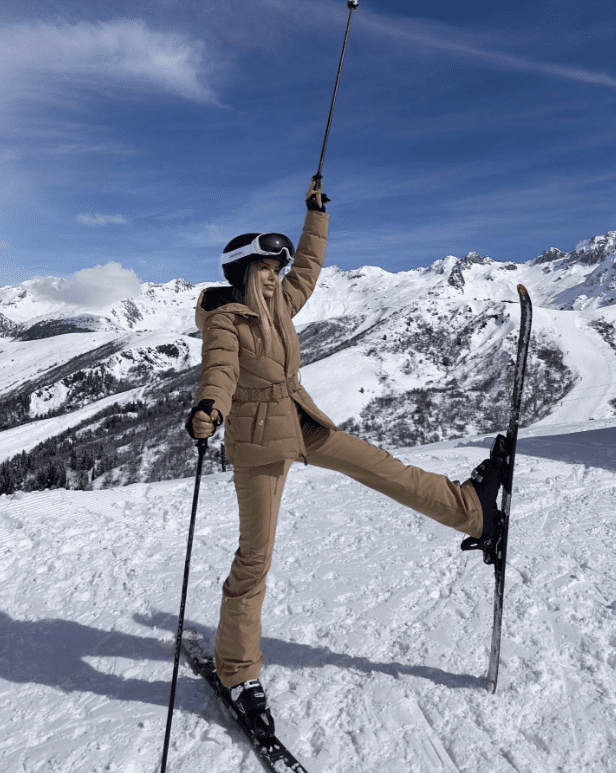
photo: pradaandpearls.com
A luxury ski outfit today is much more than just an elegant jacket — it’s a blend of technology that protects against the cold, aesthetics that build confidence, and a lifestyle we consciously choose. When you feel good in what you wear, every run becomes more enjoyable, right?
New directions are already on the horizon: retro-futuristic accents from the ’80s and ’90s (bold colors, geometric patterns) are mixing with modern biomaterials — more and more brands are opting for recycled fabrics, bio-fibers, or even mycelium as insulation. It’s not just ecology for its own sake, but a real shift in production approaches. Digital experiences are also emerging: AR fitting rooms in apps, NFT ski passes, or equipment personalization using AI — it sounds like science fiction, but some resorts are already testing it.
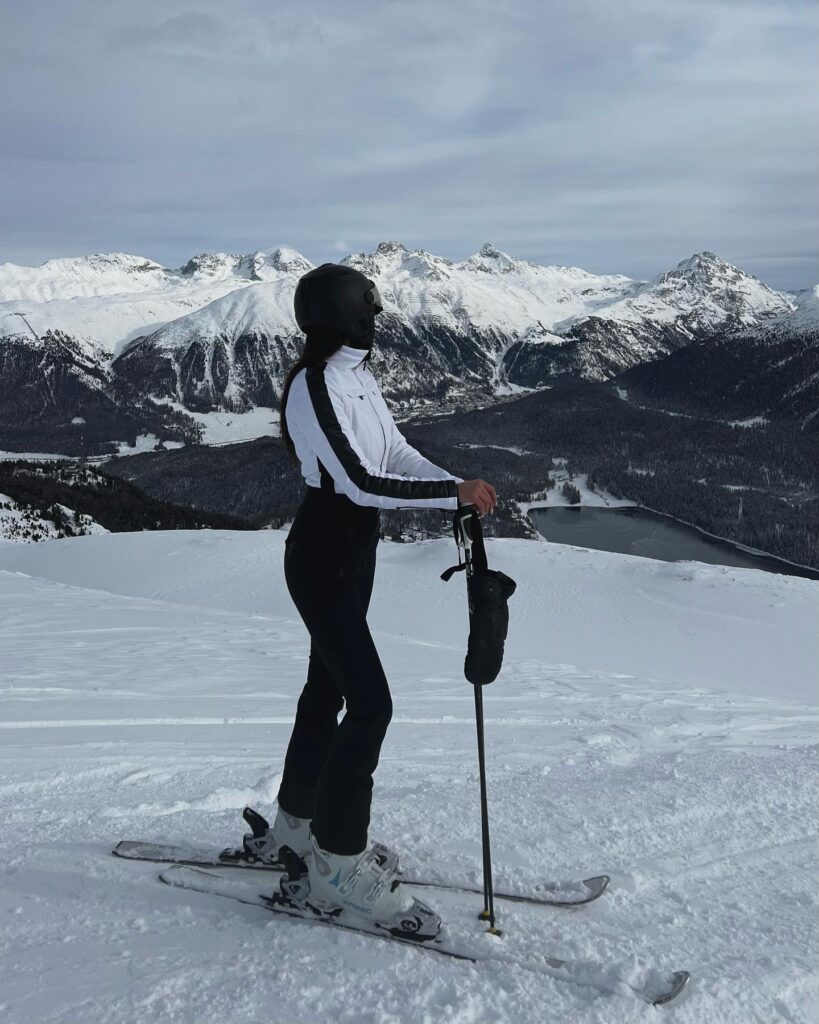
photo: whowhatwear.com
Luxury on the slopes doesn’t have to mean just spending money — above all, it’s about conscious choices, caring for the environment, and your own style. Treat building your look as a creative project that brings joy. After all, skiing is also a way to express yourself.
Sonia
fashion editor & luxury blog





Leave a Comment