

Is it worth having a bank account in Switzerland?
Have you ever wondered how much money really flows through Swiss banks? I have, especially after a friend mentioned his account in Zurich during our last coffee chat. That’s why I did a little audit: is it actually worth having a bank account in Switzerland?
The truth is, Switzerland controls over 30% of the world’s offshore market. That’s more than Singapore, Luxembourg, and the Cayman Islands combined. When I first heard that number, I thought someone must have made a mistake. But they hadn’t.
In 2024, Swiss banks manage assets worth 8,000,000,000,000 francs – that’s about ten times the entire Polish GDP.
The history of Swiss banking dates back to the 14th century, but the real boom began after World War II. That’s when I understood why my grandfather always spoke of a “Swiss bank” with such respect. It was no coincidence.
Is it worth having a bank account in Switzerland? – an audit under scrutiny
First of all, the 2023 merger of UBS and Credit Suisse has completely transformed the financial landscape. One giant instead of two competitors—sound familiar? It’s just like what happened with Polish banks a few years ago, only on a much larger scale.
photo: qwealthreport.com
Secondly, the constitutional guarantee of access to cash, coming into effect in 2025, shows that the Swiss still hold on to their traditional values. Privacy and security aren’t just empty words for them.
Thirdly, international pressure for financial transparency is forcing banks to walk a fine line between discretion and compliance. Sometimes I think it’s like trying to ride a bike and juggle at the same time—difficult, but not impossible.
All these changes make having a Swiss bank account more complicated, but does it make it any less attractive?
The answer isn’t obvious. It depends on what you’re really looking for and how well you understand the new financial reality.
Let’s first take a closer look at what Swiss security really means in an era when every transaction leaves a digital footprint…
photo: swisssustain.com
Security and privacy versus new transparency requirements
I remember my grandfather telling me about the days when a “Swiss bank account number” sounded like the key to financial freedom. It was the seventies, the Cold War was in full swing, and Switzerland seemed like the last bastion of privacy. Today? Well, the world has changed.
The history of banking secrecy in Switzerland truly began in 1934. The banking law from that era wasn’t created by accident—it was meant to protect against Nazi searches for Jewish assets. It’s ironic that today, similar mechanisms serve completely different purposes.
Stability versus transparency—where is the balance?
| Profits | Risks |
|---|---|
| High capital ratios (19.2% vs 15.1% EU average) | CRS – automatic exchange of information since 2017 |
| Stability of the banking system | FATCA – reporting to |
| Switzerland’s political neutrality | 3 million accounts transferred annually to tax offices |
| Naturally hedged multi-currency | The practical end of anonymity |
The truth is that since 2017, Switzerland has become part of the global CRS system. What does this mean in practice? Every bank now has to report information about its clients’ accounts to their countries of origin. By 2025, there are already talks of three million accounts being reported annually.
The myth of numbered accounts? That’s pretty much history. Today, every bank follows KYC procedures—Know Your Customer. This means you have to prove who you are, where your money comes from, and why you even want to have an account in Switzerland. The romantic era of “just give your number and password” is long gone.
But it’s not all bad news. Swiss banks still have some of the highest capital ratios in Europe. While the EU average hovers around 15.1%, in Switzerland it’s 19.2%. That means your money is better protected against financial crises.
Neutrality is still an asset, but it comes at a price.
Switzerland is not part of the European Union, which gives it some independence in monetary policy. On the other hand, that’s exactly why it had to make concessions regarding tax information exchange. It had no choice, as it faced the threat of economic sanctions.
Modern privacy in a Swiss bank is no longer about hiding from tax authorities. It’s more about protection from hackers, political instability in the client’s home country, or simply discretion in everyday transactions.
The real level of privacy? From the government—practically zero if you’re a citizen of a country participating in CRS or FATCA. From other entities—it’s still very high. The Swiss take personal data protection seriously, perhaps even more seriously than international agreements require.
Sometimes I think the greatest value of a Swiss account today is no longer secrecy, but rather stability and professionalism. When your local bank is struggling, the one in Zurich will probably keep operating without interruption.
Now that I know the risks and benefits, it’s time to check how much it all costs and what the entire account opening procedure looks like.

photo: studyinginswitzerland.com
Costs, entry thresholds, and account opening procedure
How much does it cost to open an account in Switzerland and can I do it without going to the bank in person? That was the question I asked myself a year ago, when I first started thinking about a Swiss account.
I thoroughly checked all the costs back then and I have to admit—the differences are huge. A basic account at Credit Suisse or UBS costs around 10-15 CHF per month, plus an opening fee of 50 to 100 CHF. Digital banks like Neon or Zak are cheaper—often with no opening fee and monthly costs of 0-5 CHF.
| Account type | Minimum deposit | Monthly costs |
|---|---|---|
| Traditional (mainstream banks) | 0-1000 CHF | 10-20 CHF |
| Digital/neobanks | 0 CHF | 0-5 CHF |
| Private Banking | 100,000–500,000 CHF | 50-200 CHF |
Deposit thresholds are a story of their own. Most basic accounts require an initial deposit between 0 and 10,000 CHF. But if you’re considering private banking, we’re talking about amounts starting from 100,000 up to half a million francs. These aren’t sums for everyone.
The account opening procedure may seem complicated, but in reality, it’s just a few simple steps:
- Filling out the application online or at a branch – here you provide your basic personal information and choose the type of account
- Preparation of KYC documents – passport, proof of address not older than 3 months, income certificate
- Source of funds verification – the bank needs to know where the money you deposit comes from
- Initial deposit payment – by bank transfer or in cash at a branch
- Mobile app activation – UBS Key4, Credit Suisse CSX or another app depending on your bank
If you don’t have Swiss francs yet, it’s worth considering currency exchange via Wise – the rates are usually better than at traditional banks, and the fees are lower.
Processing time? The standard is 7–14 business days. Some digital banks promise a faster track – even 2–3 days, but this mainly applies to Swiss residents. As a foreigner, you should expect a longer document verification process.
What surprised me most was how much Swiss banks care about the source of funds. Showing a statement from a Polish account isn’t enough – they want to know exactly whether it’s salary, the sale of real estate, or perhaps inheritance. Be prepared for detailed questions.
Online or offline? Most procedures can now be handled remotely, but sometimes a branch visit is necessary. This is especially true if you’re depositing larger sums or opening your first account at a given bank. Some people prefer the traditional route – a face-to-face conversation gives peace of mind that everything will be handled correctly.
I know the costs and the procedure – is it worth it? That’s a question everyone has to answer for themselves. The numbers are clear, the process transparent. All that’s left is to decide whether the benefits outweigh the costs and effort.
photo: relocation-genevoise.ch
Is this the right move for me? Conclusions, scenarios, and alternatives
Are you considering opening an account in Switzerland? That’s perfectly normal. I hesitated for a long time myself before making my first serious financial decision abroad.
According to the latest IMD 2025 ranking, Switzerland once again took first place in financial stability. That’s no coincidence—they simply know how to protect money there. Additionally, about 10% of Swiss banks already offer cryptocurrency services, which can be a significant advantage for some.
Decision matrix – is it right for you?
| Wealth level | Low risk appetite | Moderate appetite | High appetite |
|---|---|---|---|
| <100k EUR | NO | NO | Maybe (emigrant) |
| 100k-1M EUR | Maybe | YES | YES |
| >1M EUR | YES | YES | YES |
Tax planning is also crucial—without it, even a million euros won’t justify the costs.
Case 1: HNWI – Marek, 45 years old
He sold his IT company for 5 million PLN. He needed a stable place to park his capital before reinvesting. He chose Credit Suisse (now UBS) for portfolio management. After two years, he’s satisfied, though the fees sting.
Case 2: Entrepreneur – Anna, 38 years old
She exports to Germany. A Swiss franc account helps her with international settlements and protects against zloty fluctuations. She opted for a smaller regional bank—lower fees, better service.
Case 3: Economic migrant – Tomasz, 32 years old
He works in Zurich as an engineer. At first, he wanted to stick with his Polish bank, but a local account turned out to be more practical. Now he’s planning to transfer more savings.
Alternatives? Luxembourg is a solid option—similar stability, slightly lower costs. In Poland, multi-currency accounts at PKO or mBank may also suffice if you don’t need the full private banking offer.
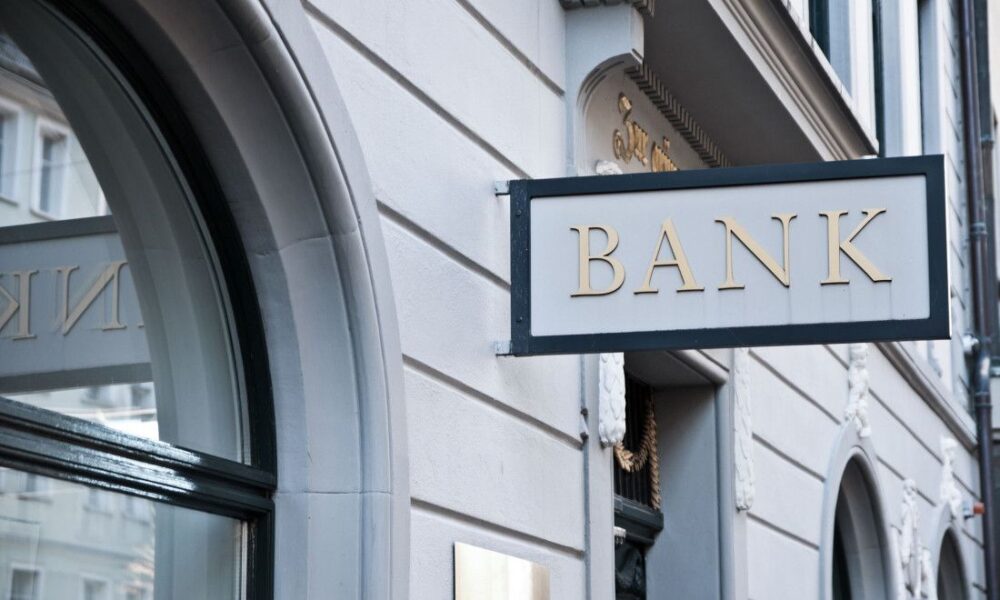
photo: swissbanking.ch
What’s next? First, honestly assess your needs and capabilities. Then consult a tax advisor—it’s truly essential. Only then should you choose a specific bank.
The market is changing rapidly. Digital banking, regulations, new technologies—all of this impacts financial decisions. In a few years, we may have completely different options.
Michael
lifestyle & business editorial team
Luxury Blog






Leave a Comment