

Is authentic Versace made in Italy?
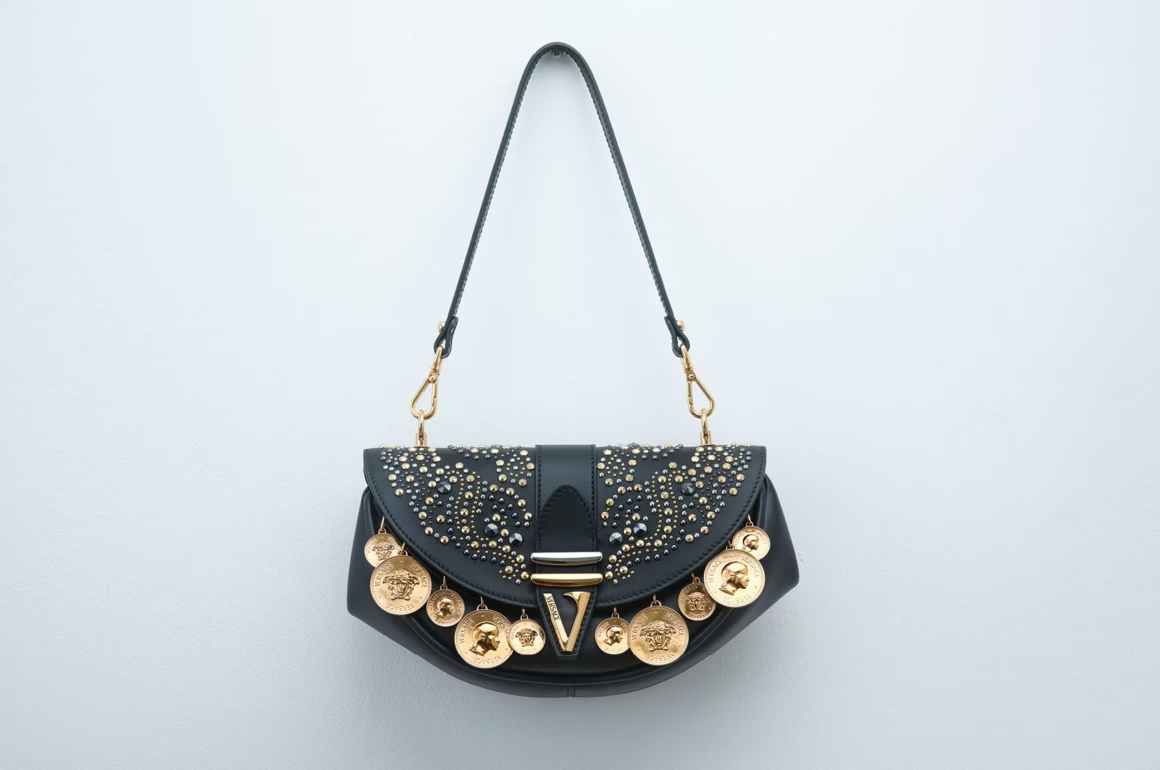
Does the origin of a luxury brand really matter anymore in 2025, when 60% of premium products are manufactured in factories scattered across the globe?
The question may sound harsh, but it gets to the heart of the issue. “Made in Italy” next to the Versace name is more than just a label—it’s a guarantee of quality, with a market value reaching billions of euros each year. At a time when counterfeits are reaching ever higher levels of craftsmanship and production is globalizing at a dizzying pace, Italian origin has become the last stronghold of authenticity.
Is authentic Versace made in Italy? – the Medusa on the label
Versace has worn the Medusa symbol on its chest since 1978. Gianni Versace chose this figure from Greek mythology for a reason—it was meant to hypnotize and captivate, just like his creations. But there’s more to it. Medusa is also a metaphor for Italian craftsmanship, which can transform raw materials into works of art with a single glance from a master. The fashion house was founded in Milan, the heart of Italy’s textile industry, where tailoring traditions are passed down from generation to generation.
Today, when someone buys a Versace bag or dress, they’re paying for more than just design. They’re investing in the heritage of Lombardy’s workshops, the skills of seamstresses from Campania, and quality control maintained to standards honed over decades. It may sound lofty, but the numbers don’t lie—products labeled “Made in Italy” command, on average, a 25% higher price than their counterparts from other countries.

photo: versace.com
The problem is, the market is flooded with imitations. Some are so convincing that even seasoned collectors need specialized tools to verify authenticity. That’s why it’s worth understanding the mechanisms behind Versace’s Italian production—from the brand’s historical roots and modern authentication techniques to the realities of today’s factories.
The story of this brand is a fascinating journey through the evolution of the Italian fashion industry, showing why origin still matters fundamentally.
The story of needle and thread – the evolution of Versace production in Italy
When someone mentions Versace, you instantly think of golden pins, bold patterns, and of course—that “Made in Italy.” But the story of this brand’s production is really about how Italian craftsmanship survived globalization and still stands strong.
Gianni Versace chose Milan from the very beginning. Not Paris, not London—Milan. And it was a deliberate choice. Italian hands, Italian machines, Italian tradition. Sometimes I wonder if he realized just how important that decision would be for decades to come.
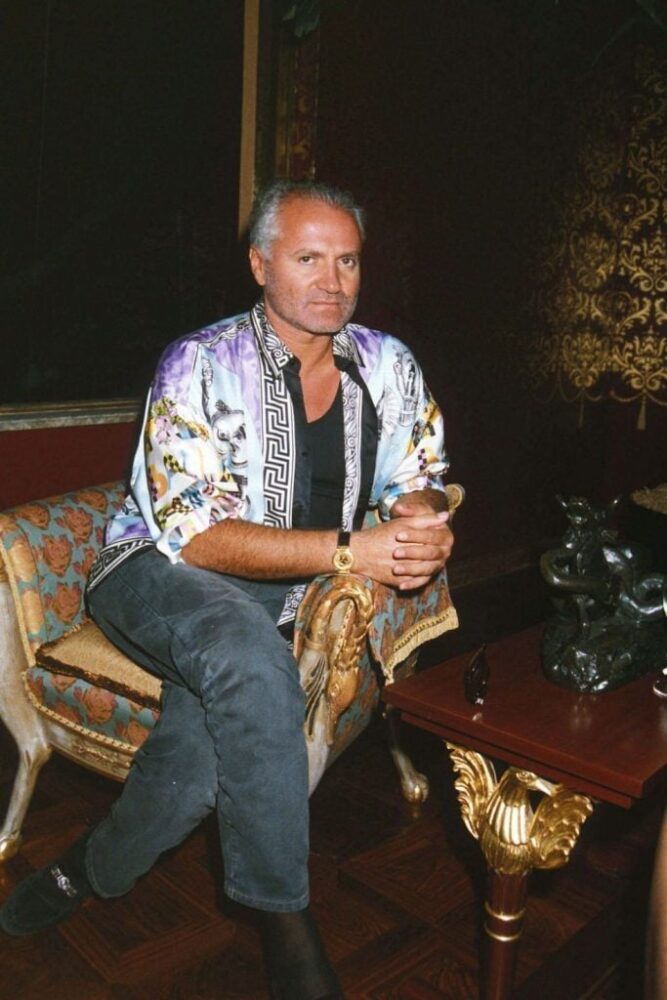
photo: collater.al
What stands out most in this story is consistency. For nearly half a century, Versace could have moved production to China, Bangladesh, or other low-cost countries a dozen times over. Especially after 1997, when the brand faced tough financial times. But they never did.
Maybe it’s pride, maybe just smart business logic. Italian craftsmanship isn’t just about skill—it’s an entire ecosystem. Silk suppliers from Como, dye houses from Bergamo, seamstresses with decades of experience. You can’t just copy that somewhere else.
The 2018 acquisition by Capri Holdings could have changed everything, but the American investors turned out to be surprisingly wise. They kept production where it was. They invested in modernization, in sustainability, but left the fundamentals untouched.
Now, as the world talks about authenticity and product origin, these decades of consistency have proven to be the best investment. Every thread, every stitch is proof that some things are worth doing the way they’ve always been done.
Technology vs. Counterfeits – Methods of Authenticity Verification
Counterfeit Versace products are a real scourge. I once checked the statistics—apparently, every third product sold online is a fake. Maybe not exactly every third, but still way too many.
The latest technologies have completely changed the game. Since 2020, Versace has introduced an RFID system on its tags. These are tiny chips that can be scanned with a smartphone using the brand’s official app. Just hold your phone up to the tag and you’ll know instantly—authentic or not. It works really well, although not all products have these chips yet.
The Entrupy app is making waves among collectors. The manufacturer claims an accuracy rate of around 98 percent in 2024. That might sound too good to be true, but it actually delivers in practice. All you need to do is take a few photos of the product’s details, and artificial intelligence analyzes everything in seconds.
photo: versace.com
Visual inspection is still the foundation—nothing beats a trained eye.
I’ve put together a simple six-step checklist:
- Check the stitching – it should be even, with no loose threads
- Check the metal parts with the Medusa – the details should be sharp, not blurred
- Look for a hologram on the tags – a genuine one changes colors at different angles
- Look for the “Made in Italy” label – the font should be clear and even
- Verify the serial number on the official Versace website
- Evaluate the packaging – originals come in premium boxes made of thick cardboard
Serial numbers are a separate topic. Every genuine product has a unique code that can be verified online. Counterfeiters sometimes use real numbers, but they copy them onto hundreds of fakes. That’s why it’s worth checking several elements at once.
Metal parts often give away counterfeits. The real Medusa has sharp lines, and every detail is crisp. On fakes, it often looks like someone drew it with a thick marker.
Holograms on tags are something counterfeiters still can’t replicate well. A real hologram has depth and shines in different colors. Fake ones are flat and dull.
All these methods work best together. One check might fail, but if you verify five different things, the risk of error drops almost to zero. The next step will be to check exactly where the original products are made.
Factories and artisans – today’s geography of the brand’s production
From Milan to Sicily stretches the network of Versace workshops, which in 2025 stands as one of the last bastions of Italian fashion manufacturing. These aren’t vast factories like those in Asia—rather, they are small, specialized ateliers where tradition blends seamlessly with innovation.
Key facts:
• 3,200 direct employees across Italy
• €1.2 billion in revenue in 2023 (an increase of €180 million year-on-year)
• 47% of production is concentrated in three regions: Lombardy, Tuscany, and Marche
Lombardy – the heart of design
Milan is not just the headquarters, but above all the place where prototypes and the most exclusive collections are created. Around 180 tailors and technicians work at the workshops on Via Manzoni. I once witnessed the process of making an evening gown there—from the initial sketch to the finished product, it can sometimes take up to six months.
These workshops are much more than ordinary production facilities. Every element is tested, refined, and perfected. There are no assembly lines here in the traditional sense of the word.
Tuscany – the kingdom of shoes and leather
This region concentrates the largest share of the brand’s footwear production. The best example is the Mercury model from the 2024 collection. This shoe passes through the hands of 27 different artisans in 27 separate assembly stages. The first person only cuts the upper, while the last applies the logo.
In the province of Florence alone, Versace employs over 800 people. The average salary in these workshops is around €2,400 per month—well above the local average. Many of these employees have worked for the brand for decades, passing their skills on to younger colleagues.
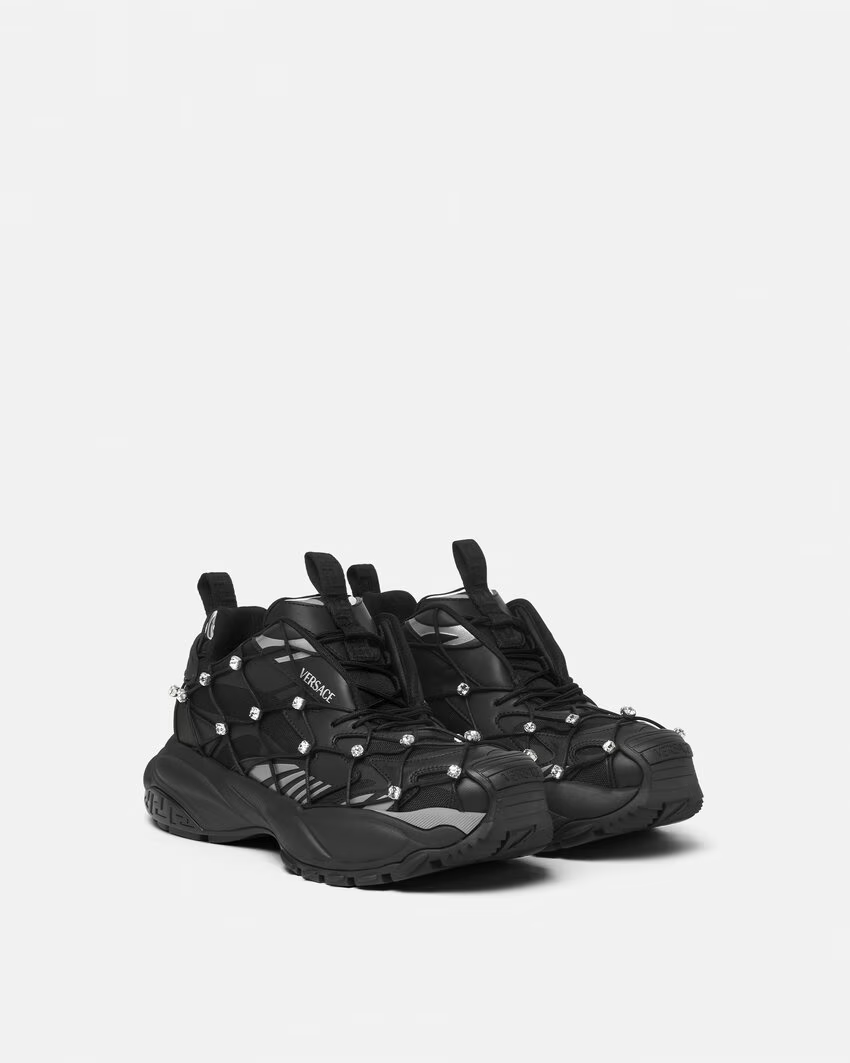
photo: versace.com
Marche – a powerhouse of production
This region, though less publicized, is a true powerhouse of production. Most handbags and leather accessories are made here. The numbers are impressive—employment in the Marche region alone amounts to around 1,400 people involved in Versace production.
Interestingly, local subcontractors often work exclusively for this brand. Some of them have been around for three generations and specialize in a single, specific element—for example, producing only handbag buckles.
The impact on local economies is significant. In small towns like Tolentino or Fermo, factories associated with Versace are often the largest employers. The company also runs training programs—each year, around 150 young people complete craft courses.
For comparison, Gucci employs a similar number of people in Italy, but spread across more locations. Prada, on the other hand, has a more concentrated production, mainly in Tuscany and Veneto.
An interesting fact is that some production processes have been deliberately left unautomated. Not because they can’t be automated—simply because hand-finishing creates a different result. Sometimes this may seem economically irrational, but customers paying for luxury expect exactly that difference.
The question is how long such a model will remain profitable in a world of rising costs and global competition. The answer depends on many factors that will shape the future of the entire industry.
Italian DNA under pressure from globalization – what’s next for Versace?
The analysis of Italian production at Versace reveals one thing—the brand walks a fine line between tradition and global pressures. It’s not an easy position, especially when Capri Holdings’ owner is focused mainly on profits rather than cultural heritage.
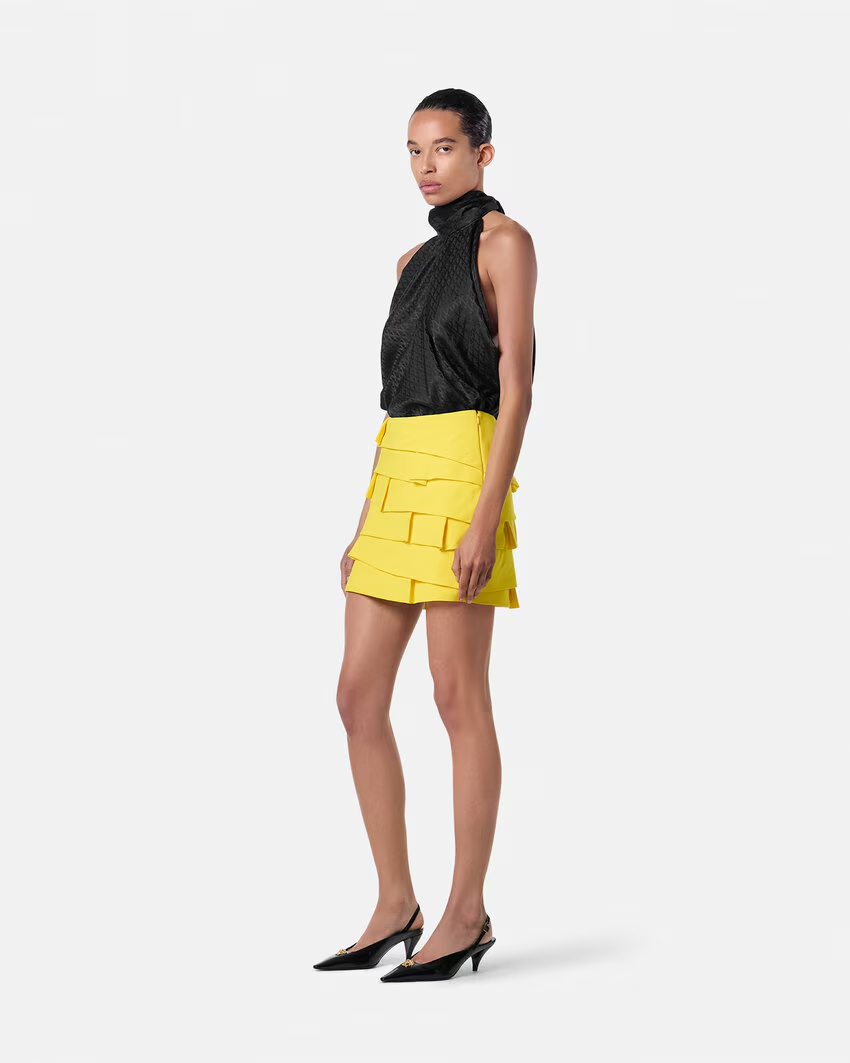
photo: versace.com
The coming years will bring a revolution in the supply chain of luxury brands. Versace is likely to achieve 100% eco-Italian sourcing by 2030—it sounds wonderful, but prices may rise by 30-40%. The question is whether consumers will accept it. I know for many, this will be a price shock.
The biggest threat awaits after 2025, when Donatella Versace steps down. The new creative director may not have the same leverage in negotiations with Capri Holdings’ management. The risk of moving part of the production outside Italy will increase dramatically. Blockchain-based traceability is supposed to change this—every item will be tracked from raw material to boutique. In theory, it’s a great solution; in practice… we’ll see if it doesn’t just become another marketing gimmick.
The future of Versace depends on all of us. Every purchase is a vote in a referendum on whether Italian DNA will survive globalization. Sometimes I think we, as consumers, have more power than we realize—we just need to use it consciously.
Don’t buy luxury blindly—choose it consciously!
Norman
lifestyle editor
Luxury Blog





Leave a Comment