

How to properly taste caviar?
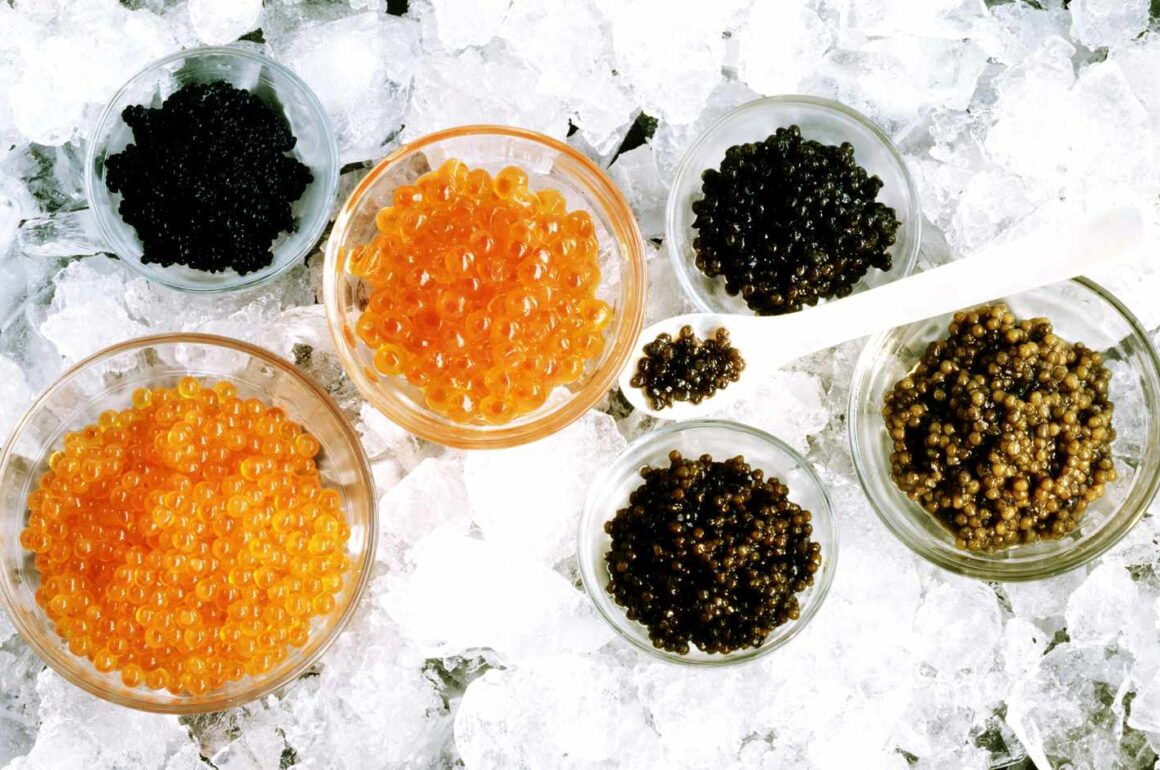
Caviar is one of the most exclusive products. We usually enjoy it on special occasions, in restaurants, or during elegant dinners. But what if you want to serve caviar at a party or include it as part of a stylish dinner with friends? Is there a way to properly taste caviar? How do you choose the best product? Which caviar color is the most expensive, and how is it obtained?
The history of caviar
Caviar has a long and fascinating history that dates back to ancient times. Back then, it was considered a delicacy. Initially, it was consumed by the ancient Persians and Greeks, who discovered that sturgeon eggs, transformed into caviar, were not only delicious but also healthy. The tradition of serving and enjoying caviar in an elegant manner developed in Russia in the 18th century, where it became a symbol of sophistication and luxury.
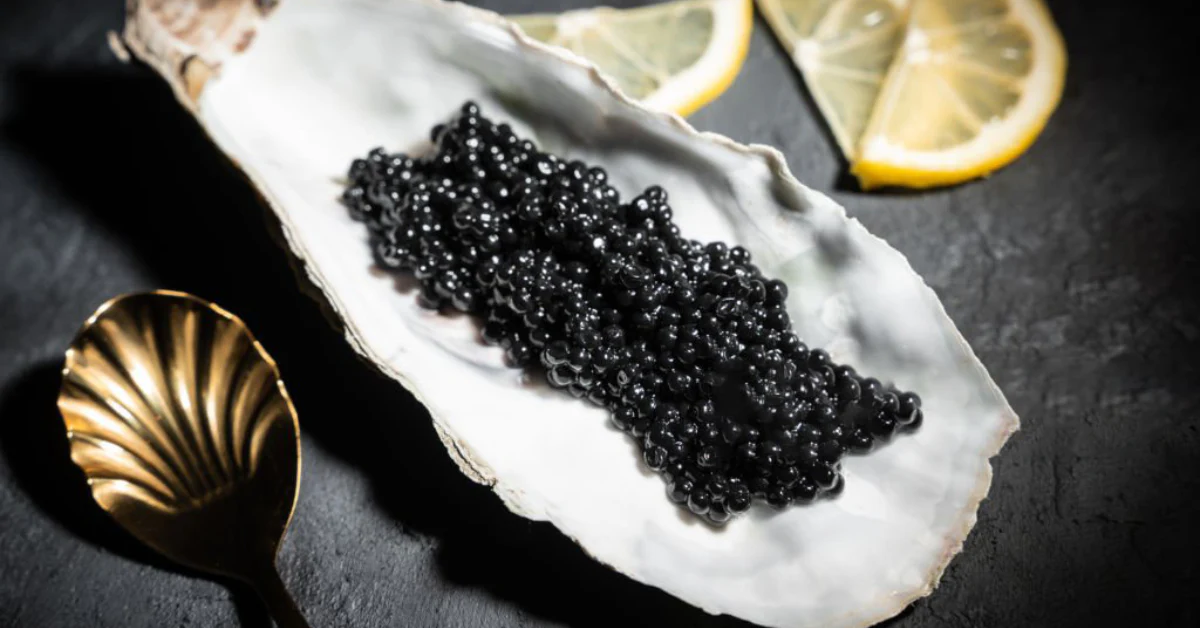
Over time, thanks to trade, caviar reached Western Europe. At the same time, its popularity flourished at royal courts and among the aristocracy. Russian beluga caviar, once a favorite at the Tsar’s Palace, became a status symbol at the beginning of the 20th century. The tradition of tasting caviar has remained unchanged to this day—it is still served elegantly, often in a chilled dish, ideally accompanied by a touch of vodka or champagne. Interestingly, caviar was once regarded not only as a delicacy but also as a valuable medicinal resource, considered an elixir of youth. Today, although available to a wider circle of gourmets, caviar still remains synonymous with luxury. So how should you taste caviar, and how does eating it affect your health?
Is eating caviar healthy?
Caviar is a true treasure trove of nutrients, with even a small serving providing the body with valuable substances that support overall health. In 100 g of caviar, you’ll find an impressive amount of protein—up to 25-30 g. This makes it an excellent source of high-quality protein, essential for tissue regeneration and muscle building. It’s also worth highlighting the presence of omega-3 fatty acids, which are extremely important for heart and brain health. They help reduce inflammation and support memory and concentration. Caviar is also a real mine of vitamins: vitamin A for eye health, vitamin D to support the immune system, vitamin E as a powerful antioxidant, and vitamin B12, which boosts energy production and ensures proper nervous system function.

There’s no shortage of minerals either: selenium, zinc, and iron help strengthen immunity, improve skin condition, and support red blood cell production. Although caviar contains fats (about 15–20 g per 100 g), these are mostly healthy unsaturated fats that have a positive effect on cholesterol levels. Caviar fits perfectly into Mediterranean, ketogenic, and low-carb diets.
A small serving of this luxurious delicacy perfectly satisfies the need for essential nutrients. The richest source of all these benefits is sturgeon caviar, renowned for its exceptional quality and high concentration of valuable substances. While it may be considered a treat for the select few, it’s worth knowing that caviar is more than just an elegant addition for special occasions. It’s a true health powerhouse that can be incorporated into your daily diet in small yet highly nutritious portions.
What color of caviar is the most expensive?
The most expensive and exclusive caviar in the world is Almas white caviar, sourced from the rare, albino beluga sturgeon. Its golden, almost pearlescent hue and exceptionally creamy texture make it fetch staggering prices—sometimes tens of thousands of dollars per kilogram! When it comes to health benefits, sturgeon caviar is the most valuable, rich in omega-3 fatty acids, protein, and vitamins. There are many varieties of caviar, and its color depends on the species of fish:
- Black (graphite, grayish, silver, brown) – comes mainly from sturgeon (beluga, osietra, sevruga).
- Gold – the rarest, often from albino sturgeon varieties (e.g. Almas).
- Red – salmon roe (chum, sockeye, keta).
- Orange – trout roe or roe from various species of salmonids.
- Yellow – e.g. vendace caviar or caviar from other small fish.
In 2024, the price of Almas caviar, the most expensive in the world, remains astronomical. Its cost can reach as much as $25,000–$30,000 per kilogram. Such a high price is due to its rarity—it comes from exceptionally ancient, albino beluga sturgeons that can live for over 100 years. The process of obtaining this caviar is time-consuming and requires meticulous handling, which also contributes to its high price. Almas is often sold in elegant, ornate tins or jars that emphasize the luxurious nature of the product. It is a true symbol of prestige, available mainly to a very select group of luxury delicacy enthusiasts.
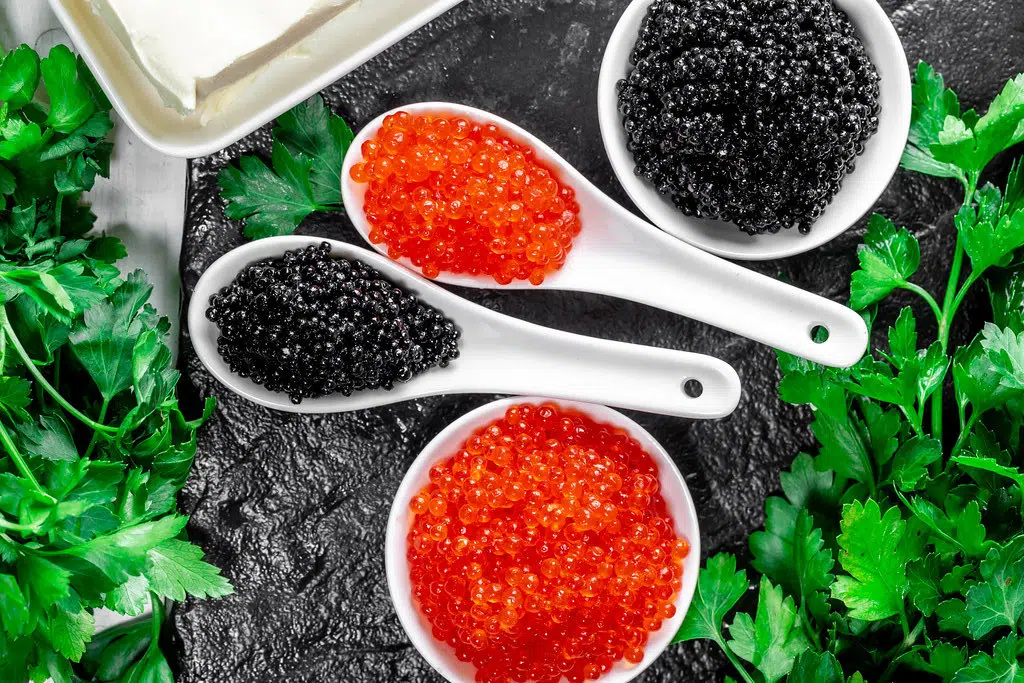
And how should you taste this most expensive caviar? The best way is to enjoy it in the most classic style: served cold, without any additions, using a special mother-of-pearl spoon, letting it gently melt on your tongue, accompanied by a glass of chilled vodka or champagne. It’s a true delicacy to be savored slowly, allowing you to discover its extraordinary, subtly nutty flavor!
How to taste caviar?
How do you taste caviar to truly appreciate its unique flavor? First and foremost, a piece of this luxurious delicacy deserves the right setting. Caviar should be well chilled, but never frozen. That’s why it’s best to store it in the refrigerator and, before serving, place it in a bowl filled with ice. This is exactly how it’s served in the finest restaurants.
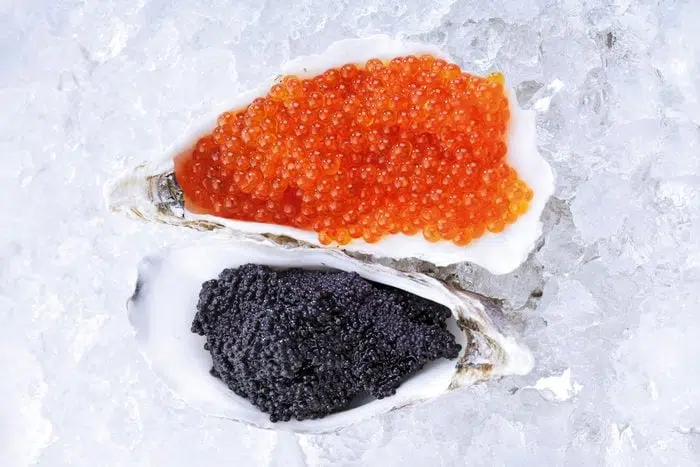
Serving temperature is key to unlocking its full flavor. So how should you serve it to guests to highlight its uniqueness? Traditionally, it’s served on blinis. However, it also pairs beautifully with a slice of dark bread or boiled potatoes in their skins, accompanied by sour cream. Remember not to use metal spoons—they can affect the taste of the caviar. Opt for mother-of-pearl spoons to preserve its true flavor.
And how should you eat caviar to truly savor its full flavor? Traditionally, a spoonful of caviar is placed on the hand, between the thumb and index finger—after all, who wouldn’t want to feel that velvety texture just before tasting it? So, for what occasion will you serve caviar— an elegant dinner or simply for the pleasure of it?
Caviar – recipes and serving ideas. Discover how to taste caviar.
Caviar is a luxurious delicacy that pairs beautifully with a variety of dishes, adding elegance and a unique flavor. Blinis with sour cream are a classic—small, fluffy pancakes that make the perfect base for caviar, highlighting its taste. If you want to try something different, caviar on a slice of dark bread with a touch of butter and fresh dill is a combination that will delight any gourmet. Chives also work well as a substitute for dill. Boiled potatoes in their skins with sour cream are another excellent option—their neutral flavor perfectly accentuates the intensity of caviar.
For more sophisticated dishes, try caviar with pieces of tender wagyu beef, or serve it as an appetizer with lightly chilled champagne. Caviar also pairs well with light salads—for example, with avocado, cucumber, and hard-boiled egg, where its intense flavor beautifully complements the freshness of the vegetables. Remember that caviar tastes best when served in small amounts. This allows you to fully appreciate its flavor and unique texture.






Leave a Comment