

How to cook in copper pots – precision and safety
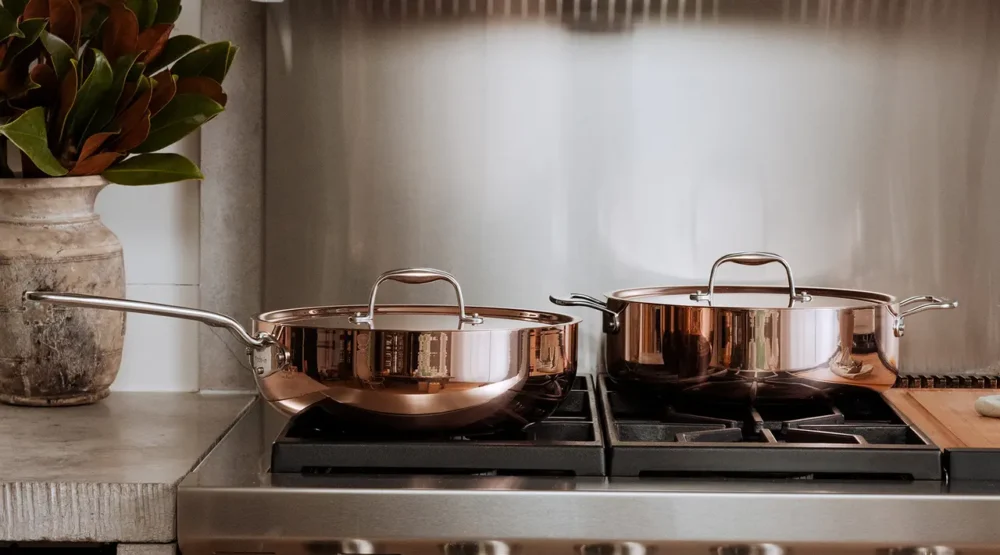
Did you know that copper conducts heat 25 times better than stainless steel and 9 times better than aluminum? We’re talking about values of 401 W/m·K compared to just 16-50 W/m·K for steel. What does this mean in practice? The entire bottom of the pot heats up evenly—no more of those annoying hot spots where something burns while right next to it, it’s barely simmering. And that’s why I love cooking with copper!
You lower the flame and the pot reacts instantly. Add more heat, and you feel the effect right away. This responsiveness is something you just don’t get with regular cookware. Plus, you save energy because water boils faster and maintaining the temperature requires less heat. That’s why I mainly use this equipment for emulsified sauces, caramelizing sugar, melting chocolate, and making preserves. And finally, reduction—that’s my favorite part. On copper, it’s simply perfect.
How to cook in copper pots: the renaissance of dishes
Interesting that copper has recently been making a comeback in home kitchens. Not just in professional restaurants. The market now offers modern solutions with a ferromagnetic base for induction, so even contemporary stoves are no obstacle. In the next section, I’ll show you exactly how to work with this material to make the most of its potential. Why a renaissance? Because copper is compatible with many dishes and can truly be called the cookware of the Renaissance!
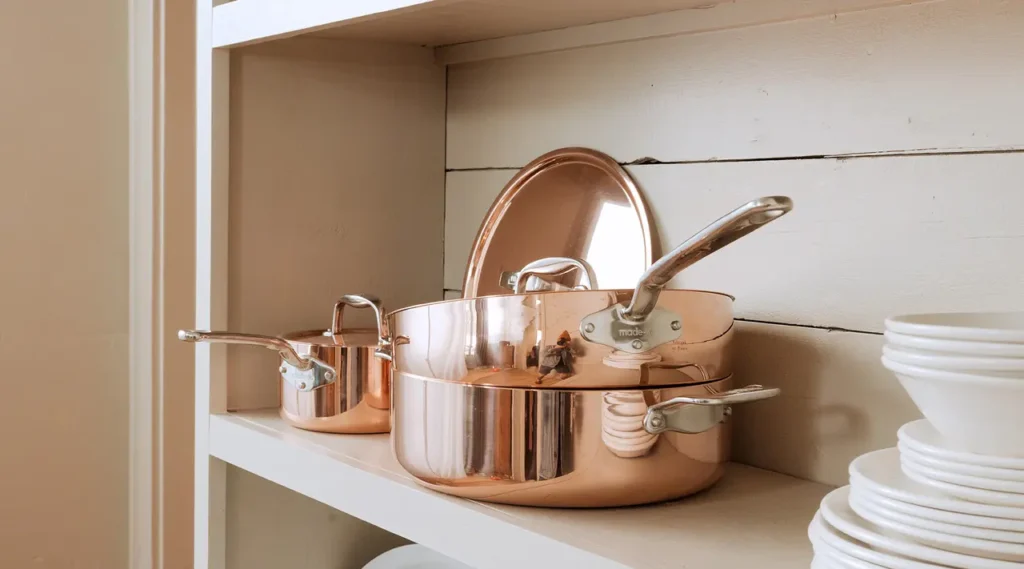
photo: madeincookware.com
Power and heating: less is more
The first thing you need to understand about copper: it’s not an ordinary pot. It conducts heat so well that medium power is all you need. High flame? That’s asking for trouble. Copper can warp if overheated, and in the worst case, you’ll damage the inner lining. That’s why you should always heat it gradually, on low to medium heat. Give the pot a minute or two to let the temperature distribute evenly. On gas, it’s worth buying a flame diffuser (those metal discs designed for stovetops).
And here’s an important rule: never heat an empty pot. Especially if it has a tin lining, since tin melts at just 230°C. Always add fat or liquid first, then turn on the burner. And if you stick to this rule, everything will be just fine.
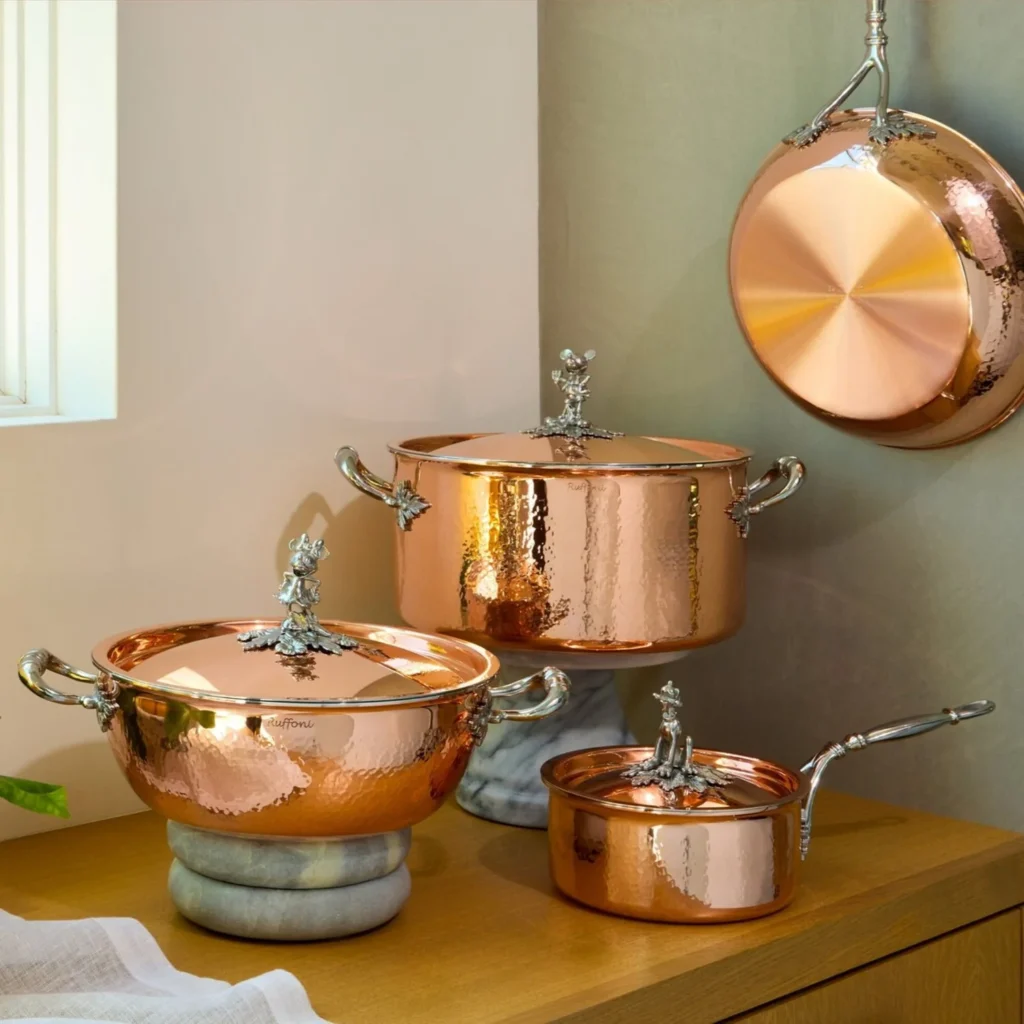
photo: us.ruffoni.net
Fat, oven, and hot handles
You’ll notice you need less fat than you think. Well-heated copper naturally doesn’t stick. When making delicate sauces like hollandaise or frying fish, that temperature control really does the trick—nothing burns. Of course, you won’t be cooking without any fat at all; that’s not what this technology is for.
As for the oven: a tin-lined pot can safely go up to about 230°C. Cookware with an internal stainless steel layer can handle higher temperatures, but still stick to reasonable limits.
Oh, and remember to use oven mitts, because copper handles heat up along with the pot. Really fast. Burns are no joke. Of course, there are brands that make more modern handles, but most are inspired by traditional craftsmanship.
That’s pretty much it. Lower heat, gradual warming, never heat empty. The rest comes with practice.
Choosing pots
Choosing a copper pot is a bit like choosing a musical instrument — the details matter immensely. And indeed, not all copper pots are created equal. I love those crafted by manufactories that have been around for generations, and that brings me great joy in using them.
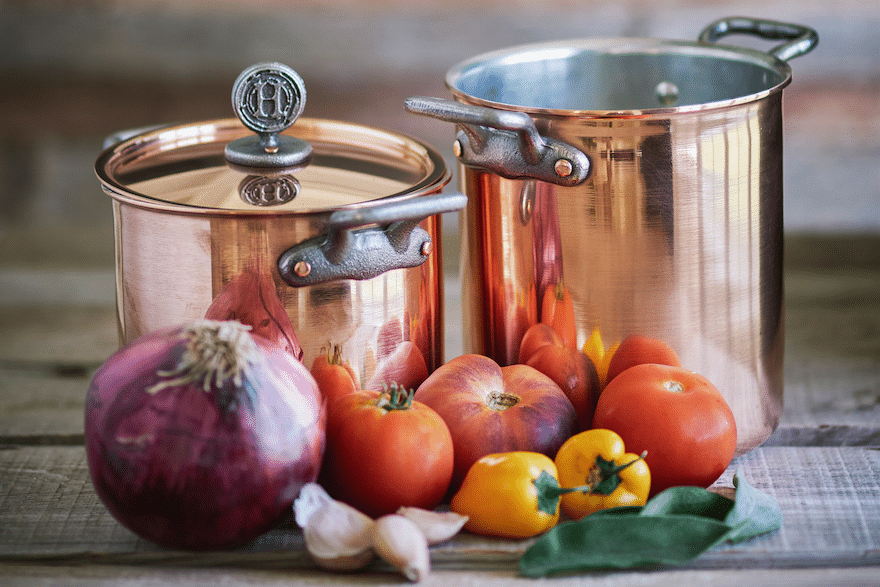
photo: thecookscook.com
Thickness and lining
We start with wall thickness. Standard copper is 1.5-3 mm, but if you’re serious about cooking, aim for 2-2.5 mm. This thickness ensures the best heat retention without turning the pot into a dumbbell, because yes, good pots weigh 2-5 kg each (the density of copper is about 8.9 kg/dm³). You’ll feel the difference when moving them between burners.
The lining, on the other hand, is all about what actually comes into contact with your food:
- Enamel – classic, non-stick, but only up to approx. 230°C. Great for sauces and delicate dishes.
- Stainless steel – harder, will withstand anything, less hassle with maintenance.
- Silver – premium, expensive, for perfectionists or collectors.
In the kitchen, the difference is mainly noticeable when it comes to how the pan responds and temperature control. Of course, this is reflected in the price, but a good copper pot is not cheap.
Brands worth attention
Brands to consider: Mauviel, de Buyer, Matfer Bourgeat, Ruffoni, Falk Culinair, Hestan, All-Clad, Cu Artigiana. Basically, when it comes to top quality, Italians and the French are leading the way. That’s because the oldest workshops creating copper functional art pieces are located there.
In my opinion, the best price-to-quality ratio is offered by the Italian brand Cu Artigiana. Excellent craftsmanship, outstanding thermal properties, and above all, a stunning design. You can find this Italian workshop at the Luxury Products store.
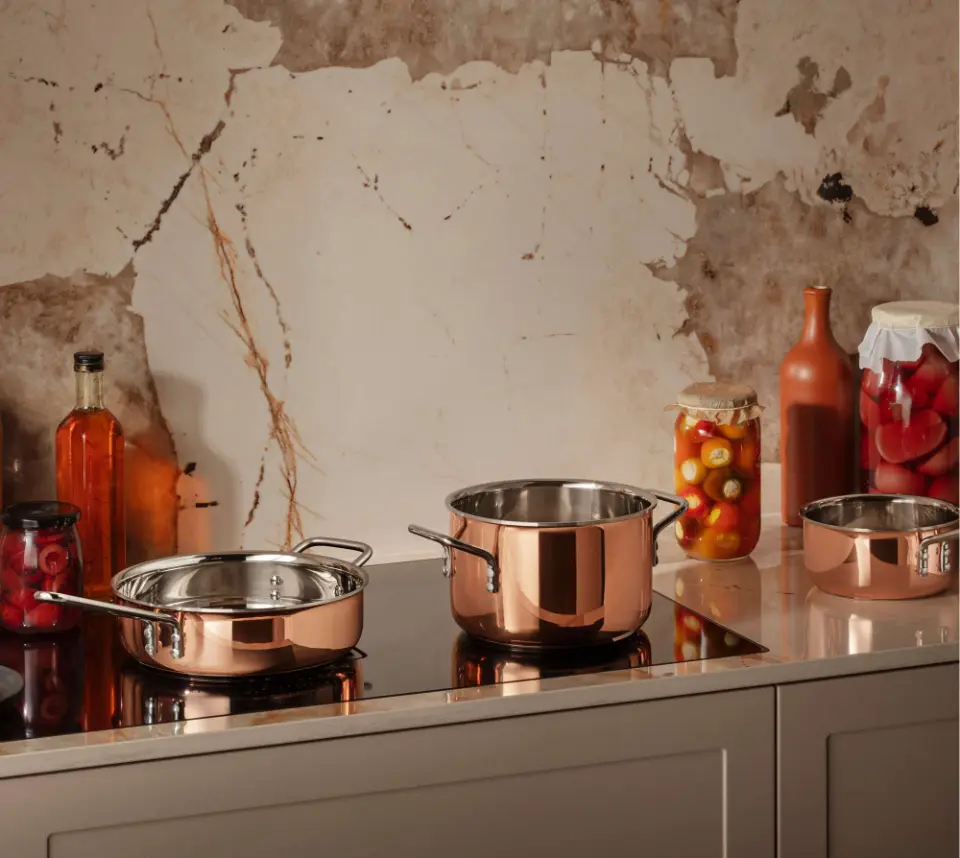
photo: evasolo.com
What looks best in copper?
Copper excels with dishes that require an immediate response to temperature changes. There’s no magic involved—this metal simply transfers heat instantly, which translates into better control.
Sauces, chocolate, and delicate egg whites
Emulsion sauces like Hollandaise or Béarnaise often separate, as just a moment of inattention is enough. In copper pots, it’s easier to maintain the emulsion because the heat responds instantly when you remove the pot from the burner. You add butter, stir, the temperature drops slightly, you return it to the heat, and you have control at every stage.
Caramelizing sugar is a classic. The absence of hot spots means the sugar melts evenly, without burning in one spot. The same goes for chocolate —if it burns, there’s no saving it, so even heat really helps. Less crystallization, a nicer result.
Fish and seafood dry out quickly—just 30 seconds too long is enough. Precise temperature control reduces the risk of turning a cod fillet into rubber.
photo: proware-kitchen.co.uk
Jams and everyday cooking
In Poland, jams and preserves were traditionally made in copper bowls, as they quickly evaporate water without burning the fruit. A cleaner taste, less residue at the bottom.
For everyday use? Soups, vegetables, rice, meats, pots with lining are suitable for everything. Just don’t store acidic dishes in them for long, as they may react with the lining. But for cooking? Excellent versatility. And as I mentioned, this is a renaissance vessel!
When is copper safe?
Most modern copper pots have a lining, and this is crucial. Tin, stainless steel, sometimes silver, these layers separate the food from pure copper, so the migration of metal into dishes is minimal. In everyday use, such cookware is safe, although of course, it requires that the lining remains intact. People are often surprised when they buy a copper pot and it contains other metals. But there’s no other way!
As for the numbers: the safe daily intake level of copper is about 3 mg, and the WHO states 2–3 mg/l for drinking water. In practice, this means we’d really have to make an effort to reach harmful concentrations through normal cooking. The problem arises when the pH drops; an acidic environment (tomatoes, lemons, vinegar) increases copper leaching. That’s why in unlined pots, such dishes are a risk not only to health but also to taste. A metallic aftertaste can ruin even the best recipe.
photo: purewow.com
What about sulfur dishes and water?
Eggs, cabbage, and garlic are also not friends of pure copper. Sulfur reacts, changes color, and affects the taste. Simple rule: acidic and sulfurous = only for lined pots.
And water? Storing it in a copper (uncoated) vessel can limit bacterial growth. This is an old practice, especially in Ayurvedic cultures. But be careful, this applies to water, not simmering acidic sauces for half an hour. Context matters. I’m not trying to scare you—it’s just good to know what’s happening in your pot.
How to care for it?
Copper likes attention, but honestly, it doesn’t require as much effort as some people think. A few simple habits are enough to keep your pots looking and working great for decades.
After each use, just hot water and a mild dish soap will do. A soft cloth or sponge (without the rough side!) and you’re done. Two things to absolutely avoid: the dishwasher and abrasive scrubbers. They simply destroy both the copper and the tin lining inside. I wash by hand, dry thoroughly, and put it away. That’s really all it takes.
A tinned interior needs more delicacy. When the tin clearly wears off (you see copper at the bottom), it’s time to have the pot re-tinned. Depending on how often you cook, this could be every 10 or maybe 15 years. Not a cheap procedure, but it restores full functionality.
Two more quick tips: don’t store acidic foods in copper overnight (they react with the tin), and use gloves for hot handles (copper conducts heat extremely well). Before first use, you can wipe the pot with acetone for an even shine, though this is optional.
photo: us.ruffoni.net
Precision that lingers on the tongue
Cooking with copper pots is simply a different level of control, and you can feel it in every dish. That quick response to temperature changes that everyone talks about translates into flavors that are more pronounced, more refined. You literally have more time to correct a mistake because the pot isn’t working against you. Even heat distribution offers great possibilities.
Safety is just as important here as precision. A well-maintained copper pot with the proper interior lining is a tool you can trust for years. Just stick to the basics: don’t scrape the tin lining with sharp tools, regularly check its condition, and avoid excessive heat when the pot is empty.
Once you experience the difference, it’s hard to go back to regular pots. I’ve been using copper cookware for 10 years. Today, I’ve already learned how to make high-quality dishes with them. Taste is one thing, but for me, the most important are the health benefits they offer.
Stan 89
A lover of good cuisine
Lifestyle & hobby editorial team
Luxury Blog





Leave a Comment