

How much does it cost to enter the Louvre and how to plan your visit?

I remember my first encounter with the Louvre. It was before the pandemic, when queues were just a normal part of the Parisian landscape. I stood there with my ticket in hand, wondering why I had waited so long to visit. Maybe it was because the price seemed… abstract. Today, I want to write about how much it costs to enter the Louvre.
But the numbers speak for themselves. In 2023, the Louvre welcomed 9.6 million visitors. That’s more than the entire population of Austria. The museum houses 380,000 artifacts, of which only a fraction are on permanent display. Every day, thousands of people from all over the world pass through these halls.
How much does it cost to enter the Louvre? – discover culture with a capital C
22 euros for a ticket. That’s about six coffees at a Parisian café on the boulevard, where an espresso costs 3.70 euros. Or let’s compare it to the Metropolitan Museum in New York —there, a ticket is 30 dollars. Suddenly, the French price doesn’t sound so bad, does it?
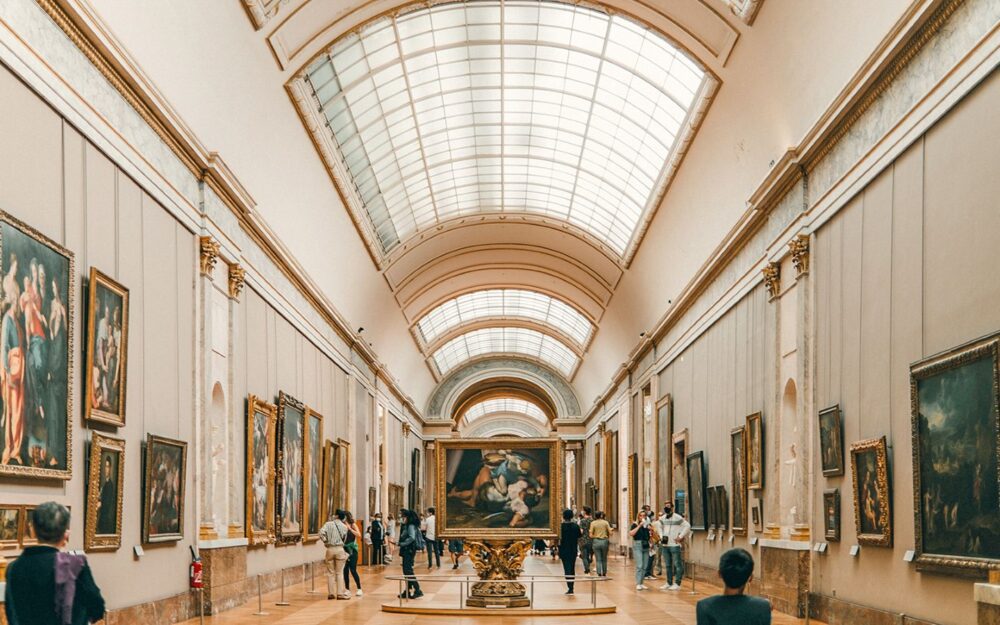
photo: paristickets.com
The Louvre is more than just a museum. It’s an institution that has to balance cultural accessibility with the need for funding. Preserving works of art costs a fortune. Air conditioning, security, renovations—all of it requires money. And at the same time, the museum can’t become an exclusive club for the wealthy.
The ticket price is a compromise. Not perfect, but an attempt to find balance.
In this article, I’ll explore:
- How Louvre ticket prices have changed over the years
- What discounts are available and who can enter for free
- Is it possible to save money on a visit without compromising the quality of the experience
- How do Louvre ticket prices compare to other major museums around the world
The history of prices is a fascinating journey through decades of social and economic change.
From Fortress to Megamuseum: The Evolution of Admission Fees
I remember my first visit to the Louvre. I stood in front of the pyramid and thought—who came up with the idea of charging a fortune just to enter a museum? Turns out, it’s a long story.
It all began on August 10, 1793. The revolutionaries opened the palace to the people—completely free of charge. They wanted to show that art belongs to everyone, not just the aristocracy. Quite a gesture, though it was probably more about propaganda than a genuine love of art.
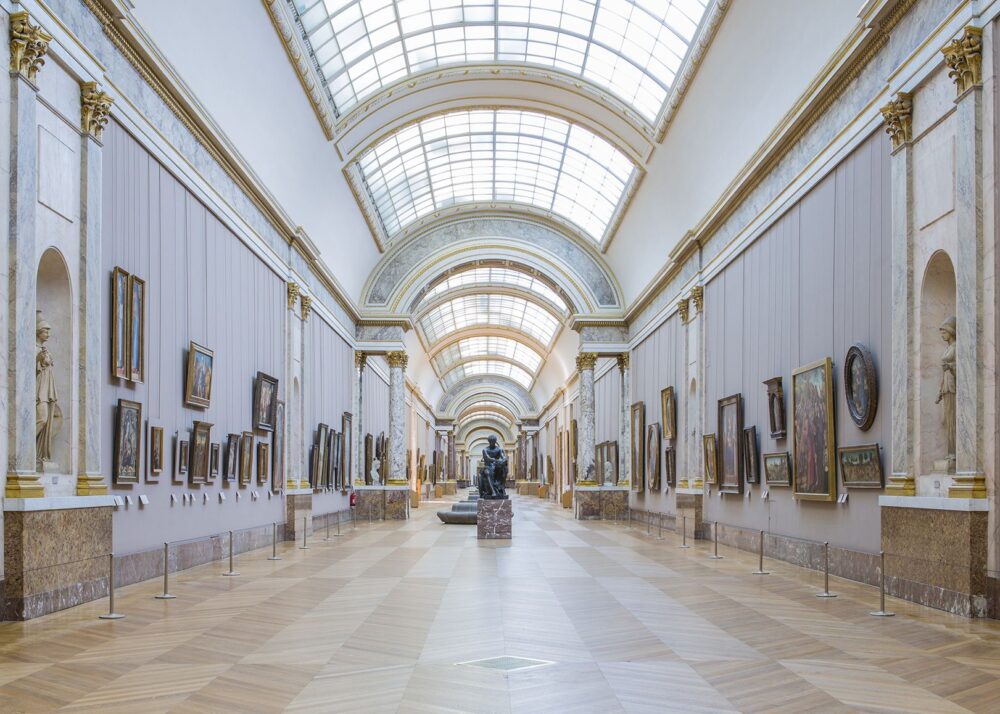
photo: jewish-paris-tours.com
The Revolutionary and Napoleonic Era
- 10.08.1793 – completely free admission
- 1800-1850 – occasional symbolic fees during special exhibitions
19th century and early 20th century
- 1850-1914 – mainly free of charge, sometimes 50 centimes for exhibitions
- 1920-1939 – introduction of fixed fees of 1-2 francs
After World War II, the situation changed. In the 1940s and 1950s, regular admission fees between 1 and 5 francs were introduced. France was rebuilding after the war, and museums needed funds for conservation. People understood this.
The real shock came in 1980. With the launch of the Grand Louvre project, prices jumped to 20 francs—about 3 euros in today’s money. It sounds funny compared to what we pay now, but back then it was a revolution.
| Year | Price (in euros after conversion) |
|---|---|
| 1793-1850 | 0 € |
| 1950 | €0.30 |
| 1980 | 3 € |
| 2000 | 7.50 € |
| 2020 | 15 € |
The digital era has brought even more changes. The internet, online reservations, attendance control—all of this has influenced pricing policies. The latest blow to the average tourist’s budget? In 2024, free admission on the first Sunday of the month was abolished. The end of a tradition that had lasted for decades.
Politics have always played a role in these prices. Every time France wanted to showcase its cultural power, it invested in the Louvre. And the costs? They were passed on to visitors. Mass tourism is a separate issue—the more people want to enter, the higher the prices.
All of this explains why we pay what we pay today.
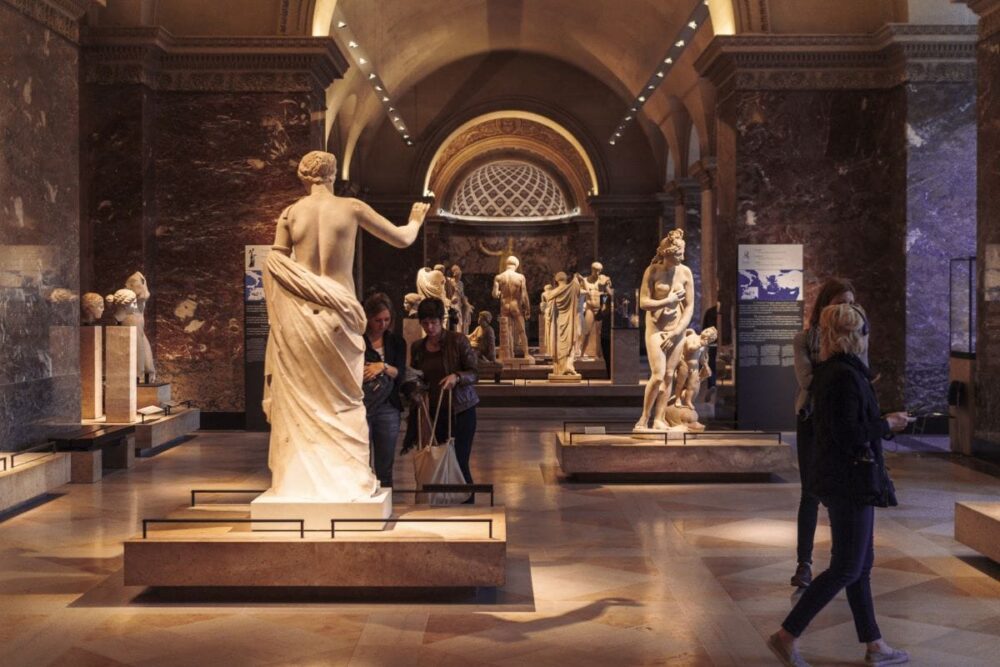
photo: walksofitaly.com
Current 2025 price list: ticket options and their contents
I checked ticket prices for 2025 yesterday and I have to admit, the differences between buying online and at the ticket office are quite significant. And it’s not just about the price.
| Ticket type | Price | Where to buy | What it includes |
|---|---|---|---|
| Adult | 22 € | Online (slot reservation) | Permanent collections + most temporary exhibitions |
| Adult | 15-17 € | Payment on site | Permanent collections + most temporary exhibitions |
| Family (2+2) | 44 € | Online | Permanent collections + most temporary exhibitions |
| Family (2+2) | 30-34 € | Payment on site | Permanent collections + most temporary exhibitions |
Each ticket grants access to the main collections and almost all temporary exhibitions. There’s no re-entry on the same day—once you leave, that’s it.
The museum operates regular hours, but on Fridays, they’re open late until 9:45 PM. It’s a great option for people who work during the day.
Here’s where the real issue starts—they have a daily limit of 30,000 visitors. This means that without a reserved time slot, you might end up with nothing.
I saw it happen: a friend showed up without a reservation on a Saturday morning. The line was massive, she waited over an hour, and still didn’t get a ticket for that day. She had to come back on Monday. Meanwhile, I bought mine online in advance, paid a bit more, but walked in right on time for my chosen slot.
The time slot reservation system isn’t just a gimmick—it’s a necessity. Especially on weekends and holidays, everything can sell out online several days ahead.
The €7 difference between the online and box office price might seem steep, but you save time and are guaranteed entry. At the box office, you never know if there’ll be any spots left that day.
Of course, there are various discounts and ways to get in cheaper, but that’s a story for another time.
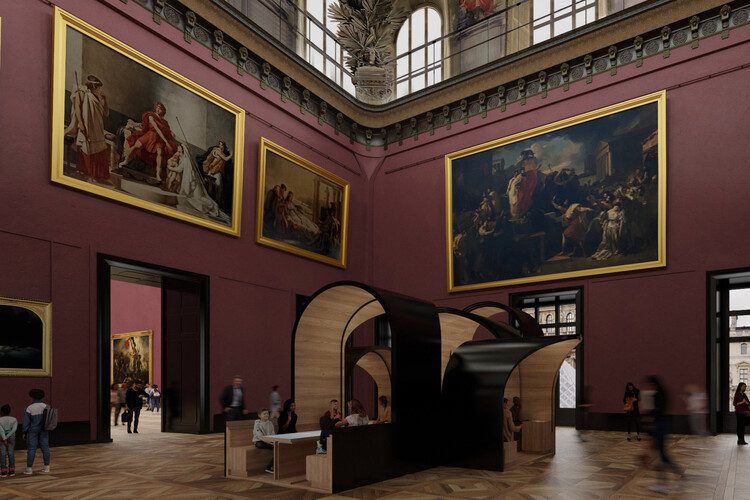
photo: archdaily.com
Who gets in for free or at a discount: concessions, reductions, museum passes
Sometimes I think the Louvre is like a giant money magnet. But it doesn’t always have to be that way. In fact, quite a few people can get in for free or at a much lower price.
Check if you’re one of the lucky ones:
– You’re under 18 (any nationality) – just bring your ID or passport
– You’re 18–25 and from an EEA country – you’ll need a document confirming your age and citizenship
– You’re an art history teacher – you’ll need to show proof of employment
– You have a disability certificate – you and your caregiver get in for free
– You work as a journalist – a press card does the trick
Recently, I met a student from Romania. She thought she had to pay full price. But EEA countries aren’t just the “big fifteen” – it’s all EU members plus Iceland, Norway, and Liechtenstein.
Citizens of European Economic Area countries aged 18-25 are entitled to free admission to state museums in France under EU Directive 2011/24/EU.
Paris Museum Pass is a completely different story. It costs €52 for 2 days, €66 for 4 days, or €74 for 6 days. It’s worth it if you plan to visit at least 3-4 museums. Admission to the Louvre and Versailles alone is almost €40.
Remember your documents – without them, even the best entitlements won’t help you.
The staff at the entrance are quite strict. I saw a teenager without ID who had to pay full price, even though she was clearly under 18. Sometimes life is unfair, but rules are rules.
The pass is simple to use – you just show your card and walk in without waiting in line. That’s really the only advantage besides saving money. There are no extra benefits or audio guides included in the price.
Where and when to buy a ticket: sales channels and skipping the lines
I once stood in line for the Louvre at 10 a.m. and didn’t reach the entrance until 1:30 p.m. Never again.
Now I always buy tickets online—mainly through the official louvre.fr website. The process is simple:
- You select a day and a time slot (every 30 minutes from 9:00 AM to 6:00 PM)
- You pay by card and receive a QR code via email
- You go straight to the entrance with your code, skipping the main queue
You can also buy tickets through authorized platforms like Tiqets or GetYourGuide. The commission there is about 2-3 euros more, but sometimes they offer better customer service in Polish. Personally, I prefer the official website.
The statistics are harsh – during peak season, the line without a reservation can take up to 3 hours. I experienced this myself in July.
If you really want to buy tickets on site, there are three main entrances: the main one by the pyramid (the longest line), Porte des Lions (often closed), and the entrance on Rue de Rivoli (my favorite option). At the physical ticket offices, you pay the same as online, but you lose time.
Honestly, I don’t see the point in buying tickets on site. Unless someone enjoys standing in lines… but that’s a matter of personal taste.
After purchasing your ticket, it’s worth checking what additional options are available on site.
Additional costs: audio guides, packages, and combined offers
Actually, most people think that a ticket to the Louvre is all you need. Then it turns out there are a bunch of extra fees that no one mentioned before.
The audio guide costs 5-6 euros and honestly, it’s worth the investment. It’s available in Polish, so you don’t have to struggle with English. You rent it for the whole day, so you can explore at your own pace. I always get one, because otherwise, most of the artworks are just pretty pictures without any context for me.
You can also buy a ticket plus audio guide package right away for 27 euros. That saves you about one euro—not a huge deal, but at least you have everything sorted in advance.
| Service | Price | Pros | When is it worth it |
|---|---|---|---|
| Audioguide | 5-6 € | • Polish language • All day • At your own pace | For every visitor |
| Guided tour with a female guide | 40-100 € | • Group of up to 20 people • Special routes • Fascinating stories | If you don’t speak French |
| Louvre + Eiffel Combo | +10-50 € | • Two attractions• One reservation | For tourists on a short stay |
Guided tours are a whole different price story. From 40 to 100 euros per person, but they take you on routes like “Secrets of the Mona Lisa” or “The Art of the French Kings.” Some women say that without this, the Louvre is chaos, but I prefer exploring on my own.
A combo with the Eiffel Tower might make sense if you plan to visit both places on the same day. The extra charge is somewhere between 10 and 50 euros, depending on the package. The problem is that these combo tickets often have fixed times.
Realistically, you should add at least those 6 euros for the audio guide to your budget. The rest depends on how much you want everything organized in advance.
In the next part, I’ll show you specific ways to minimize all these extra costs.
The savvy traveler’s strategy: practical tips of the day
My last visit to the museum turned out to be a real lesson in economics. I arrived around noon on a Saturday, thinking it would be fine. But it was packed! Lines at the ticket counter, crowds at every exhibit, and I paid 8 euros for a sandwich in the café. That’s when I realized there’s a much smarter way to do this.
Here are my tried-and-true tips for budget-friendly sightseeing:
★ Arrive at 9:00 am – the museum opens right then, and it’s genuinely quiet for the first hour. The first wave of tourists doesn’t show up until around 10:30.
★ Avoid Tuesdays (the museum is closed) and Saturdays – Saturday is a total nightmare. Wednesday or Thursday are your best bets.
★ Buy tickets online in advance – you’ll save time and avoid the stress of waiting in line.
★ Pack your own snacks – small water bottles and snack bars are allowed. The restaurant inside is a real rip-off.
★ Check for free days for locals – sometimes you can get in if you have friends from the city.
Case study: family 2+2 (two adults, two children)
Regular adult ticket: €17
Children’s tickets (ages 7-17): €5 each
Total family cost: €17 + €17 + €5 + €5 = €44
Savings:
- Online booking: -2€ (there are sometimes promotions)
- Own snacks instead of restaurants: -€30 minimum
- Morning entry = more time for relaxed sightseeing
It’s definitely worth being prepared. I always take a small bottle of water and a snack bar with me now. No one checks your bag thoroughly, so you can sneak in the basics. Just don’t go overboard.
A concrete action plan: buy your tickets the night before your visit, set your alarm for 8:00, pack some light snacks, and choose Wednesday or Thursday. It really works and saves both money and stress.
But will these prices go up in the future?
Looking ahead: will ticket prices continue to rise?
Lately, I’ve been wondering whether it’s worth postponing a visit to the Louvre. Honestly, looking at recent trends and statements from museum representatives, I think that would be a mistake.
Industry reports are quite clear—experts predict that standard ticket prices will rise to 25-30 euros as early as 2027. That’s not a random figure. Inflation, increasing costs of maintaining historic sites, upgrades to security systems… all of this impacts the institution’s budget.
But that’s not the end of the changes. In 2026, additional fees are planned for visitors from outside the European Union. There’s talk of a surcharge exceeding 30 euros on top of the standard ticket price. It sounds harsh, but similar measures are already being introduced by other European museums.
Optimistic scenario
Prices will rise gradually, inflation will stabilize. Tickets will reach 25 euros by 2027, with no additional fees for most visitors.
Realistic scenario
Standard increase to 28-30 euros plus the introduction of geographic surcharges and the first eco-fees related to the museum’s climate neutrality program by 2030.
Pessimistic scenario
A sudden price surge to 35+ euros, with a full package of additional fees—geographical, ecological, and technological.
I think it’s worth taking action now. First—plan your budget for a visit within the next two years. Second—sign up for the Louvre newsletter to stay updated on official announcements about price changes. I’ve already done it.
Remember, every day you wait could mean a higher ticket price. The Louvre isn’t going anywhere, but its financial accessibility could decrease significantly. It’s time to act, not to plan endlessly ?
Marika
lifestyle editor
Luxury Blog






Leave a Comment