

How much does 30-year-old whiskey cost? – check the prices
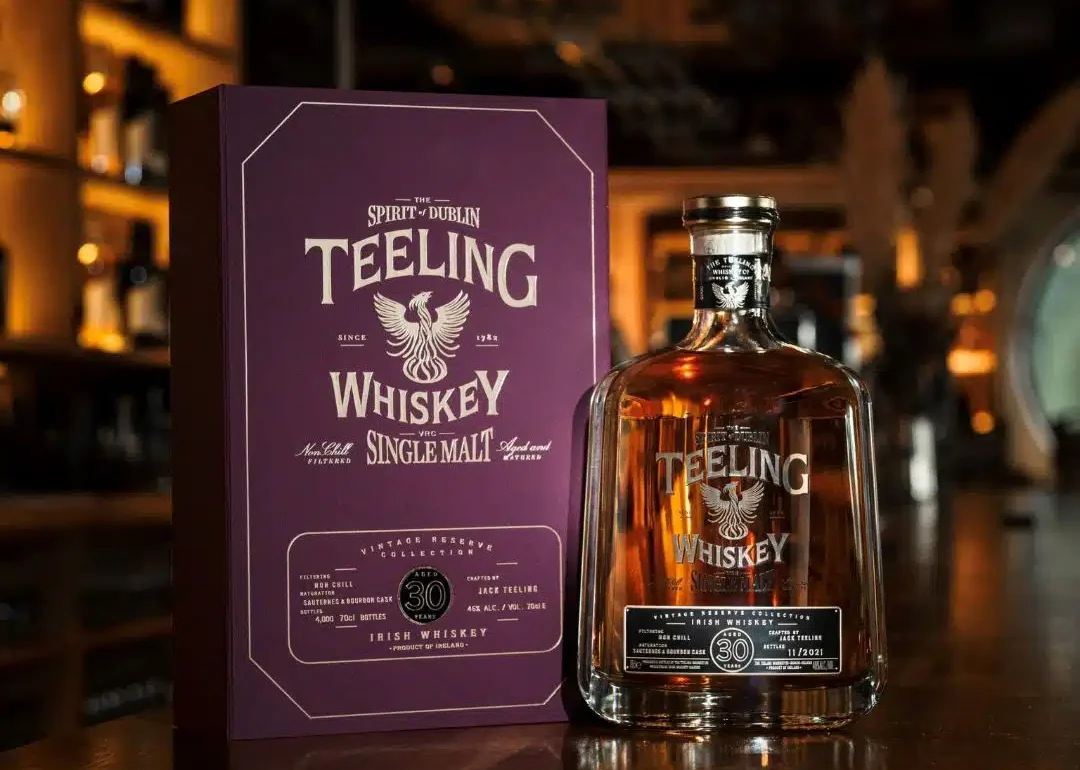
Sounds like an exaggeration? Unfortunately, it’s not. Some bottles reach prices of 50,000–60,000 PLN, and that’s just the starting point in this segment’s price ladder. But how much does a 30-year-old whiskey cost? Today, I’m going to find out!
This is an alcohol that has matured in barrels for three decades. The difference between “whisky” and “whiskey” is mainly geographical—Scots and Japanese spell it without the “e,” while the Irish and Americans include it. But regardless of spelling, they all need time. And that time comes at a price.
The premium alcohol market is booming. The whiskey segment with long maturation is seeing annual growth rates of several percent. People buy not just to drink—they treat it as an investment. Sometimes, it’s a better bet than stocks or bonds.
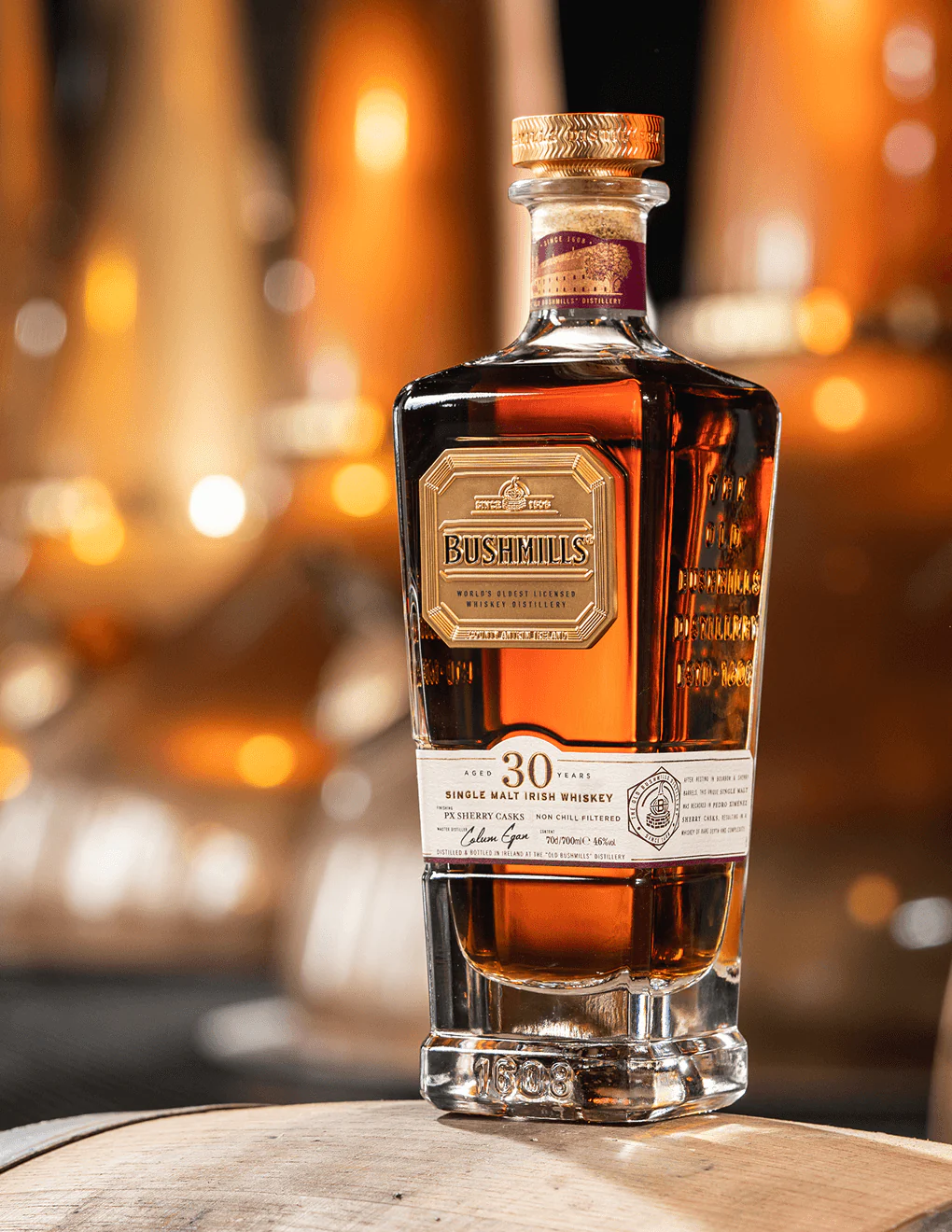
photo: bushmills.com
How much does 30-year-old whiskey cost? – three decades in a barrel!
The record belongs to the Macallan 1926, which went under the hammer for over 6 million PLN. For a single bottle. This is no longer just alcohol—it’s a work of art in liquid form.
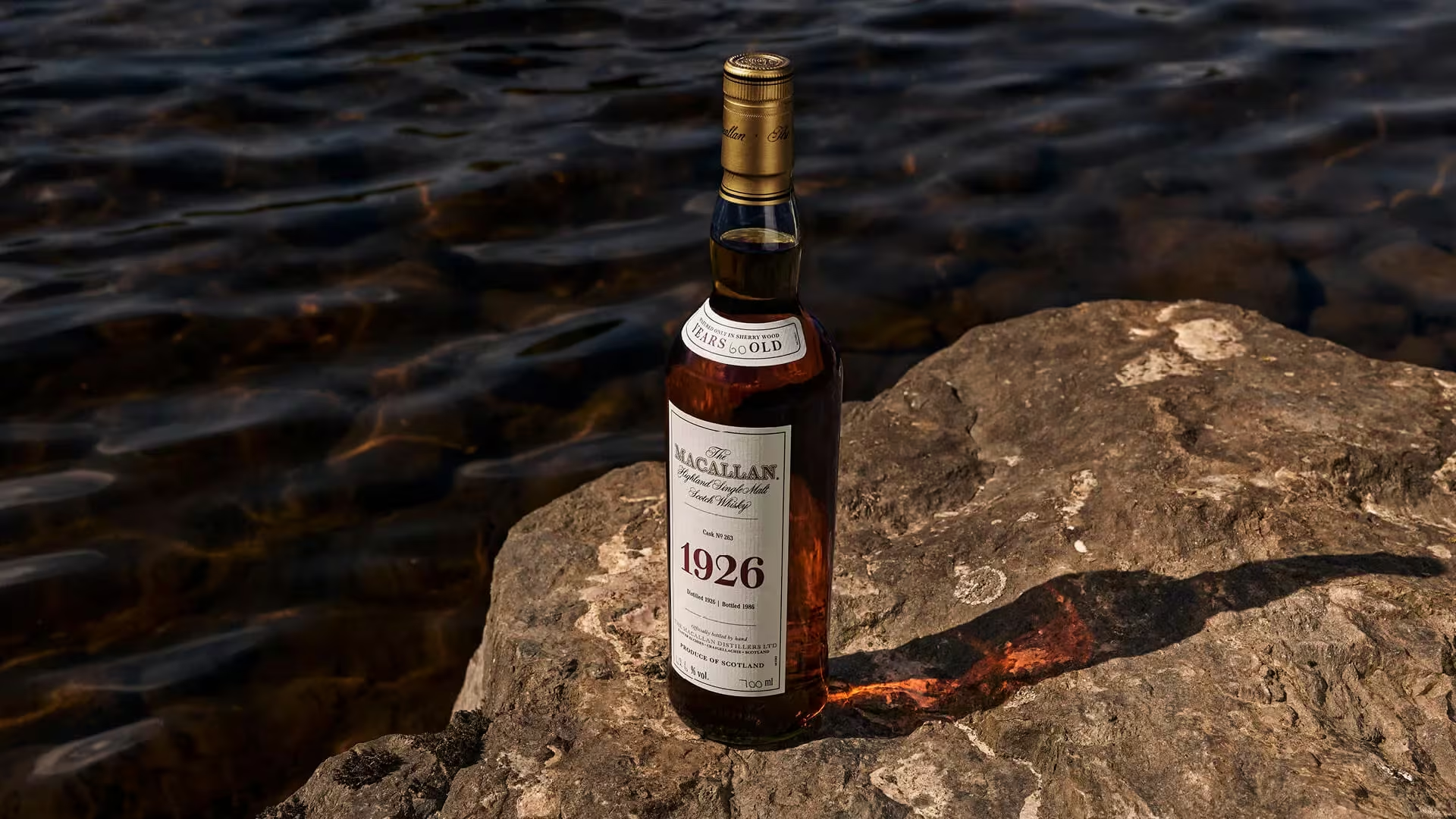
photo: themacallan.com
Why would anyone pay that much for a bottle of whiskey? What makes a single bottle worth more than a brand-new car? And is it really worth treating alcohol as a bank investment?
This segment fascinates not only collectors. Ordinary people wonder whether these prices reflect real value, or if it’s all just marketing and snobbery. The truth lies somewhere in between.
To understand the phenomenon of 30-year-old whiskey, you need to look at three key aspects. The first is the mechanisms that drive these astronomical prices—from production costs to the psychology of luxury purchases. The second is specific examples of bottles and their valuations across different markets. The third is a practical look at whiskey as an investment vehicle.
Each of these areas reveals a different piece of the puzzle. Together, they show whether we’re dealing with a justified valuation of a premium product, or a speculative bubble that will eventually burst.
Let’s start with the basics—what actually makes up the price of a bottle of whiskey that might have witnessed the days when the internet was still in its technological infancy.
What determines the price of 30-year-old whiskey?
The price of 30-year-old whiskey is no coincidence. Behind every bottle are several mechanisms that together determine the final amount.
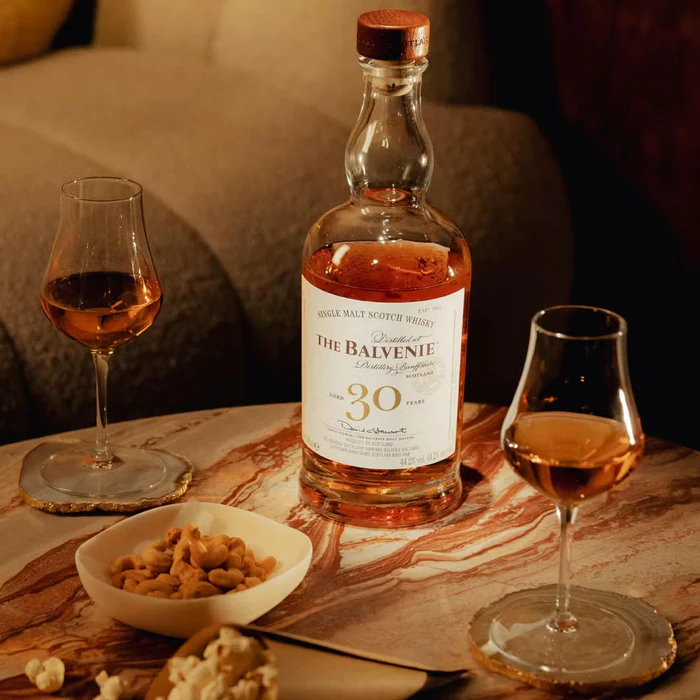
photo: secretbottleshop.co.uk
Producing such whiskey is a long story. First, you need to invest in raw materials, distillation, barrels. Then, wait three decades. But most importantly—whiskey evaporates. This process is called the “angel’s share,” and that’s where the heart of the matter lies.
Every year, about 2-3% of the alcohol evaporates from the barrel. After 30 years, only about 40-50% of the original volume remains. From a barrel that initially held 200 liters, after three decades there may be just 80-100 liters left. The rest simply disappears.
That’s only one side of the coin. In Poland, the cost structure looks like this: excise tax accounts for about 35-40% of the retail price, VAT adds another 20%, and the store and distributor margin together can reach 25-30%. That leaves barely 10-20% to cover the actual production costs and the producer’s profit.
Branding plays its part. People pay not only for the liquid in the bottle, but also for the name, the story, the prestige. Macallan, Glenfiddich, or Johnnie Walker are brands that have built their reputation over decades. Their 30-year-old editions are no longer just alcohol—they’re a status symbol.
Limited editions are a separate topic—producers deliberately restrict production, number the bottles, and create artificial scarcity.
| Factor | Share in the price |
|---|---|
| Taxes (excise duty + VAT) | 55-60% |
| Trade margins | 25-30% |
| Branding and prestige | 10-15% |
| Actual production costs | 10-20% |
All these elements overlap. The angel’s share makes whiskey physically scarce. Taxes raise the price mechanically. The brand adds emotional value. Limited editions create a sense of exclusivity.
It’s like a puzzle—each piece has its place. Together, they form a price that often surprises. But in a moment, we’ll see how all these factors translate into actual numbers on store shelves.
How much will you pay today – specific examples and price ranges
Price ranges for thirty-year-old whiskey can be surprising. From a few thousand PLN for standard bottles to amounts exceeding 50,000 PLN for limited editions.
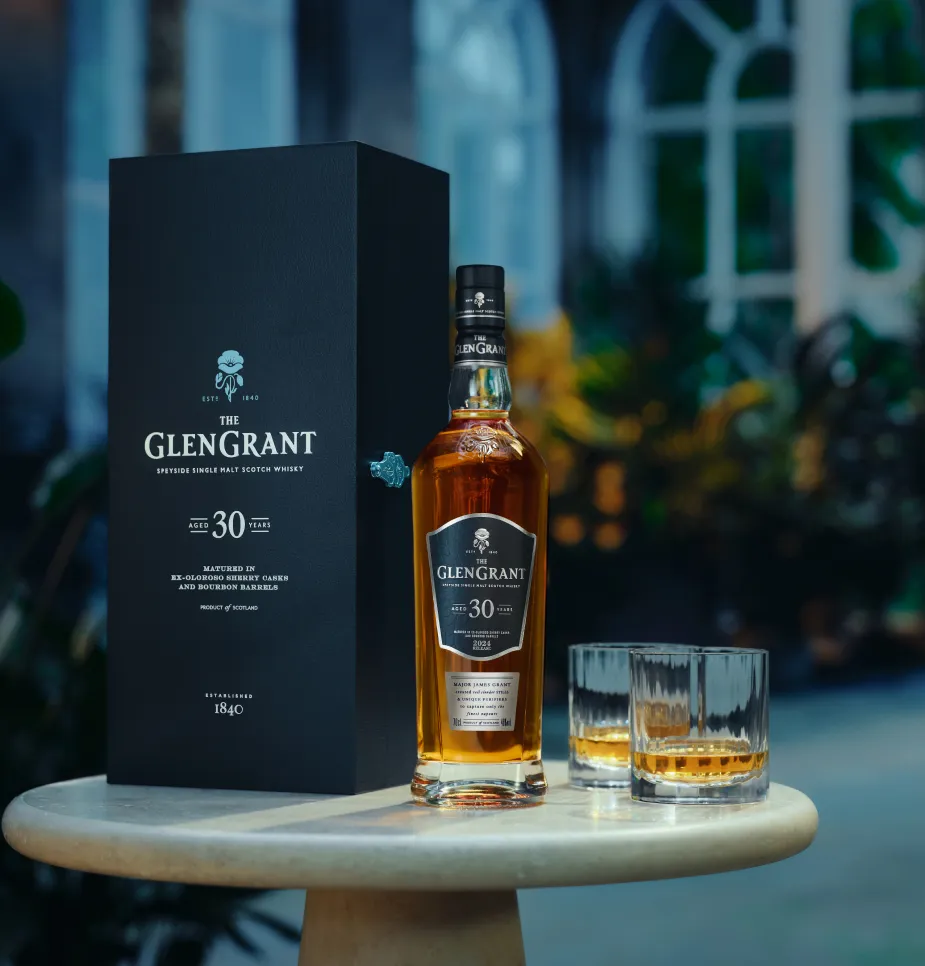
photo: theglengrant.com
I checked current prices in various places and compiled them in a table:
| Brand | Variant | Price PL (PLN) | Foreign price | Availability |
|---|---|---|---|---|
| Macallan | 30 YO Sherry Oak | 28,500 | 6,200 USD | Premium stores |
| Balvenie | 30 YO | 18,900 | 4,800 EUR | Online/stores |
| Glenfiddich | 30 YO Excellence | 4,200 | 950 EUR | Common |
| Highland Park | 30 YO | 7,800 | 1,650 EUR | Limited |
| Johnnie Walker | 30 YO Blue Label | 3,800 | 850 USD | Okay |
The same bottles purchased in Germany or the USA are often cheaper. Macallan 30-year-old at duty-free in Frankfurt costs around 5,800 EUR, which at the current exchange rate is about 25,000 PLN. Add transport and insurance, but you still save around 2-3 thousand.
In the USA, the situation can be even better—you can find Balvenie 30 YO for $4,500. The catch is, you have to factor in customs duties if you exceed the allowance.
Seasonal promotions are a separate story. Black Friday and the holiday season can bring prices down by as much as 15 percent.
I saw Glenfiddich 30 YO on sale for 3,600 PLN instead of the usual 4,200.
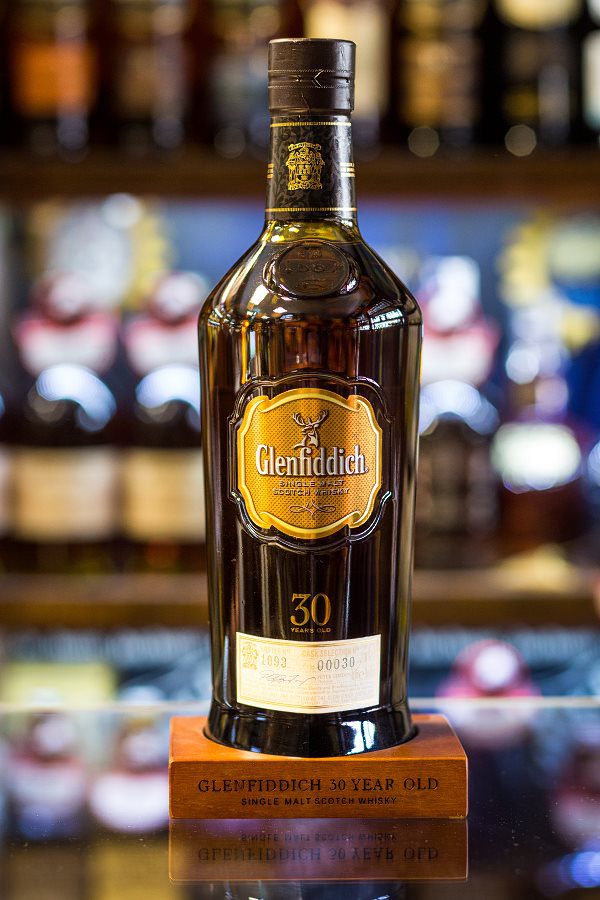
photo: alkoholecapone.pl
Highland Park also sometimes drops to 6,800 PLN during annual sales.
When buying online, it’s worth checking a few things:
☐ Authenticity of packaging and labels
☐ Seller’s reputation on Google and forums
☐ Return and complaint policy
☐ Storage and transport conditions
Fakes of 30-year-olds are less common than with younger whiskies, but at these prices, caution never hurts—especially when buying from abroad.
The price differences between Poland and foreign markets show just how much local taxes and distributor margins matter. Sometimes it’s worth taking a weekend trip to Berlin for whiskey.
Your next steps – informed decisions and forecasts
After analyzing all the data and examples, everyone needs to ask themselves one question—why do you actually want to buy a 30-year-old whisky? This isn’t a spontaneous purchase.
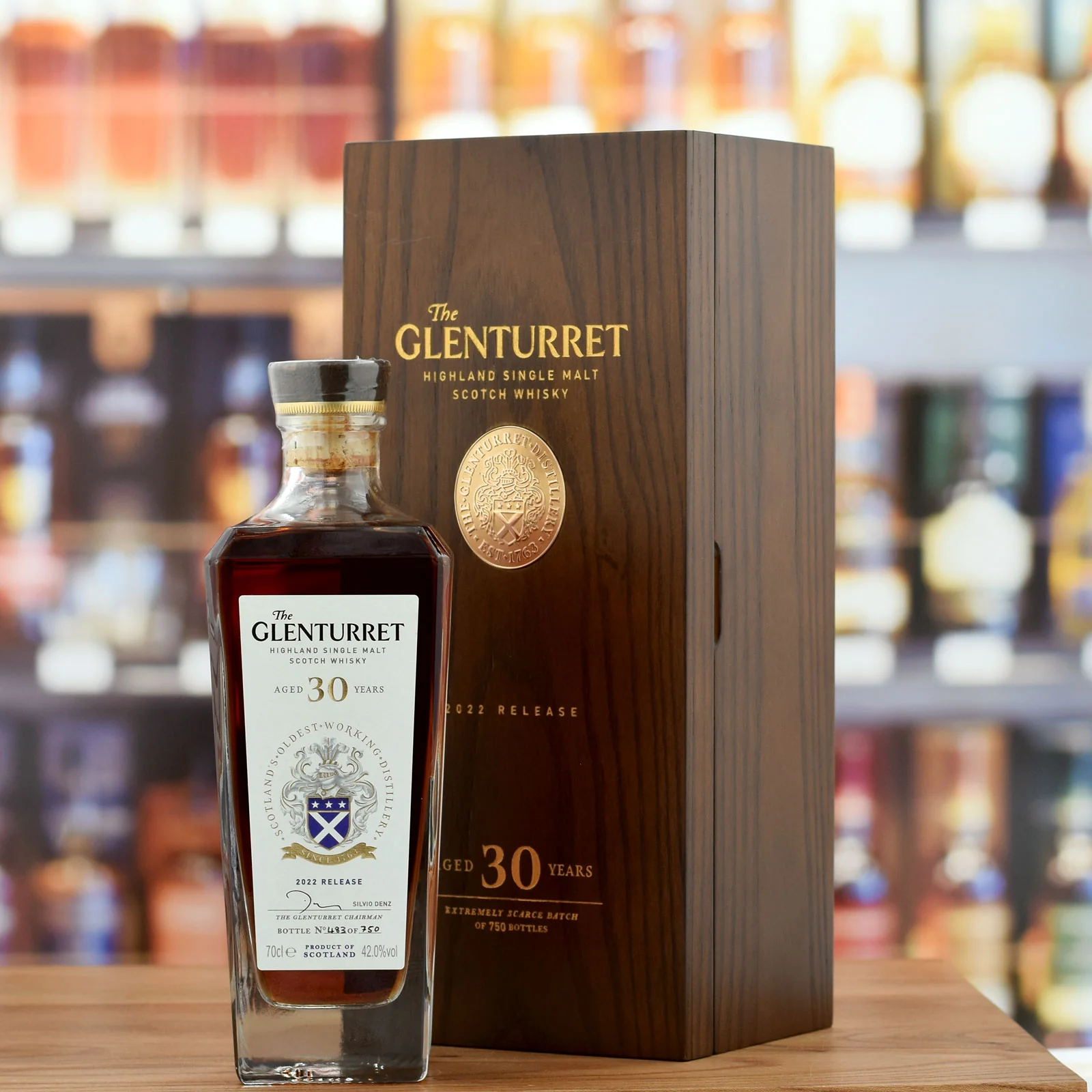
photo: whiskygalore.co.nz
Tasting is a completely different mindset than investing
If you’re planning to open the bottle and savor the flavor, look for well-known distilleries with a solid reputation. There’s no point in overpaying for limited editions—the taste is often similar to standard releases. If it’s a gift, impressive packaging and a recognizable brand matter. Grandma might not know Ardbeg, but Macallan sounds prestigious.
Investment is a whole different story. Here, it’s all about growth potential, not whether the whisky tastes like caramel or peat.
The price forecast through 2030 looks fairly predictable:
- 2025 – an increase of 15-20% compared to current prices
- 2027 – stabilization, possibly slight downward adjustments
- 2030 – renewed growth, but at a slower pace
The reason is simple – more and more people are discovering whisky as an alternative investment, but at the same time, the market is learning. Those wild increases from the pandemic won’t happen again.
What should you do tomorrow morning? First, set up price alerts for 2-3 bottles that interest you. Whisky Auctioneer and other platforms offer such options. Then, sign up for newsletters from a few distilleries – sometimes they have presales exclusively for subscribers.
It’s also worth checking local liquor stores. Some have old stock they’re selling at old prices. Sometimes the owner doesn’t realize there’s a small fortune sitting on the shelf.
One more thing – don’t buy the first bottle you see. The 30-year-old whisky market requires patience. It’s better to wait a month for a good deal than to regret an impulse buy for years.
“Collectors of whisky mostly learn from their mistakes. The smart ones learn from the mistakes of others,” says Tomasz Kowalski, an expert from the Warsaw Whisky Society.
Zybex 1980
investments & business editor
Luxury Blog



Leave a Comment