

How do smart homes provide security?

One in four break-ins could have been prevented with a simple alarm system. How do smart homes keep you safe? Discover the modern approach!
This isn’t a statistic from the ‘90s. This is data from 2024. But today, we’re not talking about ordinary alarms—we’re talking about homes that can think. And protect us better than ever before.
We’ve just entered an era where our homes have become our bodyguards. Smart homes can reduce the risk of burglary by up to 300% simply by deterring intruders and sending instant alerts. This isn’t a futuristic vision—it’s the reality of 2025.
In Poland, the adoption of smart security systems has already reached 35% of households. Just five years ago, it was only a few percent. Why does everyone suddenly want a home that protects itself?
How do smart homes provide security?
The answer is simple. The world has changed. Homeowners no longer want just locks and bars. They want to know what’s happening in real time. They want systems that not only respond to threats, but anticipate them.
photo: hometriangle.com
Smart security isn’t just a single gadget. It’s layered protection—monitoring, access control, and artificial intelligence working together like a well-coordinated team. Each layer has its own role, each one reinforcing the others.
What convinced me personally was a story from a friend. He went on vacation and received a notification about movement in his garden. It turned out to be just the neighbor’s cat, but the system recognized it wasn’t a person and didn’t trigger a false alarm. That’s exactly what sets new solutions apart from old alarms.
Does it sound complicated? It doesn’t have to be. The key is to understand that smart security is built on three pillars: technology working quietly in the background, user-friendly simplicity, and costs that are no longer prohibitive.
Now that we know why smart security has become a necessity, it’s time to take a closer look at how these systems actually work.
Technological pillars of protection: from sensors to artificial intelligence
I’ve been thinking lately about smart homes—everyone talks about security, but what’s really inside? It’s a bit like a car: you only see the steering wheel, but under the hood, there’s a whole lot working together.

photo: developers.googleblog.com
Let’s start with the basics: sensors. These are the eyes and ears of the whole system. You’ve got motion sensors that pick up every movement. Contact sensors on windows and doors—simple but effective. Glass break detectors respond to that distinctive sound. And then there are smoke, carbon monoxide, and flood sensors.
A real-life example? The TP-Link Tapo C400 camera with 4K resolution and IP67 protection rating. It has built-in artificial intelligence for motion detection. So not every cat in the garden will trigger the alarm.
| Technology | Function | Sample device |
|---|---|---|
| Motion sensors | Presence detection | TP-Link Tapo C400 |
| Smart locks | Access control | Yale Assure with AES-256 |
| AI analysis | Reduction of false alarms | Learning systems |
The second layer is access control. Smart locks like Yale Assure use AES-256 encryption—the same standard used by banks. Video intercoms with facial recognition let you grant access to a courier even when you’re not home.
Artificial intelligence is a game changer in all of this. The system learns your habits. It knows you come home from work at 5:30 PM, that you sleep in on weekends. Thanks to this, it recognizes patterns and can distinguish normal situations from suspicious ones.
A 2025 study by the University of Warsaw showed that AI can reduce false alarms to 5%. That’s a huge difference—no one wants to be woken up at night because a cat walked through the living room.
Here’s how machine learning works: the system analyzes thousands of events and draws conclusions. A burglar moves differently than a household member. The pace is different, the gestures are different. The algorithm picks up on this.
Finally, there’s the network layer—the foundation of it all. WPA3 encryption protects communication between devices. Two-factor authentication adds another level of security. Edge computing means that some processing happens locally, in your own home, not in the cloud.
All of this has to work together. A sensor detects movement, a camera takes a picture, AI analyzes whether it’s a threat, the system decides whether to trigger an alarm. It all happens in seconds.
What’s interesting is that each layer has its own role, but together they create something more. One sensor is just information; ten sensors plus AI is intelligence. The system knows not just that something is happening, but what is happening—and whether it should be concerned.
It all sounds great on paper, but in practice, questions arise about the security of these very technologies. Because what’s the point of having the best safeguards if someone hacks into the system that controls them?
The dark side of smart homes: threats and how to neutralize them
My friend came back from vacation to find chaos at home. Someone had taken control of his cameras, disabled the alarm system, and was shouting obscenities through the speaker. Sounds like a science fiction movie? Unfortunately, this is a true story from last year.
75% of IoT devices have security vulnerabilities that can be exploited by cybercriminals – Kaspersky 2024 report
The data is alarming. Kaspersky examined thousands of devices, and the results should concern us. Most smart home solutions are riddled with vulnerabilities just waiting to be exploited. The main issue lies in outdated firmware—manufacturers release patches, but nobody installs them.
The first major problem is “always-listening” devices. Voice assistants, cameras with microphones, smart speakers—all of them collect our data. In Poland, there’s currently a heated debate about privacy on social media. People are asking directly: is Amazon listening to my conversations through Alexa? The answer is—it might, if you don’t secure yourself properly.

photo: windowworld.com
The second threat is DDoS attacks and camera takeovers. Remember the massive leak in 2018? Hackers took control of millions of home cameras worldwide. Some recordings ended up online. Imagine your bedroom camera suddenly working for a stranger.
The third issue is botnets. Your fridge could become a soldier in a cyber army attacking banks. It sounds absurd, but it’s really happening.
Here’s a five-step plan to defend against these threats:
- Change all default passwords to strong ones – at least 12 characters, including numbers and special symbols
- Enable two-factor authentication wherever possible
- Create a separate guest network for IoT devices – keep them isolated from computers with important data
- Regularly review activity logs and suspicious connections
- Back up your configuration once a month – if something goes wrong, you’ll be able to restore your settings quickly.
Most people ignore these steps because they seem complicated. In reality, each one only takes a few minutes.
Now that you know what to avoid and how to protect yourself, it’s time to see how to properly implement the entire system from scratch.
Step by step: how to choose and implement a system that truly protects
I sometimes wonder how many people buy an alarm system on impulse after hearing about a neighbor’s break-in. Then it turns out they’ve spent a fortune on something they didn’t really need.
Let’s start with a real analysis of your needs. Living in an apartment block is a completely different story than owning a house with a garden. In a flat, door cameras and a hallway motion sensor are often enough—DIY cost is around 1000 PLN. Detached house? Here, you’re looking at a full system with outdoor sensors, cameras, and automation. A professional KNX installation can cost up to 15,000 PLN, but it truly offers comprehensive protection.
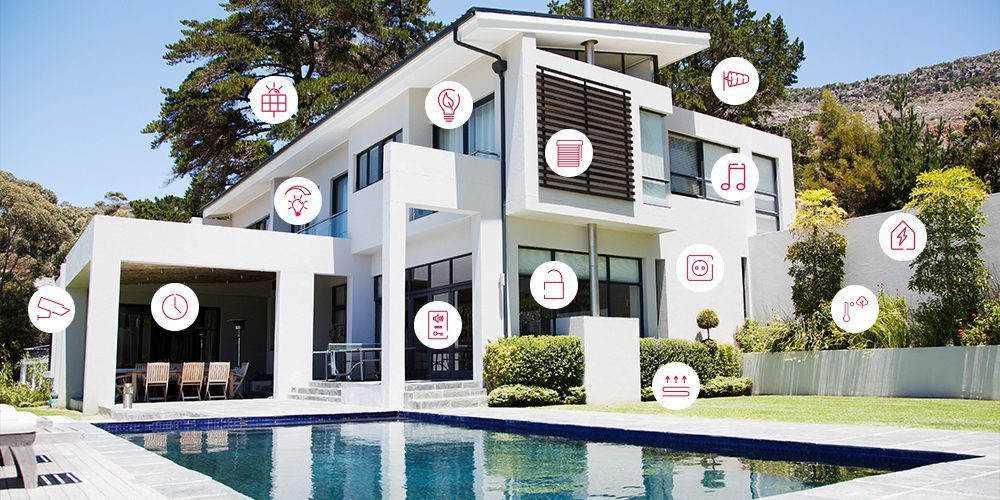
photo: peaknx.com
Budget is one thing, but you also need to think about the future. Maybe next year you’ll want to add window sensors? That’s why the ecosystem matters.
Compatibility is the key to success. Home Assistant ZWA-2, which launched in 2025, changed the game. It combines Zigbee and Z-Wave without needing an internet connection—perfect for those who don’t want to send data to the cloud. Personally, I prefer offline solutions, though I admit the setup can be exhausting.
Let’s walk through the specific steps:
Analysis – measure the area, count the windows and doors, check if you have WiFi in every corner. Without good coverage, even the best cameras are useless.
Selection – this is where many people go wrong. They read reviews and buy whatever has the best ratings. Instead, they should check if the devices actually work together. Xiaomi with Philips Hue? It might work, but not always smoothly.
Installation – if you have no experience with electronics, don’t try to wire sensors to the control panel yourself. Seriously. I know a guy who burned out a 300 PLN smoke detector because he mixed up the wires.
Optimization – the initial setup is just the beginning. You need to “tame” the system for a few weeks, turn off false alarms from the cat, fine-tune sensor sensitivity.
Let me tell you about a Polish family from Kraków. They needed a system to care for their 80-year-old grandmother. They chose a Tapo camera set for about 325 PLN—three indoor cameras with motion detection and a mobile app. The granddaughter can check if grandma took her meds, and grandma feels safer knowing someone is “watching over” her. A simple solution that really works.
Not every situation calls for a complicated system. Sometimes you just need to think through your needs and not get carried away by manufacturers.
Once your system is installed, the moment of truth comes—testing. Test each sensor individually. Open a window with a magnetic sensor, walk past the camera, check if you get notifications on your phone. Set up alerts so you’re not woken up at night by every cat in the garden. Finally, do a break-in simulation—ask someone to enter through the balcony or window when the system is armed.
It might sound strange, but it’s better to check if everything works now than find out during a real threat.
A system that truly protects isn’t the most expensive one, but the one that’s well thought-out and properly configured. Implementation takes patience, but the end result should give you peace of mind.
Your safe tomorrow: what’s next for smart homes
I’ve been wondering lately if maybe all these gadgets in my apartment are a bit too much. But the truth is, there’s no turning back now.

photo: thelabrepair.com
What we’ve been through together shows one thing – smart homes aren’t just a weekend toy. They’re a system that requires thoughtful protection on many levels. Router hardening, a conscious choice of ecosystem, regular updates. It sounds boring, but it’s these basics that determine whether your home will be safe or become an easy target.
Forecasts predict 80% smart home adoption in Poland by 2030. That means in a few years, almost everyone will have IoT devices at home. At the same time, AI-driven predictive security is developing – systems that anticipate threats before they even appear. This is no longer science fiction.
You can’t ignore regulations either. GDPR is just the beginning. Right now, Brussels is already discussing directives on smart grids and data protection in smart homes. Poland will likely introduce its own regulations on this, especially when it comes to energy networks.
But hey, don’t wait for regulations or for 2030. You can start taking action now:
• Audit your home within the next 7 days – check all connected devices and their security settings
• Change the default passwords on every device you already have connected
• Choose one main ecosystem and stick to it, instead of mixing different brands
Honestly, this audit isn’t as scary as it sounds. I did mine last month and discovered I have 23 devices connected to the internet at home. I wasn’t even aware of half of them.
A safe home is a smart future, but only if we lay the groundwork today. There’s no point waiting for someone else to solve the security problem for us. It’s our responsibility and our home.
Mark
lifestyle & business editor
Luxury Blog






Leave a Comment