

Guangzhou on New Year’s Eve – a growing trend and new challenges
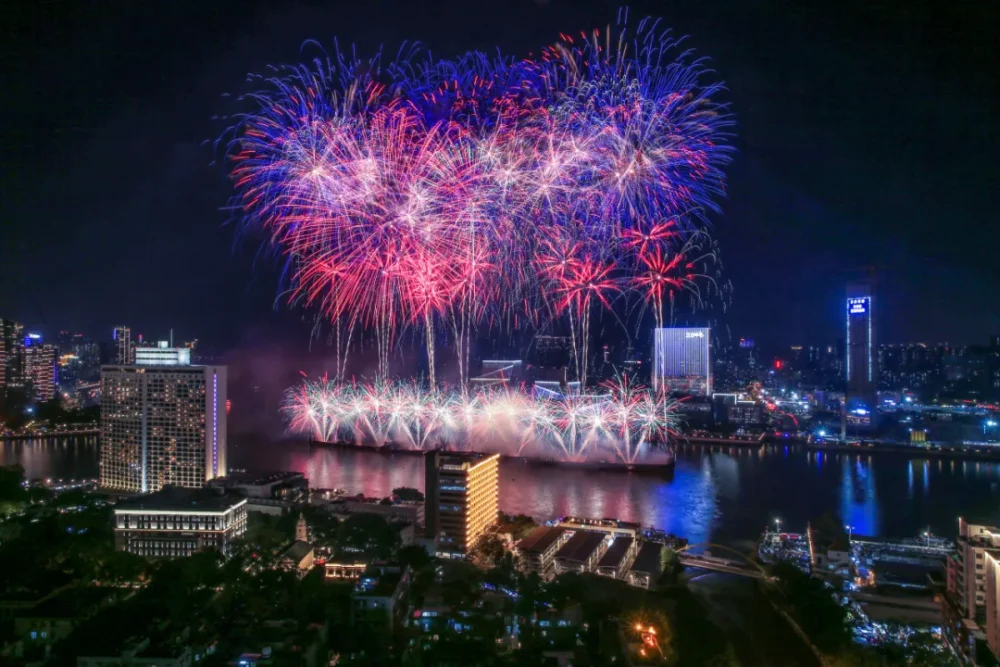
Chinese New Year is the holiday of holidays in China – fireworks, family reunions, weeks off work. But December 31st? Historically, just an ordinary workday. However, Guangzhou is rewriting these rules. The capital of Guangdong province, spread across the Pearl River Delta with a population of about 18.7 million, is reinventing the Western New Year’s Eve – and more and more Europeans, including Poles, are discovering Guangzhou as an “exotic yet accessible” destination for a December getaway.
Guangzhou for New Year’s Eve – the new heart of winter travel
This is a modern metropolis with the iconic Canton Tower towering over a skyline of skyscrapers, a subtropical climate (15-20°C on New Year’s Eve—warm like a Polish autumn), and a vibrant rhythm of commerce, street food, and illuminations. After China reopened post-pandemic, tourism in major cities has revived, Guangdong is seeing growth, and travelers are looking for something beyond Europe or Thailand—and they end up here.
The paradox of New Year’s Eve 2025/2026? The growing popularity of the destination clashes with the cancellation of official outdoor events—the authorities have withdrawn large-scale festivities. Despite this, the city pulses with life: shopping malls are lit up, food courts stay open, and Canton Tower remains the symbol of the night. Guangzhou has never shouted “come celebrate,” but people arrive. And they are surprised to find that it works differently—calmer, more authentic—than the classic New Year’s capitals.
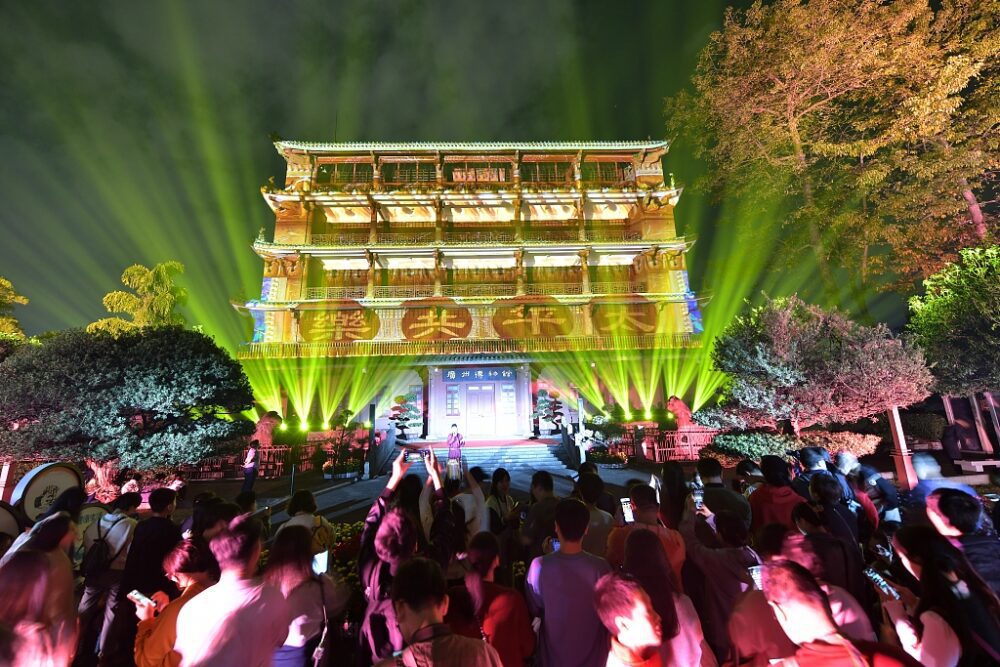
photo: news.cgtn.com
From the Canton Fair to a New Year’s Eve city break
To understand why Guangzhou is suddenly becoming a trendy destination for New Year’s Eve, it’s worth going back several decades. For years, this city was known mainly to businesswomen and traders—not to tourists seeking winter adventures.
Canton Fair – the birth of Guangzhou’s global brand
Since 1957, Guangzhou has been hosting the Canton Fair (China Import and Export Fair) – one of the largest in the world. It was this event that put the city’s name on the calendars of international companies. Thousands of exhibitors, hundreds of thousands of buyers. But beware – this was business, not typical tourism. Hotels were packed with delegations, restaurants catered to business meetings, and there was no atmosphere of relaxation. The city operated in “work mode,” and the idea of “coming to Guangzhou for entertainment” sounded rather absurd.
Canton Tower and the city light show after 2010
Breakthrough? The opening of Canton Tower in 2010—604 meters of modern architecture that instantly became an icon of the skyline. Suddenly, there were spectacular light shows, including New Year’s Eve displays (historically 10-15 minute fireworks over the Pearl River). The city began to build an image as a “tech hub with character” instead of “just the world’s factory.” Investments in the metro, parks, and street aesthetics—Guangzhou wanted to be not only wealthy, but also attractive.
144h transit visa, pandemic, and the city’s reopening
In 2019, China introduced a 144-hour visa-free policy for 53 countries (including Poland) — a change that opened the door to short city breaks and layovers. Suddenly, Guangzhou appeared on the radar of tourists from Europe.
The COVID-19 pandemic (2020-2022) brutally halted this trend. In 2022, the city operated as a gigantic quarantine center — over 87,000 places in special camps. But after reopening in 2023, demand exploded — bookings surged, and New Year’s Eve 2024/2025 became a test of popularity. The year 2025? The next stage: the city reaches peak interest, but the authorities cancel official events on December 31 — as if to see whether tourists will come anyway.
New Year’s Eve 2025/2026 in Guangzhou without fireworks: what does it mean for tourists
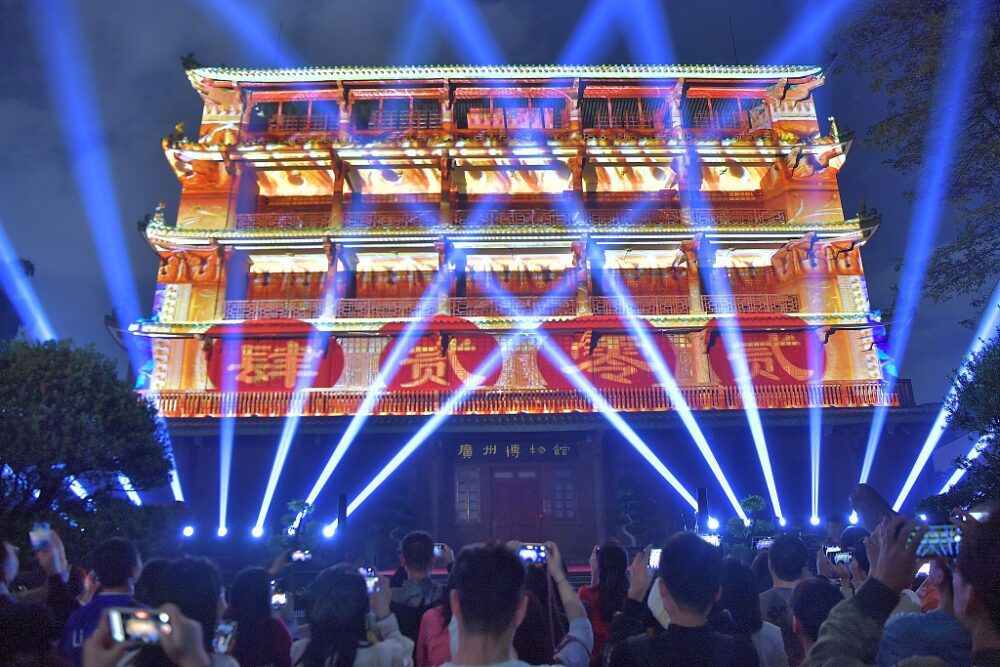
photo: cgtn.com
On the night of December 31, 2025 to January 1, 2026, Guangzhou surprises tourists — there are no official New Year’s Eve fireworks, open-air concerts, or countdown zones. The authorities canceled all outdoor events around noon on December 31, citing “force majeure” and public safety. Xi’an, Zhengzhou, and other Chinese metropolises did the same. For many visitors, it’s a shock — they expected a light show, but were met with silence.
Why are there no official events in Guangzhou this year?
Officially, it’s about crowd control and preventing panic. Unofficially? There is plenty of speculation. The internet is abuzz with theories about economic difficulties (losses are estimated at around 100 million CNY from New Year’s tourism alone) and avoiding protests. The authorities are focusing on prevention—better to cancel than risk an incident.
Security, monitoring, and public sentiment
Police patrols are everywhere, and cameras are even more so. Estimates suggest there is one camera for every two people, placing Guangzhou among the world leaders in surveillance. For some, this brings comfort; for others, it creates a sense of constant observation. Social media is buzzing: enthusiasts praise the “real life of the city,” while critics compare it to “third-world filth like Cairo” and question whether this is still protection or already control.
What does New Year’s Eve look like in a city without fireworks
Despite cancellations, Guangzhou never sleeps. The Canton Tower glows with illuminations, shopping malls sparkle with decorations, and street food steams as usual. Chimelong Tourist Resort operates as normal. Tourists move the party to bars and hotels (rooms 500–1,500 CNY/night). Flight from Poland: 3,000–5,000 PLN/person. Baiyun Airport handled 75 million passengers in 2024, with international traffic expected to grow by 20–30% in 2025. Interest remains high, despite the lack of major events.

photo: holidaysmart.com
How to plan a New Year’s Eve trip to Guangzhou from Poland
Organizing New Year’s Eve in Guangzhou with Polski sounds exotic, but logistically it’s simpler than it seems. The city boasts one of the largest airports in Asia (Baiyun served 75 million passengers in 2024), and flight connections—although often with a layover—are quite accessible. All it takes is planning a few key steps in advance.
Flights and first steps upon arrival
From Warsaw to Guangzhou, the flight takes about 12 hours, usually with a stopover in Beijing, Frankfurt, or Hong Kong. LOT and China Southern offer regular connections, and if you book your ticket several months in advance, you can expect to pay between 3,000–5,000 PLN/person. Baiyun Airport (the hub for the entire region) is very well connected to the city center—metro, express buses, and app-based taxis—all operate efficiently and at low cost.
Visa, 144-hour transit and formalities
Since 2019, a 144-hour visa-free transit has been in effect for citizens of 53 countries, including Poland. It sounds convenient for a short city break during transit, but beware—the regulations change, so always check the current visa requirements before departure. If you’re planning a longer stay (e.g., 7 days), you’ll need a standard tourist visa.
Budget, accommodation, and practical tips
Sample budget per person (4-7 days):
| Expense | Estimated cost |
|---|---|
| Flight (return) | 3,000–5,000 PLN |
| Accommodation (per night) | 500-1,500 CNY (~300-900 PLN) |
| Daily food | 100-300 CNY (street food vs. restaurants) |
| Local transport | ~50 CNY/day (metro, taxis) |
Accommodation? Tianhe (modern shopping centers, skyscrapers) or the area around Canton Tower—both are close to everything. The metro has 18 lines and over 700 km of routes, so getting around is a breeze. From Guangzhou to Hong Kong, you take the high-speed train in about 58 minutes —a great bonus for a day trip.
Climate in December/January: 15-20°C, humid, so pack lighter clothes plus something waterproof. Safety? Standard city level—crowds, extensive CCTV monitoring, but generally calm. A surprise for Poles: Tsingtao beer is legal on the street, which can be a pleasant change here.
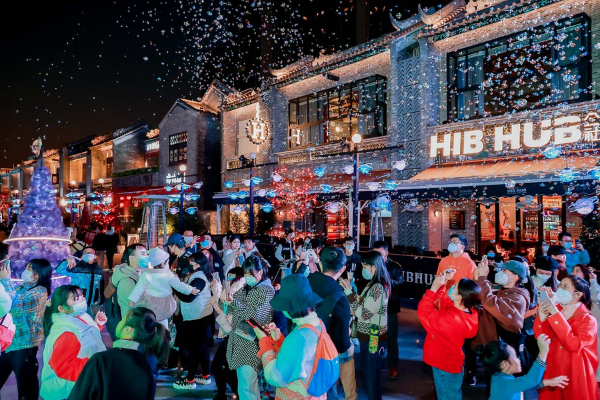
photo: gz.gov.cn
Guangzhou or Shanghai and Hong Kong? How to choose a New Year’s Eve destination in China
Guangzhou compared to Shanghai, Beijing, and Hong Kong
When you think of “China for New Year’s Eve,” probably the first things that come to mind are Shanghai with its futuristic Bund or Hong Kong with its light shows over Victoria Harbour. Maybe Beijing, if you’re interested in history and the Forbidden City. Guangzhou? It rarely makes the Top 5 lists, but that might actually be its advantage.
Each of these cities plays in a different league. Shanghai is all about elegance and cosmopolitan flair—a skyline straight out of Blade Runner, with a slightly cooler climate (around 10°C in December). Beijing is the political and historical heart of the country, but on New Year’s Eve, temperatures often drop to -5°C and the smog can be a real nuisance. Shenzhen is a tech hub full of startups and modern galleries. Hong Kong? An iconic port, expensive hotels, and crowds along the waterfront.
| City | New Year’s Eve atmosphere | Character | Advantages for tourists |
|---|---|---|---|
| Guangzhou | 15-20°C, mild | Trade, gastronomy (dim sum) | Cheaper, less crowded, authentic food |
| Shanghai | approx. 10°C, humid | Cosmopolitan, elegant | Spectacular skyline, nightlife |
| Beijing | ok. -5°C, frosty | Historical, political | Monuments (Great Wall), culture |
| Hong Kong | approx. 17°C, mild | Financial, international | Light shows, shopping, the ease of the English language |
Climate, crowds, and costs – which destination is right for whom?
Guangzhou works a bit like an “anti-Beijing”—warmth instead of frost, street food instead of imperial palaces, and much lower prices than in Hong Kong. If you avoid crowds and want more authenticity (without the English-speaking vibe of HK), Canton is a great compromise. And those 15-20°C temperatures are perfect for people who prefer to steer clear of the cold.
The Pearl River Delta as a base for a New Year’s Eve tour
Guangzhou is located in the heart of the Guangzhou-Shenzhen-Hong Kong megaregion—almost 80 million residents in a single delta. The high-speed train will take you to Hong Kong in 58 minutes. You can start your day in warm Canton with dim sum for breakfast, go shopping in Shenzhen, and end New Year’s Eve by Victoria Harbour—all in one weekend.
Sometimes there’s a trend for snow tourism (for example, Liaoning with a 2 km ski run), but Guangzhou is more of an urban alternative with cuisine and shopping, not winter sports.
Is it worth choosing Guangzhou for upcoming New Year’s Eve seasons
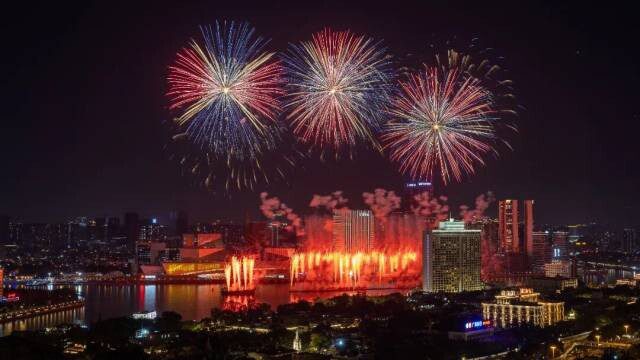
photo: eguangzhou.gov.cn
Guangzhou will not disappear from the map of New Year’s Eve destinations — that’s for sure. The cancellations on December 31, 2025 were a shock, but the city still has plenty to offer those looking for something different from mass concerts and fireworks. In fact, that might be exactly why it’s worth considering for the coming seasons.
How might New Year’s Eve tourism to Guangzhou develop after 2026
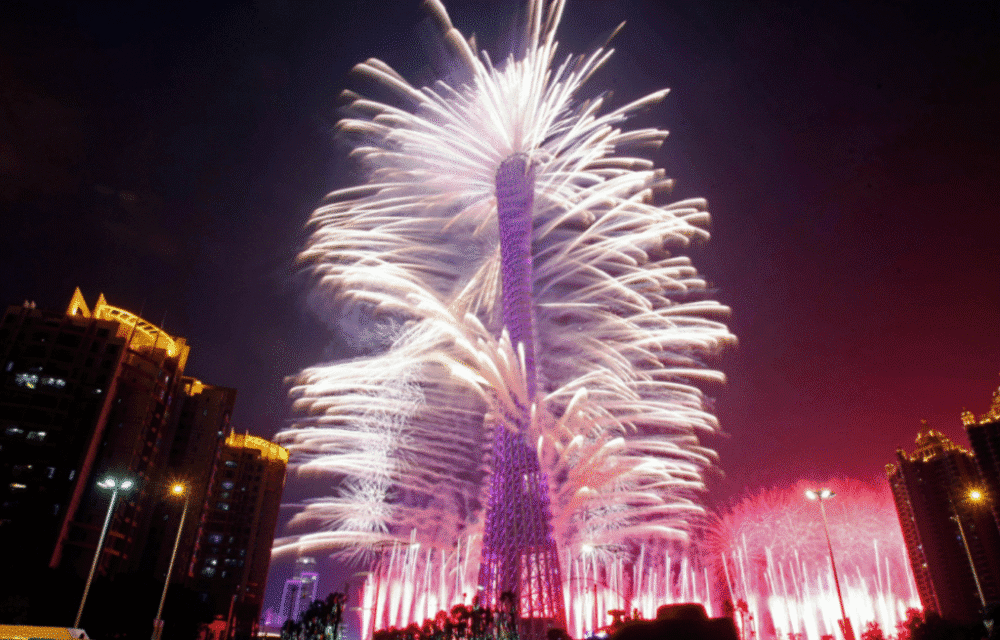
photo: newyearseveblog.com
Strengths? Above all, the authentic city life — dim sum at six in the morning, night markets with street food, huge shopping malls open around the clock. Plus, modern infrastructure (the metro is more efficient than in many European capitals), mild winter climate, and proximity to Hong Kong or Shenzhen — you can combine several cities into one trip.
Trends after 2026 look promising. Chinese New Year (January 29, 2026) is increasingly shifting the tourist peak — people are aiming for the off-season just before or right after the holidays. Forecasts predict traffic growth of up to +30%, and projects like the free port in Hainan (duty-free imports +57 million USD in December 2025) show that China is opening up even more.
photo: ncabgroup.com
But… unpredictability remains. Authorities can cancel events without warning — that’s a risk you have to factor in. Shenzhen is a strong competitor with technology and events, and logistics during February 1-7 (New Year breaks) can paralyze supply chains — companies like Magemar Logistics and PEKO openly warn their clients.
Not for everyone — but for savvy travelers, it could be a bullseye.
Toni 99
travel editorial team
Luxury Blog






Leave a Comment