

Global luxury real estate market – where is the price per square meter the highest?
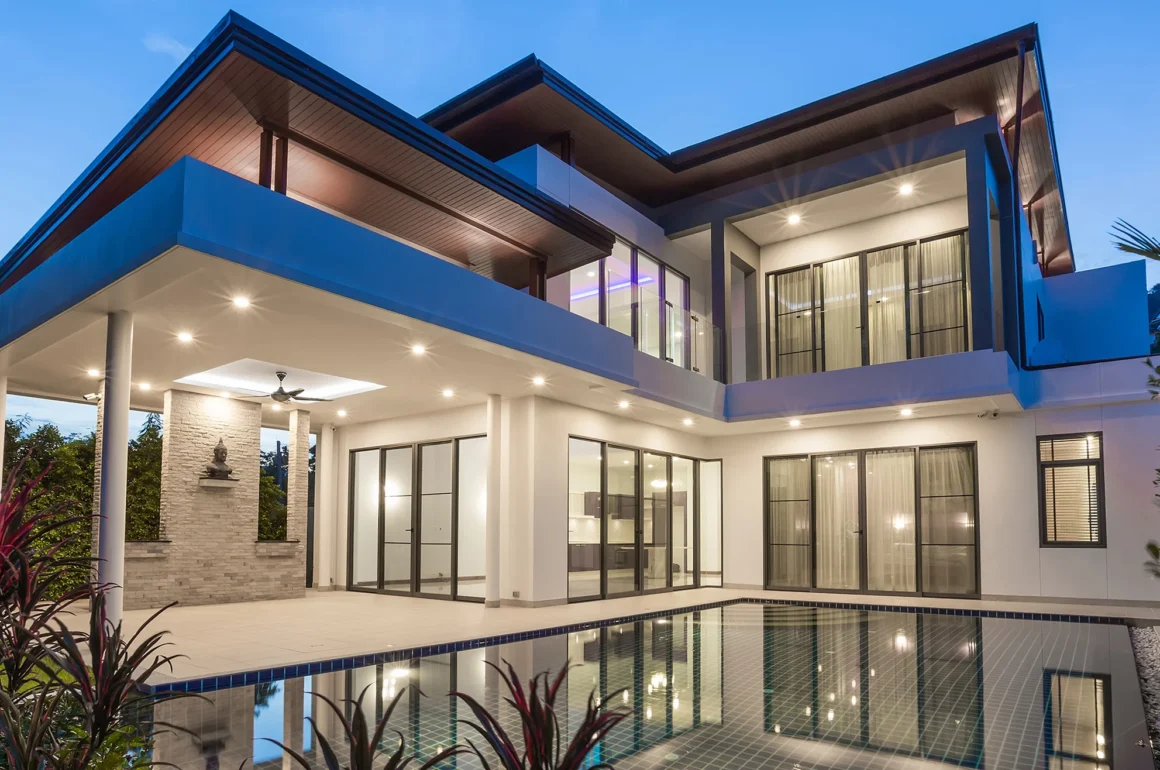
With 4,000,000 PLN, you could buy a 40-square-meter apartment in Hong Kong or a villa with a pool in Tuscany—the same amount, two completely different worlds. Today, I’ll try to take a closer look at the global luxury real estate market.
Just ten years ago, no one imagined that a square meter could cost more than a car. Now, we’re seeing prices that turn everything upside down. In Monaco, you pay 200,000 euros per square meter. That’s not a typo.
The global value of the luxury real estate market in 2023 reached $1,121 billion according to Deloitte. Forecasts for 2025 predict an increase of 24–25 percent. It’s almost hard to comprehend.
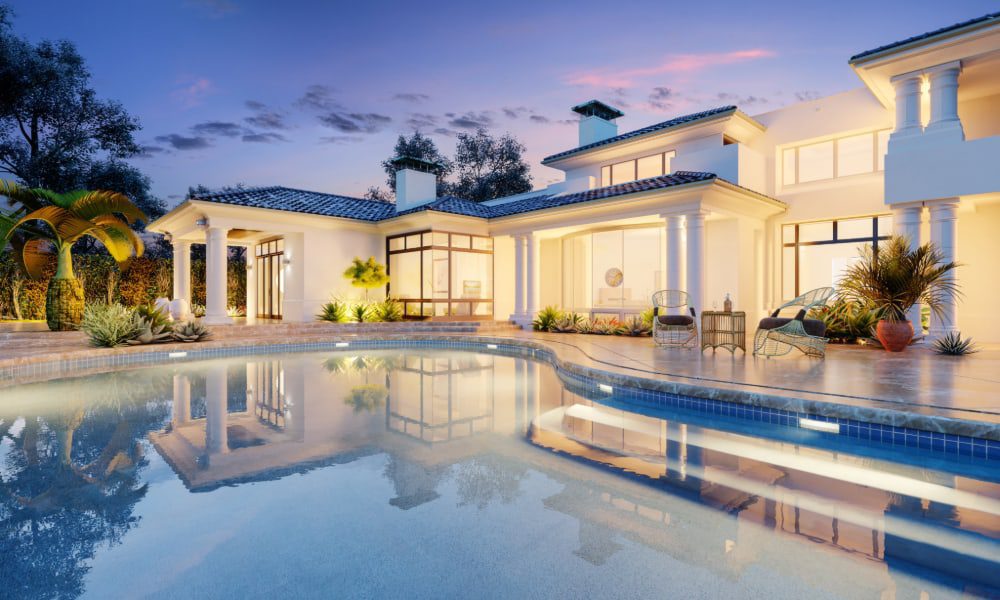
photo: tomferry.com
Global luxury real estate market – welcome to the world of millions
The question “where is the most expensive?” matters today more than ever. It’s not just about curiosity. It’s about understanding how the modern world of money and power operates. Where the wealthiest invest their capital, the future of entire regions is shaped.
I sometimes wonder what will happen to prices in the most exclusive locations. Will Monaco, with its €200,000 per square meter, be able to maintain its position in the era of sustainable development? Will the new generation of billionaires still want to live in concrete skyscrapers on the Mediterranean coast?
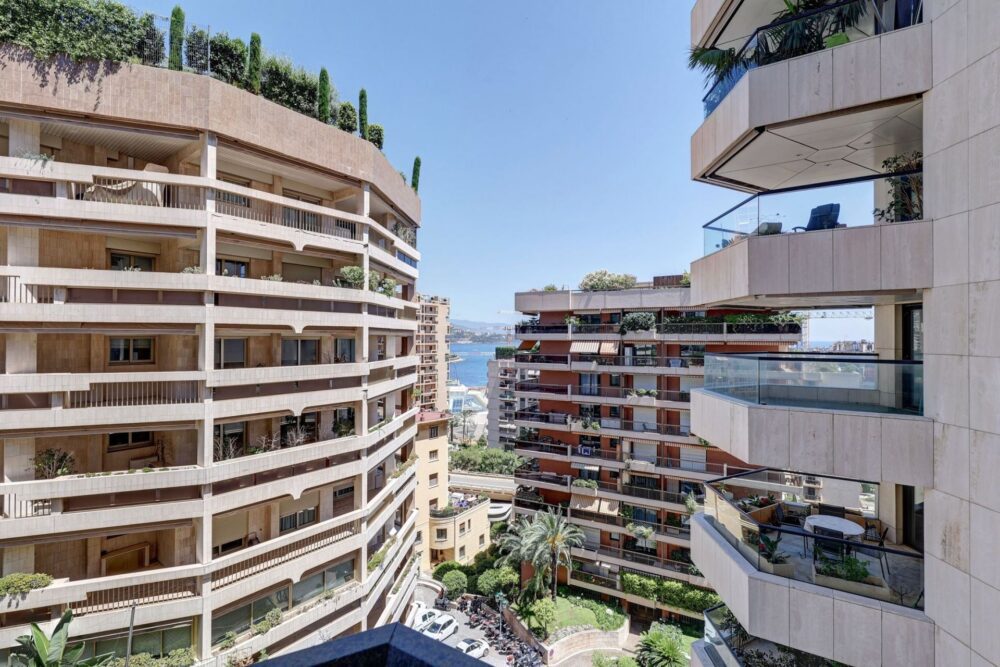
photo: sothebysrealty-france.com
This article answers three key questions about today’s luxury real estate market:
• Which cities are breaking all price records and why these places in particular
• What do multi-million apartments look like and what exactly are you buying for that kind of money
• Does the luxury real estate boom have its limits, and when might it end
We live in a time when an apartment can cost more than the budget of an entire city. It sounds like science fiction, but it’s our reality. Before we look at the specific ranking of the most expensive locations, it’s worth understanding the scale of this phenomenon.
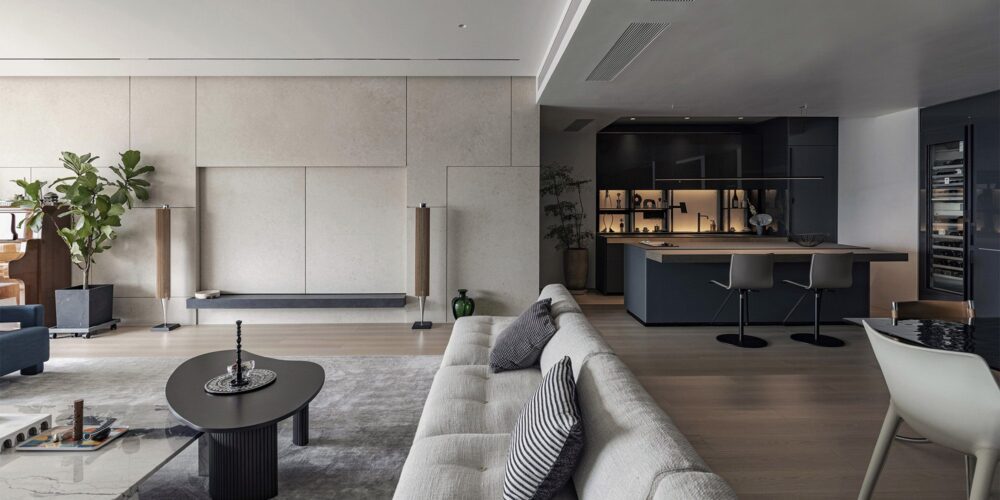
photo: valcucine.com
Global Hotspot Ranking: Where a Square Meter Costs a Fortune
I’ve checked the latest data from the first months of 2025, and I have to admit—the price per square meter in the world’s most expensive districts is impressive, even to me.
| City/District | Average price/m² | Record 2022-2025 | Why is it expensive |
|---|---|---|---|
| Monaco | 55,000 EUR/m² | 95 million EUR (penthouse) | No taxes, prestige |
| London-Mayfair | 45,000 EUR/m² | 78 million GBP (house) | History, proximity to the City |
| Hong Kong-Central | 42,000 EUR/m² | 168 million HKD (apartment) | No space, finances |
| New York-Manhattan | 38,000 EUR/m² | 250 million USD (penthouse) | Status, Wall Street |
| Singapore-Orchard | 35,000 EUR/m² | 62 million SGD (penthouse) | Asia’s business hub |
| Cannes-Croisette | 32,000 EUR/m² | 45 million EUR (villa) | Festival, French Riviera |
| Tokyo-Shibuya | 28,000 EUR/m² | 12 billion JPY (complex) | Technology, tradition |
| LA-Bel Air | 25,000 EUR/m² | 295 million USD (estate) | Hollywood, climate |
“The difference between Europe and Asia? In Monaco, you pay for capital security; in Hong Kong, for access to rapidly growing markets. America is simply pure prestige.”
The most fascinating case is probably that penthouse in New York for $250 million. The owner bought it mostly online, without ever seeing it in person. In Monaco, on the other hand, the record-breaking deal involved an apartment with its own yacht port—you can literally sail right up to the balcony.
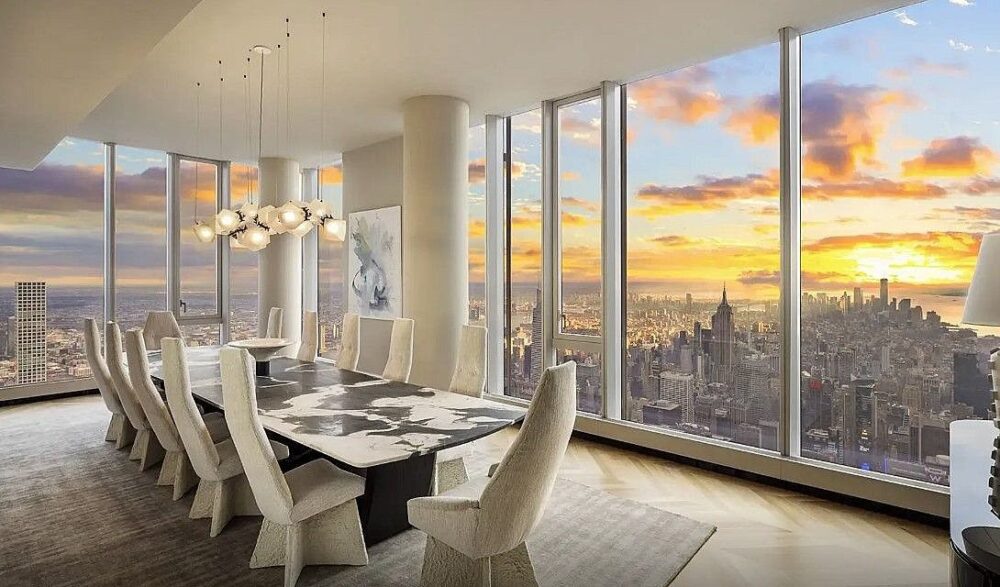
photo: 943thepoint.com
Asian markets operate differently than European ones. In Singapore or Hong Kong, buyers focus mainly on new developments, while in London or Cannes, it’s often historic properties with character.
Poland in the world’s mirrors
Here in Warsaw, the most expensive locations have already reached 95,000–110,000 PLN/m², which is about 20,000 EUR/m². That’s still five times less than Monaco, but the gap is narrowing. Gdańsk broke its own record—an apartment on the Motława River sold for 24.8 million PLN. Laughable compared to Manhattan, but for Polish standards, it’s a breakthrough.
I remember five years ago when people talked about the “madness” of 15,000 PLN/m² in central Warsaw. Today, that’s the norm in better locations.
What do these cities have in common besides astronomical prices per square meter?
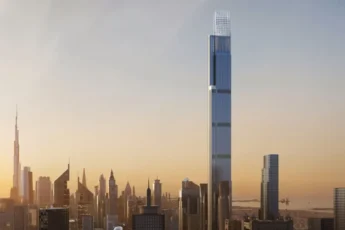
photo: solproperties.ae
Why is it so expensive there? Factors that shape prices
Where do these astronomical prices come from? This question has been on my mind ever since I saw an apartment in Hong Kong priced at 50,000 dollars per square meter. It sounds like a joke, but the mechanisms behind such figures are entirely rational.
ASCII CHART – MAIN PRICE FACTORS:
Supply vs Demand ████████████ 60%
Macroeconomics ████████ 40%
Tech & Lifestyle ████ 20%
I’ll start with the economic fundamentals, because they’re what drive the entire machine. In Hong Kong, only 25% of the land is suitable for development—the rest is mountains and water. Global capital, however, faces no such limits. Billions of dollars from mainland China, Singapore, and London are searching for a safe haven. The result? Prices rise not because the apartments are better, but simply because they’re rare.
Monaco is an even more extreme case. I call it a “bank on the rocks”—here, you’re not buying real estate, you’re buying security. According to PwC 2025, “political stability and zero income tax generate a security premium of 30-40% compared to other premium locations.”
Interest rates also play a key role. When the Fed cuts rates, wealthy investors abandon bonds and look for alternatives. Real estate in prestigious locations then becomes like works of art —the more expensive, the more desirable.
Technology adds another layer of cost. AI-ready homes with intelligent energy management, LEED or BREEAM green certificates—all of this comes at a price. The sustainability premium is currently 5-10%, but I see that number rising. A smart home in New York is no longer a luxury—it’s a must for anyone paying millions.
Sometimes I wonder if we’re going overboard with these certificates. But the market is clear—an apartment without a green badge loses value faster than an iPhone without the latest iOS.
Culture and prestige are the third pillar of this puzzle. Cannes isn’t just a film festival—it’s a global brand. An apartment overlooking the red carpet instantly gains value. Off-market exclusivity works the same way. The most expensive properties never make it to public listings. They’re sold within a closed circle by private brokers.
I remember a conversation with a London broker who told me, “If you see the price online, it means you can’t afford that apartment.” It sounds arrogant, but it makes economic sense. The real gems are sold within networks, where price is just one of many factors.
All these forces work together like the gears in a Swiss watch. Limited supply, global capital, technological requirements, cultural prestige—each element drives the others. Will these forces strengthen or weaken?

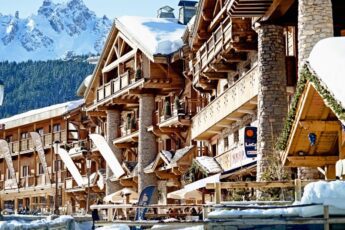
photo: ehl.at
What’s next for luxury? 2025+ trends and key takeaways for investors
I’ve just analyzed hundreds of reports on the luxury real estate market. And you know what surprised me most? Everyone’s looking the wrong way.
While Polish investors are still focused on the local market, the real action is happening in Asia. The forecasts are clear—by 2030, the global luxury real estate market is set to grow by 10–15% annually. Asia will be leading this growth. This isn’t a coincidence; it’s demographic math.
photo: 11prop.com
I see three megatrends that will change everything. The first is Asian dominance—new wealth from Singapore, Hong Kong, and Dubai is buying globally. The second trend is ESG, which is no longer just a fad but a requirement. The third is VR technology, which is revolutionizing the way off-market properties are evaluated.
But beware of the pitfalls. I’ve put together a table of the key opportunities and risks:
| Opportunity | Risk |
|---|---|
| Rising demand from Asia for European real estate | Price bubble on the Polish luxury market |
| Development of VR technology for remote valuations | New EU tax regulations for investors |
| The growing importance of ESG certificates | ECB interest rate volatility |
| Geographical diversification of the portfolio | Political risk in certain jurisdictions |
I remember how five years ago everyone said Warsaw was too expensive. Now those same people regret not buying. History tends to repeat itself, just in different locations.

photo: thepinnaclelist.com
My three specific recommendations for every investor are:
- ESG due diligence – check energy certificates and sustainable solutions in every property
- Geographical diversification – at least 30% of the portfolio outside Poland, with a focus on Asia and stable European markets
- Leverage VR technology – to assess off-market properties and analyze their potential before visiting

photo: vicworkstudio.com
I won’t hide it—the market is about to get more complicated. Regulations will be stricter, competition fiercer. But that’s exactly why those who prepare in advance will reap the biggest rewards.
It’s time to stop thinking locally. Analyze globally, diversify wisely, act decisively!
Michael
real estate editor
Luxury Blog



Leave a Comment