

Williamsburg in Brooklyn – the new number one in NYC luxury
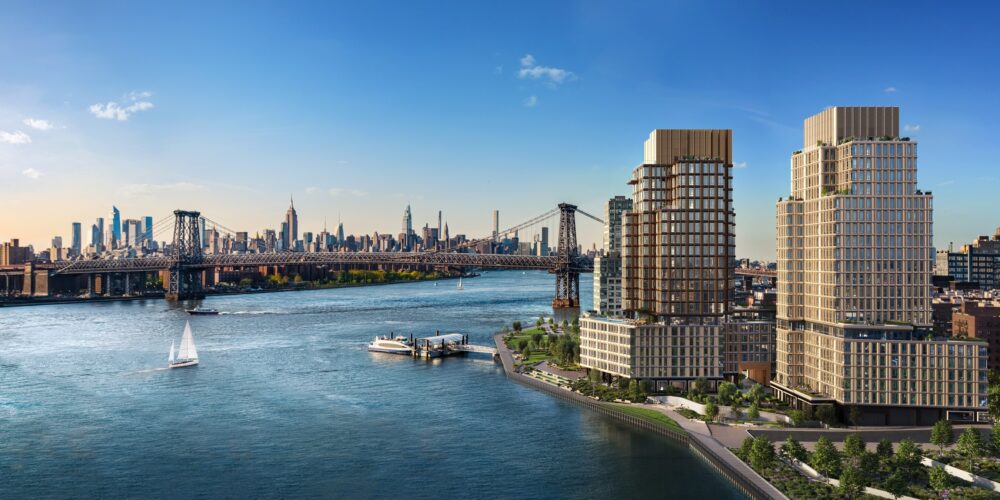
In December 2025, Williamsburg was officially named the fastest-growing luxury real estate market in New York City. The neighborhood on the East River, which just two decades ago was associated with deserted factories and struggling artists, now sells penthouses for multi-million dollar sums and attracts buyers seeking an alternative to Manhattan.
Location is key here—just a few subway stops from downtown, with views of the Midtown skyline, yet offering a neighborhood atmosphere with real street life. There’s no need to “move to Brooklyn” anymore to have access to everything. And the prices? Still lower than in the top locations on Manhattan, though the gap is closing with each quarter.
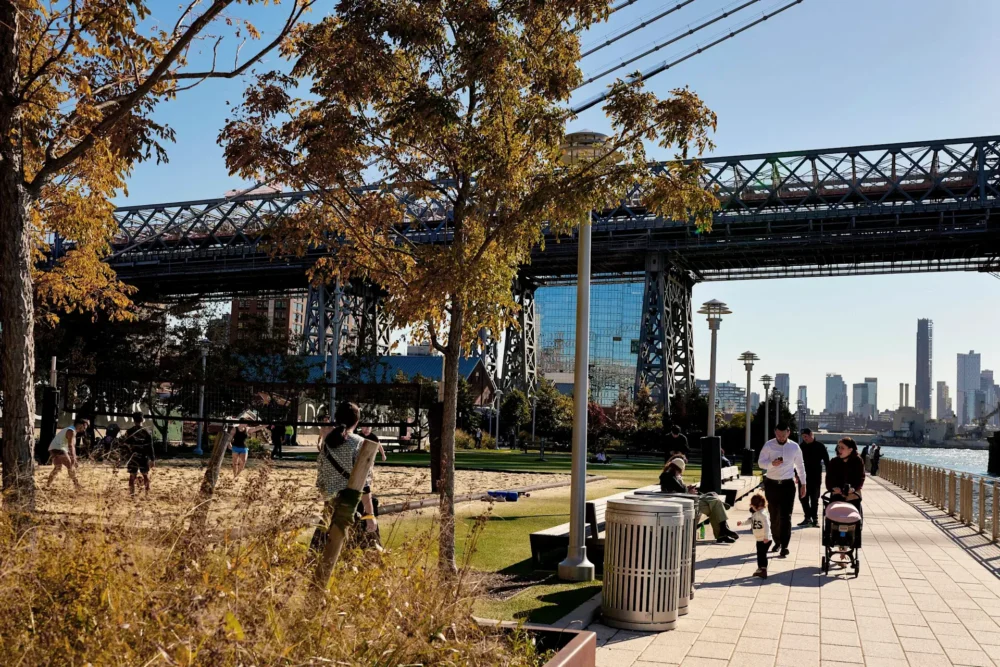
photo: nyctourism.com
Williamsburg in Brooklyn – riding the wave of luxury on the East River
Williamsburg has transformed from a post-industrial enclave into a symbol of modern luxury—without entirely losing that hipster flair that first attracted waves of affluent renters. Today, however, it’s not the vintage shops that define the neighborhood, but developers erecting glass towers and investors willing to pay a premium for a “Williamsburg Waterfront” address.
In this article, you’ll find concrete market data, examples of the most talked-about developments, a profile of the new buyers—and the answer to whether this boom still has fuel, or if we’ve already hit the peak of the bubble. Everyone’s talking about Williamsburg, but not everyone understands what’s really happening here.
Numbers that say it all: how hot is the market in Williamsburg today
“The fastest-growing luxury market”—sounds like a brochure slogan, right? But when it comes to Williamsburg, it’s not just marketing. These are figures anyone can check.
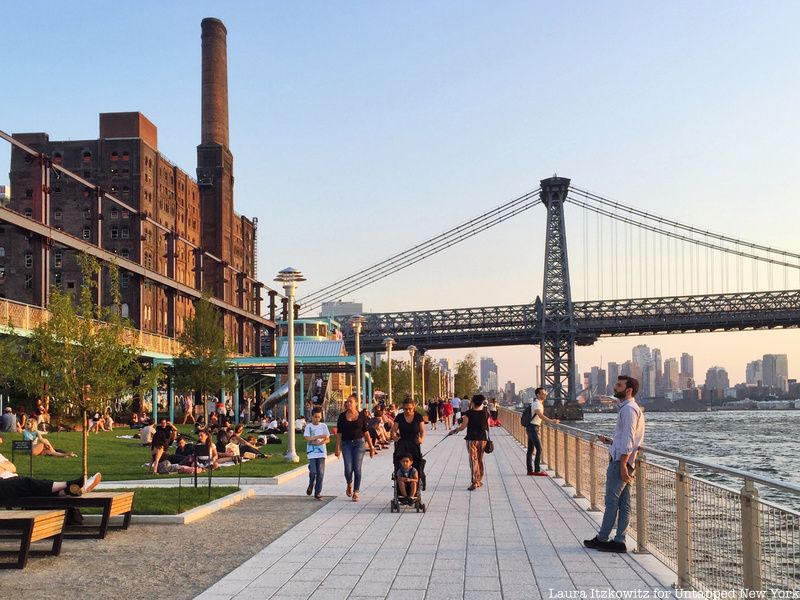
photo: penny-hotel.com
Key luxury market indicators in Williamsburg
The median property price in Q3 2025 was $1.3 million. Year-on-year, that’s a drop of 3.2%, but — and here’s the catch — transaction volume jumped by 44.9%. People are buying faster, more often, and without hesitation. Supply? Just 2.1 months of inventory, while a “healthy” market is around 6 months. In the premium segment, as much as 67% of transactions are cash purchases. No loans, no waiting for the bank.
In November 2025, a total of 176 contracts were signed across NYC for properties priced at a minimum of $4 million — a 12% month-over-month increase. Brooklyn as a whole saw luxury transaction volume rise by 38% year-on-year.
How does Williamsburg compare to Manhattan
Tribeca? The average apartment goes for over $5 million. Flatiron? Similar story. Williamsburg is still more affordable—with a median around $1.3 million—but it’s appreciating faster than Manhattan’s old neighborhoods. Buyers see the potential: they pay less now, but are betting on a district that could match downtown prices in five years.
The market is hot not because prices are skyrocketing (in fact, they’ve dipped slightly), but because everyone wants to be here. And they’re buying before someone else does.
From Resort and Factories to a Creative Mecca: The Story of Williamsburg’s Transformation
Today’s Williamsburg—with its luxury high-rises and prices rivaling Tribeca—has emerged from a completely different, industrial past. It’s hard to believe that as recently as the 1990s, artists were renting spacious lofts here for less than a thousand dollars a month.
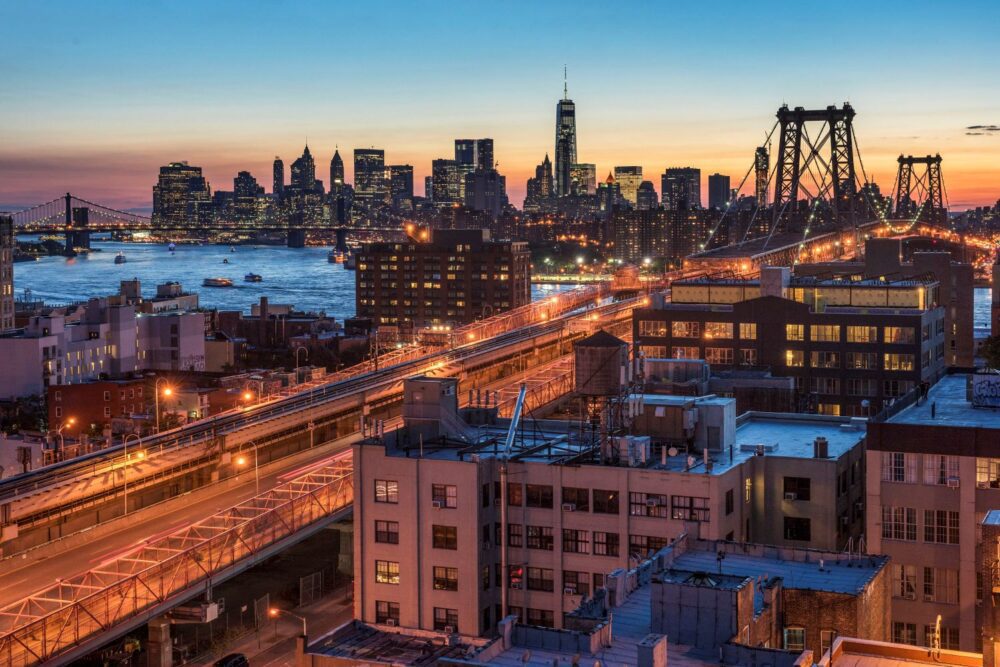
photo: nyctourism.com
From an elite resort to New York’s industrial hub
In the 1830s, Williamsburg was a summer enclave for wealthy Manhattan residents—they arrived by ferry to the banks of the East River to escape the city’s hustle and bustle. But after the Civil War, rapid industrialization took hold: sugar refineries (including the famous Domino Sugar), factories, warehouses. The neighborhood swelled with an influx of workers—Poles, Italians, Jews. The resort transformed into a dense, brutally industrial landscape.
After World War II, factories began to disappear. Deindustrialization meant emptying warehouses, rising crime, and declining residential appeal. In the 1980s and early 1990s, it was precisely these low rents that attracted artists—they could afford lofts for $500–1,000. This gave rise to the legendary club, gallery, and music scene, with parties at McCarren Park Pool and on Bedford Avenue.
The key turning point? Rezoning between 2005 and 2012, which allowed high-rises along the waterfront, and the opening of the direct L subway line to Manhattan in 2005. The neighborhood’s population grew by tens of thousands, and its demographic profile began to shift—young professionals from finance and tech replaced the hipsters. The groundwork for today’s boom was laid.
Towers, parks, and penthouses: the most important luxury developments in Williamsburg
The scale of transformation in Williamsburg is best illustrated by specific addresses—development projects that, within just a few years, have turned the waterfront from post-industrial to ultra-luxurious. This isn’t about concepts, but about towers with names, floor counts, and penthouse prices reaching into the millions of dollars.
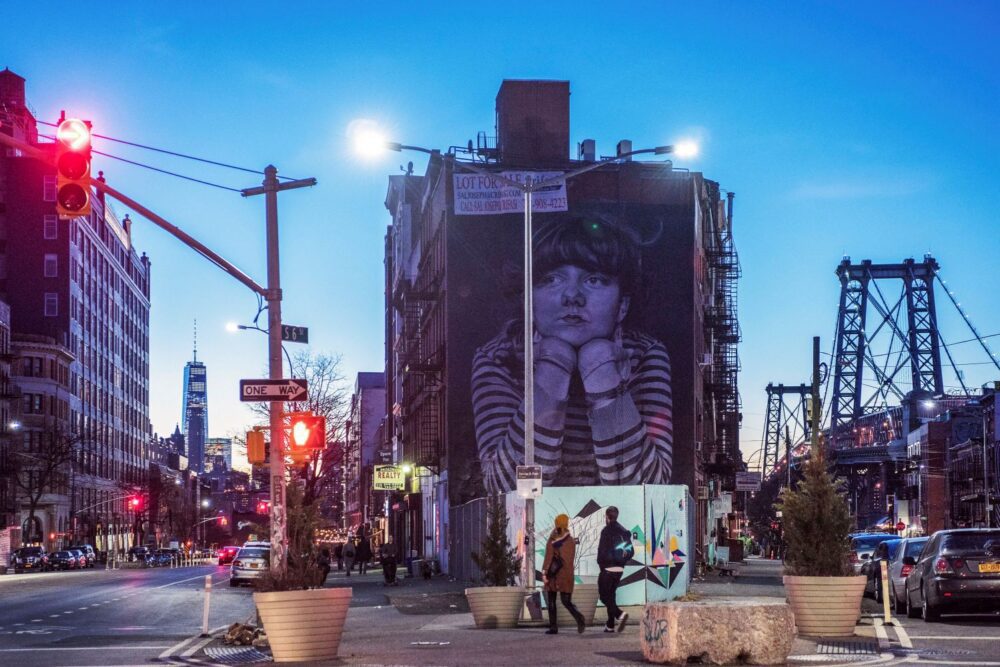
photo: nyctourism.com
One Williamsburg Wharf and Domino – new icons of the waterfront
One Williamsburg Wharf is the flagship of the entire transformation: two towers with a total of 808 residences, direct access to the East River, 30,000 sq. ft. of amenities (pool, spa, wine cellar, private cinema), and penthouses priced above $10 million. It’s a symbol of a new era—a place where Manhattan comes to live.
The Domino complex is even larger in scale: over 2,800 units, 66,000 sq. ft. of retail space, and a 5-acre waterfront park open to all. Phase II was completed in 2025, finalizing one of the largest waterfront revitalizations in NYC’s history.
Exclusive boutique addresses
It’s not just the giants dominating the scene—smaller projects like 250N10 (91 units, 6 stories, average price ~$1.5M) or 707 Kent Ave (Quay Tower) with its rooftop pool offer a more boutique take on luxury.
Most new towers are tall glass-and-concrete structures in R6-R10 zones, featuring the standard package: sky lounge, EV chargers, wellness amenities, concierge. Zoning regulations require public waterfront access, so every project gives something back to the community—though mostly for image. The result? Williamsburg now looks like a miniature Hudson Yards, just with a more interesting neighborhood.
New residents and lifestyle: who buys luxury in Williamsburg
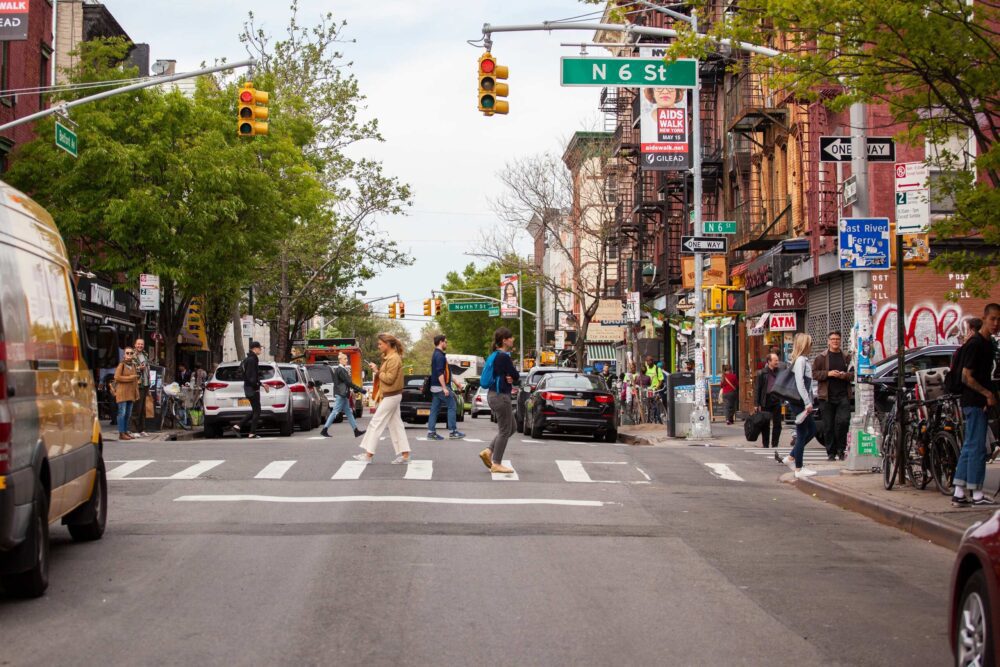
photo: penny-hotel.com
Behind every apartment sold for millions of dollars are real people—and a distinct lifestyle that drew them to Williamsburg. These are not random buyers; they are a carefully selected group who know exactly what they’re looking for.
Who are the new owners and tenants of luxury in Williamsburg
Typical buyer profile? Most often:
- Tech and finance professionals – managers from nearby Google and Meta offices in Manhattan who prefer living by the water to residing in Midtown’s glass towers
- High-earning freelancers and entrepreneurs – people who work remotely and value having a living space, not just a place to sleep
- Investors seeking an alternative to Manhattan – those who see Brooklyn as offering better value for money and quality of life
- Celebrities and influencers – Amy Schumer has settled in Brooklyn, and Jay-Z’s ties with Roc Nation add a touch of glamour to the neighborhood
Williamsburg has become a recognizable address—a place where you want to live, not just where you have to.
Lifestyle by the East River: from Aska to Smorgasburg
Everyday life? Just 7 minutes by subway (L line) to Union Square, a morning jog by the water, lunch at Asce (Michelin star), weekend Smorgasburg. Access to trendy bars and boutiques run by people who know what they’re doing.
In the ultra- premium segment, annual rent reaches $170,000—more than in many parts of Manhattan or even all of Boston. In return, you get: a rooftop pool, 24/7 concierge, gym, coworking spaces, and skyline views.
Sounds like a dream? For many, it is. But such a rapid transformation comes at a price—and it’s not just about the dollars.
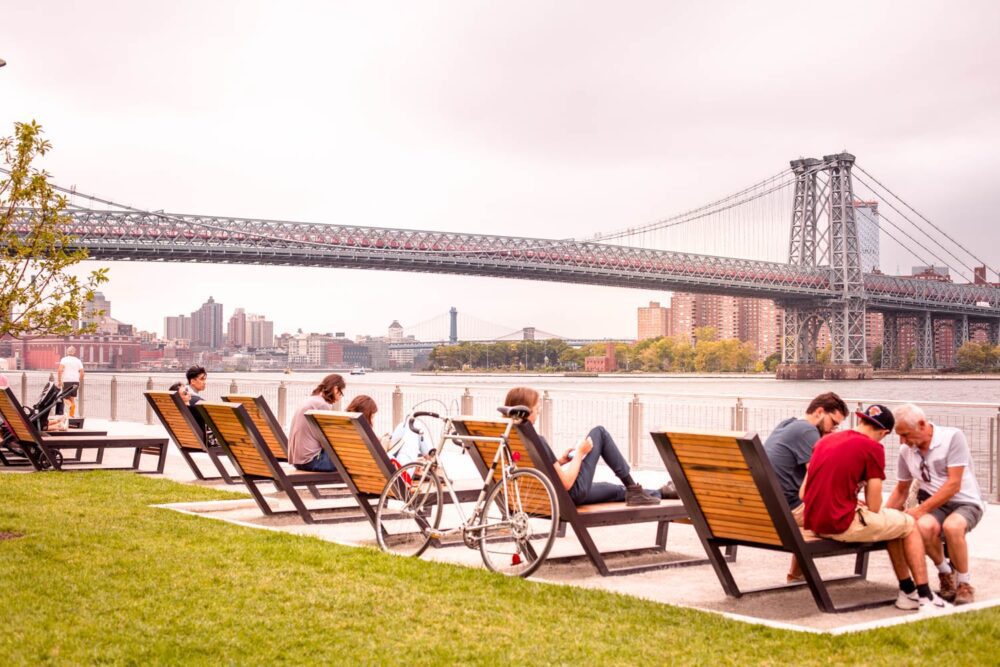
photo: we-love-new-york.com
The dark side of success: gentrification, disputes, and market risks
Who is losing out in Williamsburg’s luxury boom
On one hand, there are gleaming lobbies and multi-million dollar apartments. On the other, the harsh math of displacement. Rents in Williamsburg have risen by about 200% since 2010, forcing several hundred to over a thousand households each year to look for housing elsewhere. Artists and members of the bohemian community—those who once shaped the local culture—have moved on to neighboring Bushwick, where you can still rent a place at a reasonable price.
What’s more, there’s a structural issue: luxury condos pay an effective property tax rate of just 0.007%, while residents of the Bronx pay around 1.7%. This understandably creates tension—why do the wealthiest addresses contribute so little to the city’s common fund?
Risk is not just about politics, but also the market:
- Interest rates above 5% may force a price revision – some buyers will simply walk away
- Oversupply – several hundred new units in the pipeline could tip the balance between supply and demand
- The ban on short-term rentals (Airbnb) from 2024 limits earning opportunities for investors
- Disputes over space: concerns about shading in parks (McCarren Park), tensions with the Hasidic community, protests during subsequent rezonings in 2024-2025
The “Mamdani exodus” myth—the mass departure of existing residents—was not confirmed by the data, but that doesn’t mean the problem has disappeared. When buying or investing in Williamsburg, it’s important to remember: every boom comes with a price—social, fiscal, and market-related.
Direction 2026 and beyond: how to wisely leverage the boom in Williamsburg
Williamsburg still stands on solid ground—with a growing influx of tech and AI professionals, established infrastructure, and its status as an icon of urban luxury. The question is: as an investor or buyer, how can you take advantage of this moment before the market shifts again? The outlook through 2026 remains optimistic—analysts expect luxury real estate sales to rise by around 15%, driven mainly by hybrid work models and the neighborhood’s ongoing appeal to the well-paid younger middle class.
Scenarios for Williamsburg through 2026 and beyond
Several trends are gaining momentum. First, sustainable construction—new towers are increasingly aiming for net-zero standards, which could become an advantage as regulatory requirements continue to rise. Second, 421-a type tax incentives will expire after 2026, which may slightly alter developers’ calculations (and prices). Third, the planned subway expansion by 2027 and the development of water transport are strengthening the district’s position compared to other luxury markets—Miami or South Florida do not offer such a dense urban infrastructure.
How you, as an investor or buyer, can take advantage of this moment
- Microlocation: not every block in Williamsburg is equally appealing – check the immediate surroundings, subway access, and the “character” of the street.
- Building profile: projects with eco aspirations and a strong amenity mix are more likely to retain their value.
- Oversupply risk: compare the number of new units in the area with historical demand.
- Cap rate: at 3%, the yield isn’t impressive – keep in mind the long-term horizon and potential for value appreciation.
The key is selectivity, not chasing trends. Williamsburg is no longer an “emerging” market—it’s a mature luxury segment where every decision requires thorough research and an awareness of risk.
Natan
Real Estate & Lifestyle
Luxury Blog

Leave a Comment