

Which veneers are the most expensive?
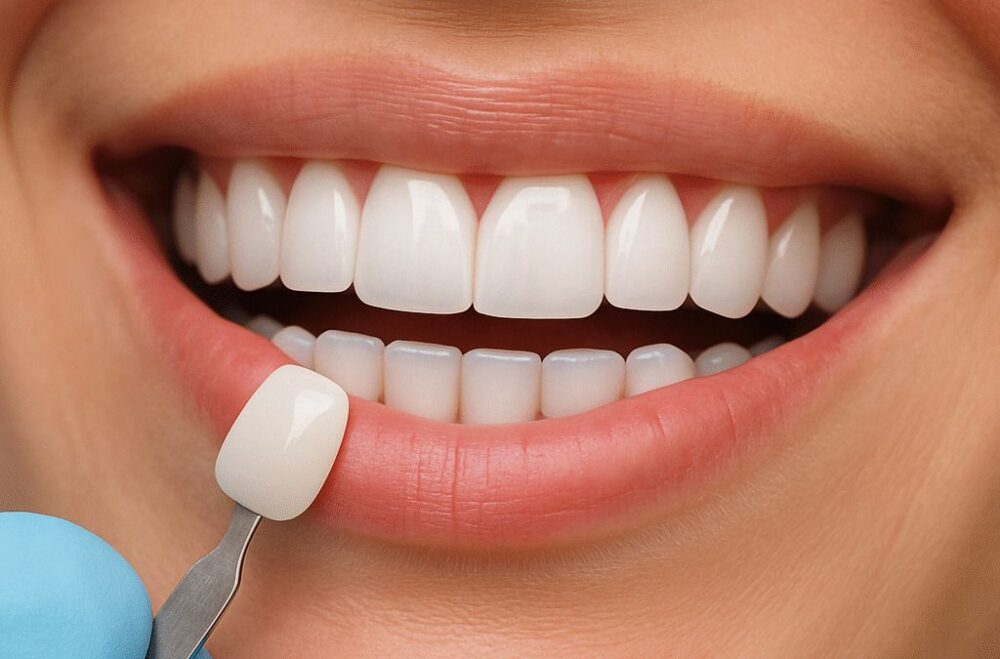
“I remember once watching an old Hollywood movie and wondering why all the actors had such perfect teeth. Turns out, there was already a trick behind it back then.” And today I want to show you which veneers are the most expensive.
It all started with Dr. Charles Pincus in 1928. This dentist came up with something brilliant—temporary acrylic overlays for movie actors. They looked great on camera, but there was one problem. After filming, they would simply fall off. Actors had to glue them on with a special adhesive just for the duration of the shoot.
The real revolution didn’t come until 1983. That’s when the first porcelain laminate veneers with etching technique were created. It sounds complicated, but in practice it meant one thing—veneers could finally be permanently bonded to the tooth. They no longer fell off after an hour like those first ones from the twenties.
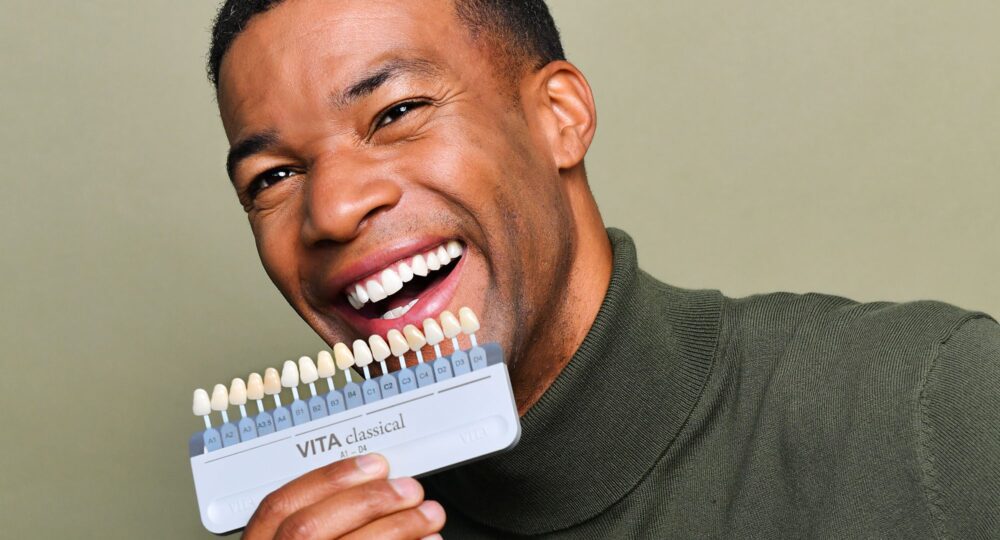
photo: bostondental.com
Which veneers are the most expensive? – from the Hollywood smile to Polish dental clinics
In Poland, the boom for veneers started after 2000. I remember those times—suddenly, Western technologies were everywhere, and people started earning more. What once seemed like science fiction became available in Polish dental clinics.
Today, in 2025, premium veneers are no longer just a toy for movie stars. I recently met a friend who works as a manager in a corporation—she has stunning porcelain veneers. She told me it was one of the best investments she’s ever made.
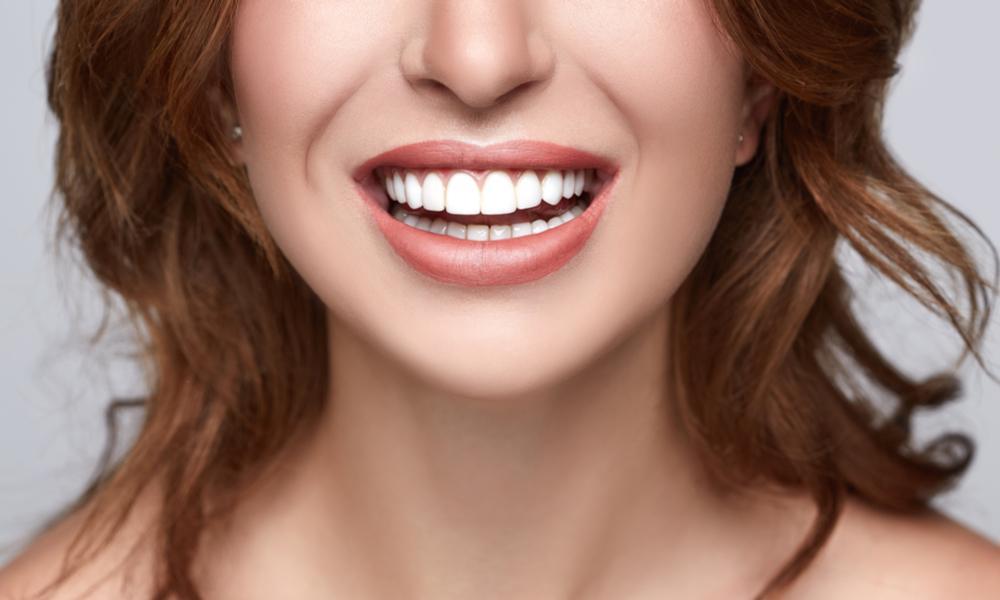
photo: modernagedentistry.com
But why is everyone talking about premium veneers right now? I think it’s because our attitude toward appearance has changed so much. A beautiful smile used to be a luxury for the few. Now, it’s something any of us can achieve.
The only question is—are all veneers really the same kind of luxury, or are the differences between porcelain and composite bigger than we think?
Porcelain vs. Composite – Weighing the Pros and Cons
I remember standing before a similar choice a few years ago— porcelain or composite? Back then, I didn’t realize it was more than just a matter of money—it was real math.
Porcelain and composite are worlds apart. The former is true material artistry—a ceramic with a refractive index of 1.5–1.6, literally mimicking the natural enamel of a tooth. Composite? It’s a reinforced resin that… well, does its best.
| Criterion | Porcelain | Composite |
|---|---|---|
| Price per tooth | 1,500 – 3,500 PLN | 500 – 1,500 PLN |
| Durability | 10-20 years | 5-7 years |
| Survival rate after 10 years | 95%+ | 70-80% |
| Translucency | Natural (RI 1.5–1.6) | Matte |
| Stain resistance | Very high | Average |
Numbers speak for themselves, but the devil is in the details. Porcelain costs more upfront, but if you break it down over years of use… Actually, composite turns out to be more expensive! With an average price of 2,500 PLN per porcelain veneer and a lifespan of 15 years, you’re paying about 167 PLN per year. Composite at 1,000 PLN for 6 years also comes out to 167 PLN per year.
But aesthetics are a different story. Porcelain has that magical quality of transmitting light—making teeth look vibrant and natural. Composite? It often looks like… well, composite. Matte, artificial.
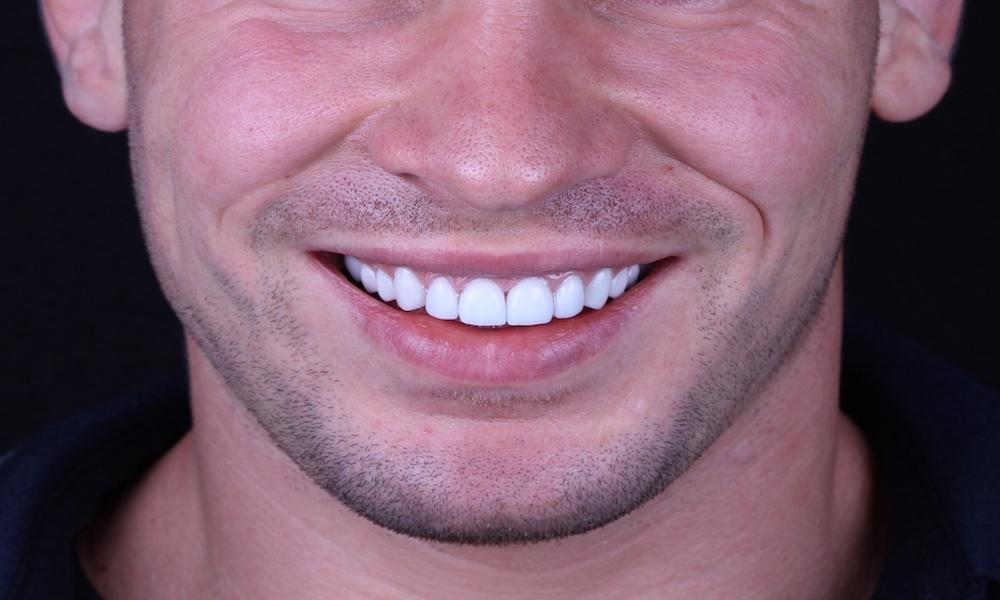
photo: woodridgedental.com
Of course, composite has its advantages—you can repair it in the office, and it’s cheaper at the start. But is it worth it? For someone thinking long-term, I’d recommend porcelain. Especially since the difference in lifetime cost is minimal.
But price isn’t everything. The final amount depends on a host of other factors, which can double or even triple the base rates.
Price-driving factors – technology, brand, location
My friend Kasia recently returned from a consultation at a clinic in Mokotów. She said they wanted 3,500 PLN for a single porcelain tooth. That sounds astronomical, but when I started digging into the details, it turned out that it’s not the porcelain itself that costs so much. It’s all the extras that clinics tack onto the bill.

photo: whitesdentalcare.com.au
CAD/CAM technology and AI-driven smile design are the first price-boosting factors. I’d heard about this before—the computer scans your mouth, then an algorithm designs the perfect smile. Sounds fantastic, but it adds about 10% to the cost. For Kasia, that was an extra 350 PLN per tooth just for using the latest equipment.
◼ Digital scanning instead of traditional impressions
◼ AI-assisted smile design—“perfect smile” projects
◼ CAD/CAM technology in the lab
◼ Additional cost: about 10% of the procedure’s value
The second thing is brands. Ivoclar Vivadent, Vita, all those Swiss and German companies. Clinics love to emphasize that they use “premium materials.” But the truth is, lesser-known labs also make decent veneers. It’s just that brand prestige means extra money on your bill.
◼ Premium brands vs local labs
◼ Ivoclar Vivadent, Vita—the difference can reach 30%
◼ “Swiss quality” marketing included in the price
◼ Actual impact on quality often debatable
Location is the third factor that surprised me. In Warsaw you pay 3,000+ PLN per tooth, in Kraków it might be 2,500, and if you go to Lublin or Białystok, it’s 1,200–1,800 PLN for the same thing. Same porcelain, similar technology, but the rent for a downtown office in the capital makes a difference.
One more thing—sedation. Kasia mentioned they offered her a “comfortable procedure under anesthesia.” That’s an extra 20–50% on the bill. For a full set of veneers, that could mean an additional 2,000–3,000 PLN.
◼ Inhalation or intravenous sedation
◼ Adds 20–50% to the total cost
◼ Often presented as a “comfort standard”
◼ In reality, optional in most cases
Looking at all these components, it starts to make sense why porcelain is the most expensive. It’s not just the material—it’s the whole marketing machine and prestige. The question remains: are all these extras really necessary?
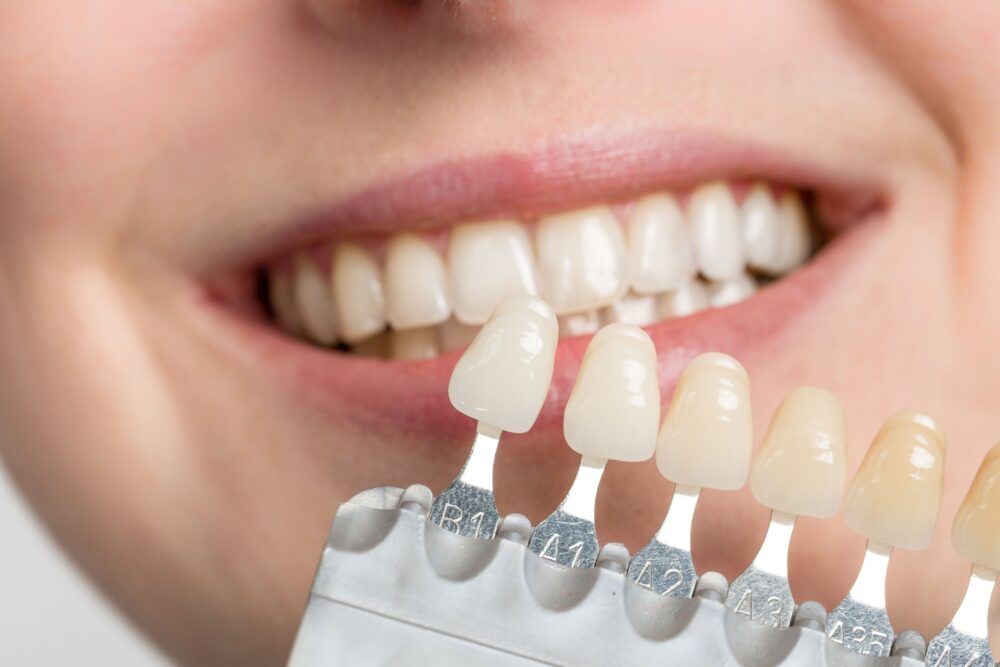
photo: woburndental.com
How to invest wisely in the most expensive veneers?
I’ll be honest—when I first heard the price of porcelain veneers, I thought it was a joke. 59,000 for a perfect smile? That’s the price of a used car. But then I started to look at it differently.
If quality veneers last 15 years and you spend 40,000–60,000 on them, that’s about 3,000–4,000 per year. Monthly, that’s just under 300 złoty. Less than you spend on coffee at your favorite café. This kind of ROI calculation really changes your perspective, doesn’t it?
photo: cooperdental.ca
My three-step framework for anyone seriously considering this investment:
- Assess your real needs. Is it a matter of aesthetics, or are you experiencing problems with biting? Different situations require different solutions.
- Set a realistic budget. Check financing options—some clinics offer 0% installment plans, others provide all-inclusive packages. Compare costs, but don’t go for the cheapest solution.
- Choose a clinic based on their portfolio, not advertisements. Ask to speak with previous patients.
Pro tip: Always ask about the warranty and what happens if something goes wrong. A reputable clinic won’t shy away from these conversations.
What’s next? The aesthetic dentistry market is projected to reach 4 billion dollars by 2030. That means more options, better technologies, and maybe even lower prices thanks to competition.
I’m already seeing the first AI solutions—personalizing tooth shapes based on facial features. In a few years, this will be the norm. Dental tourism is also booming—Turkey offers complete packages for 4-8 thousand dollars, hotel included.
photo: argylefamilydentist.com
Sometimes I wonder if I should wait for these innovations. But then I remind myself that life is happening now. Every day brings hundreds of smiles, thousands of first impressions. Is it really worth waiting for the perfect moment that might never come?
The decision is yours. The numbers are on the table, the options too. All that’s left is courage.
Nastia
lifestyle editor
Luxury Blog





Leave a Comment