

What kind of flour do Italians use to make pasta?
Did you know what kind of flour Italians use to make pasta? This question comes up naturally, since Italians truly appreciate good food. They love both cooking and gathering around the table to eat and talk with family and friends, especially on Sundays. Thanks to regional cuisine, there is an incredible variety of dishes. All the nations that have passed through Italy (the French, Spanish, Arabs, Austrians) have left behind their recipes and flavors. Today, Italian cuisine is famous all over the world. You can find Italian restaurants everywhere, serving excellent pasta.
But when was pasta “born”?
Pasta has a very ancient history full of anecdotes, which began 7,000 years ago. Back then, humans abandoned their nomadic lifestyle and started cultivating the land. They discovered wheat. They learned to grow it more efficiently, grind it into flour, and then mix it with water, flattening the dough. Afterwards, they baked it on hot stones. Cicero and Horace, 100 years before Christ, enjoyed something they called lagana. These were strips of thin pasta made from flour and water, which were dropped into oil, and from which our modern lasagna originates.
Marco Polo brought spaghetti from China
According to legend, as early as 1292, Marco Polo brought spaghetti from China. However, this belief is false. There are numerous documents confirming the existence of pasta in Italy even before his journey. According to these studies, it was most likely the Arabs who introduced pasta to Italian cuisine around the year 1000. In a document dated 1154, the Arab geographer Al-Idrin mentions “a flour-based food in the form of threads” called triyah. That’s why it is believed that pasta, as we know it, originated in Sicily—specifically in the town of Trabìa, near Palermo. And indeed, Sicilians have been true masters of pasta cooking for centuries.
How many types of pasta are there in Italy?
Currently, in Italy, more than 300 types of pasta are consumed, produced in 120 factories. They can be classified as dry and fresh (solid or with holes), short, delicate, smooth, or striped. Countless varieties of pasta actually differ in the type of dough, shape, surface, and the possible presence of filling. It is worth mentioning that at the beginning of the 1990s, there were over 400 pasta shapes available on the Italian market.
What is the difference between fresh and dried pasta?
Fresh pasta is a product that must be stored in the refrigerator, while the dry one can easily sit on a shelf in your cupboard. The former is made from water and flour (sometimes also with egg) and has a limited shelf life.
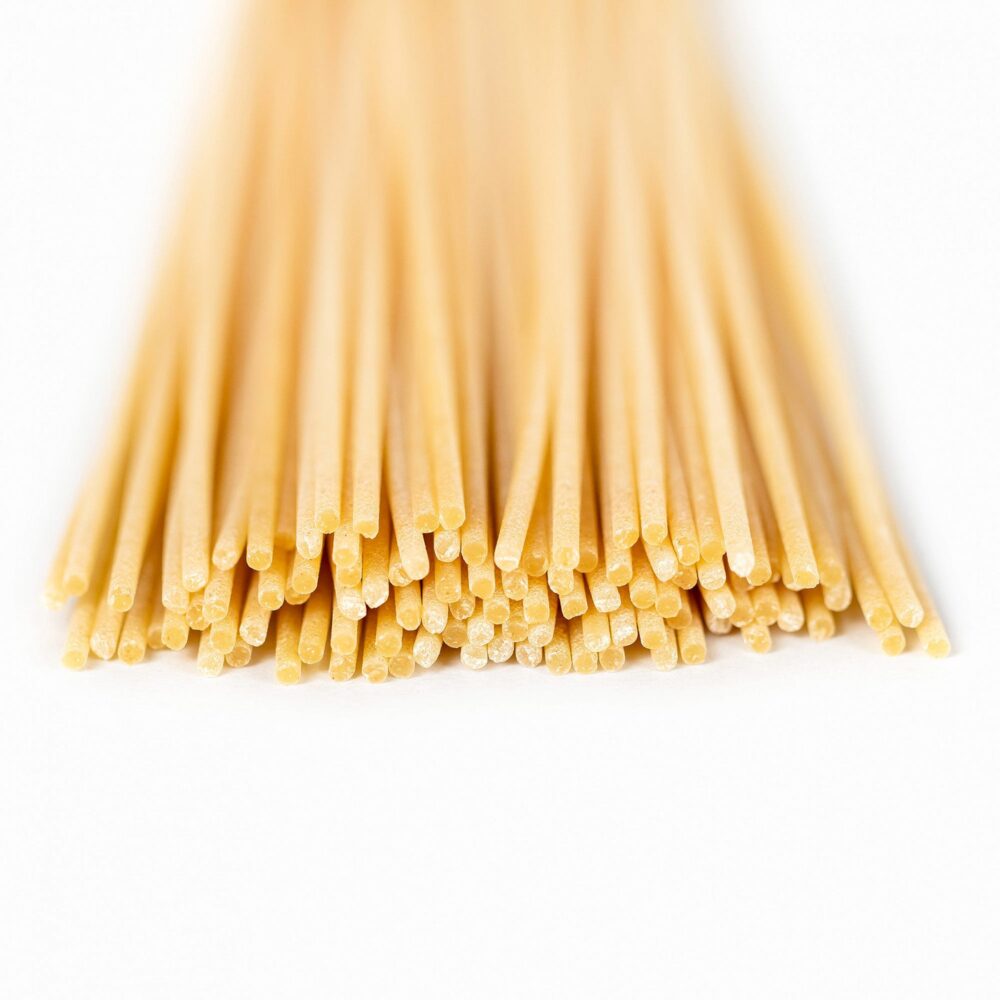
According to some studies, Italy is the country with the highest pasta consumption. Each person consumes about 28 kg per year. Italy is also the largest producer of pasta. The undisputed leader among the best-selling pasta shapes in Italy is spaghetti. You’ll find it in every regional culinary tradition, from northern to southern Italy. It pairs perfectly with all kinds of seasonings and sauces.
10 best-selling pasta shapes in Italy
Ranking 10 best-selling pasta shapes in Italy according to data provided by leading industry companies:
- Spaghetti
- Penne rigate
- Fusilli
- Rigatoni – Eliche
- Spaghetti grossi
- Mezze penne rigate
- Vermicelli
- Mezze maniche – Cravattine – Spaghetto quadrato
- Maccheroni
- Elicoidali – Paccheri
Depending on the type,
Long pasta
- wide (lasagne, reginette, pappardelle);
- narrow (capellini, tagliolini, fettuccine);
- with a rectangular or lens-shaped cross-section (trenette, linguine);
- round cross-section (spaghetti, vermicelli);
- with a perforated section (bucatini).
Short pasta
- small pasta for soups (quadrucci, stelline, ditalini);
- medium (conchiglie, orecchiette);
- long (rigatoni, fusilli);
- stuffed (ravioli, agnolotti).
Depending on the surface texture, pasta can be divided into three types:
- leaves – smooth
- ruvide – porous, allowing the sauce to cling better
- rigate – valued for their ability to hold sauces
If we know what type of flour Italians use to make pasta, we can already classify it based on its ingredients:
– durum wheat semolina pasta – the dough contains durum wheat semolina, water, and a higher amount of bran. To qualify for this category, the final product must have a maximum moisture content of 12.50%;
– whole grain durum wheat semolina pasta – the dough contains whole grain durum wheat semolina and water. It is characterized by a higher fiber content;
– egg pasta – the dough contains semolina, water, and eggs (at least 4 whole chicken eggs per kg). It is characterized by a higher content of protein nutrients;
– fresh pasta – the dough is made from soft wheat flour. The final product has a variable moisture content ranging from 24-30%. It must be stored at a temperature not exceeding +4°C, with a tolerance of up to 2°C;
– stabilized paste – the final product has a moisture content of no less than 20%;
– diet pasta – characterized by a specific combination of ingredients. They are divided into gluten-free, high-protein, whole grain, and quick-cooking varieties (containing higher amounts of water);
– specialty pasta – the dough contains additional food ingredients (e.g. spinach and tomato).
The best flour for fresh pasta
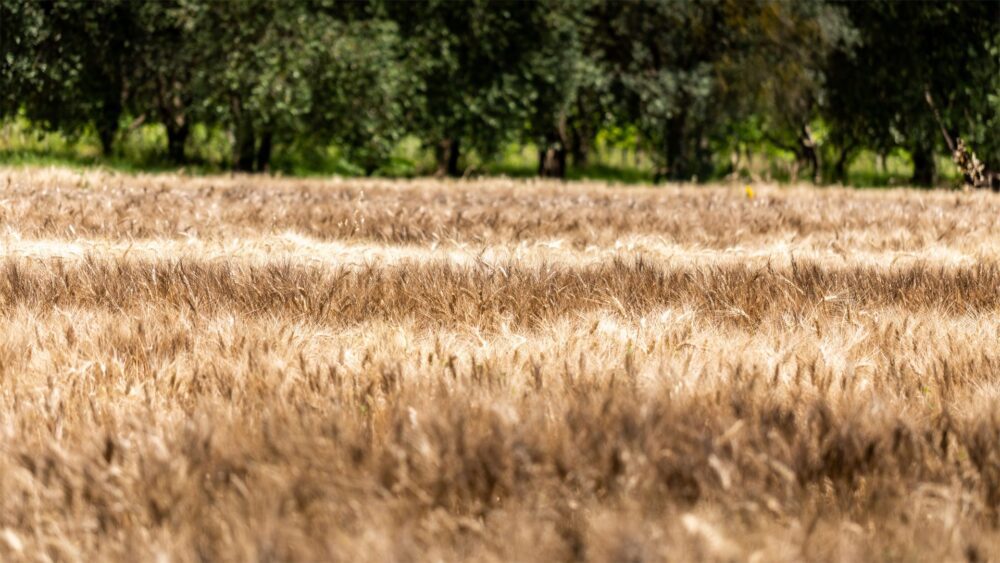
Egg pasta is typical of northern Italy. It is especially associated with the Emilia-Romagna and Piedmont regions, where it is usually made exclusively from soft wheat flour. In fact, in the northern regions, soft wheat has historically been the main crop, making it perfect for egg pasta.
Among fresh pastas, the filled varieties—such as tortelli and ravioli—deserve special mention. They need to be rolled out thinly to accommodate the filling, which is why they require a higher content of durum wheat semolina compared to, for example, tagliatelle. On the other hand, unfilled pastas can also be made without adding semolina.
Fresh eggless pasta is traditionally found in the central and southern regions. For example, we’re talking about cavatelli, orecchiette, scialatielli, which are made by mixing only durum wheat semolina and water—using warm water makes the mixing process easier.
The difference between “00” flour and “0” flour
Starting from the whitest flours to the darkest and most fiber-rich, we’re talking about “00”, “0”, “1”, “2” and wholemeal flours. We can say with certainty that, in Italian tradition, fresh egg pasta has always been made with light flours, which in the past were carefully sifted by home cooks to remove any lumps.
This rule still applies today, and to make traditional egg pasta you can use either “00” or “0” flour. But which of these two types is better? In reality, the difference between “00” flour and “0” flour lies in the ash content (that is, the residue left after heating a flour sample to over 600°C). For the former, it cannot exceed 0.55%, and for the latter, 0.65%. The difference is therefore quite minimal—so much so that even a well-trained eye has trouble spotting any distinction between these two types of flour.
Whether you use type “0” or “00” flour, you’re sure to achieve excellent results given the simplicity of the recipe. The finished product may appear slightly “grey” at the end of preparation, but this is not a flaw and it’s not the flour’s fault! In fact, during cooking, the high temperature will bring back the yellow color of the egg, and as a result, the cooked pasta will take on an appealing, characteristic hue.
How to cook pasta?
Here are some simple tips for cooking pasta. Always cook pasta in plenty of water: about 1 liter for every 100g of pasta (for example: 300g of pasta and 3 liters of water). Choose a pot of the right size so that the water doesn’t reach the rim, as pasta can expand up to three times its original volume during cooking. Use about 10g of salt per liter of water and add the salt only once the water is boiling. If you’re cooking fresh pasta, add a little oil to the boiling water. After adding the pasta, as soon as the water comes back to a boil, reduce the heat to keep the liquid at a gentle simmer. Stir frequently while cooking to ensure the pasta cooks evenly. Drain the pasta while it’s still “al dente”; this way, it will absorb less water and be more digestible and flavorful. If you plan to toss the pasta in a pan, cook it at least one minute less.
Basic rules for serving pasta
Just like preparing dishes, their presentation—through the choice of the right tableware or dinnerware—is equally important. When it comes to etiquette, there are best practices that should be followed. Above all, cooking time is crucial for a successful presentation. Cooking for the right amount of time to avoid burning is a fundamental rule. In fact, overcooked spaghetti will be neither pleasant to look at nor to eat. It’s also worth choosing the right copper or stainless steel cookware.
We already know what kind of flour Italians use to make pasta, but we still need high-quality cookware!
Equally important is the choice of dishes, such as plates: a flat bottom is generally the best option, while deep bottoms are suitable for soups and pasta with plenty of sauce. As with any other type of culinary presentation, it’s crucial to maintain balance between the elements: the dish shouldn’t be too abundant or have too much empty space on the plate. The arrangement must also be harmonious, in line with the shape of the dish. If the plate is round, it’s better to place the pasta in the center; if it’s square, you can make full use of the corners, but don’t overdo it. Presenting spaghetti in the center of the plate using the ladle-and-fork technique ( twisting the pasta around the fork with the help of a ladle or spoon) is a method favored by the trendiest chefs, but it’s certainly not the only way to impress your guests.
Colors and textures are other key elements to consider when presenting a pasta dish. The starting point is to enhance the appeal of the dish—our main star—which is why white tableware is perfect for rigatoni with tomato sauce, but less so for pennette with cream, unless the white sauce is framed with decorations that define the boundary between the plate and the food. However, the best solution for pennette is to use colorful tableware.





Leave a Comment