

The history of the Gucci brand
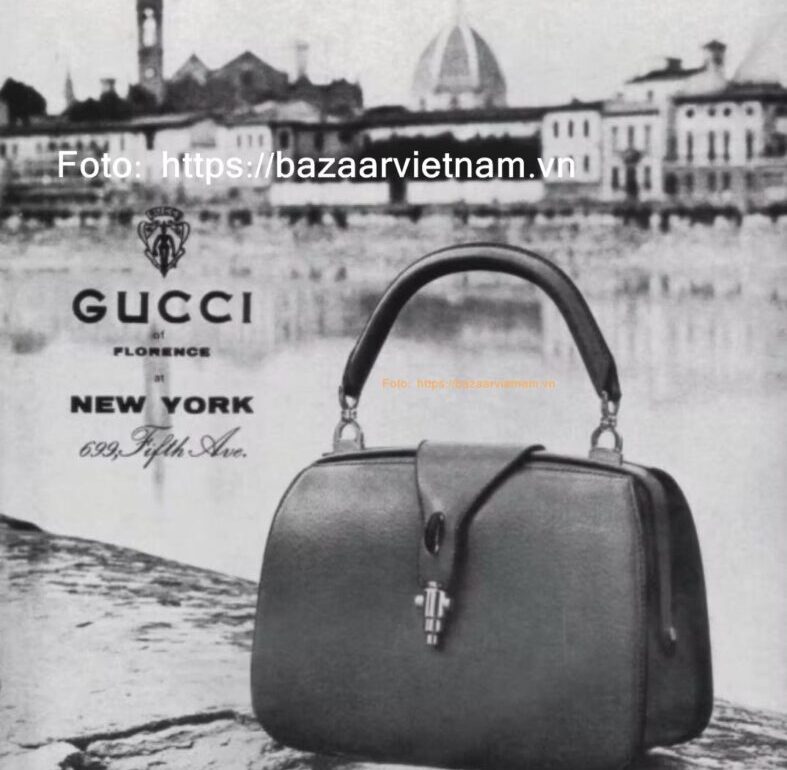
Their logo is now one of the most recognizable symbols worldwide. Meanwhile, the is synonymous with wealth, elegance, and timeless beauty. There’s no doubt why the company has attracted a loyal clientele from nearly every corner of the globe.
The Italian fashion house offers top-quality collections of clothing and accessories, all handcrafted in Italy. Sophistication, subtlety, and a unique aesthetic have been shaping the brand’s reputation for over a century.
So despite numerous scandals involving the Gucci name and internal family crises that nearly drove the company to bankruptcy, today its position seems unshakable. Gucci is not only a creative force in the fashion industry but also responds to current events of international significance. But what exactly did the brand’s journey to the top look like?
The history of the Gucci brand – who is behind the empire of the Italian fashion house?
The origins of the brand trace back to. The son of a Florentine merchant, he spent his youth working in his uncle’s straw hat workshop. Soon, faced with a downturn in the family business, he decided to seek his fortune in London. There, for the first time, he experienced true luxury at the exclusive Savoy Hotel, where he applied for a job as a porter.
Initially turned away, after some time and many language lessons, he managed to land a job as a dishwasher. However, within just six months, he was promoted to hotel bellboy. Guccio was handsome, well-dressed, and exceptionally charming, quickly winning over wealthy travelers. Although the hotel job itself was rather modest, for the future designer it became a source of inspiration.
It all started with hats and bags
Gucci, spending hours watching men in elegant suits and women practically dripping with luxury, felt absolutely elated. Yet what fascinated him most were the various bags, hat boxes, and trunks adorned with initials. It was then that he began dreaming of opening his own store with leather accessories.
After spending four years working in England, Gucci returned to his homeland. There, he fell in love with Aida Calvelii, and the couple soon married. Just as he was about to begin working toward his dream, war broke out and he was drafted into the army. And perhaps the story of the Gucci brand would have unfolded differently, if not for a certain other manufactory…
Franzi’s episode
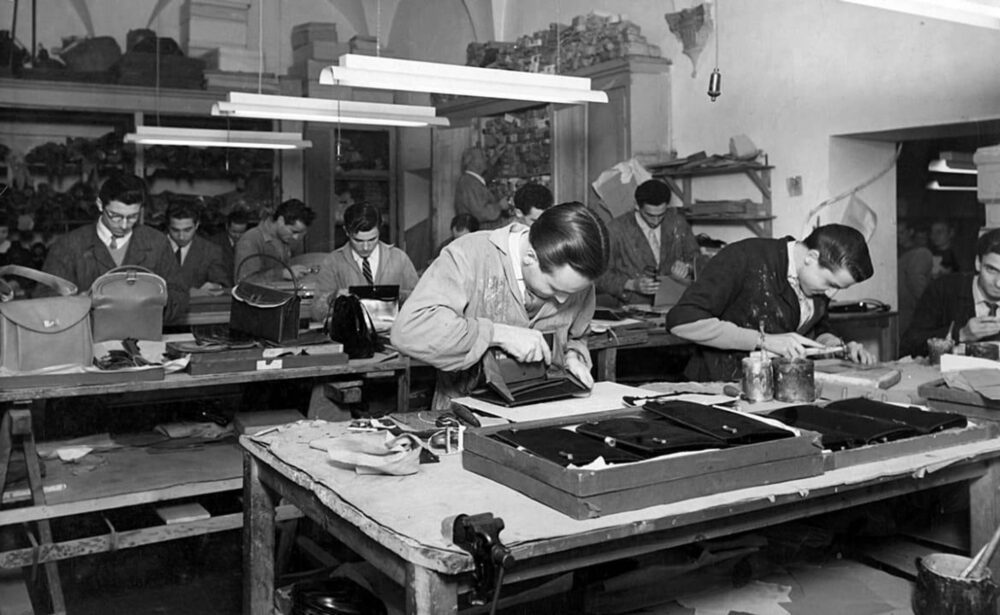
Afterwards, which specialized in luxury leather goods. It was there that he gained the essential knowledge needed to run a business independently. At that point, he was truly ready to put his plan into action.
And so, in 1921, the first store bearing the Gucci name opened at number seven Via della Vigna Nuova in Florence. Along with it came the brand’s first—though not last—logo: the silhouette of a bellboy in livery and cap, holding a suitcase in one hand and a carry-on bag in the other. The “House of Gucci” began as a small, essentially one-man business.
Gucci’s multigenerational fashion business
Guccio had five children: a daughter named Grimalda and four sons—Enzo (who died in childhood), Aldo, Vasco, and Rodolfo. He also adopted his wife’s illegitimate son, Ugo, although it is said they were never particularly close. His clear favorite was his eldest son, Aldo, whom he saw as the future heir to the company.
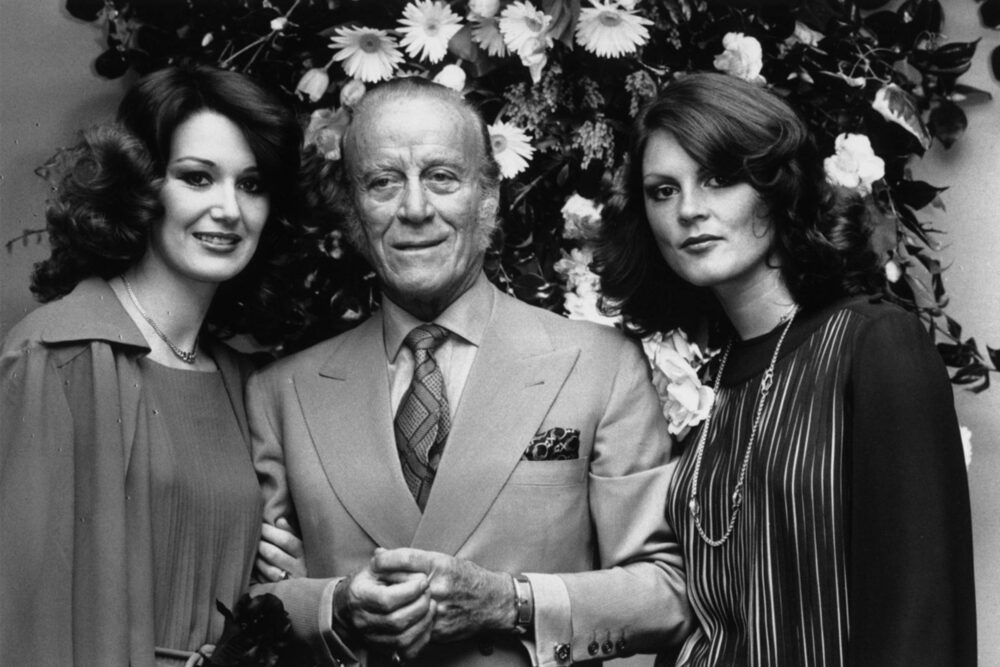
In 1938, it was Aldo who convinced his father to open a second boutique in Rome. Gucci became a family business and, with its headquarters now also in the capital, gradually gained popularity. Fourteen years later, just before his death, Guccio witnessed the opening of the first store outside Italy. significantly contributed to the increase in profits.
Famous actors and Gucci
Two years later, Gucci releases a product that turns the company into a status symbol. A handbag made of pigskin with a polished bamboo handle is created. This very model is made famous by the renowned Swedish actress Ingrid Bergman in the film “Journey to Italy.” Around the same time, all products begin to be numbered, and the existing logo is changed—the poor boy with luggage is replaced by a majestic knight in armor. All these factors contribute to the growing interest in Gucci.
In no time, the GG insignia become a favorite among celebrities and even royal families (Elizabeth II was known to frequent the Gucci boutique in Florence). Over the next 30 years, Aldo vigorously expands the business, opening boutiques in Los Angeles, Tokyo, and Hong Kong. He is even appointed the first Italian ambassador in the field of fashion by then-president Kennedy.
Women played a significant role in this story
Interestingly, in Aldo’s life, there was always room for women alongside the company. Despite being married to opera singer Olwen Price, years later it was revealed that Aldo had an affair with a sales assistant from one of the Gucci stores—the beautiful Bruna Palombo. Since divorce was only legalized in Italy in 1974, and fearing scandal, the couple hid the existence of their daughter, Patricia, from the press for 10 years.
Despite the designer’s personal scandals, the 1960s marked the peak of the company’s success. During this time, the boutique on Via Condotti was visited by the biggest film stars—Grace Kelly and Rita Hayworth. That’s exactly why the history of the Gucci brand is so colorful and truly fascinating!
A synonym for luxury and international fame, Gucci
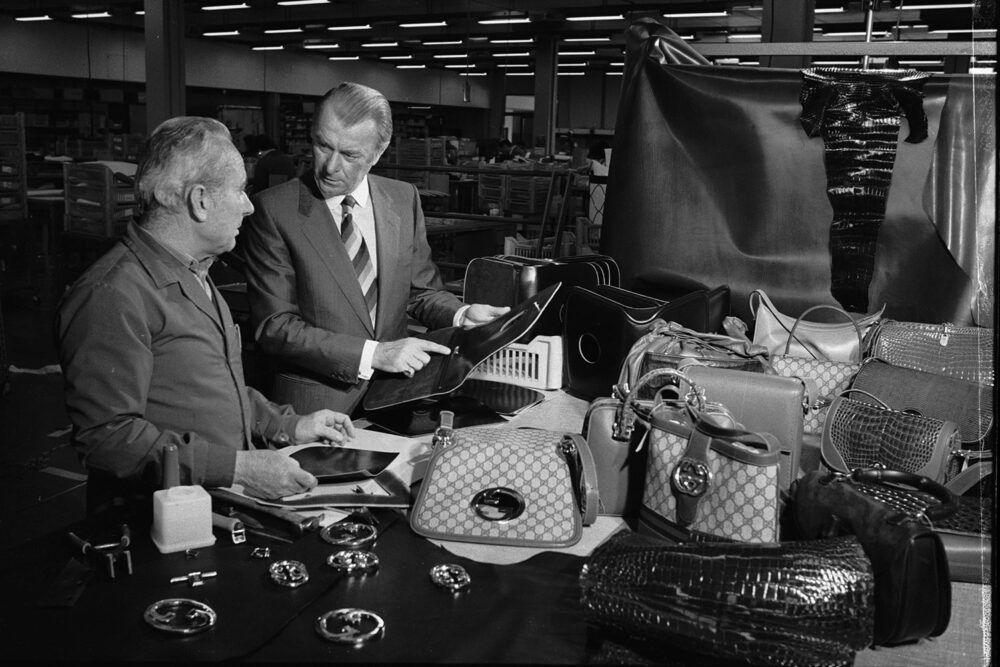
Gucci products are becoming incredibly famous worldwide. The logo changes form for the last time—simplified to two overlapping Gs. In addition to accessories, the iconic Gucci loafers are introduced, followed soon after by jewelry. At that time, Aldo is assisted in running the business by his three sons—Paulo, Roberto, and Giorgio.
The first internal problems at Gucci began to surface in the 1970s. Aldo’s aforementioned sons gradually started seeking more independence within the company. The first conflicts arose as each brother tried to push through his own ideas. The most eager for change was Paulo. He proposed; when this idea didn’t materialize, he demanded the creation of Paulo Gucci as a competing company on the market. This was met with open disapproval from the rest of the family.
Family issues
In 1983, Aldo’s brother Rudolfo Gucci passed away in Milan. After his death, most of the company’s shares were taken over by his son Maurizio, who became one of the main managers. Over time, the situation spiraled out of control, leading to a six-year legal battle between Maurizio and Aldo for full control over the Gucci empire. Money became the catalyst for the conflict. The dispute intensified.
Maurizio’s vast shares are frozen, and Aldo Gucci, accused of tax fraud, is sent to prison in Florida in 1986, where he spends a year. Maurizio, who narrowly escaped prosecution, flees to Switzerland three years later. In 1989, having eliminated competition from Aldo, he is appointed president of Gucci.
Fashion and Finance
The original story of the Gucci brand is not so glamorous, as Maurizio’s management brings nothing but losses to the company. He is accused of financial mismanagement and spending vast amounts of money on headquarters in Florence and Milan.
The company’s well-being is starting to be questioned, and the future of the empire is no longer certain. It is noted that between 1991 and 1993, for the first time in the brand’s history, Gucci’s finances were in the red. The situation became deadlocked as early as 1987, when the Arab company Investcorp bought out Paolo’s shares, and later Aldo’s, who, as a result of his nephews’ actions, was removed from managing the company. thus becomes the sole owner of the Gucci company.
As the history of the Gucci brand shows, less than two years after the gunshot, Maurizio is killed, at the time the last heir of the Gucci dynasty still working at the company. The person behind the murder turns out to be his ex-wife, Patrizia Reggiani, known as the black widow of the Gucci house. The motive for the crime was allegedly her fury over losing her fortune after the divorce, as well as jealousy over Maurizio’s new relationship. Interestingly, the story of this murder can be seen on screen in Ridley Scott’s latest biographical film, “.”
A new standard – a new chapter
After Maurizio’s death, Domenico de Sole becomes the CEO of Gucci Group. However, he is not a newcomer to the company. Back in the 1980s, he worked at a law firm where, through collaboration with Gucci, he assisted in the company’s corporate restructuring. From 1984, he served as CEO of Gucci America. The years 1994–2004 mark a period of renewed prosperity for the brand.
During his tenure, De Sole led the brand out of bankruptcy and restored its international prominence. Gucci once again became a luxury conglomerate, encompassing Yves St. Laurent, Bottega Veneta, Balenciaga, Alexander McQueen, Stella McCartney, and Sergio Rossi.
From now on, everything prestigious is associated with the history of the Gucci brand
A breath of fresh air was brought to Gucci by Frida Giannini, who joined the brand in 2004. The outstanding fashion designer elevated Gucci’s runway shows to a new level. At the same time, Alessandro Michele, who has held the position of creative director since January 2015, is redefining luxury under the Gucci label. The Italian designer champions a surreal aesthetic, surprising audiences with every new collection presentation.
This is precisely why today’s Gucci is associated with an incredibly precise balance between beauty and controversy. Currently, is a subsidiary of the French holding company Kering, which brings together luxury brand manufacturers. It seems that after years of family feuds, Gucci has finally found calmer waters.




Leave a Comment