

Real estate prices in Dubai, check how much they cost
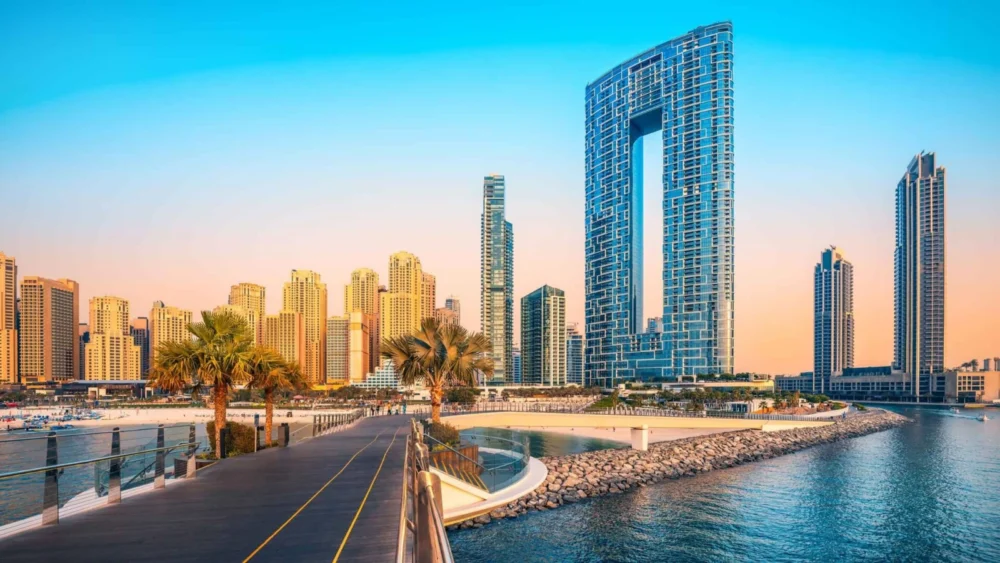
In 2025, the real estate market in Dubai reached a value of around 917 billion dirhams, with as much as 87% of transactions being cash purchases. Impressive numbers, right? For buyers, it’s crucial to understand that 1 AED is roughly 0.25 EUR, which means the other way around—1 EUR is about 4 AED. This relatively stable exchange rate makes budget planning quite predictable. Today, I’ll try to describe what property prices in Dubai look like.
Since 2002, foreigners have been able to buy property outright in designated freehold zones. This opened the market to investors from all over the world, including from Europe. And today, there’s a noticeable increase in interest in this form of capital investment. That’s why I decided to research the market for you even more!
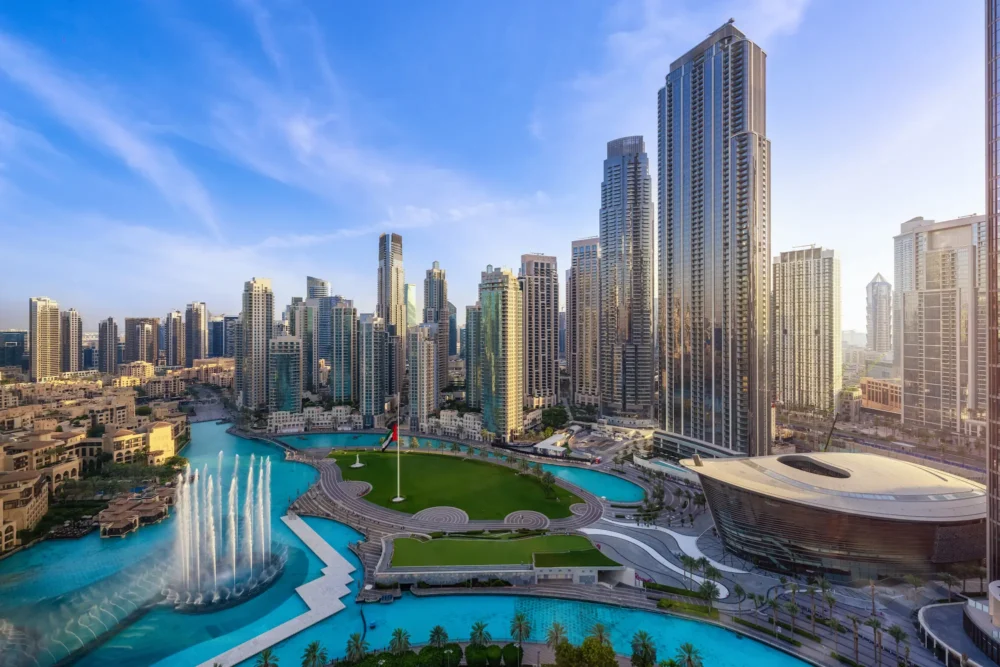
photo: famproperties.com
Real estate prices in Dubai – my analysis
Dubai is now a city with a population of over 3.8 million residents and record tourist numbers expected in 2025. Demand is driven mainly by a young demographic and a focus on development. And clearly, for many years, significant funds have been invested here to make this city a tourism icon.
Importantly, after the frenzied boom of 2021-2025, the market is entering a phase of moderation. The growing supply of apartments is starting to stabilize prices, so we are no longer seeing skyrocketing increases. This is good news for buyers looking for reasonable valuations rather than speculative fever.
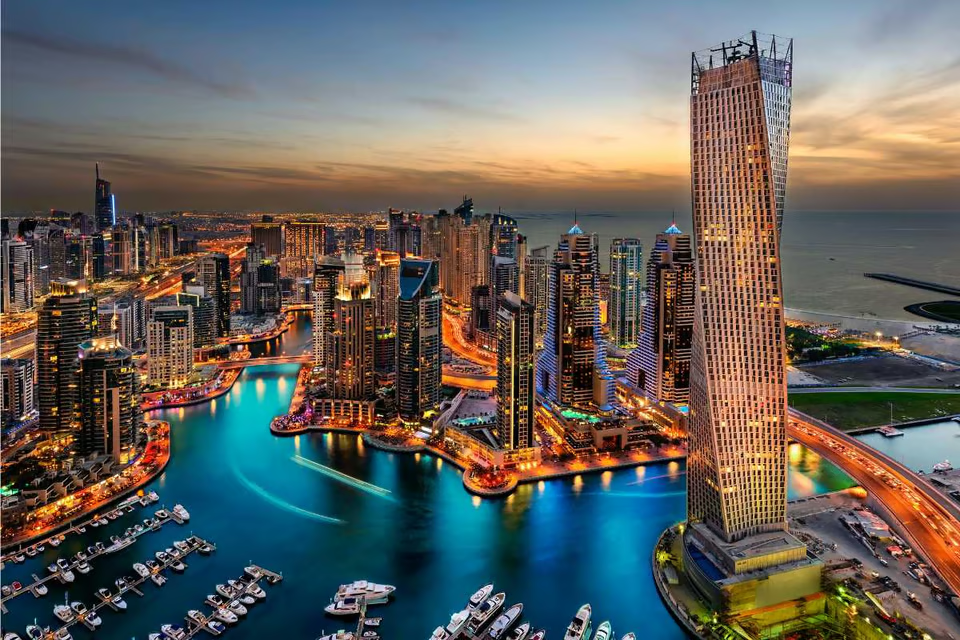
photo: economymiddleeast.com
Price range, types, and standard
Let’s start with the basics: 1 AED is approximately 0.25 EUR. This rate fluctuates slightly, but it’s perfect for quick calculations. And now for the specific numbers, since that’s probably what interests you most.
Current price range in euros
Studios usually cost between €105,000 and €198,000 ( equivalent to AED 450-850k), although standard models tend to fall within the lower range. One-bedroom apartments start from €209,000 up to €372,000 (AED 900k-1.6m), while two-bedroom units begin at around €349,000 and can reach as high as €651,000 (AED 1.5-2.8m). Villas and townhouses? Here, prices start at a minimum of €511,000, with the upper limit easily reaching €1.86m and above (AED 2.2-8m+). Luxury locations like Palm Jumeirah can exceed €7.5m (AED 30m+), so the price range is truly wide.
The price per square meter for apartments ranges from ~€2,100 to €7,800, with the median at around €4,900 (approximately AED 19,000). The average transaction value exceeds ~AED 2.6m, which is about €650,000.
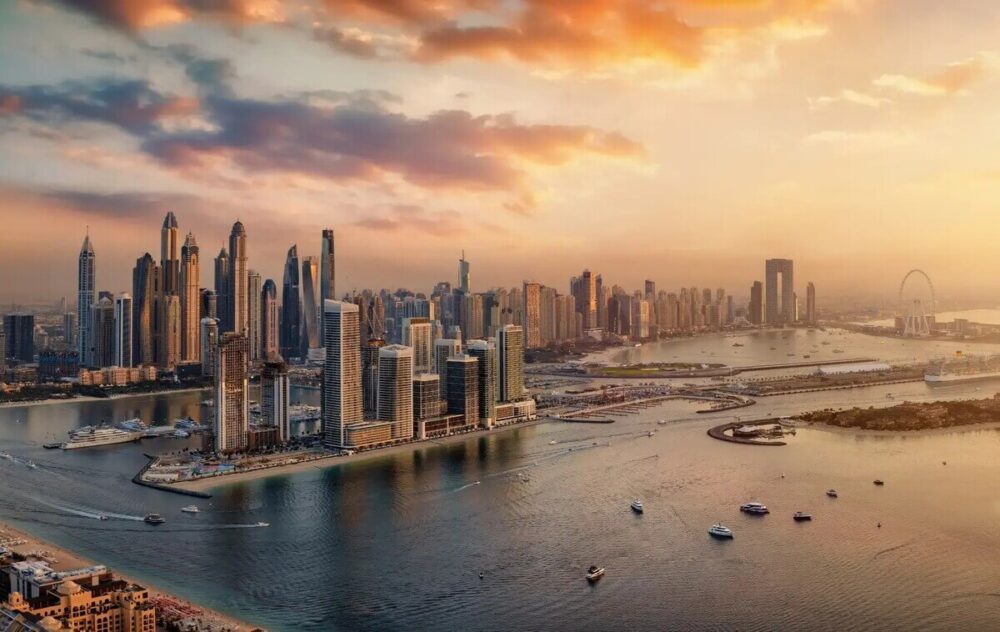
photo: dxbinteract.com
What affects the price?
Off-plan properties (under construction) often require a payment of 20-60% of the value according to a schedule, which gives flexibility. Ready-to-move-in apartments are usually more expensive per m², but you can rent them out or move in immediately. Sea view or Burj Khalifa? Expect to pay at least several percent more. The floor also matters—higher means pricier.
Example: for €300,000 you can buy a decent 1-bedroom (about 55-70 m²) with good standards, while for €150,000 you’ll get a studio (maybe 35-45 m²) in a decent location. Size and finish make a difference.
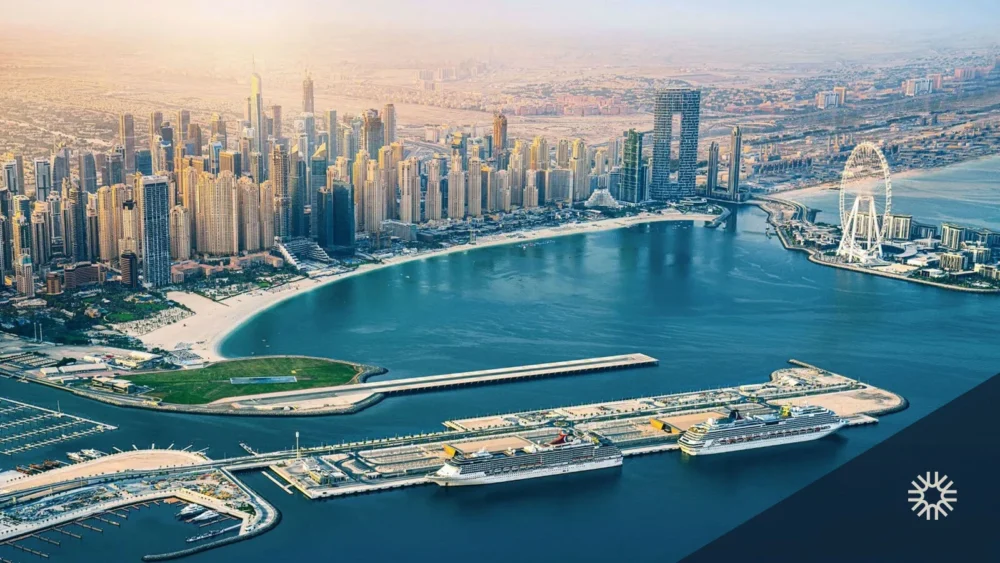
photo: uniqueproperties.ae
Comparison of €/m² in key districts
Location in Dubai is key. The price differences between districts are huge and directly affect how much you actually pay and what rental return you can expect.
Here are the approximate rates at the beginning of 2026:
| District | €/m² | ROI (rental) | For whom |
|---|---|---|---|
| JVC | €2,100–€2,500 | 7-9% | Investors seeking profit |
| Dubai Marina | €5,000+ | 5-6% | Expats, young professionals |
| Downtown | €6,500–€11,500 | 4-5% | Prestige, views of the Burj Khalifa |
| Palm Jumeirah | €7,500+ | 4-5% | Luxury, villas for the wealthy |
The differences are truly significant. Take this example: a 60 m² apartment in JVC costs around €135,000 (at €2,250/m²). The same 60 m² in Downtown? Already €480,000 (with an average of €8,000/m²). That’s more than three times the price, while the ROI in JVC is twice as high.
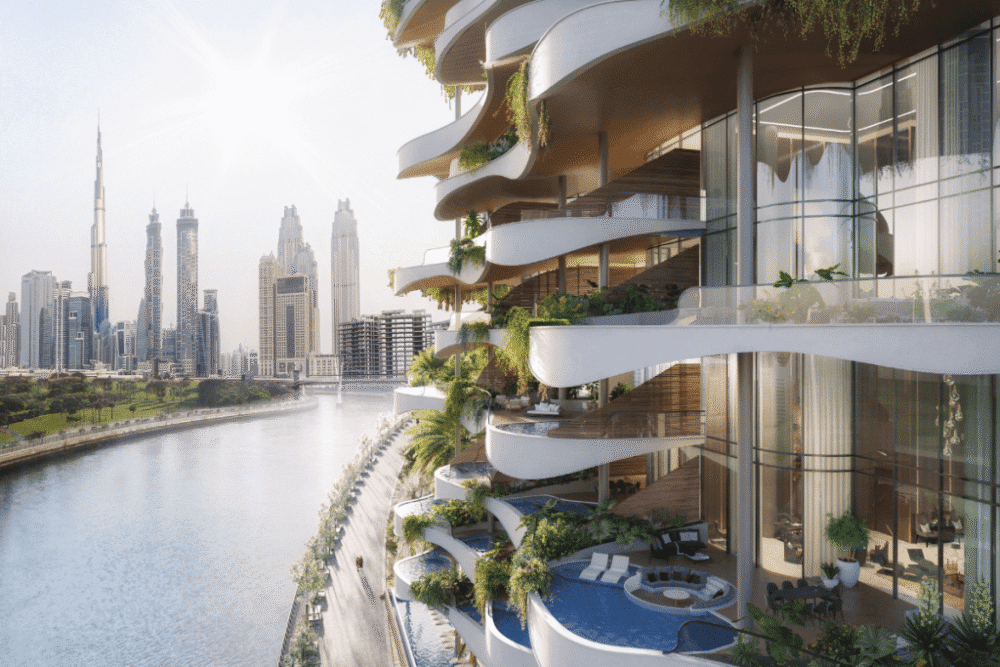
photo: wurarealestate.com
Freehold zones and the nature of the location
All the districts mentioned are freehold zones, meaning foreigners can buy without restrictions. Dubai Marina is a hub for expats, with marinas, restaurants, and a vibrant city atmosphere. Downtown offers views and prestige, but you pay a premium for it. JVC (Jumeirah Village Circle) is a quieter, more family-friendly area, which means lower prices and better ROI. Palm Jumeirah is on a whole different level, mainly featuring villas and ultra-luxury apartments.
Remember, these are indicative rates. Actual prices depend on the view, floor, developer, and finishing standard. However, the market is so vast that everyone can find something for themselves!
Fees, maintenance, and visa
The price of an apartment or villa is only part of the story. In reality, you’ll pay more, and the difference can be surprising.
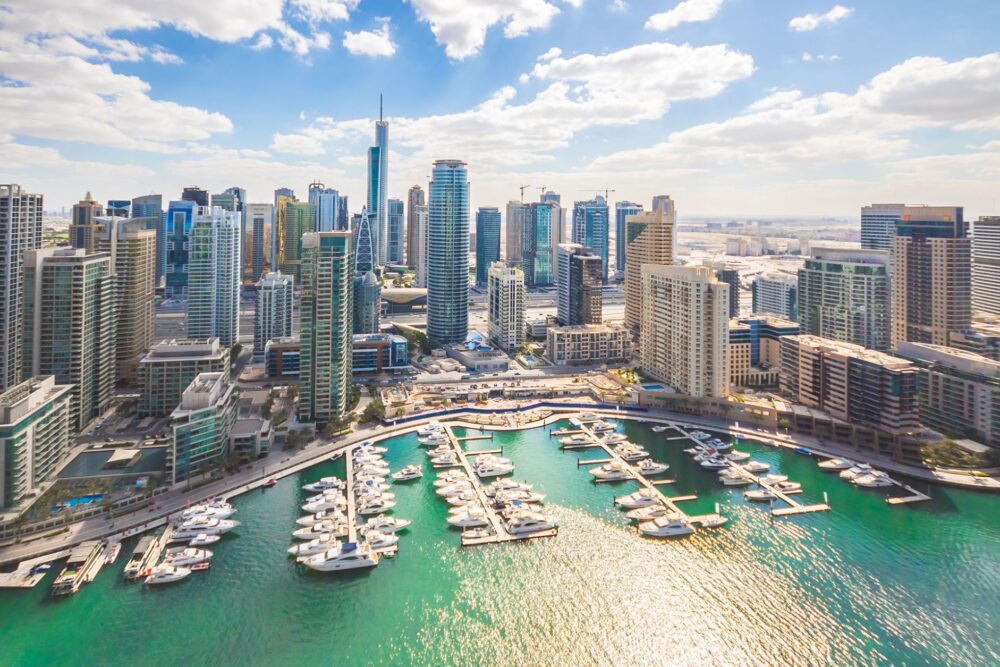
photo: kaizenams.com
Fees when purchasing step by step
The largest item is the DLD (Dubai Land Department fee), which amounts to 4% of the property price. For a purchase of €300,000, that’s €12,000. On top of that, there’s the agent’s commission, usually around 2% plus VAT, so in this example, another €6,000–€6,300. If you take out a mortgage, you’ll also pay a mortgage registration fee (from 0.25% to 0.5% of the loan value) and a few smaller administrative charges. Total? Around 6–7% of the purchase price goes toward transaction costs.
And this is exactly where the difference lies compared to many European markets. In Dubai, there is no property tax or rental income tax. You pay once at purchase, and then only for maintenance.
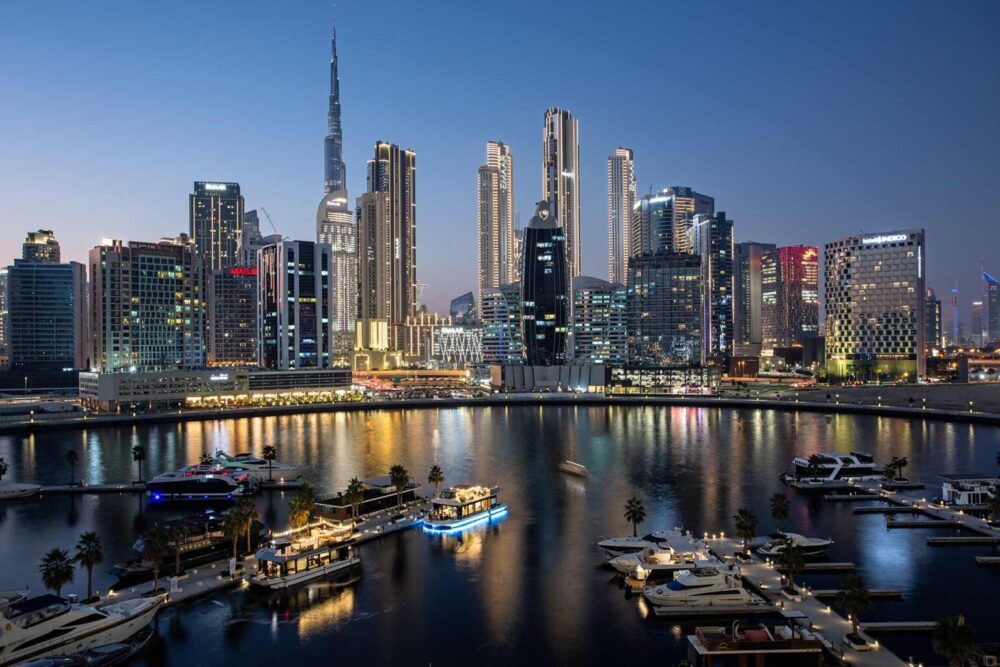
photo: liminastudios.com
Visa
Annual costs are usually €2,000–€5,000, depending on the building’s standard and available amenities (pool, gym, security). The higher the standard, the higher the service charge.
If you’re considering a residency visa, the thresholds are specific. A property worth at least 750,000 AED (about €190,000) grants a shorter permit, while the 2,000,000 AED threshold (roughly €515,000) opens the way to a 10-year Golden Visa. The value is calculated based on the purchase price, not the current market valuation.
For an investment of €300,000, the total initial cost (price + fees) will be around €320,000. Then, you’ll have annual maintenance costs, but without any property or income taxes.
Scenarios for the future
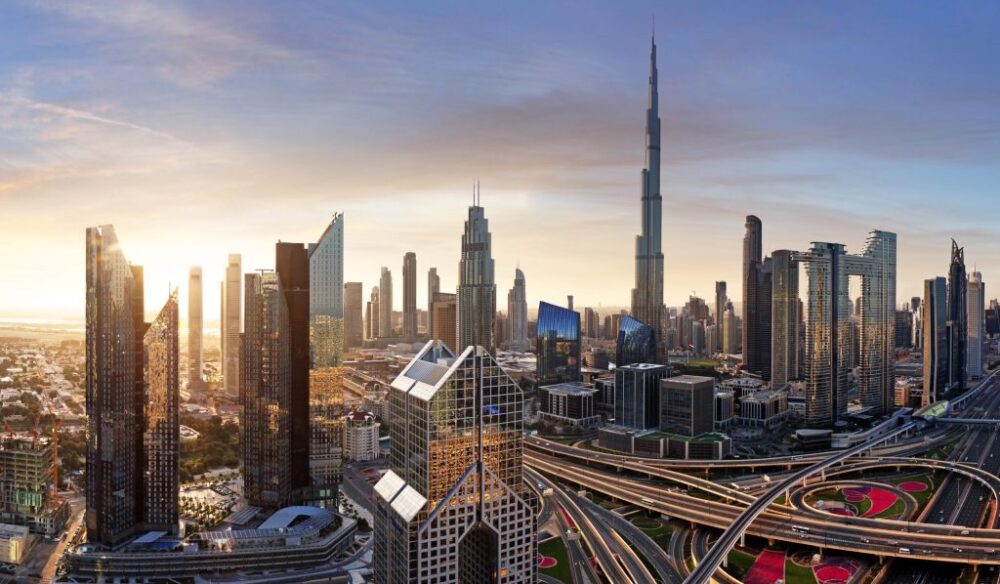
photo: cbnme.com
To understand where we are now, it’s worth going back to 2014. Back then, the average price per square foot was around 1,003 AED. Then came a correction, and in 2020 we dropped to about 894 AED/sqft (the effect of the pandemic and earlier oversupply). And from that point, things really started to happen.
We closed 2024 in the range of 1,524–1,597 AED/sqft, depending on the data source. For 2025, forecasts indicate 1,625 AED/sqft, and some scenarios see 2026 above 1,800 AED/sqft. Sounds like a rocket, but beware: the growth rate is already slowing down. We’re entering a phase of moderation, not further euphoria.
Sales volume and market structure
Scale? In 2025, we expect around 270,000 transactions with a total value of 917 billion AED. The first quarter of 2025 alone saw ~42,000 transactions (approx. 114 billion AED). Interestingly, 60-70% are off-plan purchases, meaning properties bought before construction, and 87% of buyers pay in cash. This shows just how solid the market’s foundation is, although the high share of off-plan deals also means greater sensitivity to project delays.
On the supply side: in 2025, ~48,000 new units are expected to be delivered, and in 2026 as many as ~72,000, with Q1 2025 alone adding ~9,400 units. Dubai’s population now exceeds 3.8 million, plus tourism (over 17 million in 2024), so demand is there. The only question is whether supply will start to outpace it.
Forecasts
This is where it gets interesting. For villas and the premium segment, most analysts predict a +5-8% increase in 2026. Apartments in the mid-range segment? Fitch and other cautious experts warn of a possible correction of around 10-15%, mainly due to an oversupply of off-plan properties and a growing number of deliveries. Rents are rising in the short term ( +6-13%), so buy-to-let investors have a cushion, but in 2026-2027, price pressure may go the other way.
So what does this mean? If you’re looking at luxury and villas, the outlook appears stable. Apartments? You need to be careful with timing.
How to read the Dubai market wisely?
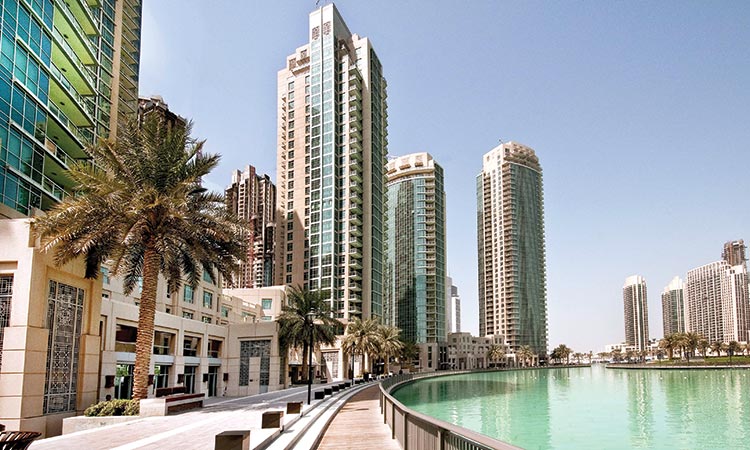
photo: elysian.com
The Dubai market is not just about hard data; it’s also about the context that determines whether a given price is a bargain or a trap. One square meter in Marina may cost similarly to Downtown, but rental potential, metro access, and the area’s development prospects create a completely different investment story. Average prices in euros provide a reference point, but the real value lies in the details that developers rarely mention in their sales brochures.
That’s why, when buying in Dubai, it’s worth looking beyond just the numbers on the listing page. Location, the maturity of the district, the developer’s quality, and the actual maintenance costs often matter more than the purchase price itself.
And it’s precisely this ability to read between the lines that separates a successful investment from disappointment. I already own two properties in Dubai and I honestly recommend this region to you!
Stev
premium real estate and golf enthusiast
Luxury Blog editorial team


Leave a Comment