

Raffles Hotel Singapore – an icon of luxury and history
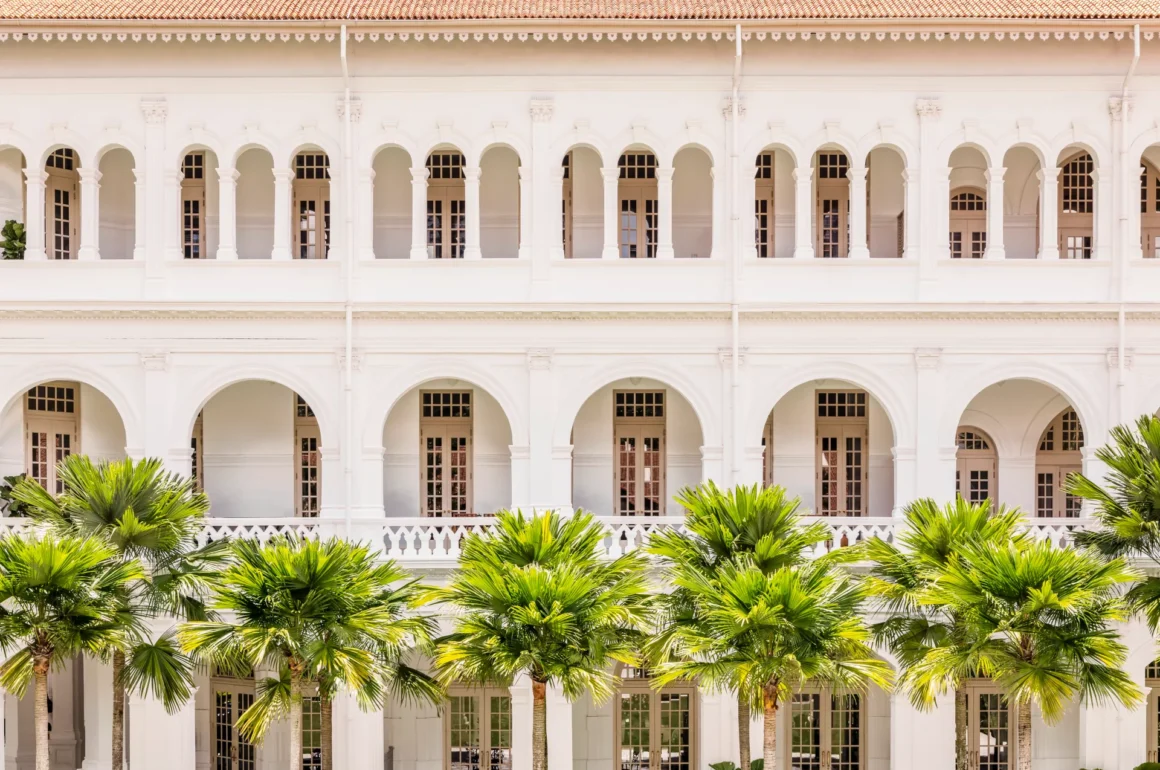
When you step through the doors of Raffles Hotel Singapore at 1 Beach Road, you feel as if you’re entering another world—one where time slows down and elegance still matters. This white colonial complex, dating back to 1887, is more than just a hotel. It’s a national monument. A symbol of how Singapore remembers its roots, even as glass skyscrapers rise all around.
Raffles stands right in the heart of the city, yet somehow feels cut off from all the hustle and bustle. Tourists come here even without a reservation—just to see those white facades, the palms in the courtyards, and to soak up the aura of a place that has witnessed so much history. And indeed, it’s one of the most iconic spots in Singapore.
Raffles Hotel Singapore – an icon of Singapore
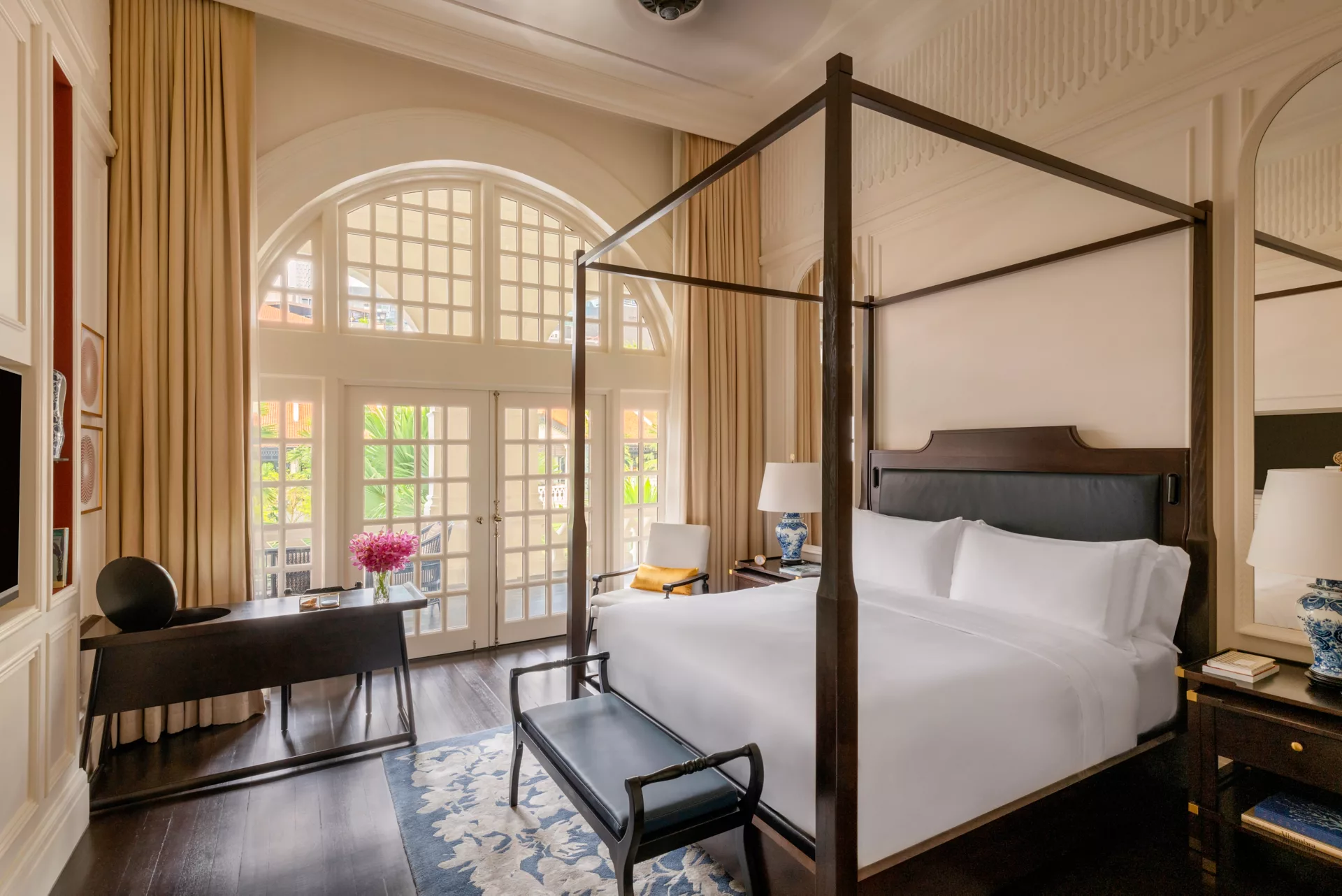
photo: raffles.com
Interestingly, Raffles has managed to maintain that unique balance between colonial heritage and modern luxury. Here, you’ll find only suite accommodations, butler service for every guest, and details that evoke the spirit of old Asia. Some call it a “living museum of luxury”—and it’s no exaggeration.
In the following section, we’ll take a closer look: where did this legend begin, what is it like to stay inside, and where is this brand headed? The story of Raffles is truly fascinating—it started on a tropical beach and ended up on the list of the world’s most iconic hotels.
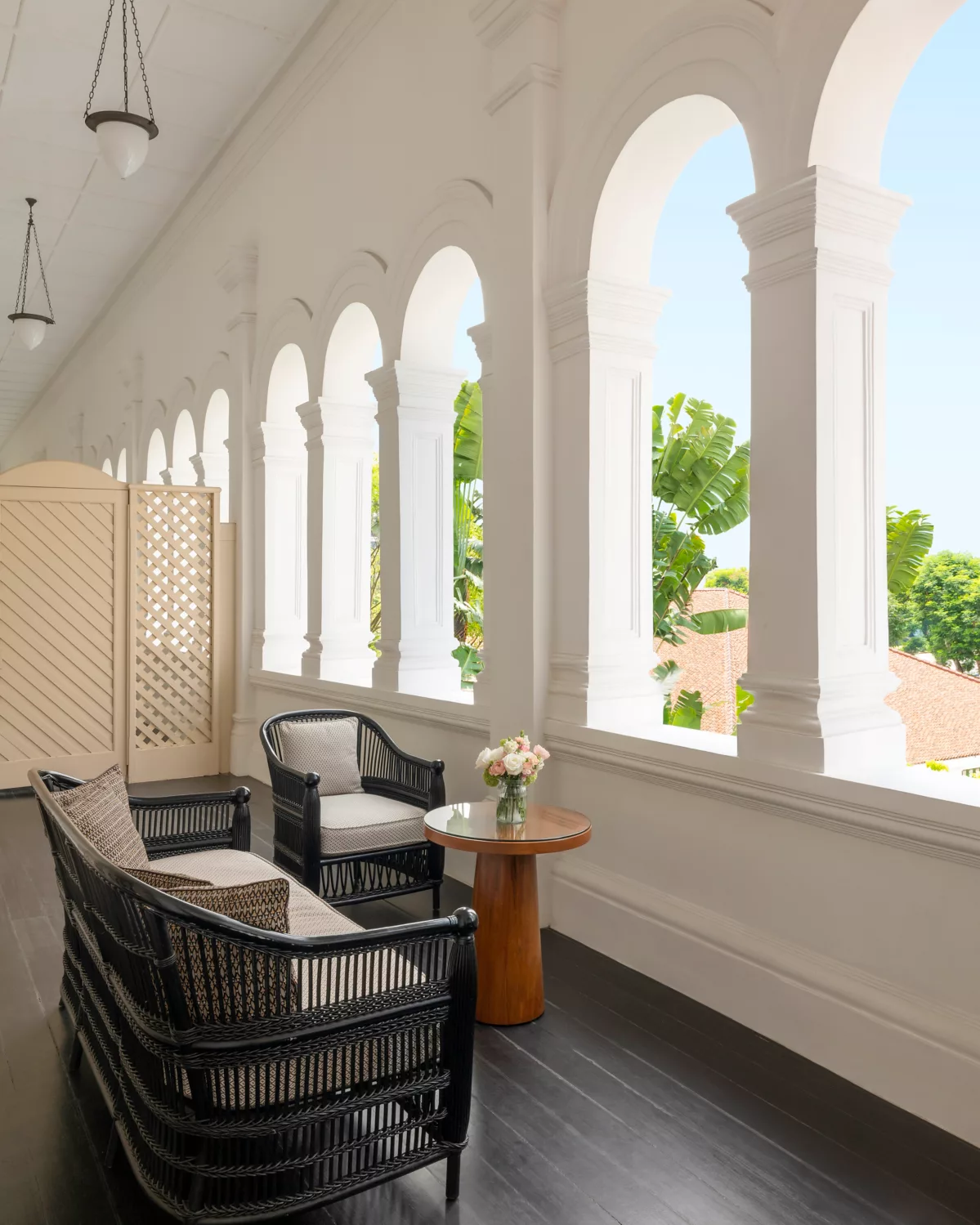
photo: raffles.com
From a seaside house to a national monument
In the 19th century, when Singapore was still a colonial port far removed from today’s metropolis, a small private house stood on the beach by Beach Road. It was this estate from the 1830s that became the starting point of a story spanning nearly two centuries. In 1878, the place was transformed into Emerson’s Hotel—a modest guesthouse that, after the owner’s death, was closed down, and for a time the building was used by Raffles Institution.
From a beach house to an icon of colonial elegance
The real breakthrough came in 1887, when four Sarkies brothers—Armenian entrepreneurs with experience in hospitality—acquired the property and opened Raffles Hotel. Initially, it offered just 10 rooms, but its popularity soared almost overnight. Within a few years, new wings were added, a magnificent ballroom was built, electricity was introduced (which was a sensation at the time), and the hotel became the number one address for Europeans traveling across Asia.
| Date | Event |
|---|---|
| The 1830s | Private beach house |
| 1878 | Opening of Emerson’s Hotel |
| 1887 | The founding of Raffles Hotel by the Sarkies brothers |
| 1915 | The invention of the Singapore Sling |
| 1942-1945 | Japanese occupation (“Yamashita Tenryo”) |
| 1987 | National monument status |
The 1920s and 1930s were a golden era—Raffles embodied pure elegance, with white suits, palm trees, and cocktails on the terrace. It was here, in 1915, that bartender Ngiam Tong Boon created the famous Singapore Sling. However, everything changed with World War II.
How Raffles Survived the Bulldozers
During the Japanese occupation, the hotel was renamed “Yamashita Tenryo” and served Japanese officers. After the war, the place fell into decline—competition from modern hotels, changing economic realities, and a lack of funds for renovations meant it was threatened with demolition. In fact, in the 1980s, there were serious discussions about tearing down the entire complex.
Fortunately, in 1987, the Singaporean government granted the hotel national monument status, which saved it. The first major renovation ended with its reopening in September 1991, and the second—even more extensive—was completed in August 2019. Both had the same goal: to preserve the spirit of the past while introducing 21st-century standards. And that’s exactly why today we can experience a piece of history in an almost unchanged form.
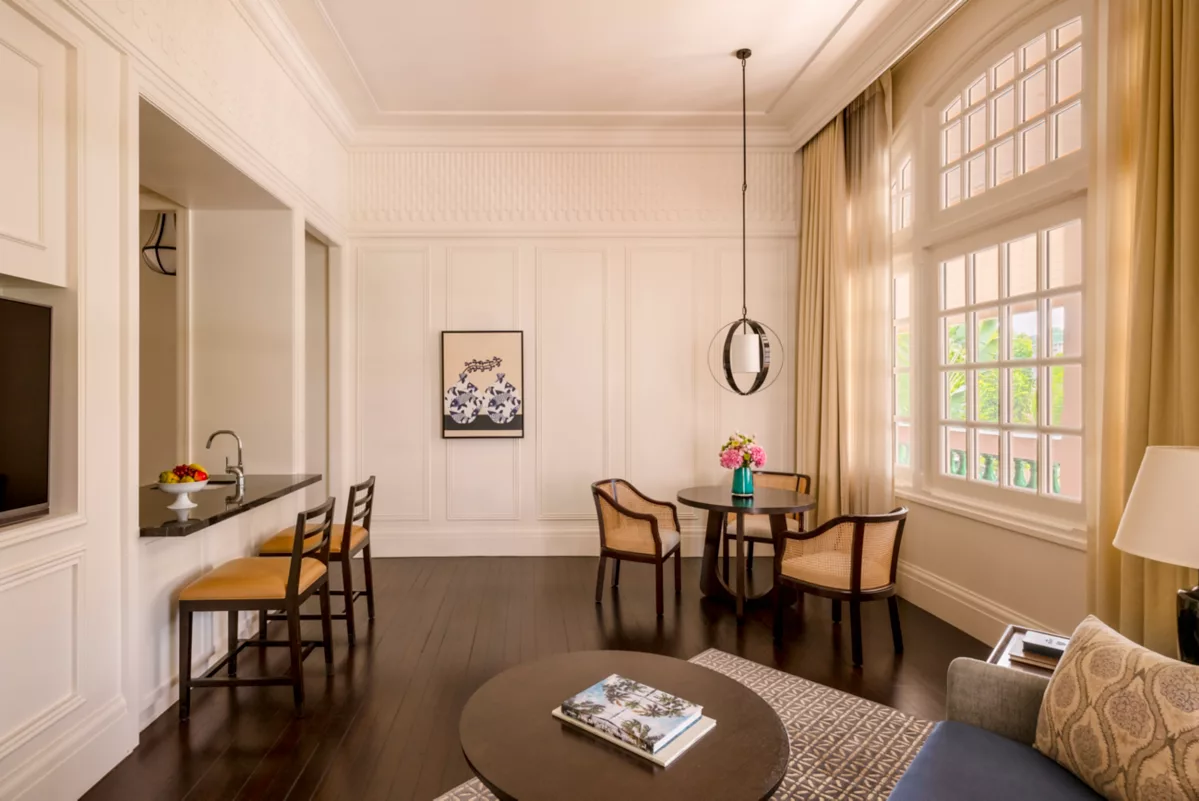
photo: raffles.com
What is it like to stay at Raffles Hotel Singapore today
All-suite luxury in the heart of Singapore
After a major renovation in 2019, Raffles is now a hotel without rooms—only suites. There are 115 suites, with the presidential one spanning around 238 square meters. The entire property has preserved its colonial soul: wide verandas, high ceilings with fans, white teak wood, and tropical gardens that make you feel like you’re in a 19th-century estate, right in the heart of Singapore.
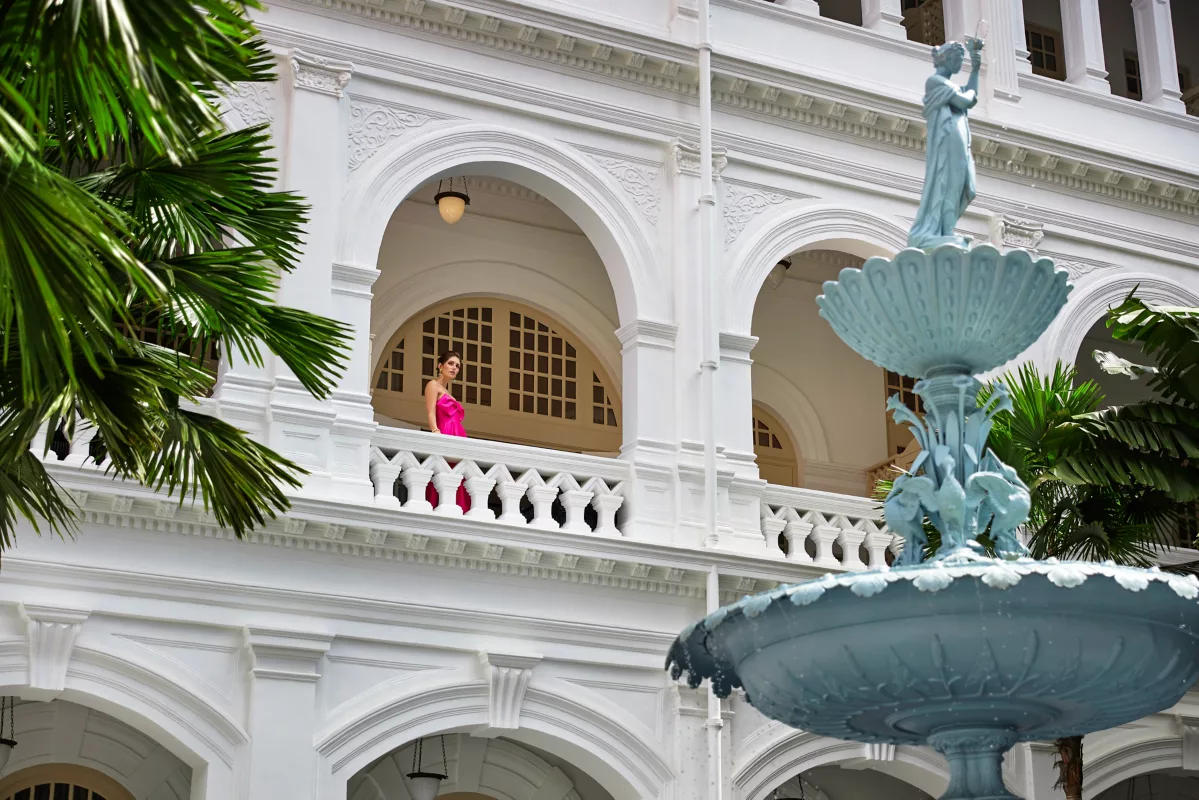
photo: raffles.com
What sets Raffles apart? Every guest—regardless of which suite they stay in—gets their own butler. This isn’t just a marketing flourish. It’s a real person who remembers how you take your morning tea and whether you want the newspaper laid out on the terrace. In the ultra-luxury segment, service is half the experience, and here you can truly see that the concept works.
Key places you have to see:
- Long Bar – the birthplace of the Singapore Sling, restored to preserve the spirit of the 1920s.
- La Dame de Pic – three Michelin-starred fine dining Michelin, cuisine by Anne-Sophie Pic
- Raffles Spa – a tropical haven offering treatments based on local ingredients
- A pool with a private courtyard, although rather small for a property of this class
- Indoor gardens – perfect for exclusive weddings or private business forums
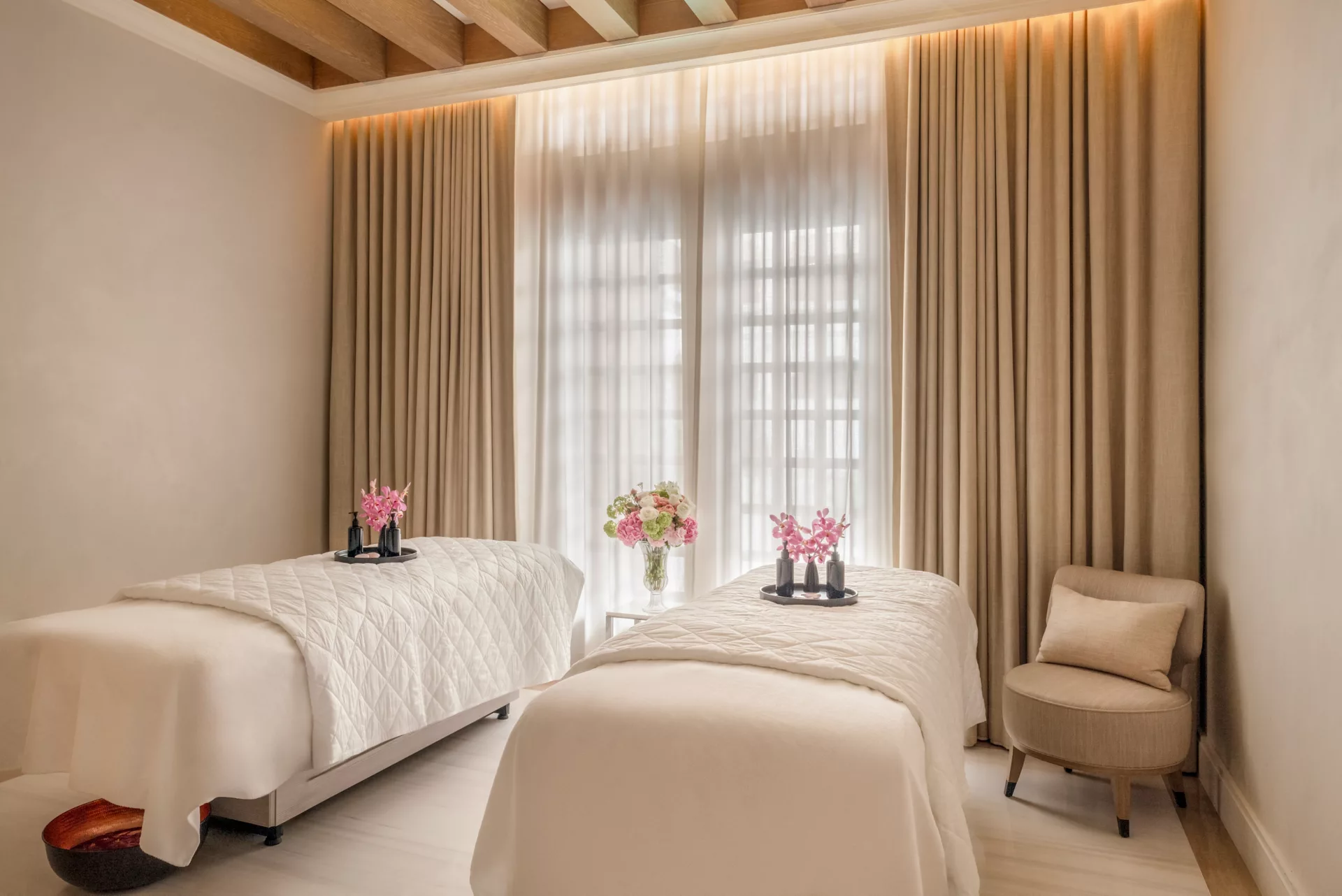
photo: raffles.com
From Singapore Sling to zero waste cuisine
It may sound funny, but Raffles now takes sustainability as seriously as service. After the renovation, modern HVAC systems were installed, solar panels were added to the kitchen roofs, water reduction systems and zero waste policies were introduced in the restaurants—because even an icon must adapt to the expectations of new guests.
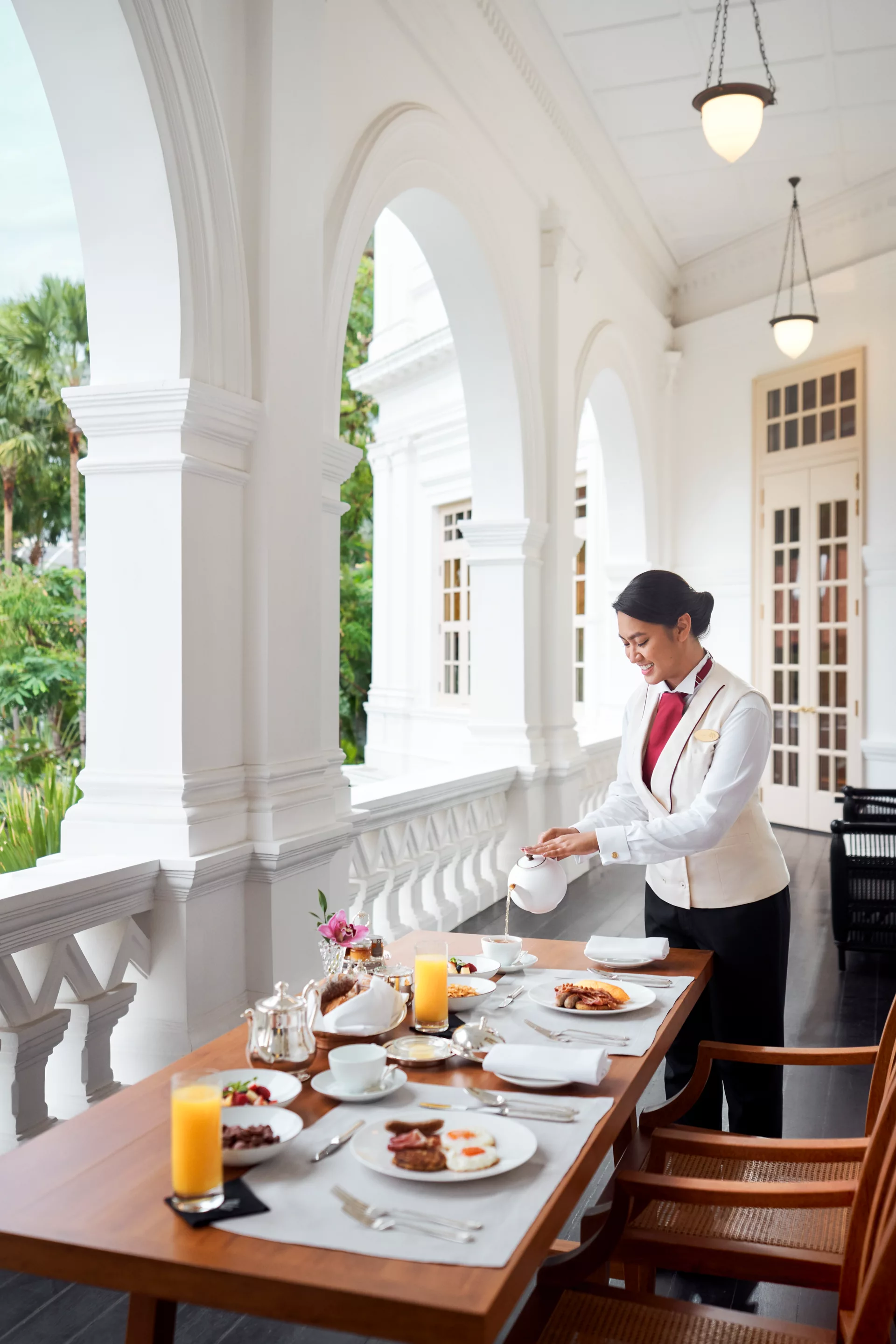
photo: raffles.com
The market is responding well: occupancy remains between 70-77%, and RevPAR in spring 2025 is around S$6,150+. It’s not cheap, but people are still willing to pay for authenticity and history wrapped in modern comfort. What’s next? We’ll see how Raffles plans to defend this position in a world of growing luxury competition.
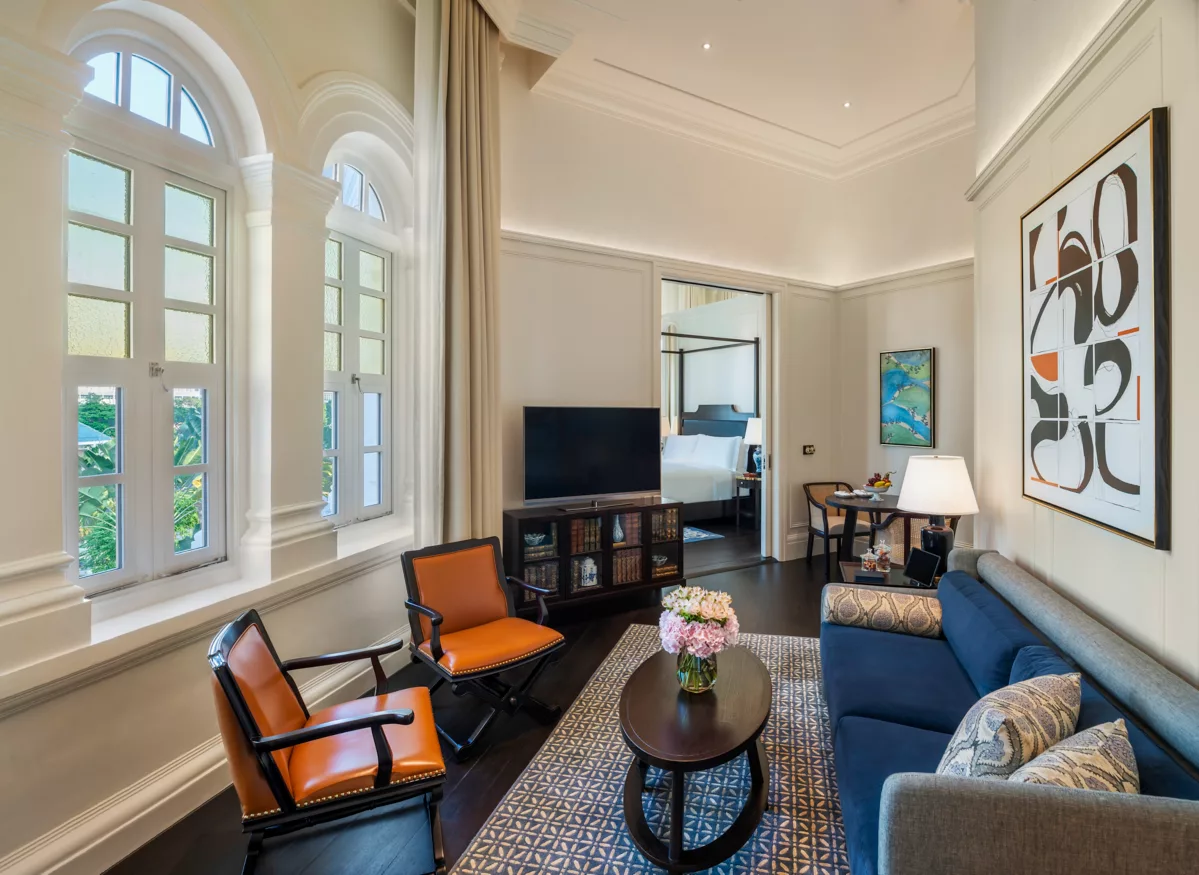
photo: raffles.com
What’s next for Raffles – a legacy that inspires
Raffles isn’t a museum under a glass dome—it’s a living, breathing hotel, hosting discerning guests and competing with new industry giants. That’s exactly what makes it such an intriguing case study for the entire hospitality sector. It proves you can preserve historic heritage, offer butler service in white gloves and at the same time implement AI for personalization, carbon audits, and smart-room technologies. In other words—heritage doesn’t exclude innovation. Quite the opposite: authentic history combined with modern tools is a formula more and more hotels are trying to replicate.
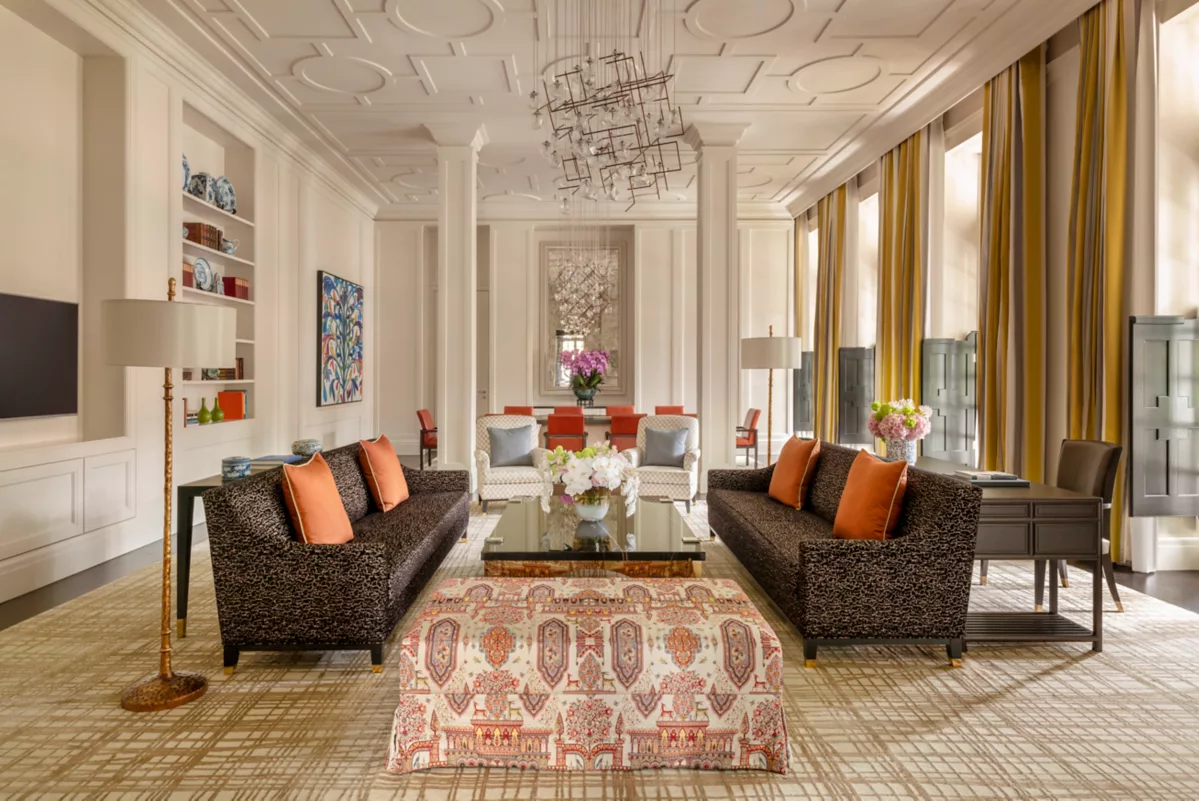
photo: raffles.com
The Raffles brand itself is expanding (the chain has plans for over 20 locations worldwide), and Singapore adds new luxury hotels every year. Competition in the ultra-premium segment is getting truly fierce. What does this mean for Raffles? It has to prove that authenticity and storytelling outshine generic luxury.
Why does this even matter? Because places like Raffles remind us that travel isn’t just about ticking off attractions. It’s a way to see a city in a broader context—not just “what’s here now,” but “how did we get here.” And that deeper layer is exactly what we seek when we truly want to be somewhere, not just pass through.
NOAH 89
lifestyle & travel editor
Luxury Blog





Leave a Comment