

Niki Lauda – from the Nürburgring flames to a Formula 1 legend
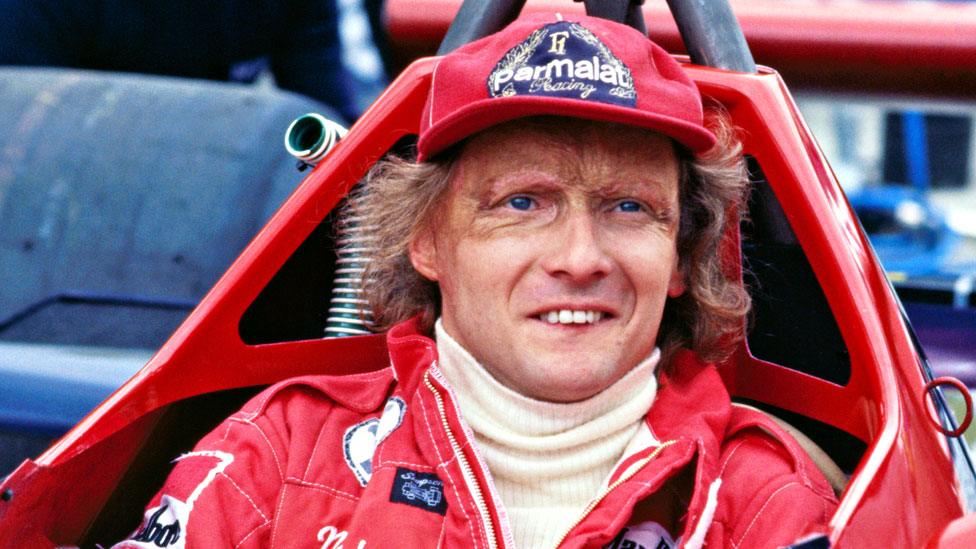
Ferrari 312T2 burns at 800°C on the Nürburgring. August 1, 1976. Niki Lauda trapped in a hell of fiberglass and steel. His face melted, lungs filled with poison. Death seems inevitable.
And yet, this same man would go on to become a three-time Formula 1 world champion.
You see, sometimes I think that real stories are more unbelievable than the best movies. Lauda is proof that human willpower can overcome anything—even 800-degree heat and third-degree burns to the face. Forty-two days between the accident and his return to the cockpit. Forty-two days to go from a deathbed back behind the wheel of the world’s fastest machines.
Niki Lauda – why does his story still captivate us?
Niki’s story lives on. In the 2024 season, the Mercedes -AMG F1 car raced with a red stripe on the halo—in his honor. And for good reason. Lauda isn’t just a legend from the past; he’s a role model for today’s drivers. His approach to risk, technology, and the very art of racing continues to inspire.
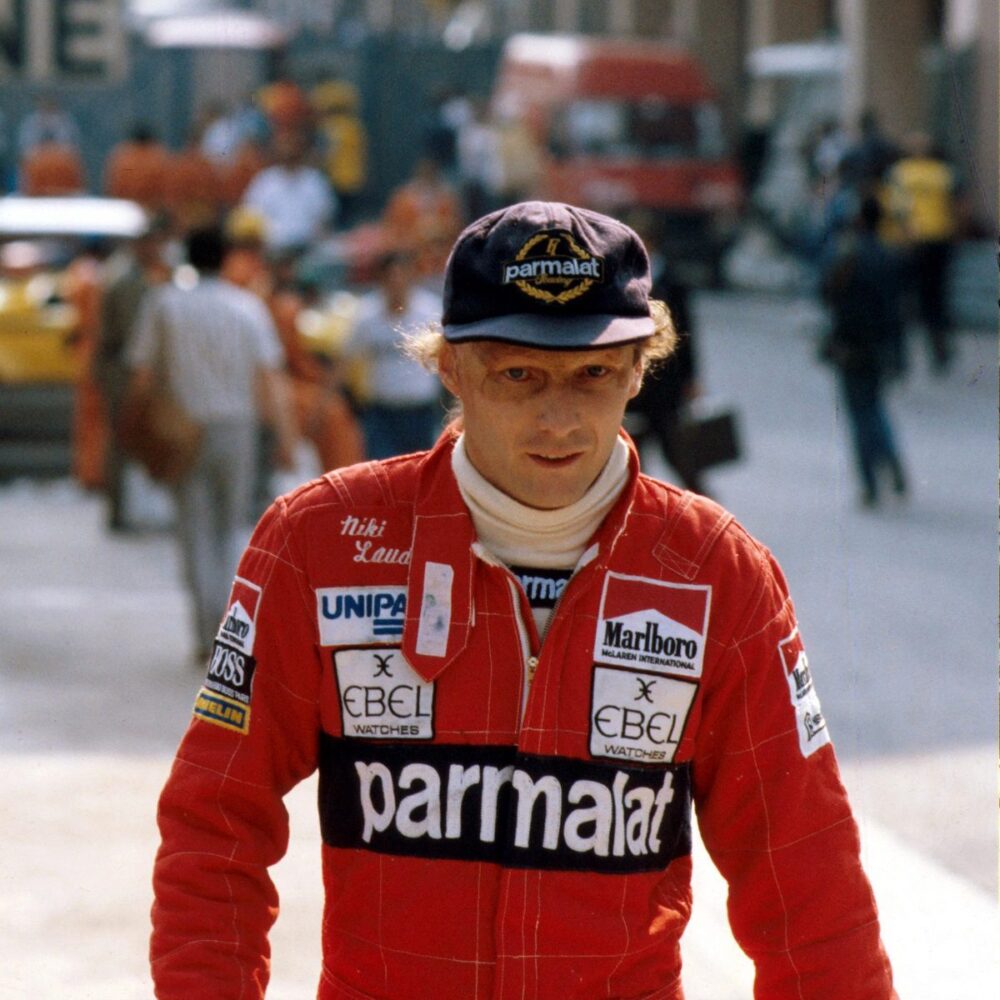
photo: mclaren.com
What makes his story so captivating in 2025? Maybe it’s because we live in an era where every mistake is recorded, analyzed, and commented on. And Lauda made the biggest mistake possible—he let the fire nearly kill him. And came back stronger.
In this story, you’ll discover how a boy from an Austrian business family became one of motorsport’s most important figures. You’ll understand why his rivalry with James Hunt was more than just sporting competition. You’ll meet a man who could stare death in the face and say, “not today.” You’ll see how his legacy shapes modern Formula 1.
But to truly understand it all, we need to go back to the beginning. To Vienna in the 1950s, where a stubborn kid dreamed of something more than the family business.
From Young Banker to Master of the Wheel: Early Years and the Road to the Top of F1
You know, the family of bankers wasn’t exactly thrilled when Niki Lauda announced he was leaving a financial career for racing. The grandfather founded the bank, the father ran it, and suddenly the grandson wants to race on tracks. The arguments at home were intense.
But Lauda had a plan. In 1971, he did something that sounds crazy—he took out a loan against his life insurance policy and headed to Formula 2. Honestly, not everyone would dare to do that. But he knew that without money, there are no races, and without races, there’s no career.
The first years were tough. He drove wherever he could, learning at every track.
| Team | Season | Best result |
|---|---|---|
| March | 1971 | Did not finish (Austria) |
| March | 1972 | 8th place (Belgium) |
| BRM | 1973 | 5th place (Belgium) |
These results weren’t impressive, but Lauda was watching everything. Every screwdriver, every setup, every technical detail. The mechanics said he asked more questions than all the other drivers combined.
The breakthrough came in 1974 during tests for Ferrari. Enzo Ferrari listened to his comments about the car’s handling and reportedly said, “This boy understands what it’s all about.” Lauda didn’t just drive fast—he could explain why the car behaved a certain way in the corners.
The 1975 season was something incredible. The Ferrari 312T with its 3.0-liter flat-12 engine turned out to be perfect. The car weighed 575 kg, had 495 HP, and Lauda felt right at home behind the wheel.
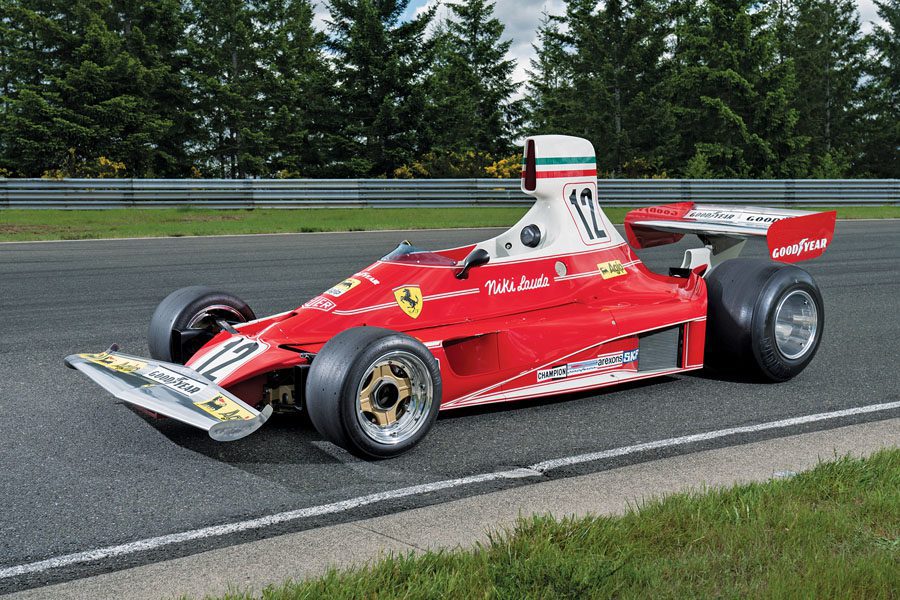
photo: sportscarmarket.com
Five key races of that season:
- Monaco (11.05.1975) – first victory for Ferrari
- Belgium (25.05.1975) – dominance from start to finish
- Sweden (08.06.1975) – won despite brake problems
- France (06.07.1975) – pole position and victory
- USA (10/05/1975) – the final race that sealed the title
The statistics say it all: 5 wins, 9 pole positions, 64.5 points. Emerson Fittipaldi finished second with 45 points. The gap was enormous.
I remember watching those races on TV. Lauda drove differently from the others. Calmly, without unnecessary risk, but always fast. As if he had everything calculated in advance.
Ferrari was pleased, and so were the fans. The team’s first championship title since 1964. But 1976 was about to bring even greater challenges.
55 seconds in flames: the 1976 accident and the triumphant comeback
Can you imagine what it’s like to lose control of a race car at 200 km/h? On August 1, 1976, at the Nürburgring, Niki Lauda found out firsthand. The suspension simply gave out—no warnings, no signs. One moment you’re a world champion, the next your Ferrari is engulfed in flames.
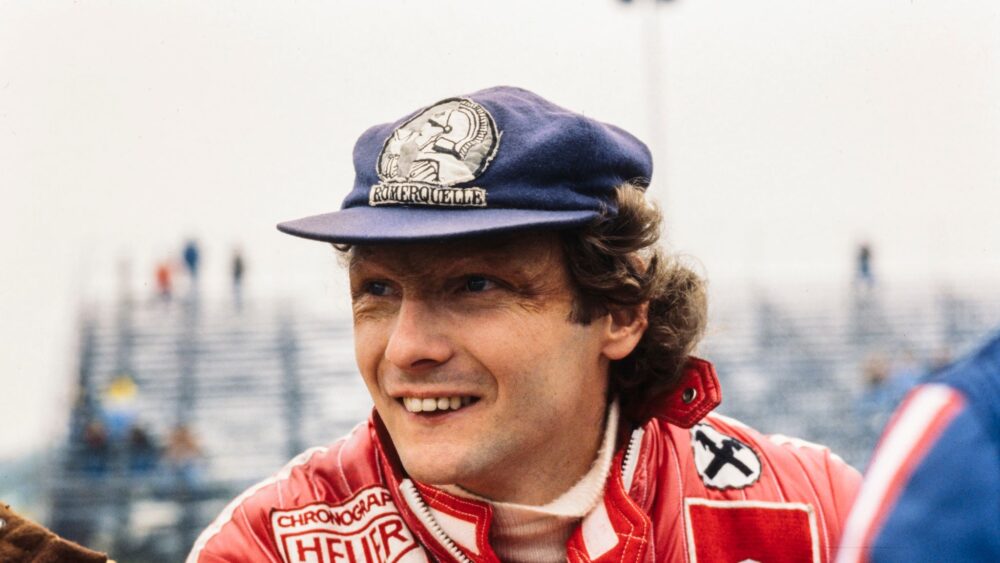
photo: skysports.com
The flames swallowed the cockpit instantly. Lauda spent 55 seconds in that inferno—an eternity for someone burning alive. When they finally pulled him from the wreckage, the doctors were certain of one thing—he wouldn’t survive.
“My life is mathematics; risk has to pay off”
Recovery timeline:
→ August 1: Accident, first to third-degree burns, loss of eyelids, last rites administered
→ August 20: First conscious conversations with family
→ October 9: Back in the cockpit at the Italian GP—just 42 days after the accident
→ October 24: Japanese GP—the decision that cost him the title
It’s that last date that probably hurts the most. Hunt was chasing like a madman all season, while Lauda had everything in his hands. The problem? Rain in Fuji turned the track into an ice rink. Niki looked at the conditions and told himself—no, today isn’t worth dying for. He pulled out after two laps.
Hunt won the championship by a single point. One damn point.
But you know Lauda—a mathematician at heart, stubborn like few others. The 1977 season was his revenge. No sentimentality, no self-pity. He just raced and won. 72 points in the final standings and a second title in his pocket. Hunt? He wasn’t even close.
Interestingly, I thought after such drama Niki would slow down. Nothing could be further from the truth. In 1984, already a McLaren veteran, he fought the fiercest battle of his career against Alain Prost. The Frenchman was younger, faster, hungry for success. But Lauda had something Prost hadn’t yet learned—he knew what defeat tasted like and how to come back from it.
Half a point. That’s all that separated them in the final standings. Half a point advantage for Lauda over a future legend. At 35, scarred from burns, the Austrian glacier showed the young wolf who was boss.
That same determination that let him come back from the brink of death and snatch the sweetness of triumph from Hunt later served him in business. But that’s another story.
From the Track to the Skies: Business Career, Aviation, and Role at Mercedes F1
You know, when I look at Lauda’s post-racing career, it reminds me of a pit stop. Only instead of three seconds, it lasted decades. And instead of changing tires, the guy was building an airline empire.
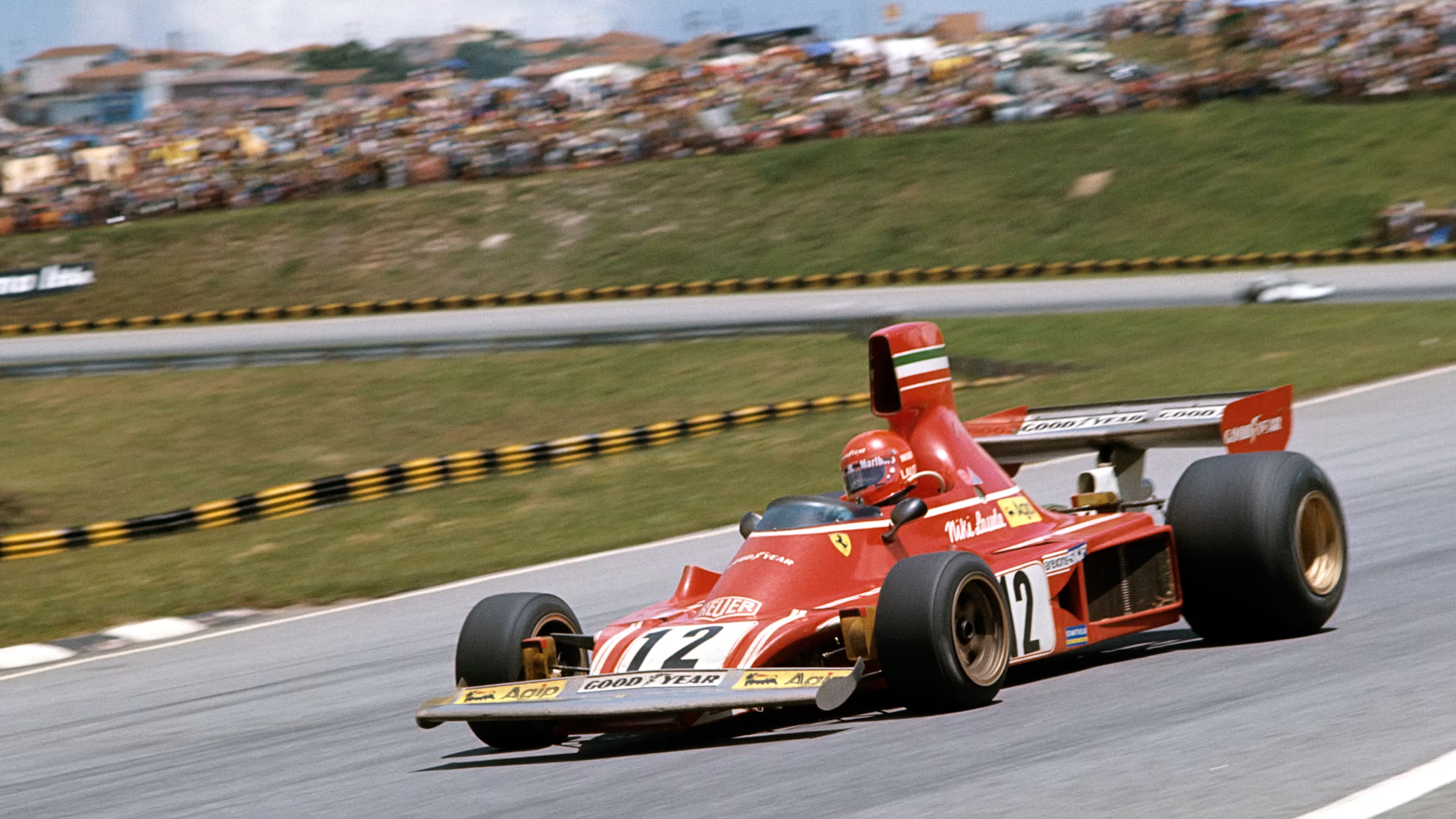
photo: formula1.com
Lauda Air was founded in 1979, but not right away. Niki still had one more season with Ferrari ahead of him, but he was already thinking about business. The strategy was simple—long-haul routes, Boeing 767s and later 777s, no cheap tricks. Just like in racing—quality, precision, reliability.
The problem came on May 26, 1991. Flight 004 to Bangkok crashed in Thailand. Everyone died. Lauda didn’t accept the standard “sorry, it was an accident.” The man personally flew to America and faced Boeing’s engineers head-on. He wasn’t the type to give up.
It turned out the issue was with the engine thrust reverser system. The Boeing 767 had a design flaw. Lauda fought for years until Boeing finally admitted the mistake. It cost him a fortune and a lot of nerves, but he won. As always.
Then came the nineties and 2000s—Lauda Air kept growing, but in 2000 he sold most of his shares to Austrian Airlines for around 200,000,000 euros.
In 2003, he founded Niki—another airline, this time low-cost. I think he got bored with peace and quiet. Niki operated until 2017, when he transformed it into Laudamotion. Ryanair came in as a partner, but Lauda kept control of the brand.
It’s interesting how all this connects to F1. In 2012, Mercedes invited him as non-executive chairman. He wasn’t just there for show. It was Lauda who convinced Lewis Hamilton to leave McLaren in 2013. They talked for hours, with Niki persuading him that Mercedes was the future.
| Motorsport | Aviation | F1 Management |
|---|---|---|
| Technical precision | Safety first | Talent above politics |
| Long-term strategy | Quality of service | Honesty in communication |
| Personal commitment | The fight for truth | Building trust |
Hamilton hesitated. McLaren was his first love, but Lauda understood people. He knew Lewis needed new challenges. And he was right—since 2014, Mercedes has dominated, and Hamilton has already won several titles with the team.
Milestones of Lauda’s airline:
- 1979 – founding of Lauda Air
- 1991 – the Flight 004 disaster and the battle with Boeing
- 2000 – sale of the majority stake in Austrian Airlines
- 2003 – launch of the Niki line
- 2017 – transformation into Laudamotion with Ryanair
At Mercedes, Lauda was like a catalyst. Toto Wolff handled operations, but it was Niki who had the final say on key decisions. The drivers respected him because he knew exactly what it meant to sit in a race car at 300 km/h.
Sometimes I wonder if Lauda was even capable of stopping. Aviation, F1, hotels, and other businesses. The guy was seventy years old and still flying around the world, negotiating contracts, checking every detail.
It was this multidimensionality that made him such a remarkable entrepreneur. He wasn’t just a former driver lost in nostalgia. He was a businessman who understood technology, people, and the market. And he never hesitated to speak the truth, even when it hurt.
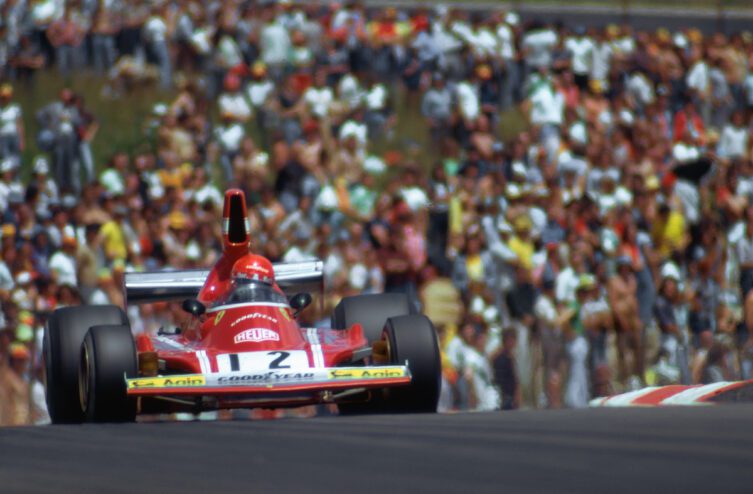
photo: autohebdo.pl
A legacy that endures: Lauda’s lessons for future generations
Can you learn courage from someone who’s been through hell and come back even stronger?
Lauda left us with three universal lessons that apply everywhere—from startups to major corporations.
Lesson one: calculated risk isn’t gambling. Niki was never reckless behind the wheel. Every move he made was backed by data and analysis. The same goes for business—take risks, but always base them on facts.
Lesson two: data rules everything. Before anyone was talking about big data, Lauda was already living by the numbers. Lap times, tire temperatures, fuel consumption—everything mattered. Today it sounds obvious, but in the ’70s, it was revolutionary.
Lesson three: sometimes you have to go back to square one. After his accident, he could have quit. Instead, he analyzed the situation and came back stronger. In startups, they call this a pivot.
I just saw a real-life example of this lesson in action. A young team from Kraków was building a food delivery app. After a year, they realized the market was saturated. Instead of giving up, they analyzed their user data. They discovered people were mostly using their tools to plan meals. Pivoting to a diet app turned out to be a winning move.
“Niki taught us that perfection is a process, not a goal. Every day brought new data, new opportunities for improvement,” says Toto Wolff, head of the Mercedes team.
In 2025, the FIA launched the “Lauda Safety Award” project. It’s not just about motorsport—they reward safety innovations across every industry. From new helmets for construction workers to warning systems in factories. This shows how his way of thinking continues to inspire.
You can apply these lessons today. At work, in your relationships, in your plans for the future. You don’t have to be a Formula 1 driver. All it takes is to start thinking like Lauda—analytically, boldly, but with a clear head.
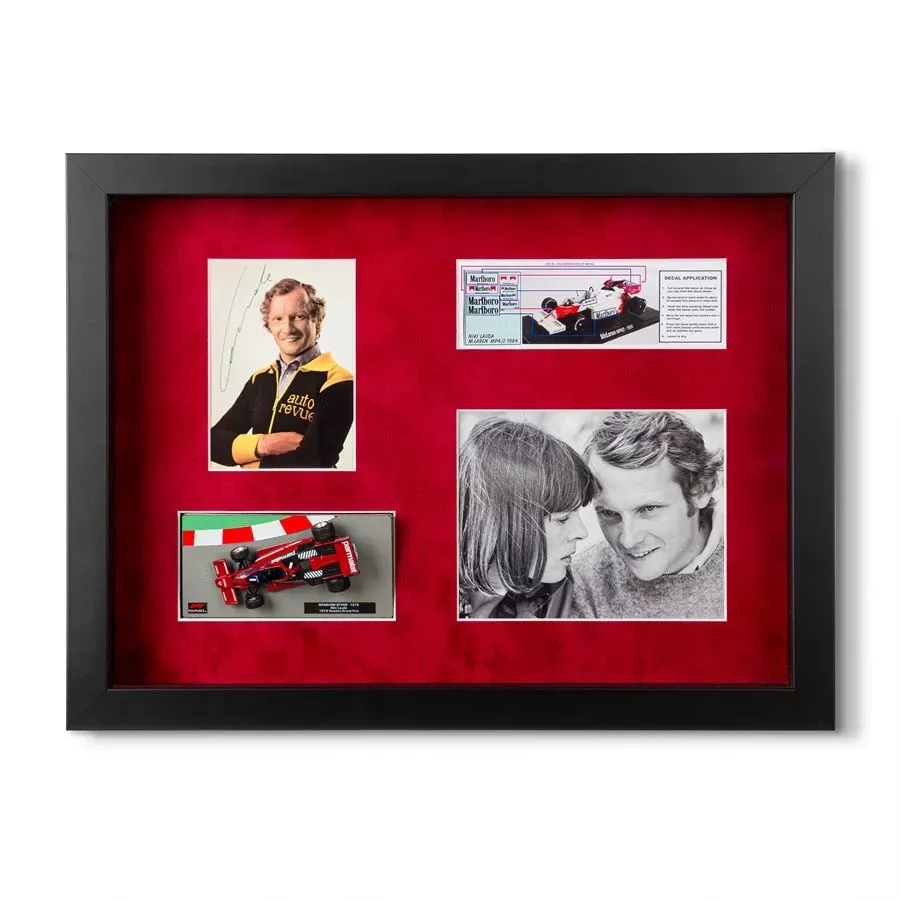 His legacy lives on in every data-driven decision, every comeback after failure, every calculated risk we take.
Mariano
lifestyle editor
Luxury Blog





Leave a Comment