

Murano Lighting – top Italian brands, history, and selection
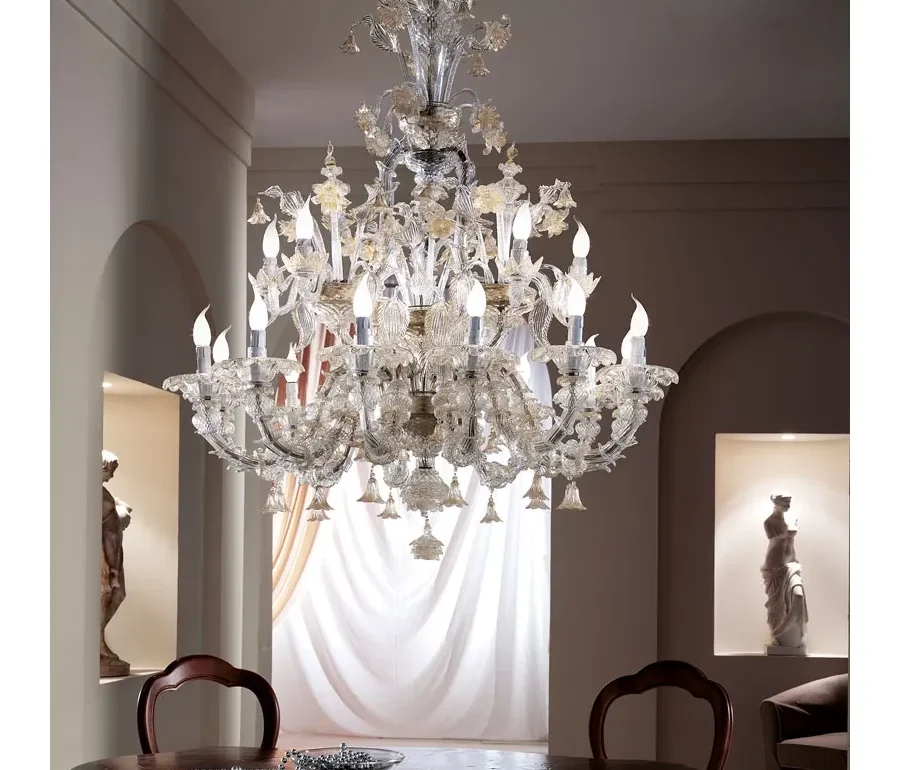
Even 70-80% of “Murano” sold in Venice and on the island itself are counterfeits. It sounds shocking, but it shows just how valuable authentic glass from this small island near Venice truly is. It’s not just a lamp. It’s a piece of history, craftsmanship passed down from generation to generation, a symbol of luxury that has endured for centuries.
Murano is experiencing a renaissance. On one hand, there is tradition ( since 1994, the Vetro Artistico® Murano mark has protected true artisans), and on the other, modernity. Contemporary studios are integrating LED and smart solutions without losing any of the magic of hand-shaped glass. The global Murano glass market is projected to reach USD 3.08 billion by 2032, with an annual growth rate of 5.59%. People are seeking authenticity in their interiors, something more than mass production.
Murano lighting continues to captivate with its beauty
The problem is that recognizing the original requires expertise. Every Murano lamp carries the soul of the master who created it, but the market is full of imitations. It’s worth knowing what to look for, which brands have tradition, and how not to overpay for glass from China in a “Venetian” style.
Arte Veneziana
History and Evolution
Actually, it all started with fire. In 1291, the Venetian council made a decision that would forever change the map of craftsmanship: all furnaces were moved to Murano, officially for fire safety reasons, but above all to guard the secrets. And thus, the island of glass was born.
Key moments worth remembering:
- ca. 1453 – Angelo Barovier invents cristallo, transparent glass almost like rock crystal; suddenly, candlelight could be multiplied and reflected
- 16th century – filigree and millefiori techniques (those colorful floral patterns); lighting ceases to be merely functional and becomes art
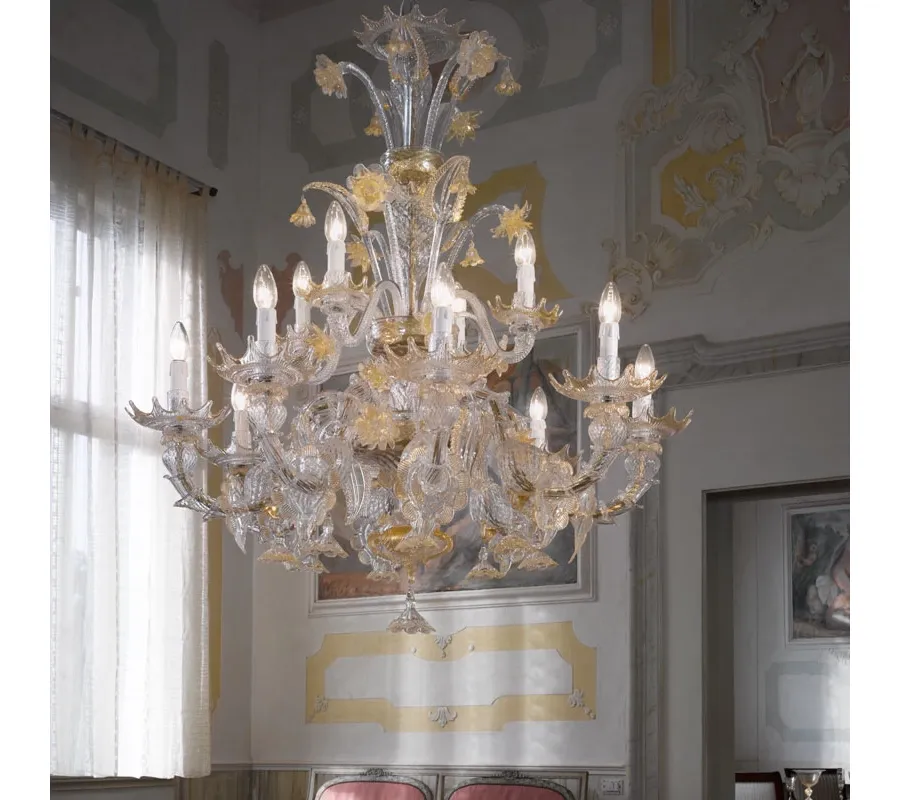
- 17th-18th century – Giuseppe Briati creates the famous “ciocche” chandeliers (in the form of flowers and leaves), but… secrets leak abroad, Murano loses its monopoly, employment declines
- 1854-1859 – revival: Fratelli Toso and Antonio Salviati restore prestige, orders return from all over Europe
- 1921 – Paolo Venini opens his studio, modernism enters the world of chandeliers
- after 1945 – Vistosi (1945), Mazzega (1946): Mid-Century Modern, pure forms instead of baroque excess
Arte Veneziana
From Rococo ‘ciocche’ to Modernism
Interesting how nature has influenced these lamps. Renaissance plant motifs, Baroque with its leaves and garlands, Rococo with delicate petals—all of this has become part of the DNA of Murano chandeliers. In the 20th century, Ercole Barovier returned to the murrine technique and created something entirely new: geometric, modern forms from traditional elements.
The tradition continues, although employment has drastically declined (from about 6,000 artisans in 1990 to fewer than 1,000 in 2012). In 1994, the Vetro Artistico® Murano mark was introduced to distinguish genuine craftsmanship from cheap imitations. Mastery of the hand still matters.
Arte Veneziana
Glass techniques, materials, and lighting specifications
When you look at a Murano lamp, you are actually seeing several centuries of techniques passed down from master to apprentice. Each method creates a completely different visual effect, and sometimes it’s worth knowing what lies behind these names.
The most important Murano glass techniques
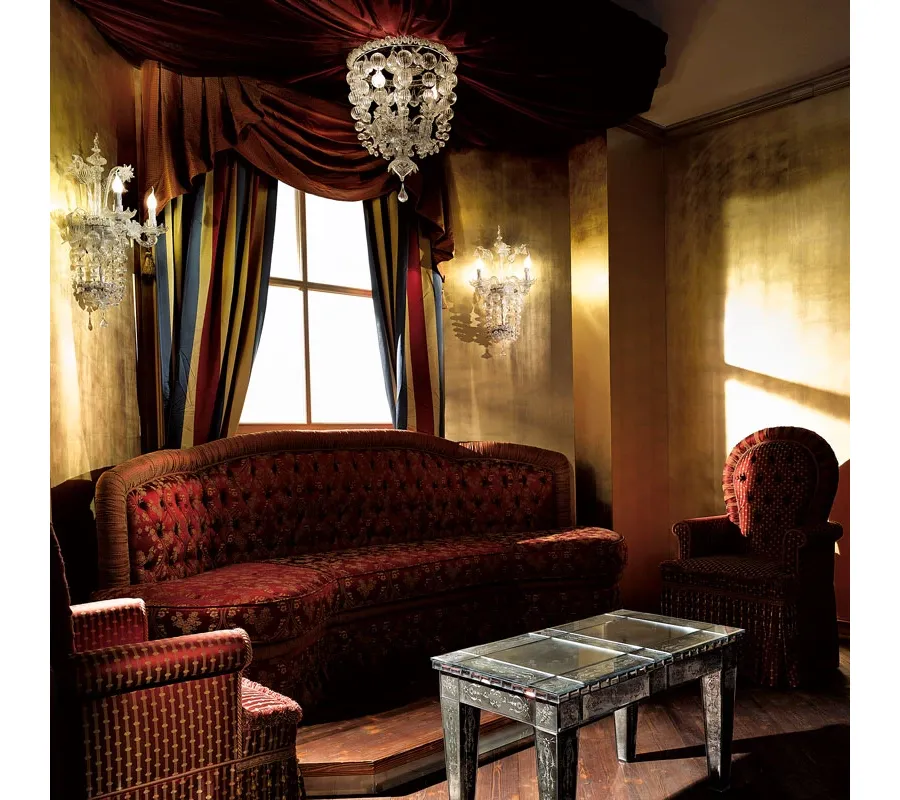
Soffiato is simply blown glass—the foundation of most lamps, where the artist shapes the form using a blowpipe. Sommerso creates the impression of layered colors: a layer of clear glass surrounds a core in an intense shade, as if frozen in time. Filigrana (or retortoli) features twisted rods of milky glass arranged in spiral patterns. Murrine are made from cross-sections of colorful rods—resulting in a mosaic effect of embedded flowers or stars. Bullicante uses controlled air bubbles scattered throughout the glass mass, adding depth and brilliance. Lattimo is milky, opaque glass reminiscent of porcelain, often in white or pastel tones. Additionally, flakes and suspensions of 24k gold or silver dissolved in the glass shimmer like an inner fire.
Arte Veneziana
Parameters that matter
The base is soda-lime glass (65-70% silica), which can be shaped at high temperatures. Most lamps feature standard E14, E27, or G9 sockets (230 V, CE marking), making it easy to replace light sources. LEDs and dimmers? No worries—many models support them, and new designs even integrate smart controls ( Matter, Thread)—tradition does not exclude modernity. The dimensions can be surprising: from compact 20 cm wall sconces to chandeliers exceeding 2 meters in height, with weights typically ranging from 5 to 100 kg. Custom options allow you to adjust the color, size, or number of arms—every lamp can be unique.
Top Italian Murano brands and their distinguishing features
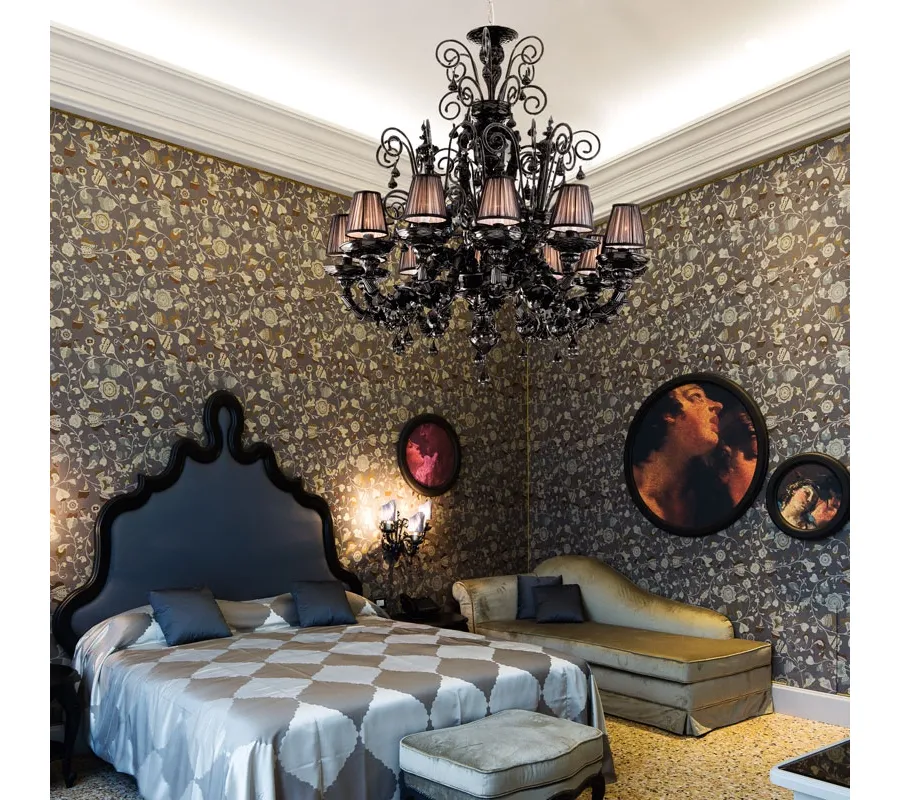
Every manufactory in Murano has its own story and recognizable DNA. It’s worth knowing a few names, because it’s a bit like distinguishing Porsche from Ferrari—similar prestige, completely different energy.
Arte Veneziana
Classics that have stood the test of time
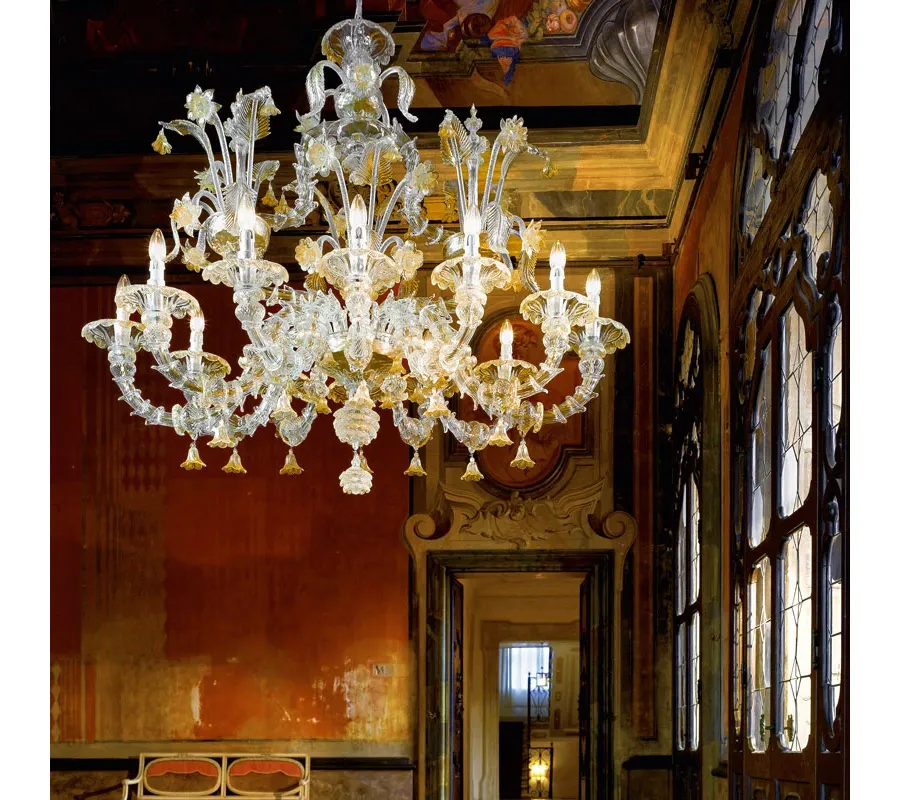
Barovier&Toso has existed since 1295. The oldest family-owned glassmaking company in the world. Their multi-tiered crystal chandeliers hang in royal palaces and luxury hotels. Mastery in gilded finishes and classic forms—if you’re looking for something that screams “elegance with tradition,” this is the place.
Seguso Vetri d’Arte (since 1397) specializes in sommerso and filigrana techniques. In 2023, the Italian government recognized them as a national heritage, which says it all. Craftsmanship passed down through generations, their lamps resemble sculptures.
Modernism and artistic collaborations
Venini (founded in 1921) is a kingdom of collaborations. Carlo Scarpa, Gio Ponti—icons of 20th-century design—worked for them. The Balloton series is a must-know. Recently, they have collaborated with Peter Marino and Ron Arad, blending tradition with artistic avant-garde. Their table lamps are often limited-edition works of art.
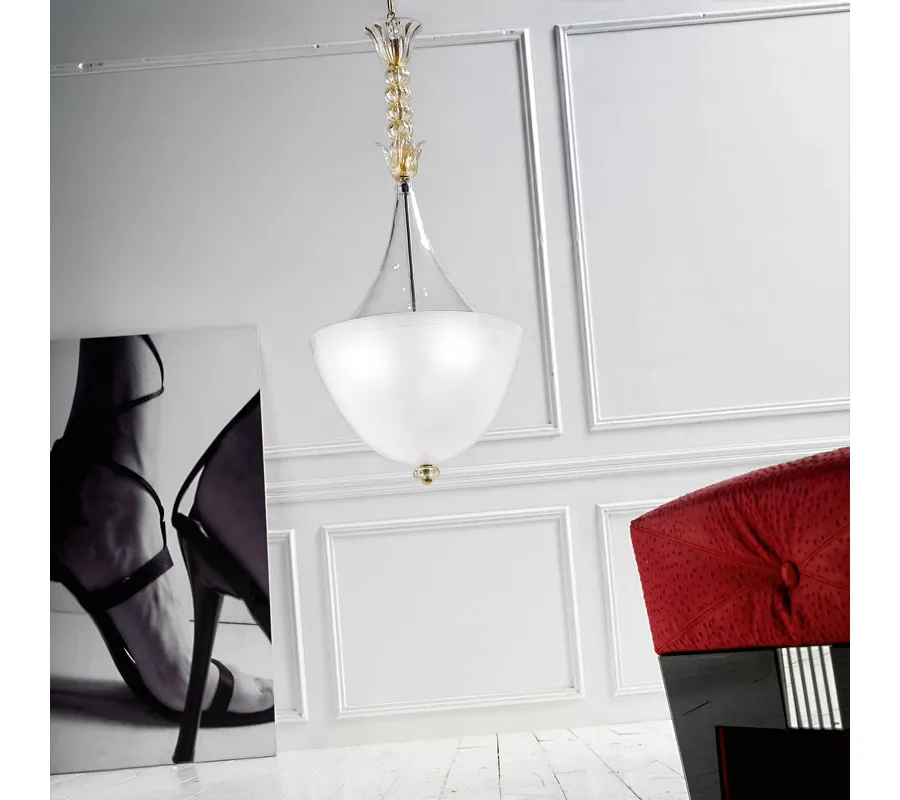
Mazzega 1946 breathes Mid-Century. The Lotus, designed by Carlo Nason, symbolizes their approach—clean lines, organic forms, zero clutter. An ideal choice for fans of 1950s modernism.
Recognizable forms
Vistosi (since 1945) is associated with disc-shaped compositions—multi-level ceiling lamps resembling flying saucers. Collaborations with Ettore Sottsass and Gae Aulenti. Their wall lamps have a dramatic character, embracing the interplay of light and shadow.
The style depends on whether you are drawn to baroque opulence or minimalist elegance. All these brands offer both chandeliers and floor lamps or wall sconces—the difference lies in their aesthetics, not the product category.
How much does Murano glass lighting cost?
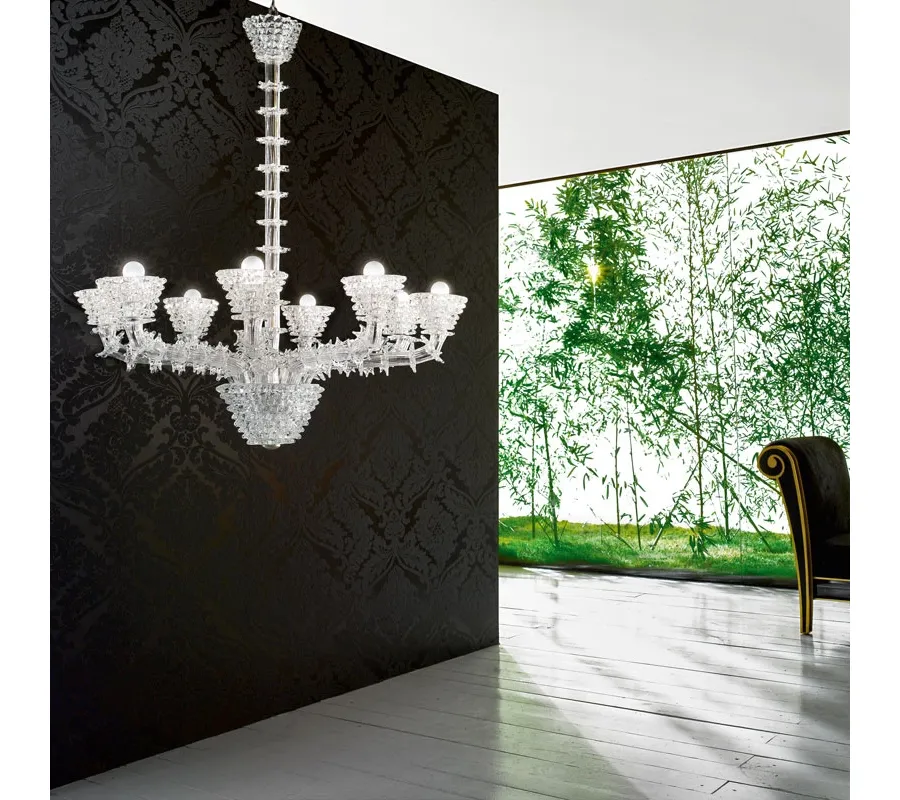
Authentic Murano lighting is an investment, not an impulse purchase. Small table lamps or wall sconces start at around €500-2,000, depending on the brand and complexity. Medium chandeliers? Easily €5,000-10,000. Large installations and bespoke pieces created for a specific interior can reach €10,000-100,000+, and sometimes even more if you commission something truly unique from renowned masters. The price depends on the size, number of glass elements, time-consuming techniques, and the reputation of the manufacturer.
Arte Veneziana
Where to buy?
Several specialized stores deal with Murano lamps online, including: MyLuxuryProducts.com
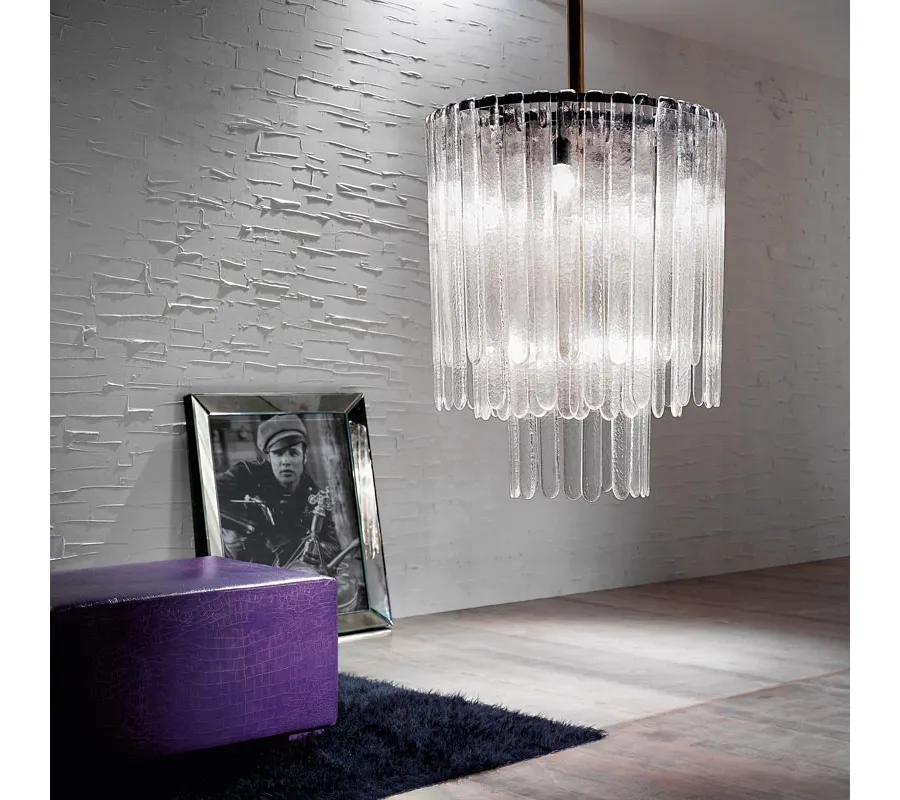
Check whether the seller provides a specific Italian brand and can document the origin. Ideally, they should have direct contact with the manufacturer or an authorized distributor.
Arte Veneziana
Authenticity checklist: what to check
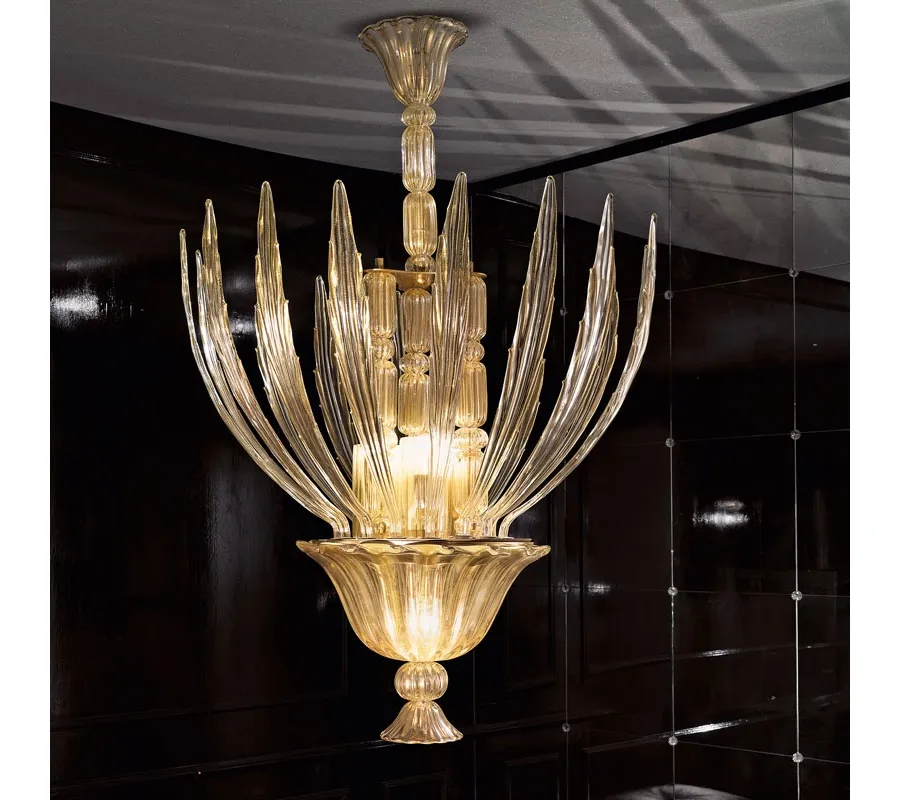
Authentic Murano glass should bear the “Vetro Artistico® Murano” mark (the Promovetro Murano consortium seal, in operation since 1994). The problem? It is estimated that 70-80% of “Murano” glass in the tourist market are counterfeits, and stickers and certificates can also be forged. What to do?
- Check the manufacturer on the official Promovetro list (available online)
- Look for traces of handcraft: subtle irregularities, the mass of glass, layer by layer
- Request documentation for bespoke orders, with a record of the entire production process
- Avoid “too good to be true” offers (if the price looks suspicious, it probably is)
Arte Veneziana
If you have any doubts, ask the seller directly about compliance with Promovetro. If they start to evade the question, you have your answer.
The radiance that will endure through the ages
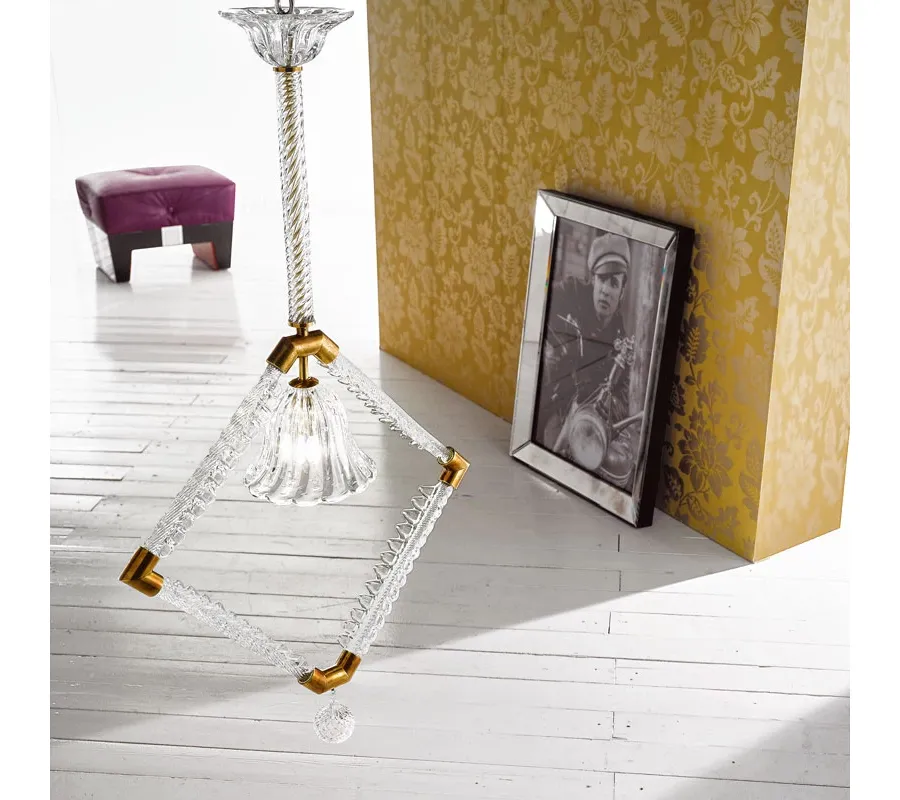
Lamps from Murano are more than just a functional item in your living room. They are a piece of history, blending medieval techniques with contemporary aesthetics, and honestly, it’s hard to find a more timeless investment. When you look at an authentic Murano crystal chandelier, you see hundreds of hours of work, generations of knowledge passed down from master to apprentice, and that unique individuality that no machine could ever replicate.
Arte Veneziana
Italian premium brands like Barovier&Toso and Venini have survived for centuries for a reason. Their lamps are objects that gain value over time, both financially and emotionally. In a world of fleeting trends and products designed to be replaced, Murano glass remains constant.
Choosing this kind of lighting is simply a good decision. Period.
Soony Tomasso




Leave a Comment