

In which countries are Hermès stores located?
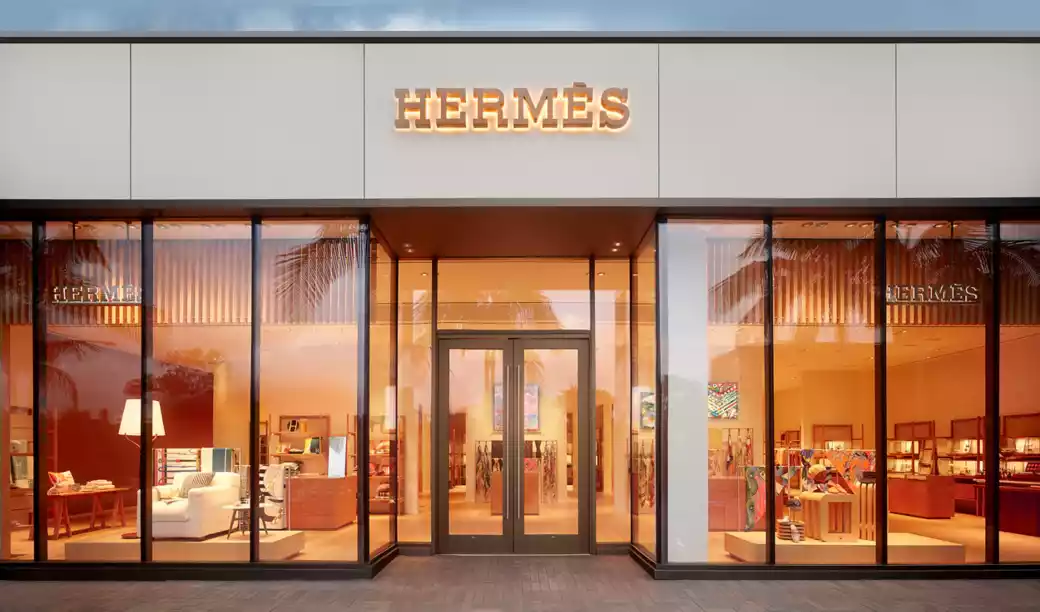
Did you know that Hermès now operates 306 stores in 45 countries, even though it started as a single saddlery workshop in Paris back in 1837?
This number may seem small compared to other luxury brands, but that’s precisely where the strength of the French giant’s strategy lies.
From Paris to Perth – why does the Hermès map fascinate?
Hermès doesn’t open boutiques everywhere – it chooses only the wealthiest markets and the most prestigious locations.
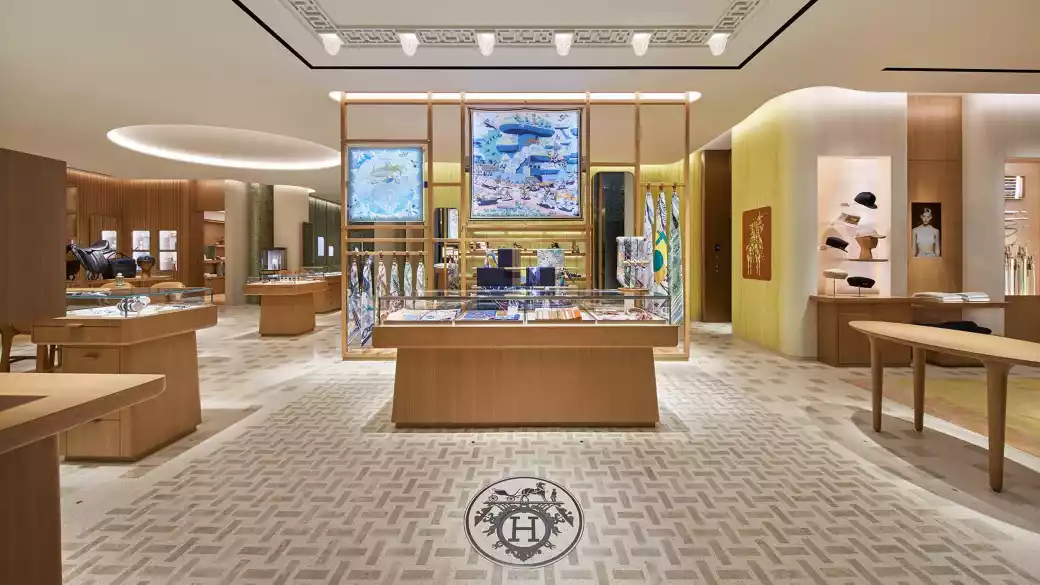
Expansion pace? Just 5-10 new stores a year. That might seem sluggish, but in the world of luxury, such caution creates exclusivity. Every new location is carefully considered.
In which countries can you find Hermès stores? – check the addresses
Interestingly, almost half of all Hermès boutiques—precisely 45%—are located in the Asia-Pacific region. This highlights where the heart of global luxury beats today. The COVID-19 pandemic only reinforced this trend, as Asian customers began shopping at local stores instead of traveling to Europe.
Why should this map interest Polish readers? Above all, because it highlights global trends that are also reaching us. Luxury brand consumption patterns in Singapore or Tokyo influence what will appear in Warsaw or Krakow.
Moreover, being familiar with the Hermès network is useful for travelers. Price differences between countries can be significant, and the availability of specific products is often geographically limited.
It’s also worth noting that the presence of a Hermès boutique in a city serves as a kind of certificate of its economic status. The brand only opens stores where it sees a sufficiently affluent clientele.
In the following sections of this article, we will explore:
• A complete list of countries divided by continent
• Regional differences in offerings and prices
• Expansion plans for the coming years
The story of this French brand is a fascinating journey from a small workshop on rue Saint-Honoré to a global luxury network. Each of these 306 boutiques has its own history and loyal clients, some of whom wait months for their dream handbag model.
The Hermès map is essentially a map of the world’s centers of wealth and prestige.
Full list of countries with Hermès boutiques – as of 2025
The complete list of countries with Hermès boutiques has been compiled based on the official store locator from hermes.com, with data current as of October 2025. However, please note that this information may change rapidly.
Europe remains the brand’s traditional stronghold, although it no longer dominates as clearly as it once did.
Europe
France – 52 boutiques; Paris (8 locations), Lyon, Cannes, Saint-Tropez, Bordeaux. Germany – 12 boutiques; Berlin, Munich, Hamburg, Düsseldorf. United Kingdom – 8 boutiques; London (4 locations), Edinburgh. Italy – 14 boutiques; Milan, Rome, Florence, Venice. Spain – 6 boutiques; Madrid, Barcelona, Marbella. Switzerland – 4 boutiques; Zurich, Geneva. Austria – 2 boutiques; Vienna. Belgium – 2 boutiques; Brussels, Antwerp. Netherlands – 1 boutique; Amsterdam. Monaco – 1 boutique. Russia – 3 boutiques; Moscow, Saint Petersburg.
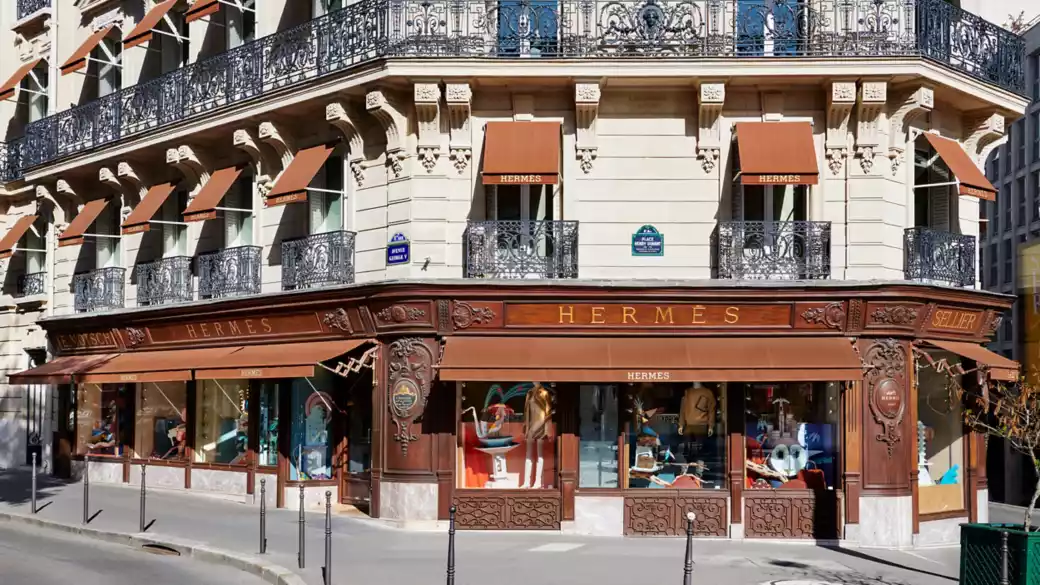
Asia and the Pacific
Japan – 28 boutiques; Tokyo (6 locations), Osaka, Kyoto, Nagoya. China – 31 boutiques; Beijing, Shanghai, Guangzhou, Shenzhen, Chengdu. South Korea – 9 boutiques; Seoul, Busan. Singapore – 3 boutiques. Hong Kong – 4 boutiques. Taiwan – 3 boutiques; Taipei. Thailand – 2 boutiques; Bangkok. Malaysia – 2 boutiques; Kuala Lumpur. Australia – 4 boutiques; Sydney, Melbourne. New Zealand – 1 boutique; Auckland. India – 3 boutiques; Mumbai, New Delhi. Philippines – 1 boutique; Manila. Indonesia – 1 boutique; Jakarta.
North America
United States – 34 boutiques; New York (5 locations), Los Angeles, Miami, Chicago, San Francisco, Las Vegas. Canada – 3 boutiques; Toronto, Vancouver. Mexico – 2 boutiques; Mexico City, Cancún.
South America
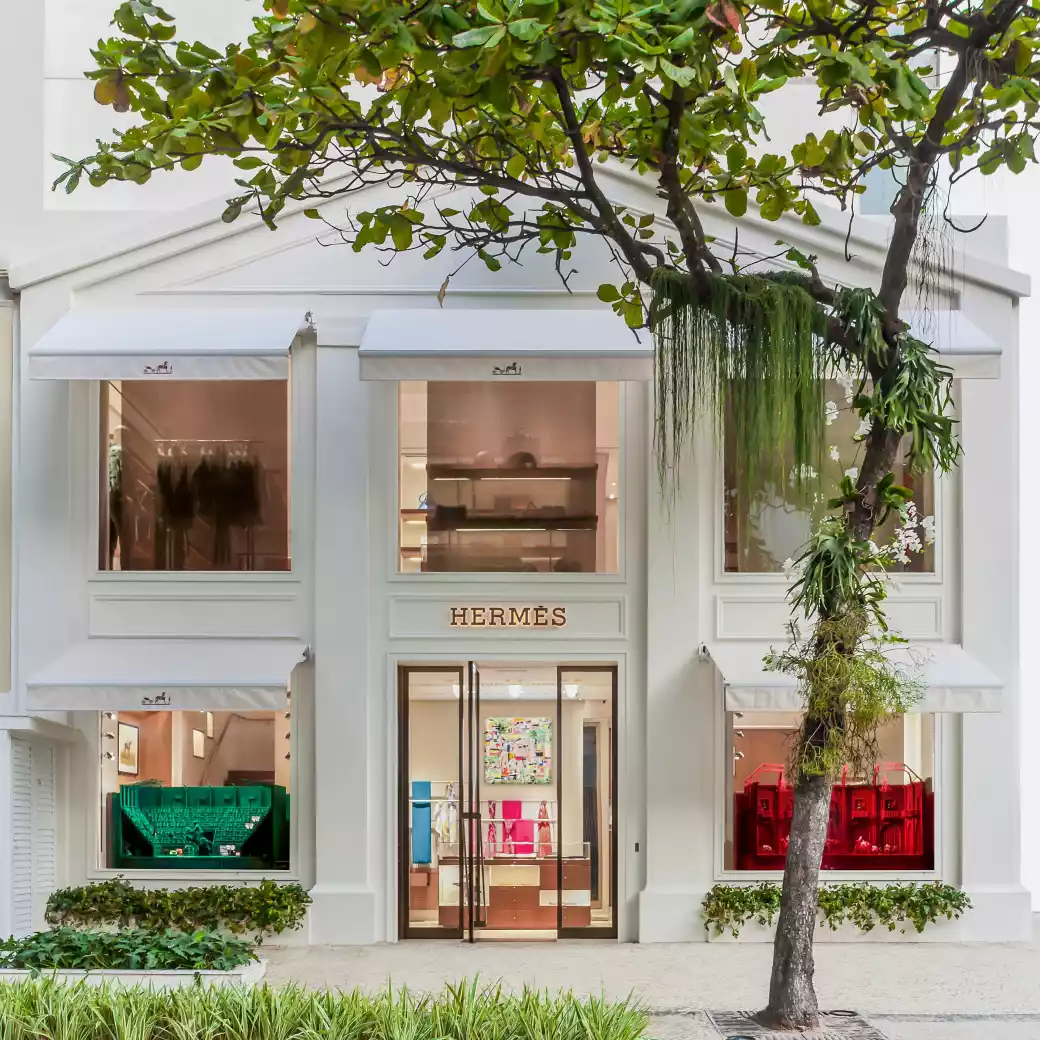
Brazil – 3 boutiques; São Paulo, Rio de Janeiro. Chile – 1 boutique; Santiago. Colombia – 1 boutique; Bogota.
Middle East and Africa
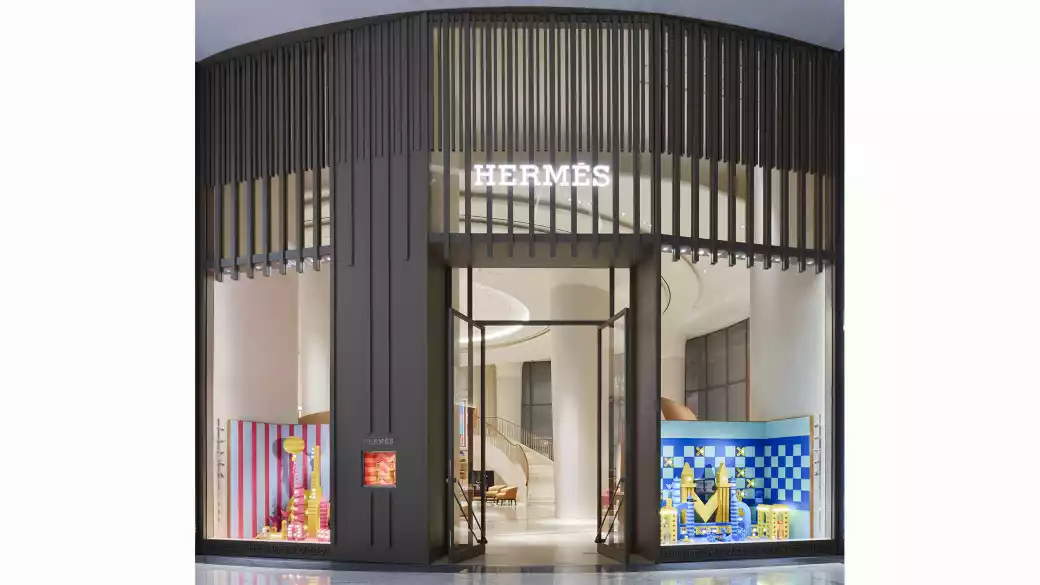
United Arab Emirates – 4 boutiques; Dubai, Abu Dhabi. Saudi Arabia – 3 boutiques; Riyadh, Jeddah. Qatar – 1 boutique; Doha. Kuwait – 1 boutique. Israel – 1 boutique; Tel Aviv. South Africa – 1 boutique; Cape Town. Morocco – 1 boutique; Casablanca.
| Region | Number of countries | Percentage share | Number of boutiques |
|---|---|---|---|
| Asia and the Pacific | 13 | 45% | ~91 |
| Europe | 11 | 30% | ~105 |
| Americas | 6 | 20% | ~44 |
| Middle East and Africa | 7 | 5% | ~12 |
| Total | 37 | 100% | ~252 |
It’s worth noting that some boutiques may have been temporarily closed or relocated. The store locator on the official hermes.com website remains the most up-to-date source of information on current locations. The numbers provided above are approximate and may differ slightly from the actual figures.
These figures clearly illustrate how much the global landscape of luxury brands has shifted. Asia is no longer catching up to Europe—in fact, it has surpassed it in terms of the number of boutiques, although Europe still leads in the number of locations per country.
Regional nuances and a Polish touch – what sets individual stores apart
A friend recently told me how he went to Hermès in Tokyo and felt like he was in a temple. Then the same person walked into the boutique in Warsaw and said, “a completely different world.” And that’s exactly how it is with this brand. Every store tells a different story.
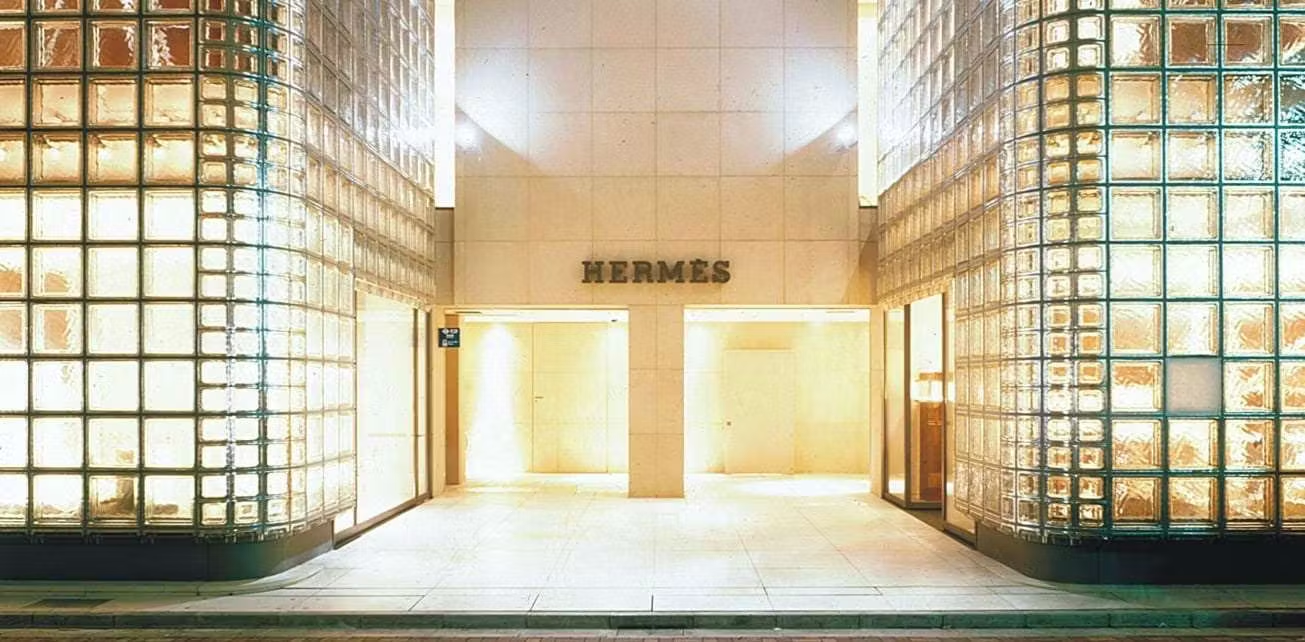
Take these two flagships, for example. The Tokyo giant in Ginza, designed by Renzo Piano in 2001, is practically a glass monument. Ten floors, each one different. The Warsaw boutique, on the other hand, only opened in November 2019. Designed by Marek Lorens, but on a completely different scale.
| Aspect | Tokyo Ginza | Warsaw |
|---|---|---|
| Architecture | Glass and steel, 10 floors | Classic elegance, 2 levels |
| Assortment | Full product line | Mainly accessories, perfumes |
| Specialization | Asian center | Market introduction in Poland |
| Atmosphere | Monumental | Intimate, local touches |
You won’t find the full range of handbags in Warsaw. This might be frustrating for some, but there’s a reason for it. Poland is still an emerging market for this level of luxury. The Warsaw boutique focuses on accessories, scarves, and perfumes—items that let you experience the brand without spending a fortune.
Differences in product availability are a separate issue. Those famous Birkin bags? Only about 12,000 are produced worldwide each year. In the US, waiting lists stretch on for years. In Asia, the situation is a bit better, but it’s still not easy.
Hermès is testing markets in an interesting way. This year, a perfume pop-up appeared in Dubai—just fragrances, nothing else. Every season, they open a temporary store in Mykonos. They’re checking where it’s worth making a permanent investment.
These experiments show that the brand does not operate in a schematic way. “In Warsaw, I waited half a year for a specific scarf, but the service was fantastic,” says one of the clients. This is typical – a smaller selection, but often a better relationship with the customer.
Looking at all these differences, I sometimes wonder—is this even the same brand? The store in the historic manufactory on Faubourg Saint-Honoré in Paris is steeped in tradition. The Warsaw boutique is modern, yet respectful of the local context. And all those pop-ups and seasonal spots are a whole different category altogether.
Every region has its own needs. Hermès understands this and adapts its strategy accordingly. Not everything has to be everywhere right away.
What’s next? Hermès’ expansion and the future of the luxury market
Looking at the current pace of Hermès’s growth, the numbers are impressive. Nearly 300 boutiques worldwide, with annual revenues exceeding 11 billion euros. But this is just the beginning.
Luxury market forecasts for the coming years are optimistic – according to a Bain & Company report from March 15, 2024, the sector is expected to grow by an average of 3-8% annually until 2030. Hermès is making the most of this trend.
The planned expansions look ambitious – the company aims to reach 400+ locations by 2030. On the horizon: Riyadh, with an expansion of the existing space, and entry into Nigeria, most likely Lagos. This is part of a broader strategy to penetrate emerging markets, where the new middle class is gaining more purchasing power.
Interestingly, the company is also focusing on sustainability. All new boutiques are set to be carbon neutral by 2030. It may sound like a marketing ploy, but they are actually investing in solar panels, recycling systems, and local materials.
Digitization is also moving full steam ahead. AR try-ons for jewelry, online in-store pickup, even metaverse pop-ups. It seems a bit strange to me that a luxury brand is doing things in virtual reality, but younger customers expect it.
The luxury market is likely to consolidate around a few major players. Hermès is well positioned to be one of the leaders. The only question is whether they can maintain their exclusivity amid such expansion.
Ultimately, it all comes down to the fact that there is more and more luxury, but true luxury remains rare. So far, Hermès has managed this paradox quite well.
Naxx
lifestyle editor
Luxury Blog






Leave a Comment