

Humidors as luxury collector’s items
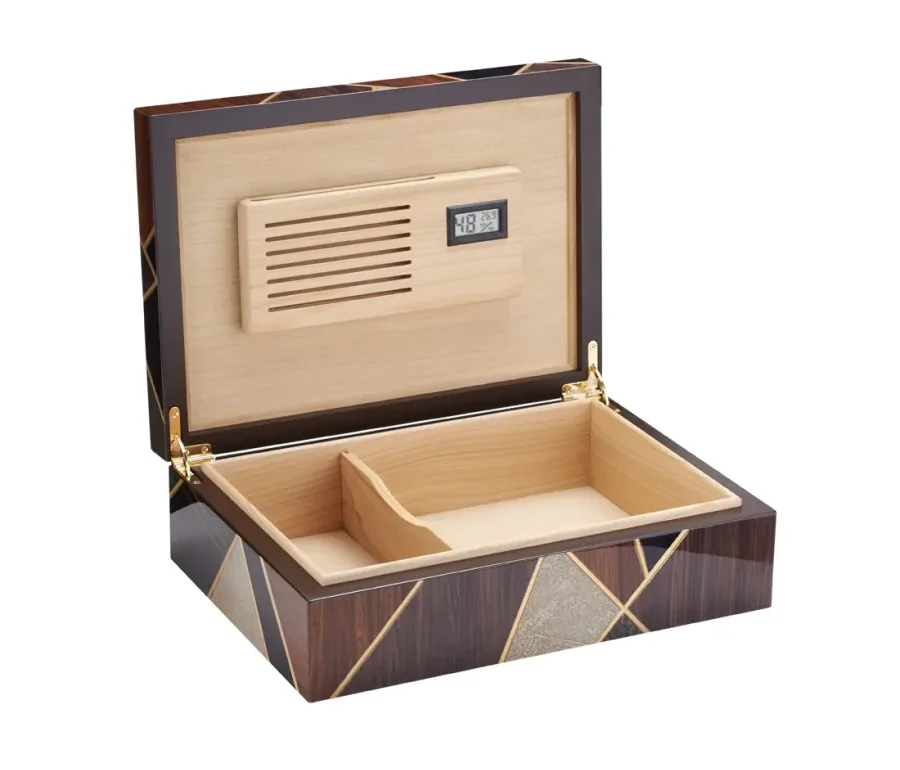
Did you know that a true cigar connoisseur can recognize the quality of a humidor just by its scent? It’s no exaggeration. In the world of luxury and prestige, a humidor is much more than just a box for cigars.
A premium -class humidor is a device designed to maintain ideal storage conditions—humidity at 65-75% and temperature between 18-21°C. Picture the study of a true collector: a mahogany humidor sits on the desk, its interior filled with the aroma of the finest cigars from Cuba or the Dominican Republic. It’s no coincidence that such a scene is associated with success.
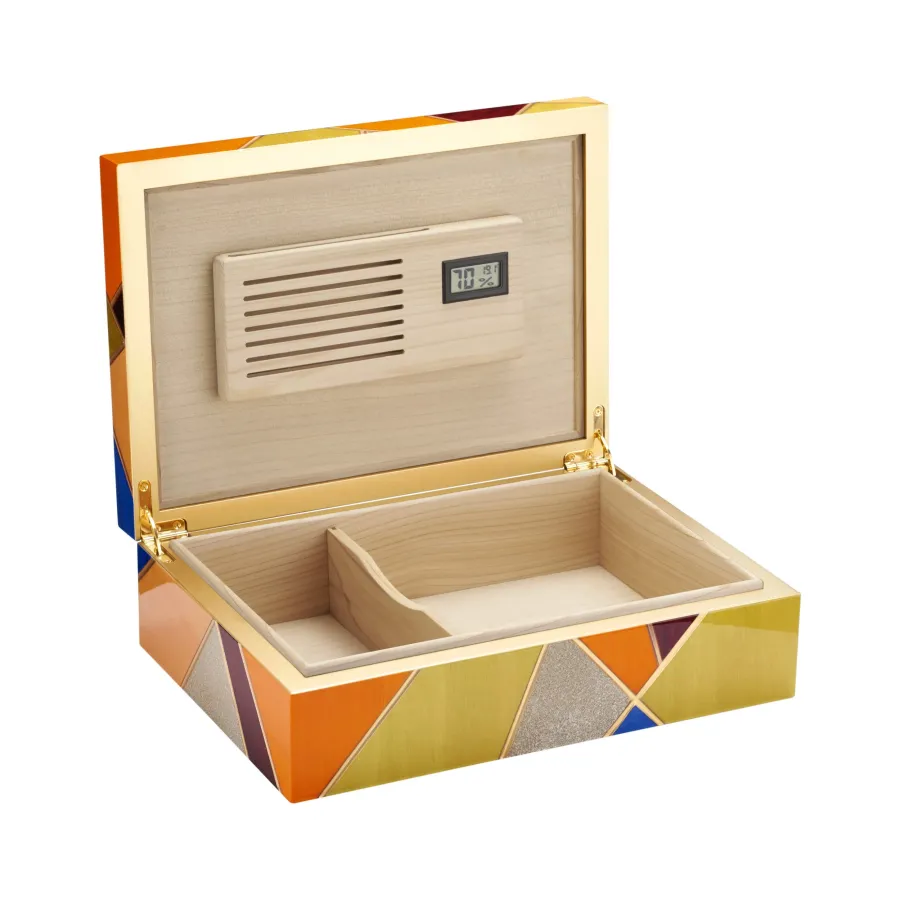
Why have humidors become a “status symbol” today? The global humidor market reached a value of $500–700 million in 2023. This shows just how seriously this segment is taken. It’s not just about functionality.
Humidors as Luxury Collectible Items – In the World of Aroma and Prestige
Collectors know one thing – owning the right humidor is an investment in prestige. Guests immediately notice the difference between an ordinary container and a true work of art. After all, Alfred Dunhill already knew what he was doing back in 1879 when he invented the first modern humidor.
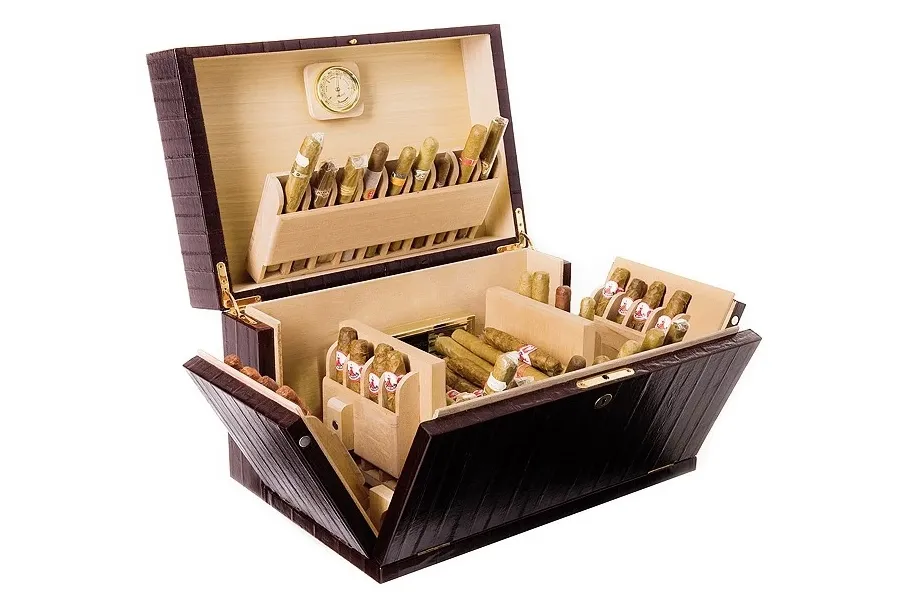
Today’s collector culture treats humidors like trophies. Much like watches or cars, these are objects that say something about their owner. In the corporate world, it’s common to meet executives who invite business partners for a cigar from their personal collection.
The third reason for their popularity is simply practicality combined with elegance – exactly what successful people are looking for.
The market now offers an incredible variety. From compact office models to impressive humidor cabinets. There’s something for everyone, though prices can be surprising. But more on that later.
The history of humidors hides fascinating secrets. How have they evolved over the decades? What technologies have changed the way cigars are stored? It’s worth taking a step back in time to trace this extraordinary journey from simple wooden boxes to today’s technological marvels.
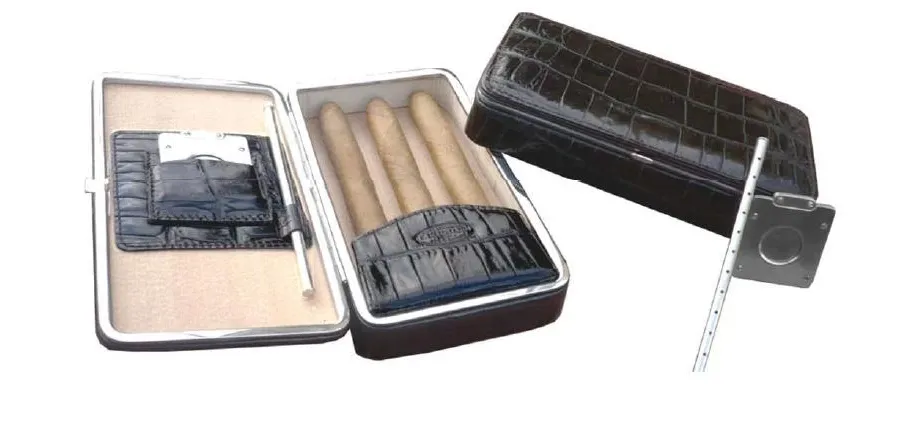
From sailors’ chests to a digital showcase
Imagine sailing across the Atlantic in 1800. In a sailor’s cabin lies a wooden chest—you don’t yet realize this is the beginning of a story that will lead us to today’s digital cases worth thousands of dollars.
This evolution is a fascinating journey through eras and styles. Humidors have followed every major artistic trend, evolving alongside the tastes and technological possibilities of their times.
| Year | Event | Why it matters |
|---|---|---|
| ca. 1800 | The first cedar chests of Cuban sailors | The discovery that cedar naturally regulates humidity |
| 1879 | Alfred Dunhill’s patent for the modern humidor | From randomness to professional design |
| 1920-1930 | The Art Deco humidor boom | Functionality meets avant-garde aesthetics |
| 1960 | Mass production in the USA and Western Europe | Democratization – not just for the wealthy |
| 1992 | “Cigar Aficionado” premiere | The renaissance of cigar culture and an explosion in demand |
| 2016 | Sotheby’s auction record – 150,000 USD | Humidors as Collectible Items and Art |
Each artistic era left its mark on these objects. In the 1920s and 1930s, humidors adopted the geometric lines of Art Deco—clean shapes, contrasting materials, and functionality taking precedence over ornamentation. It was a breakthrough. Previously, the Victorian style dominated, with its excess and elaborate decorations.
The 1960s brought Scandinavian minimalism—clean lines, natural wood, and an absence of unnecessary details. But the real revolution came in the 1990s. After the launch of “Cigar Aficionado,” humidors became a status symbol, not just a tool.
In Poland, the story unfolded differently. During the communist era, humidors were little more than a dream—cigars were a luxury, and importing such items was virtually impossible. Change arrived after 1989. I remember stories from older collectors who, in the 1990s, would travel to Germany to buy their first real humidors.
The Polish market exploded after joining the European Union. Suddenly, specialty stores appeared, and the first Polish brands began producing their own versions. Today, we even have local artisans creating unique pieces that blend traditional techniques with modern design.
This evolution of form and aesthetics has always gone hand in hand with technological progress—materials and manufacturing capabilities have shaped what we now consider the pinnacle of craftsmanship in this field.
Mastery of materials and technology
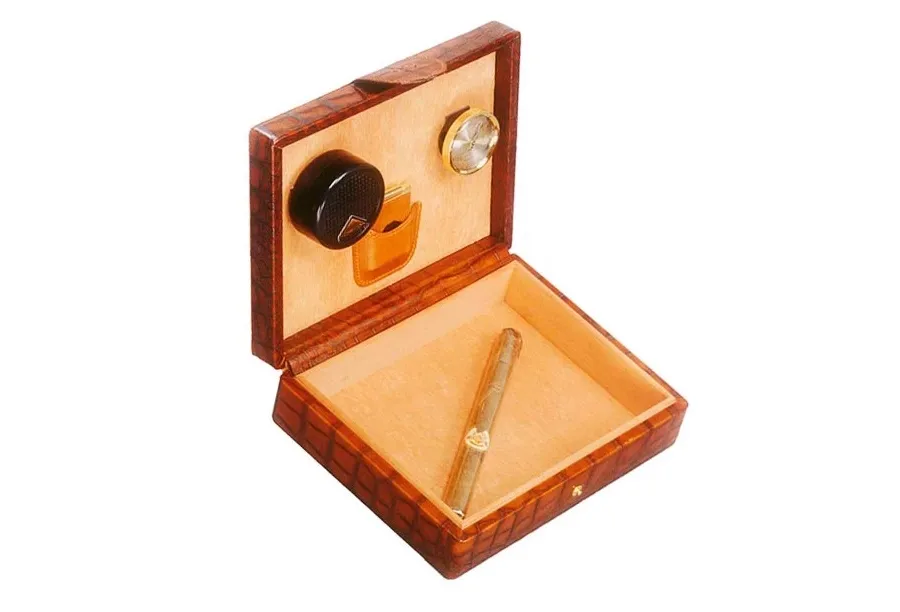
I remember the first time I opened a humidor made from genuine Spanish cedar. That scent… This isn’t just ordinary wood. Cedrela odorata hits you with its aroma right away, but that’s only the beginning of the story.
Spanish cedar is the heart of every quality humidor. It has hygroscopic properties—which means it naturally regulates humidity. It absorbs excess moisture when there’s too much, and releases it when the air gets too dry. It’s like a natural air conditioner for your cigars. Plus, the essential oils in the wood protect against pests. No insect will come near your collection.
But materials are about much more than just cedar. Here’s what really makes a difference:
| Material | Advantage | Potential drawback |
|---|---|---|
| Spanish cedar | Natural moisture regulation, aroma | Requires aging |
| Cuban mahogany | Durability, elegance | No hygroscopic properties |
| Carbon fiber | Lightness, modern look | No natural fragrance |
| Tempered glass | Transparency, easy to clean | Insulation problems |
Capacity is a whole different story. A humidor for 20 cigars? Just a simple box with basic controls. But once you reach 1,000, 5,000, or even 10,000 pieces, it’s a different league entirely. You need ventilation systems, multiple climate zones, reinforced construction. At that point, it’s no longer just furniture—it’s practically a dedicated room.
And this is where smart technology comes in. Intelligent humidors with Wi-Fi sensors are no longer science fiction. You get a phone app that monitors temperature, humidity, even air quality inside. The system tells you when to refill the humidifier, warns you about temperature spikes. Forecasts say that by 2030, 30% of the market will be dominated by such intelligent systems.
But true luxury is all about the details. 18-karat gold on hinges and fittings. Gemstone inlays on the lid. I’ve seen humidors with carbon fiber elements—they look like the interior of a Lamborghini. One friend owns a piece with real diamonds in the logo. Excessive? Maybe. But it’s impressive.
The difference between a traditional and a smart humidor isn’t just about technology. It’s a philosophy. The traditional one requires your attention, control, and involvement. The smart one does everything for you—but is it still the same pleasure? It’s like comparing a mechanical watch to an Apple Watch.
Build quality is fundamental. Poor seals, cheap wood, low-grade fittings—and you end up with a very expensive piece of furniture that doesn’t do its job. Good humidors keep cigars in perfect condition for decades. It’s an investment not just in storage, but in the entire culture of smoking.
All these materials, technologies, and solutions translate into value. Not just practical, but also collectible and investment value.
Market, investments and trends
The global luxury humidor market has reached a value of $500–700 million, and honestly, these numbers surprised me. Just a few years ago, no one took this segment seriously as an investment category.
Forecasts indicate it could hit one billion USD by 2030. It might sound abstract, but when you look at the price segmentation, everything becomes clear:
| Segment | Price range | Brand examples |
|---|---|---|
| Entry luxury | 1,000 – 5,000 USD | Daniel Marshall, Adorini |
| Premium | 5,000 – 25,000 USD | Elie Bleu, Davidoff |
| Ultra-luxury | 25,000+ USD | Dunhill limited, custom pieces |
This division is no coincidence. The entry-level segment drives volume growth, but the real money is in premium and above. Elie Bleu Medaille for $25,000 in 2023? That’s nothing. Gurkha “His Majesty’s Reserve” fetched $750,000 as an auction record.
Asia is changing everything—8% year-on-year growth, fueled by a rising middle class.
China, Japan, and to some extent Korea. There, a humidor is not just about functionality, but prestige. In Europe and the US, the market is more mature, with stable growth of around 3-4% annually. Poland? Tiny numbers on a global scale, but locally there’s movement. A few boutiques in Warsaw, a handful of collections in Krakow.
Auctions are a separate story. About 10-15% of listings are antiques, mainly from the late 19th and early 20th centuries. ROI on rare models hovers around 5-10% per year, which may sound modest, but with inflation and uncertainty in other markets… exactly.
I recently saw a Sotheby’s auction—a Dunhill humidor from 1925 sold for 40% above estimate. Buyer from Hong Kong, of course. That shows where the real money is in this business.
The problem with the Polish market? Lack of a collecting tradition and limited investment awareness. Most people buy humidors as gadgets, not as assets. A pity, because the potential is there.
Demand geography has its own rules. North America still dominates, but the momentum is in Asia. Europe is a stable third player. The rest of the world? Marginal, though the Middle East sometimes surprises with big transactions.
But for these investments to make sense, you need to understand not just the market, but also proper management and maintenance of your collection.
Take care of your moist treasure – what’s next?
Actually, we’ve already said it all — a humidor is not just an ordinary box. It’s a status symbol, a piece of craftsmanship, and a smart investment. Three things in one, which is rare these days.
But what to do with this knowledge? Maybe it’s time to get practical.
1. Measure your space and set a budget — without this, it’s like buying a suit online. Check where it will stand, how much you want to spend, and whether your wife will be okay with it.
2. Define your needs — 50 cigars or 500? Planning to store Cubans or a mix of brands? This matters when choosing the right model.
3. Explore smart options — those new humidors with apps aren’t just a gimmick. Phone control saves you stress and money.
4. Find a trusted supplier — don’t buy from the first site you see. Read reviews, check the warranty. This is not the place to cut corners.
5. Plan for expansion — maybe a small one is enough for now, but what about next year? Better to buy bigger right away or choose a modular system.
We’re living in interesting times. By 2030, smart humidors will be the norm. They’ll self-regulate, alert you to issues, maybe even reorder cigars when you run low. Manufacturers are also focusing on eco-friendly materials — bamboo, reclaimed wood. And demand from Asia? It’s just taking off. The Chinese and Koreans are discovering cigars the way we once discovered whisky.
Maybe it sounds like science fiction, but do you remember what the first mobile phones looked like?
This isn’t a purchase for a year or two. It’s an investment in your lifestyle, a way to escape the everyday. A humidor is a gateway to a world where quality matters more than quantity.
What else do you need to get started?
Andru Like!
lifestyle editorial team
Luxury Blog




Leave a Comment