

How to verify the authenticity of a Rolex?
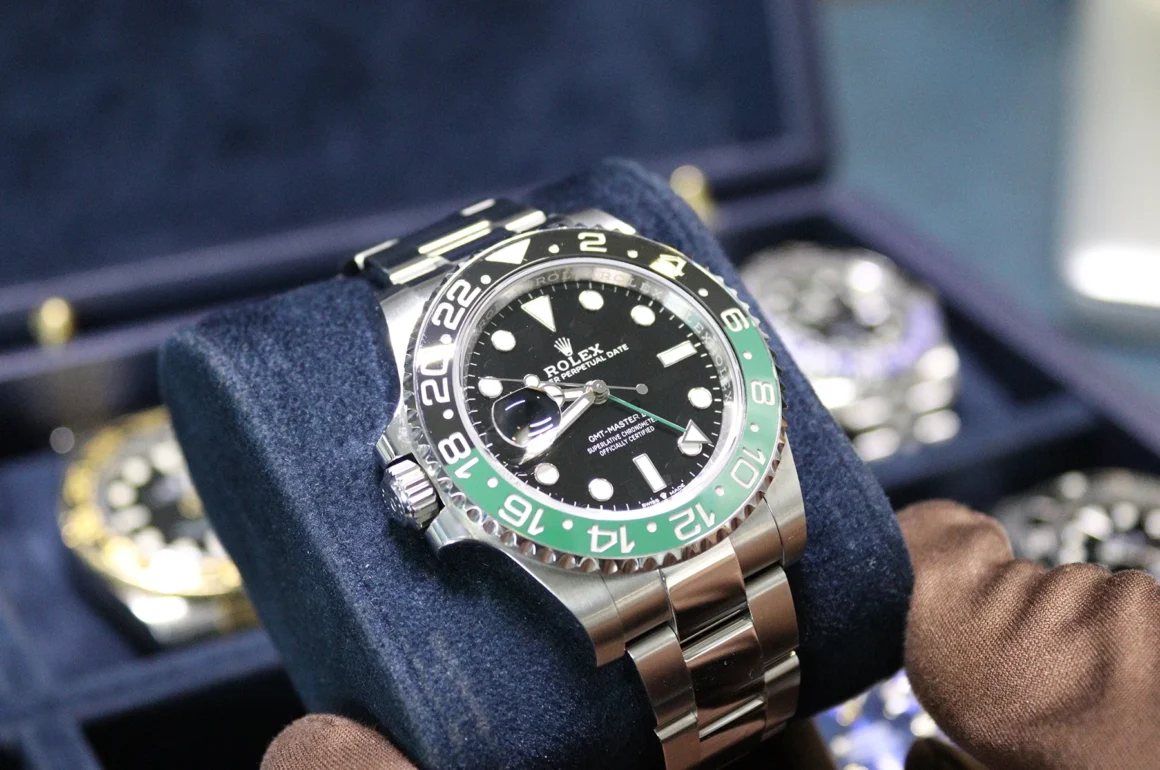
I sometimes wonder if people buying a “Rolex” for 800 złotys at some market really believe it could be genuine. Or maybe they just prefer not to know? How to verify the authenticity of a Rolex? – be sure to check!
The problem of counterfeit Swiss watches isn’t new, but the scale of the phenomenon in 2025 surpasses anything we’ve seen before. Rolex has been fighting counterfeiters for years—I still remember when the main protection was just the Oyster case from the 1920s. Now we have micro-engravings invisible to the naked eye, NFC technology built into some models, and yet the fakes are becoming ever more sophisticated.
How to verify the authenticity of a Rolex? – why does it matter so much?
It’s actually fascinating how far this “cat and mouse game” between the manufacturer and counterfeiters has gone.
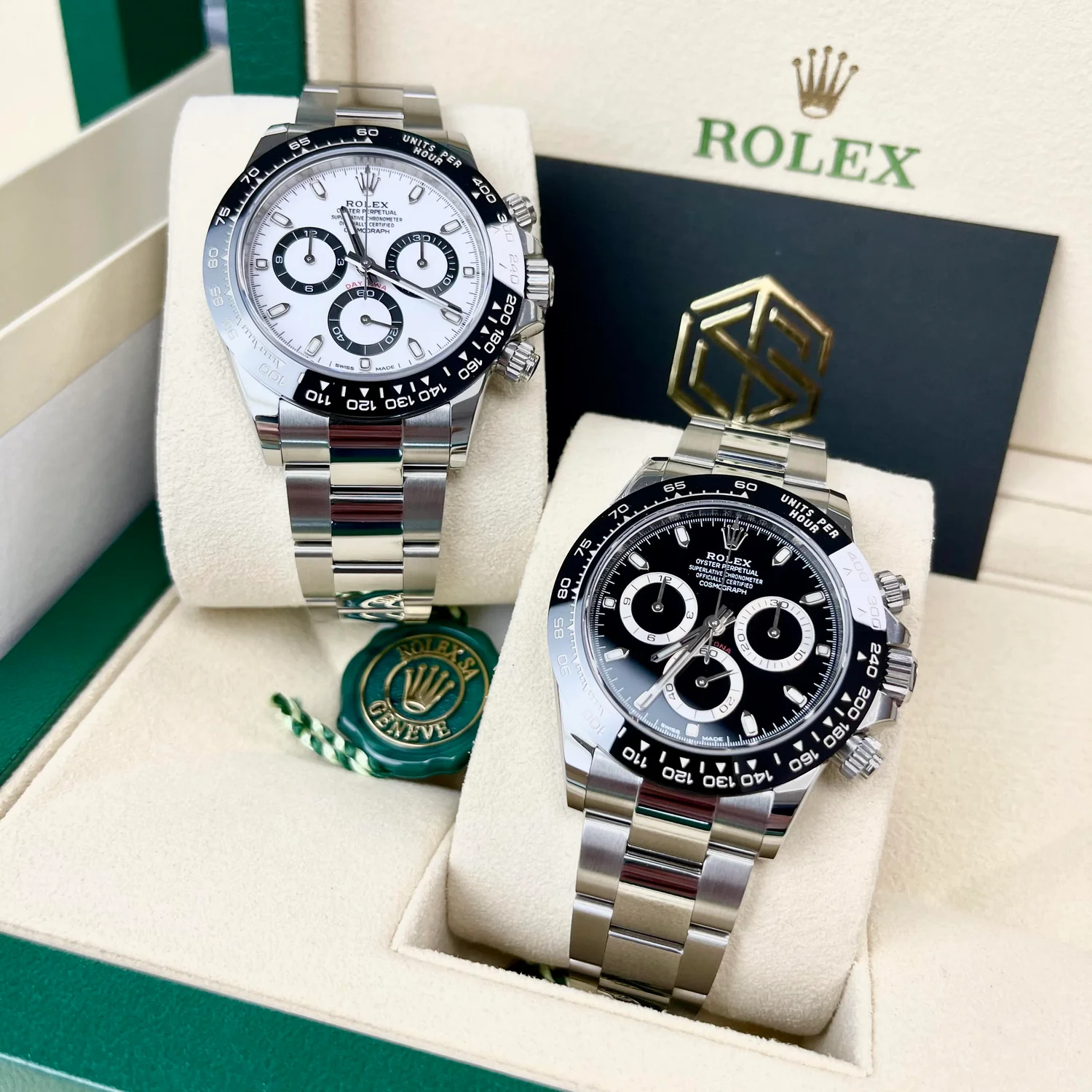
photo: swisstimepieces.co.uk
For many men, a Rolex is more than just a watch. It’s a symbol of achievement, financial stability, and belonging to a certain social group. You don’t buy it just to tell the time—you’re buying a piece of prestige meant to last for years, maybe even generations. That’s exactly why authenticity is so crucial here.
The problem is, a fake can cost someone not only money, but also credibility. Imagine someone finding out your “Submariner” is actually a $200 Chinese replica. Beyond the financial loss, there’s a social aspect—loss of trust, embarrassment.
The secondary market makes things even more complicated. More and more people are buying Rolexes second-hand, where verification becomes a real challenge. Sellers aren’t always honest, and buyers often lack sufficient knowledge.
In this article, we’ll look at practical ways to spot genuine Rolexes, discuss the most common mistakes made by counterfeiters, present professional verification methods, and point out when it’s worth seeking expert help.
Before we move on to specific visual and technical tests, it’s worth understanding the basic differences between an original and even the best counterfeit.
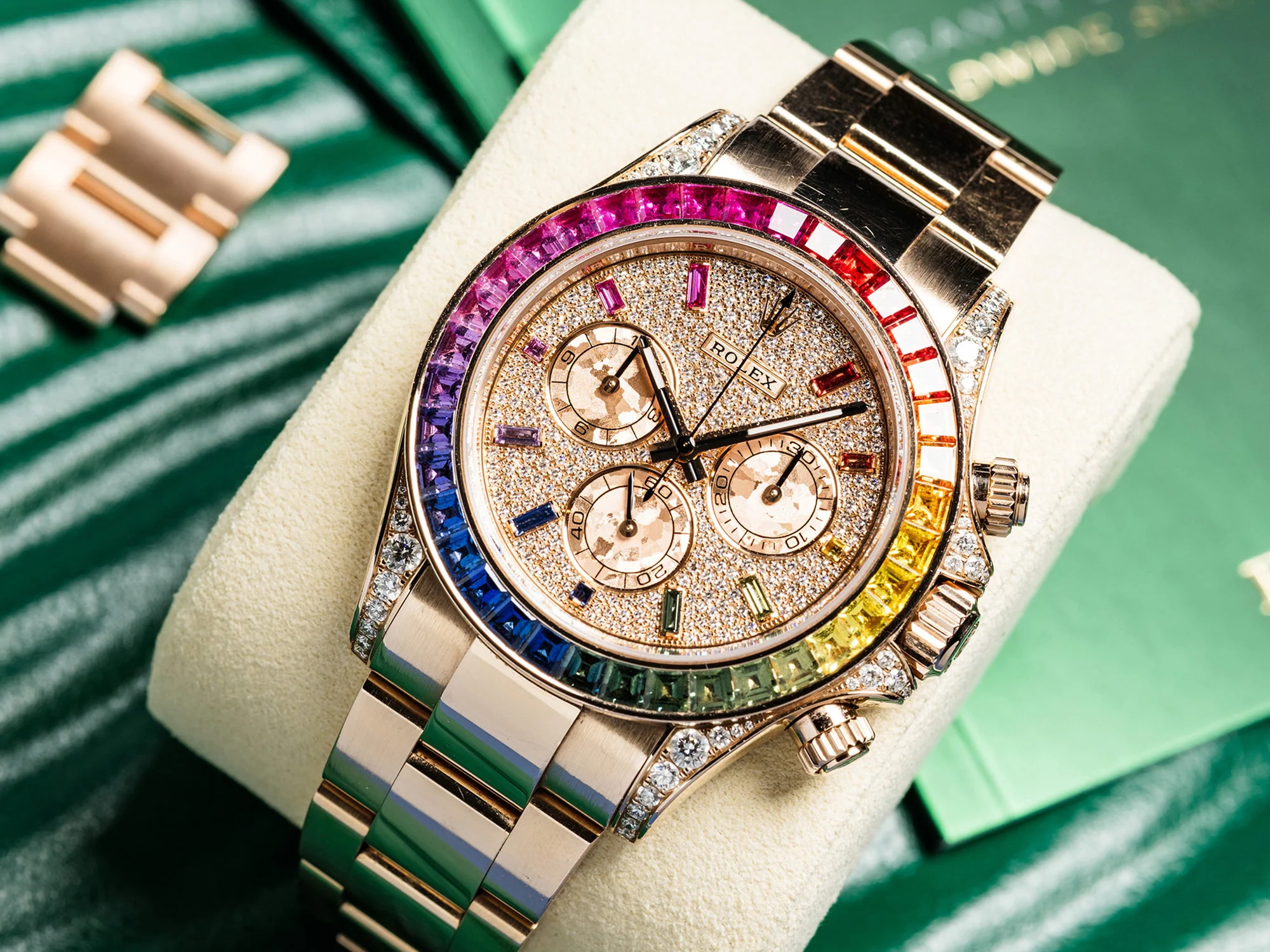
photo: teddybaldassarre.com
Self-check: 6 essential visual and technical tests
Anyone considering buying a pre-owned Rolex faces the same dilemma. How do you verify authenticity without a trip to the jeweler? The answer lies in six simple tests you can perform almost anywhere.
1. Logo and crown test
All you need is a standard 10× loupe—the same kind used for stamps. The logo on the dial should be engraved with surgical precision. The crown on the case must have perfectly shaped teeth, each identical. Counterfeits often have uneven cuts or a blurred logo.
2. Dial test
Lighting is key here. Place the watch under a lamp and examine the edges of the hands. On an original, they’re always razor-sharp. There should be no air bubbles under the glass—a classic flaw of cheap replicas.
3. Hands and second hand test
The second hand on a genuine Rolex moves smoothly, not in one-second jumps. Hold the watch to your ear—the movement should be almost silent. A loud “tick-tock” reveals a quartz mechanism, meaning it’s a fake.
4. Bracelet and clasp test
Real 904L steel has a distinctive weight. The Glidelock system should operate smoothly, with no sticking. The links of the bracelet shouldn’t move loosely—this signals poor craftsmanship.
5. Serial number test
The number on the case at 6 o’clock must be engraved, not printed. Under magnification, you’ll see the difference—engraving has depth, printing is flat. On newer models, the number is microscopic but always crisp.
6. Quick water test
Submerge the watch in a glass of water for a minute. There should be no condensation under the glass when you take it out. It’s a simple way to check the seal.
| Feature | Original | Counterfeit |
|---|---|---|
| Logo | Precisely engraved | Blurred, printed |
| Second hand | Fluid movement | Jumping every second |
| Bracelet | Heavy 904L steel | Lightweight, loose links |
| Serial number | Deep engraving | Flat print |
The truth is, these tests don’t guarantee one hundred percent certainty. Even if the watch passes all the checks, verifying the numbers and documents is still necessary.
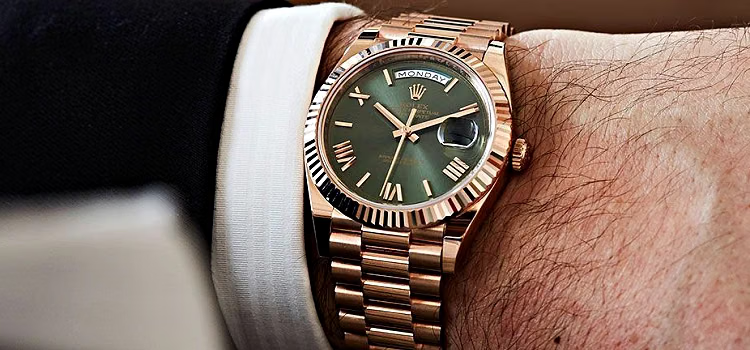
photo: luxepolis.com
Verification of numbers and documents: serial, reference, NFC certificates
Serial numbers are like the DNA of a watch —each one has its own unique code. The problem is, counterfeiters know this too and try to imitate it. But the truth is, most of them make basic mistakes.
You’ll find the serial number under the bracelet, between the lugs of the case. Sometimes you need to remove the bracelet to see it. On some models, it’s also engraved on the side of the case, but that depends on the brand. Remember—a genuine number is always deeply engraved, never printed or lightly etched on the surface.
Since 2010, many companies have introduced a system where the first letter of the serial number indicates the year. It’s a brilliant way to verify authenticity quickly. The letter “K” might mean 2020, “L”—2021, but each brand has its own system. It’s worth checking this in the manufacturer’s database.
The reference number is something else—it identifies the model and its variant. You’ll usually find it in the same place as the serial number, but sometimes it’s located elsewhere. This number should match your model’s specifications exactly.
The hologram on the case back is another line of defense. A genuine 3D hologram has depth and changes appearance at different angles. Fakes are often just stickers with a rainbow effect. Try gently pressing the edge—if it’s a sticker, you’ll feel the difference.
NFC chips are the latest verification technology. Just bring your smartphone close to the watch and open the manufacturer’s app. All the details should appear—serial number, model, production date, sometimes even service history. If the app doesn’t detect anything or shows incorrect data, that’s a red flag.
Not every watch has NFC, but more and more luxury brands are introducing it. This is the future of authentication.
WARNING: Never share your watch’s serial number online. It’s like giving out your ID number—it can be used by scammers.
Mini-FAQ:
• What if the serial number is unreadable? – This could indicate a counterfeit or a very old/damaged watch
• Do all luxury watches have holograms? – No, it depends on the brand and production period
• The NFC app isn’t working – what now? – Check if your phone supports NFC and if you have the latest version of the app
Sometimes everything seems fine, but something still feels off. Trusting your instincts can be more important than technology.
If you’re still unsure, it’s time for a professional verdict from an authorized service center.
photo: timepiecetradingllc.com
Expert analysis: tools and procedures of authorized service centers
I remember when a collector brought a watch he had bought abroad to an authorized Rolex service center in Warsaw. It seemed authentic, but something was bothering him. After two hours of detailed analysis, it turned out to be one of the best counterfeits they had ever seen. The cost of the appraisal? 800 zlotys. The value of the financial disaster he avoided? Impossible to estimate.
Microscopic inspection of details
Certified watchmakers use microscopes with up to 40x magnification to examine the micro-engraving on the case and bracelet. Every authentic Rolex features distinctive markings, visible only at specific angles and lighting conditions. They check holograms on documents under UV lamps—counterfeits often glow a different color or don’t react at all.
The procedure takes about 30 minutes and requires specialized equipment worth tens of thousands of zlotys.
Water resistance pressure test
This is probably the most spectacular part of the evaluation. The Submariner is placed in a pressure chamber that simulates conditions at a depth of 100 meters underwater. Genuine Rolex watches pass this test with ease—counterfeits often “fail” at just half the required pressure.
The entire process takes about an hour and requires a special chamber and monitoring system.
Chronocomparator – the heart of precision
A device that measures the accuracy of a watch’s movement. Genuine Rolex watches with a COSC certificate must fall within a range of -4/+6 seconds per day, but the best pieces achieve even better results. The chronocomparator “listens” to the mechanism for 24 hours in various positions.
| Service | Lead time | Cost in Poland |
|---|---|---|
| Basic expertise | 2-3 hours | 600-1000 PLN |
| Full analysis with tests | 2-3 days | 1200-2000 PLN |
When is it worth investing?
To be honest, when buying a pre-owned Rolex for tens of thousands of zlotys, the cost of an expert appraisal is really just a small insurance premium. Especially since modern counterfeits can fool even seasoned collectors.
A professional appraisal gives you a level of certainty that money simply can’t buy—a guarantee of authenticity straight from people who know every screw in a Rolex movement.
photo: barringtonwatchwinders.com
But even the best appraisal can’t protect you from every market risk. The world of counterfeits is evolving at a dizzying pace.
Counterfeit Market 2025: Trends, Threats, and Costly Pitfalls
The global market for counterfeit luxury watches has already reached 7-10% of the total sales value of original models. This means that one in ten watches on the secondary market could be fake. The numbers are striking, especially when we look at specific models.
The Rolex Submariner accounts for as much as 30% of all counterfeit watches, while the Daytona makes up 20%. This comes as no surprise—these are the most recognizable and sought-after models. But what’s truly concerning is just how much the quality of these counterfeits has improved.
The evolution of fakes is progressing at a pace that surprises even the experts:
- 2010 – basic quartz fakes, easy to spot
- 2020 – the emergence of automated mechanisms imitating originals
- 2024 – superfakes with cloned calibre 3135, virtually indistinguishable without specialized equipment
These latest “superfakes” use movements copied with such precision that even seasoned collectors can be fooled. Factories in Asia are perfecting their techniques, and it’s no longer just about appearance—they’re cloning the entire mechanism architecture.
Distribution channels have changed as well. It used to be shady websites and flea markets. Now, scammers operate through Facebook groups, Allegro, and even OLX. I’ve seen cases where sellers had hundreds of positive reviews and offered “grandpa’s watch” for tens of thousands of zlotys.
A specific example from Poland—a guy from Kraków sold over 20 fake Rolexes through a Facebook group, each for 15-25 thousand. He used photos of genuine watches, had fake documents and boxes. The case went to the prosecutor’s office, but the damage was already done.
The financial consequences are brutal. Someone buys a fake for 20,000, thinking they’re getting a great deal. Then they find out the truth and are left with a worthless piece of metal. Attempts to recover the money often fail, as sellers disappear or operate under false identities.
The counterfeit market has become professional and ruthless—buyers on the secondary market risk losses that can reach tens of thousands of zlotys.
What can you do to avoid falling victim? That’s the question everyone asks themselves when considering the purchase of a pre-owned luxury watch.
photo: globalicejewelry.com
Conclusions and next steps: how to protect yourself from counterfeits
The counterfeit market is growing rapidly, but we are not powerless against this threat.
Before you buy – check these five things:
- Verify the seller through Google and social media
- Compare the price with official distributors
- Examine the product details with a magnifying glass or your phone’s flashlight
- Ask for authenticity documents and a warranty
- Trust your instincts – if something feels suspicious, it probably is
The future of product verification is evolving at lightning speed. Mobile apps powered by artificial intelligence can already detect counterfeits from a photo. By 2025, we’ll have access to advanced tools that can scan a product and tell us within seconds whether it’s genuine.
The future of authenticity
Blockchain is revolutionizing the way we track product origins. Every original item will receive a digital certificate that can’t be forged. Experts predict that by 2026, most luxury brands will implement such solutions. Is this the end of the counterfeit era? Maybe not entirely, but it’s definitely their twilight.
photo: bobswatches.com
Don’t wait until the problem affects you personally. Share this knowledge with your family and friends. Buy only from trusted sellers, even if it costs a bit more. Support companies that invest in technologies to protect their products.
Every conscious purchasing decision is a stand against fraudsters and counterfeiters. In the age of technology, we have more tools than ever before—let’s use them.
Modny
lifestyle & sport editor
Luxury Blog




Leave a Comment