

How much does a trip to Fiji cost? – a complete 2025 budget guide
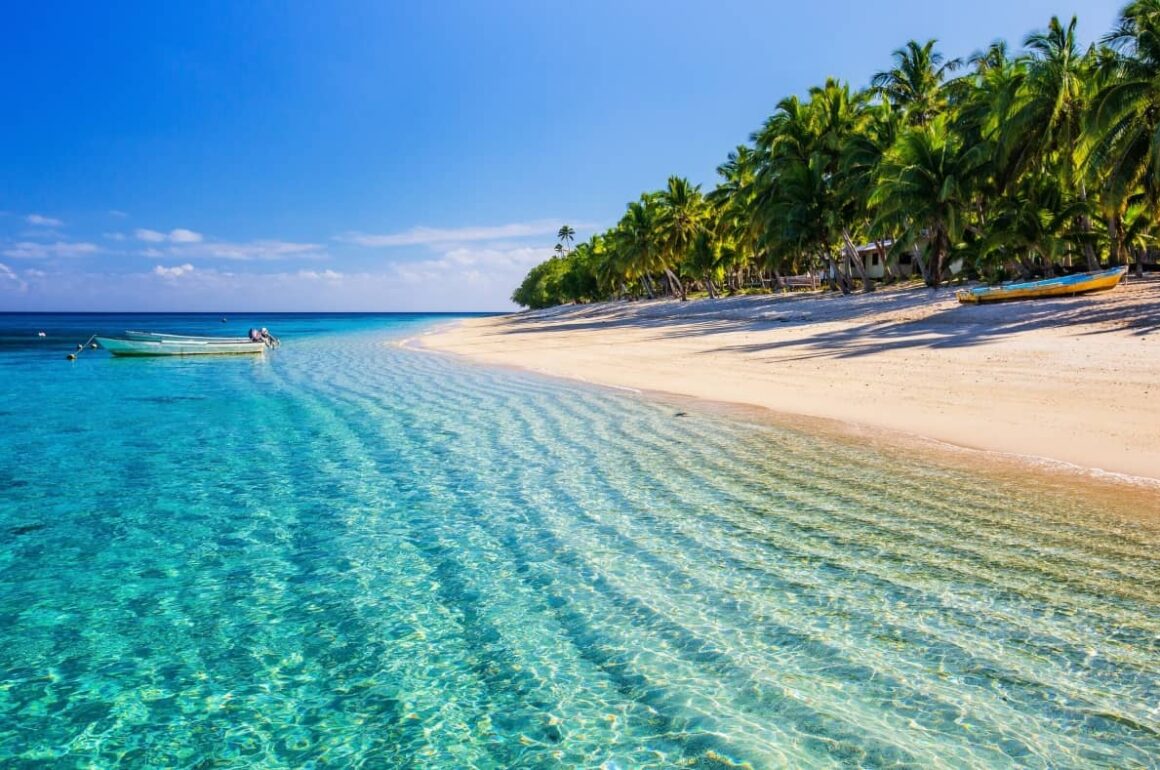
Dreaming of a paradise adventure in Fiji – but what about the real cost?
Let’s get straight to the point: the average daily cost of living in Fiji is around 200-400 PLN (at the current exchange rate, about FJ$453, or $202 per day). This rate immediately shows how much you really need to have in your wallet.
The year 2025 brings new budgetary challenges: post-pandemic inflation, rising jet fuel prices, and increasing logistics costs have significantly driven up travel expenses. This makes mindful planning essential—without it, it’s easy to exceed your intended budget.
How much does a trip to Fiji cost?
Consider this, dear reader:
- How much will I pay for the flight?
- Is it expensive on site?
- How to reduce expenses?

This article will answer each of these questions in the following sections. We’ll take a closer look at flight costs, living expenses, and proven ways to save money without missing out on experiences.
There are three key parts ahead:
- flight – how much time you really need to plan for traveling to and from Fiji,
- everyday expenses – accommodation, food, transport, and attractions,
- saving money – practical tips to help you cut costs without compromising the quality of your trip.
Let’s take a closer look at the details…
Flight: how much does a trip cost?
This is where the real planning begins, as ticket prices fluctuate dynamically—but soon you’ll know the realistic price range.
On-site costs: daily budget by category
In the next section, you’ll discover what spending looks like in practice—from hostels to luxury options, from street food to organized tours.
Money-saving hacks: how to see more while spending less
I’ll share where to find great deals, how to choose more affordable transport options, and where to discover authentic local experiences on a budget.
Get ready for specifics, not generalities – we’re about to dive into the details.
Main spending categories and current prices in PLN and FJD
Here is a section compliant with your guidelines, in Polish, containing updated data:
Flights account for as much as 60-70% of the total travel budget to Fiji. Most of the remaining expenses are divided between accommodation, local transport, food, attractions, insurance, and various minor costs. Below, you’ll find a detailed cost breakdown in the table and in the description of each category.
| Category | Scope (FJD) | Range (PLN) |
|---|---|---|
| Flights (WAW – Nadi, return) | 2,000–6,000 FJD | 3,000–9,000 PLN |
| Tourist visa | 0 FJD | 0 PLN |
| Local transport (bus, taxi, ferry) | 300-800 FJD | 450–1,200 PLN |
| Accommodation (hostel – 3★ hotel) | 1,000–3,000 FJD | 1,500–4,500 PLN |
| Food (local – restaurants) | 800–2,000 FJD | 1,200–3,000 PLN |
| Attractions (tours, parks, tickets) | 500–1,500 FJD | 750–2,250 PLN |
| Travel insurance | 200-400 FJD | 300-600 PLN |
| Additional expenses (souvenirs, tips) | 300-800 FJD | 450–1,200 PLN |
Flights: this is the main expense – round-trip ticket prices from Warsaw to Nadi range from approximately 3,000 to 9,000 PLN (at an exchange rate of about 0.5 PLN/FJD, that’s 2,000 to 6,000 FJD)
Tourist visa: for Polish citizens, the visa is free of charge for stays up to 4 months – you do not incur any visa fees.
Local transport: the fare for a bus, taxi, or ferry ranges from 300 to 800 FJD (450-1,200 PLN), depending on the distance and frequency of travel.
Accommodation: a hostel is about 1,000 FJD (1,500 PLN), while a standard hotel with three stars can cost up to 3,000 FJD (4,500 PLN) for 10 days.
Food: the food budget covers local dining and restaurants – from 800 to 2,000 FJD, which is 1,200–3,000 PLN for 10 days.
Attractions: tours, entrance tickets, and activities cost around 500–1,500 FJD (750–2,250 PLN).
Insurance: standard travel insurance can be purchased for 200-400 FJD (300-600 PLN).
Additional expenses: souvenirs, tips, and small purchases usually amount to 300–800 FJD (450–1,200 PLN).
Sample 10-day budgets:
- Backpacker (~5,000 PLN):Flights: 3,000 PLNAccommodation (hostel): 1,500 PLNFood (local): 1,200 PLNLocal transport: 450 PLNAttractions: 750 PLNInsurance: 300 PLNAdditional expenses: 300 PLN
– Total: ≈ 5,500 PLN - Mid-range (~12,000 PLN):Flights: 6,000 PLNAccommodation (3★ hotel): 4,500 PLNFood: 3,000 PLNLocal transport: 1,200 PLNAttractions: 2,250 PLNInsurance: 600 PLNAdditional expenses: 1,200 PLN
– Total: ≈ 18,750 PLN
To conclude this section: the following chapters will show which factors influence these cost fluctuations and how you can adjust your expenses according to your own preferences.
Seasonal and individual factors that affect travel costs
Seasonality and individual circumstances can significantly impact your travel budget for Fiji. In this section, we’ll show you why prices aren’t fixed and how they fluctuate—from seasonal increases and exchange rates, to booking timing, global factors, and personal preferences.
Case study: July (peak season) vs February (low season)
Let’s imagine two identical stays at a hotel: one in July, the other in February. In July (high season), the average hotel price increases by about 20% compared to February (low season) — a real difference that can easily raise your total accommodation costs.
5-6 key factors affecting travel costs
- High season – in July, hotel prices average about 20% higher than in February. This affects not only accommodation, but also airfares and services.
- Exchange rates – fluctuations of the Fijian dollar against major currencies can significantly alter the actual local cost, often without any visible changes in the offer.
- Booking time – the closer to the travel date, the more often prices increase, especially during peak season.
- Group size – larger groups may receive discounts, but during hurricane season (November–April), transportation costs can increase by as much as 10–11% due to higher insurance rates and disruptions.
- Travel style – choosing all-inclusive vs budget accommodation, frequency of inter-island travel, culinary preferences – these decisions affect your total expenses.
- Global events – for example, Cyclone Rae in February 2025 may increase transportation and local service costs, even if it did not directly disrupt accommodation.
Scenarios illustrating the impact of factors
- Season: July means +20% for the hotel – that could be an extra few hundred zlotys per night just for accommodation.
- Exchange rate: Even a slight weakening of the złoty against the Fijian dollar increases the prices of meals and excursions.
- Booking: Last-minute reservations during peak season often come with higher transportation and hotel costs.
- Group: Booking for your family? You may get a discount, but if it’s cyclone season, flight and ferry costs go up.
- Style: All-inclusive on the island can be convenient, but more expensive than local accommodation and food.
- Global events: Even a cyclone that doesn’t disrupt overnight stays can drive up service prices and affect availability.
In the box: additional information about the route and inflation
The new Fiji Airways route from Asia (e.g., to Singapore, Hong Kong, Tokyo) starting in 2025 will significantly lower flight prices—on average by about 10%.
Local inflation reaching 3–4% annually is gradually increasing the cost of services and products on site—from food to transport and accommodation.
Knowing these variables, let’s see how to use them to your advantage…
Proven ways to reduce expenses without compromising quality
I present a section that combines practical saving strategies with concrete examples—without repeating general costs: a brief introduction, a checklist of seven methods, a case study, and a sentence leading further.
Traveling to Fiji can be expensive, but that doesn’t mean you have to sacrifice comfort. There are proven, practical ways to significantly cut costs—without compromising the quality of your stay. Below you’ll find a list of strategies that truly work.
Proven ways to save without compromising on quality
✓ Take advantage of last minute deals – they often reduce the package price by 20-30%, as with Rainbow offers (for example, Blue Lagoon Cruises offers up to 25% off on last-minute cruises)
✓ Search for multi-stop flights – combining several cities can significantly reduce one-way travel costs without sacrificing comfort
✓ Buy Bula Pass – the 14-day Bula Pass (approx. $339/person) offers unlimited travel on the Yasawa Flyer catamaran between the islands
✓ Choose hostels that offer free breakfast – it’s a daily saving and a slight drop in standard, but without sacrificing comfort
✓ Visit local markets – cheap snacks, fresh produce, and authentic food at local prices are a great way to enjoy budget-friendly meals
✓ Collect group discounts – traveling with a group lets you get discounts on accommodation, tours, or local transport
✓ Use cashback cards – by paying with a cashback card, you can recover part of your expenses and increase your budget flexibility
Tip – case study
A travel couple chose multi-stop flights to Fiji and stayed in a hostel with breakfast included. This way, they saved around 3,000 PLN compared to a traditional all-inclusive package—without sacrificing travel comfort or the sense of local authenticity.
Applying these tactics paves the way for intentional planning – now you can move on to concrete actions and develop your travel itinerary.
Your action plan: turn numbers into a real journey
Here is a motivating conclusion to the guide that transforms numbers and saving strategies into a concrete action plan – all in Polish, as required:
Before you reach for your suitcase, pause for a moment and savor this feeling: planning is the beginning of an adventure that’s already waiting just around the corner. Now it’s time to take action—turn numbers into real memories.
Three key takeaways to keep in mind:
- It’s worth booking in advance – this helps you avoid price increases of up to 5–10% per year.
- Ecotourism is on the rise – more and more “green” packages on offer can mean savings and benefits for the planet.
- A simple budget plan boosts your real chances of making dreams come true – from setting expenses to actively tracking your progress.
Future trends and ecotourism
Travel costs may increase by around 5-10% per year until 2030—this poses a real threat to your budget, making early bookings absolutely essential. Additionally, the growing interest in ecotourism can bring benefits—more and more “green” packages offer discounts for conscious travelers while supporting local communities and nature conservation.
Take the first step today – plan, book, and set off to create unforgettable memories!






Leave a Comment