

How much do properties cost in Dubai?
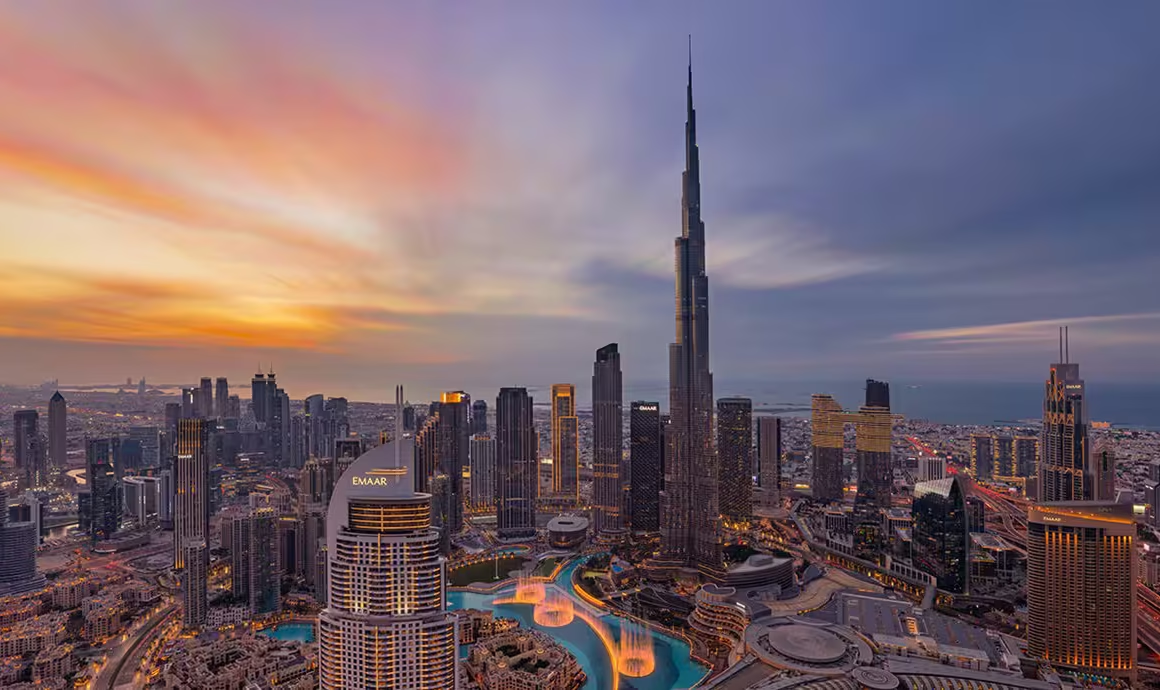
“The average price per square meter in Dubai in 2025 exceeded 18,000 AED, or around 19,000 PLN – that’s more than what you pay for a luxury apartment in the center of Warsaw.”
Sounds crazy? And yet, foreign investors already account for 70% of the entire real estate market in this Emirati city. That’s no coincidence. Dubai offers something you’ll struggle to find anywhere else—zero capital gains tax, permanent residency for property owners, and a market that continues to soar even amid global inflation.
The year 2025 marks a turning point for Dubai’s real estate market. Expo 2020 has left its mark, major infrastructure projects are nearing completion, and the city is gearing up for another wave of growth. Investors from Poland are increasingly viewing Dubai not as an exotic adventure, but as a serious alternative to their domestic market.
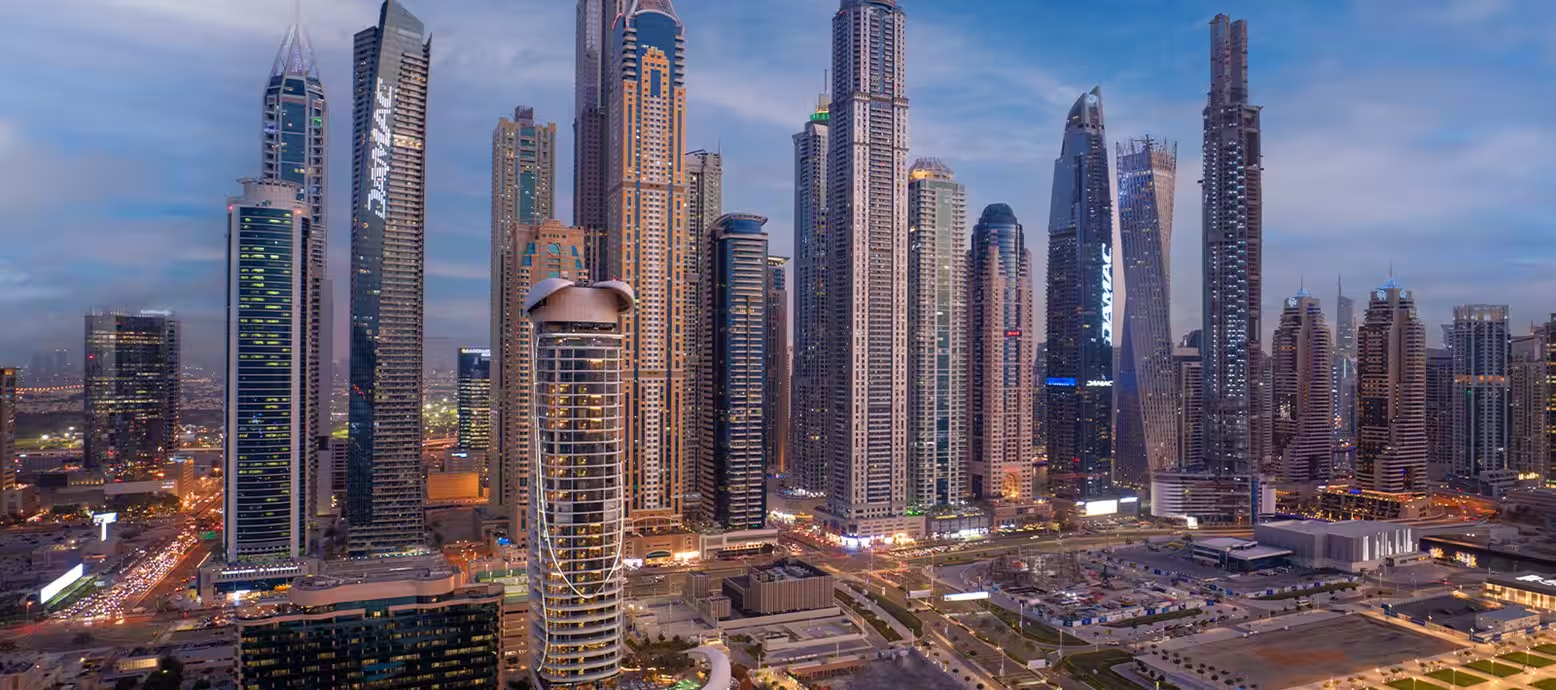
How much do properties cost in Dubai?
To understand whether it’s worth investing your money in Dubai real estate, you need to know three key things:
• Current price per square meter – what are the real costs of different types of in various districts
• Full cost breakdown – what extra fees should buyers expect beyond the apartment price
• Profitability and trends – is it possible to make money from rentals and what does the future hold for this market
I won’t deny it – numbers can be surprising. But the devil is in the details, and in this case, those details can determine the success or failure of your investment.
Before we dive into specific figures, it’s worth understanding the price landscape of the Dubai market.
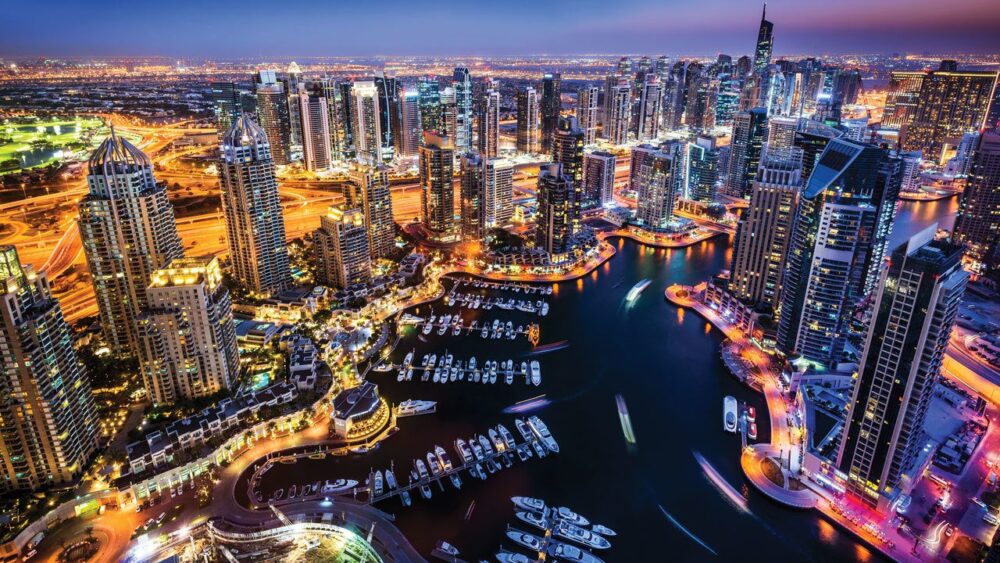
Price map 2025 – from studio to penthouse
Prices in Dubai in 2025? This is a topic every potential investor should know inside out. The range is truly broad, but it’s possible to make sense of it all.
| Property type | AED | PLN | USD |
|---|---|---|---|
| Studio | 350,000 – 700,000 | 374,500 – 749,000 | 95,000 – 191,000 |
| 2-room | 600,000 – 1,500,000 | 642,000 – 1,605,000 | 163,000 – 408,000 |
| Villas | 1,000,000 – 5,000,000 | 1,070,000 – 5,350,000 | 272,000 – 1,361,000 |
| Penthouse | 3,000,000 – 180,000,000 | 3,210,000 – 192,600,000 | 817,000 – 49,000,000 |
Key facts to remember: Off-plan prices are on average 15-20% lower than ready properties. The “luxury” standard increases the price by an additional 30-40%. The highest price growth in 2024 was recorded in canal-side districts—up to 18%.
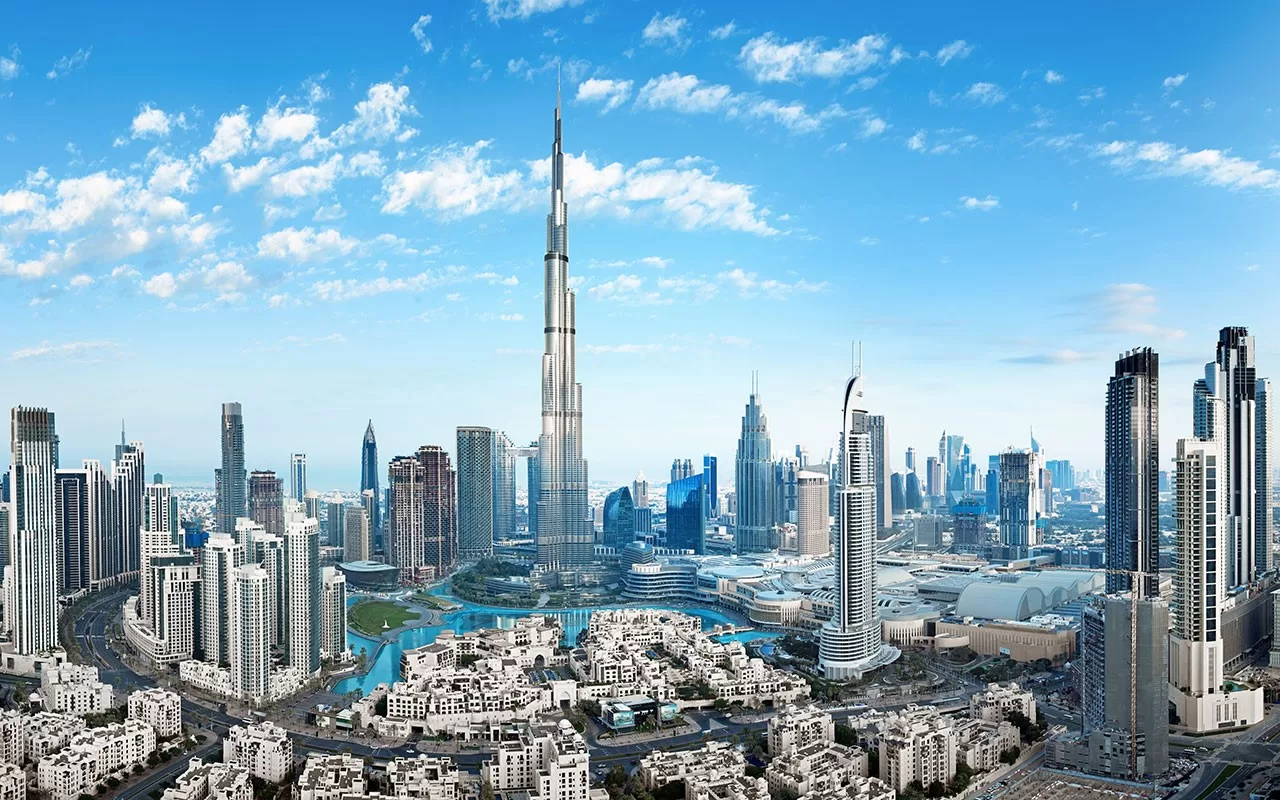
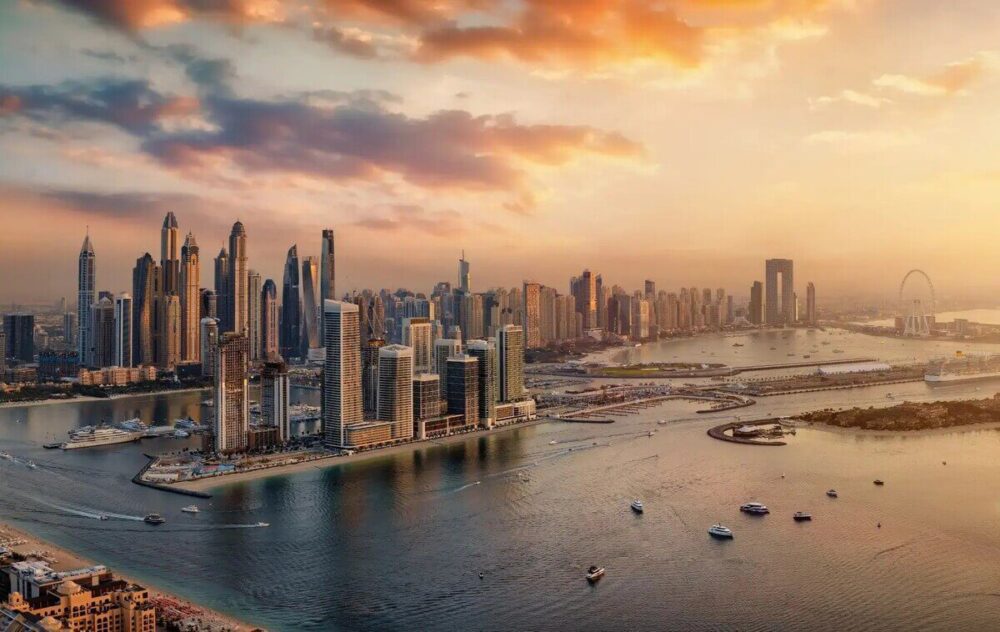
Geography is everything in this business. Downtown and DIFC are financial hubs, where a square meter costs 15,000–25,000 AED. Palm Jumeirah? There, it’s all about prestige, so you pay a similar price. But if you head out to the outskirts in Ajman or Sharjah, suddenly those same square meters cost 8,000–12,000 AED.
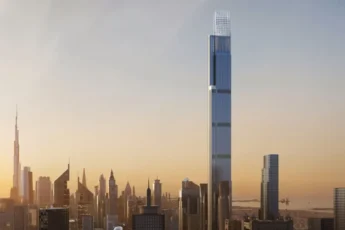
Why such a difference? Infrastructure, proximity to the metro, views of Burj Khalifa. And of course, all the marketing and the prestige of the address.
Two real-life examples—a penthouse in Burj Khalifa was sold last year for 42 million euros to a Russian oligarch. On the other hand, a Polish acquaintance bought a 74-square-meter apartment in Ajman for 223,000 AED and is quite happy with it.
The history of prices is a real rollercoaster. In 2008, before the crisis, a square meter cost around 20,000 AED—sounds familiar, right? Then the crash hit and prices dropped by 60%. The 2020 pandemic? Everyone thought it would be bad, but instead, prices skyrocketed.
Actually, it’s interesting that those 2008 prices have only just returned now. It means the market needed 15 years to recover.
We already know the starting prices, now it’s time to calculate the full bill and see what else you’ll be adding to that amount…
Full invoice – fees, taxes, and purchase steps
You see the starting price and think that’s all? Unfortunately, that’s just the beginning. In Dubai, every dirham on paper turns into a much higher amount on the invoice—and no one really explains this to you beforehand.
1. Reservation form and initial payment
You start with the “Reservation Form” and a 10% deposit. It sounds simple, but at this stage, you’re already paying the agent’s commission – typically 2% of the property value. So if you’re buying for 1,500,000 AED, that’s an extra 30,000 AED right away. Timeframe: 1-3 days.
2. Sale and Purchase Agreement (SPA) and DLD Registration
This is where the biggest cost comes in – the 4% Dubai Land Department fee. This is non-negotiable. For the same investment, that’s another 60,000 AED. Plus notary fees, usually 2,000–5,000 AED. This stage takes around 7–14 days.
- Off-plan payment schedule
Most projects follow a similar structure: 10% upon reservation, 10% at SPA signing, then installments every 3–6 months according to construction progress. Example for a 24-month project: 20% within the first two months, the next 60% in equal installments every six months, and the final 20% upon handover of keys. - Operating fees and hidden costs
No one talks openly about the service charge of 10-20 AED/m² per year. For a 100 m² apartment, that’s 1,000-2,000 AED every year. Sometimes there’s also a fee for parking, waste disposal, or building insurance. - Finalization and Handover
The remaining 20% plus ownership transfer fees. An additional 2,000-3,000 AED for documents, translations, and final registrations. The process takes 30-45 days from the completion of construction.
Golden Visa in a nutshell: with a minimum investment of 2,000,000 AED, you receive a 10-year visa for your entire family. The application process takes 2-4 weeks, and benefits include unrestricted entry to the UAE, the ability to run a business, and no requirement to leave the country every 6 months.
The truth is, the starting price is at most 85% of the final cost. The rest consists of “little extras” that can surprise even seasoned investors.
Now that we know the full cost, let’s ask: will it pay off?
Profitability and future prospects – is the investment worth it?
Is your capital working efficiently? This is the question every investor asks themselves when considering the purchase of a property in Dubai.
| Location | Average ROI | Gross profitability | Market liquidity |
|---|---|---|---|
| Dubai city center | 6.0–8.0% | 7.5% | High |
| Dubai outskirts | 8.0–10.0% | 9.2% | Average |
| Warsaw | 3.0–5.0% | 4.1% | Low |
| Berlin | 2.5–4.5% | 3.8% | Average |
The numbers speak for themselves. In downtown Dubai, you can expect a return of around 7%, while on the outskirts of the city—even up to 10%. By comparison, apartments in Warsaw offer a maximum of 5%. The difference is significant.
The forecasts for the coming years look optimistic – prices are expected to rise by 5-8% in 2025, followed by a steady 5-10% annually until 2030. The Dubai 2040 plan aims to transform the city into a global hub for the ultra-wealthy. The influx of high-net-worth individuals is already driving demand.
It’s worth looking at the transaction statistics. In 2024, there were over 100,000 sales recorded, and forecasts for
But is everything really rosy? Not quite.
Risk & Reward
| Advantages | Threats |
|---|---|
| High returns of 6-10% | The impact of global inflation |
| Growing demand from HNW | Geopolitical risk |
| Dubai 2040 Plan | Possible market corrections |
| Liquidity of over 100k transactions | Currency exchange rate fluctuations |
Global inflation can affect the cost of maintaining real estate. Geopolitics in the Middle East always carries a certain level of risk. And real estate markets—even the best ones—go through cycles of ups and downs.
Choosing between off-plan and ready projects? Off-plan offers better prices, but requires patience. Ready properties mean immediate rental income, although at a higher entry price.
Ultimately, Dubai offers some of the highest returns in this part of the world. The question is—are you ready to take that step?
What’s next for the Dubai market – key takeaways and next steps
Dubai is no longer the wild market it was a decade ago, where you’d buy an apartment off a brochure and hope the developer would actually finish construction. Today, things look completely different.
Three things you need to know
Prices are still rising, but more moderately than a year ago. That’s good news—it means stabilization without a speculative bubble. Second, you should always add 6–8% to the purchase price for additional fees. And third, most importantly: returns in Dubai still outperform most European markets.
Many people overlook this last point, focusing only on the entry price.
Test yourself before you buy
▢ Do you have a clear budget with a buffer for unexpected expenses?
▢ Do you know exactly why you’re buying—a home for yourself, an investment, or perhaps a retirement plan?
▢ Have you defined your time horizon – 3 years, 10 years, or perhaps longer?
▢ Are you prepared for the risk of currency fluctuations and local regulations?
▢ Do you have an exit strategy for your investment—when and how will you sell?
These questions may sound simple, but most buyers can’t answer them. And they should.
A look into the future 2026-2030
Dubai Vision 2040 is more than just a catchy marketing slogan. The city is genuinely investing in sustainable projects and future technologies. There’s even something called “metaverse real estate”—it may sound strange, but the first cases of selling virtual properties linked to physical ones are already happening.
I’m not saying this will be a revolution, but the direction is clear. Dubai wants to become the region’s technology capital.
Time to take action
Theorizing is one thing, but practice is another. Check current offers with licensed agents—not on classifieds websites, but with people who hold a RERA license. That’s the foundation of safety.
If you’re seriously considering buying, schedule a consultation with someone who truly knows the local market. Don’t make decisions based on online articles—even this one.
Act wisely, but act.
Mark D.
lifestyle editor
Luxury Blog

Leave a Comment