

How does a peptide cream work?
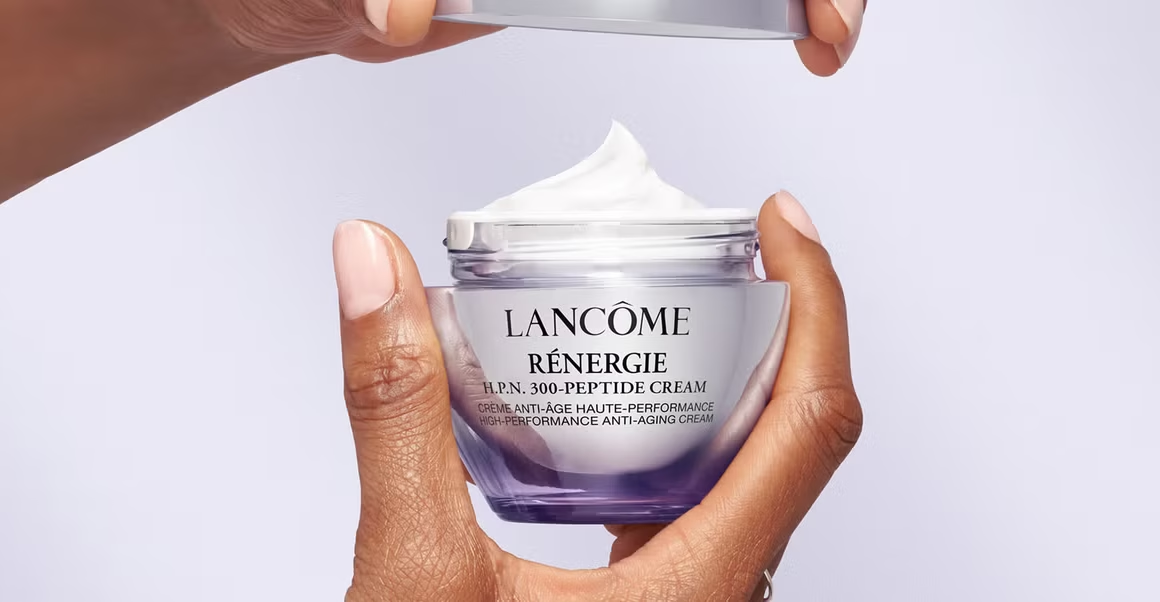
In 2024, interest in peptide-based cosmetics in Poland increased by 40%, reflecting the growing popularity of these products in skincare.
Peptides, which are short chains of amino acids, have been used in cosmetology for years. Their ability to stimulate collagen and elastin production makes them highly valued in anti-aging products. Modern cosmetic formulas are increasingly incorporating various types of peptides to meet the diverse needs of the skin.
In the following sections, we will take a closer look at how peptides work, their practical applications, and the future of this trend in cosmetology. Are peptides the key to younger, healthier skin? Read on to discover the answers to these questions.
How does a peptide cream work?
Imagine your skin as a construction site, where teams of workers are responsible for maintaining its structure and elasticity. Over the years, these teams slow down, and building blocks like collagen are produced in smaller amounts. Peptides in creams act as alarm signals, mobilizing these teams to work harder, which leads to the repair and strengthening of the skin.
What are peptides?
Peptides are short chains of amino acids that play key roles in the body, including in the skin. They are used in cosmetics for their ability to communicate with skin cells, stimulating them to perform specific actions such as collagen production or inhibiting enzymes that degrade the skin.
Four functional categories of peptides
Peptides in cosmetics can be divided into four main categories, each of which affects the skin in a unique way:
| Category | Mechanism of action | Example |
|---|---|---|
| Signal | They stimulate skin cells to produce collagen and other structural proteins. | Matrixyl |
| Carrier | They transport trace elements, such as copper, supporting repair processes. | GHK-Cu |
| Enzyme inhibitors | They inhibit the action of enzymes that degrade collagen, protecting the skin’s structure. | Palmitoyl tripeptide-38 |
| Neuromodulating | They reduce facial muscle contractions, diminishing the appearance of expression lines. | Argireline |
Effectiveness confirmed by research
Clinical studies confirm the effectiveness of peptides in reducing signs of skin aging. In one study, using a peptide cream for 4-8 weeks led to a 20-30% reduction in wrinkles and a 15-20% improvement in skin elasticity. These results were published in the Journal of Cosmetic Dermatology.
Comparison with retinoids
Retinoids are known for effectively stimulating collagen production, but their use can be associated with skin irritation. Peptides offer similar benefits in terms of improving skin texture, but with less risk of irritation, making them an attractive alternative for those with sensitive skin.
Myth: Peptides cannot penetrate the skin due to their large molecular size. Fact: Modern technologies, such as liposomes and emulsions, enable effective delivery of peptides into deeper layers of the skin, enhancing their efficacy.
Understanding how peptides work and their proven effectiveness enables you to consciously incorporate them into your daily skincare routine, which can deliver visible benefits such as wrinkle reduction and improved skin elasticity.
How to choose and use a peptide cream in practice
Standing in front of the shelf at the drugstore, you wonder which peptide cream will be best for your skin. Choosing the right product and using it correctly can significantly impact the effectiveness of your skincare routine. Below you’ll find practical tips to help you make an informed choice and incorporate a peptide cream into your daily skincare regimen.
Five-point checklist for choosing a peptide cream
- Peptide concentration (1-10%): Make sure the product contains peptides in a concentration between 1 and 10%. Lower concentrations may be ineffective, while higher ones can increase the risk of irritation.
- INCI composition: Check the ingredient list for peptide names such as “palmitoyl tripeptide-5” or “acetyl hexapeptide-8.” The presence of these ingredients indicates the product’s effectiveness.
- Presence of antioxidants: Ingredients such as vitamin C, vitamin E, or plant extracts provide antioxidant protection, shielding the skin from free radicals and enhancing the effects of peptides.
- Airless packaging: Choose products in airless packaging, which minimizes the cream’s contact with air, preventing the oxidation of active ingredients and extending the product’s shelf life.
- Quality certificates: Check if the product has dermatological or ecological certificates confirming its safety and effectiveness.
Step-by-step morning and evening application routine
Morning routine:
- Cleansing: Wash your face with a gentle gel or foam to remove impurities that have accumulated overnight.
- Toning: Apply toner to restore your skin’s natural pH and prepare it for the next steps in your skincare routine.
- Peptide serum: Apply a few drops of peptide serum, gently patting it into the skin of your face and neck.
- Moisturizer: Once the serum has absorbed, apply a moisturizer suited to your skin type.
- Sun protection: Finish with an application of SPF 30 or higher sunscreen to shield your skin from harmful UV rays.
Evening routine:
- Makeup removal: Remove makeup using an oil cleanser or micellar water.
- Cleansing: Wash your face with a gel or foam cleanser to remove makeup residue and impurities.
- Toning: Apply toner to restore your skin’s balance.
- Peptide serum: Apply the peptide serum by gently patting it into your skin.
- Nourishing cream: After the serum has absorbed, apply a nourishing night cream to support your skin’s regeneration while you sleep.
Safety of use and patch test
Although peptides are generally well tolerated, 1-2% of users may experience irritation. To avoid allergic reactions, it is recommended to perform a patch test:
- Application: Apply a small amount of the product to the inside of your forearm.
- Observation: Leave for 24 hours, avoiding contact with water in this area.
- Assessment: If after this time there is no redness, itching, or burning, the product can be safely used on the face.
Ingredient combinations: what to mix and what to avoid
- Peptides + hyaluronic acid: ✔️ This combination delivers intense hydration and firms the skin.
- Peptides + strong AHA/BHA acids (>10%): ❌ Avoid using together, as this may cause irritation and reduce the effectiveness of peptides.
Choosing the right peptide cream and using it properly is the key to effective skincare. Remember to be consistent and select products tailored to your individual needs to enjoy healthy, radiant skin.
Your skin of tomorrow – what’s next for peptides?
In the rapidly evolving world of cosmetology, peptides are gaining prominence as a key ingredient in skincare. Their versatility and effectiveness make them the foundation of modern anti-aging products. It is predicted that by 2030, peptides will be present in 70% of anti-aging cosmetics, highlighting their growing role in the industry.
Forecast: Peptides in 70% of anti-aging cosmetics by 2030
Peptides, as short chains of amino acids, play a key role in stimulating the production of collagen and elastin, which translates into improved skin firmness and elasticity. Their ability to communicate with skin cells makes them extremely effective in reducing wrinkles and other signs of aging. As a result, it is predicted that by 2030, peptides will become a standard ingredient in 70% of anti-aging cosmetics.
Innovations: AI-designed sequences, lipid nanocarriers, bio-peptides from algae
The advancement of technology is opening up new possibilities in the field of peptides. Artificial intelligence enables the design of precise peptide sequences tailored to the individual needs of the skin. Lipid nanocarriers enhance the penetration of peptides deep into the skin, amplifying their effects. Additionally, bio-peptides derived from algae offer natural and eco-friendly solutions in skincare.
Action plan: 8-week program
To fully harness the potential of peptides, consider implementing the following plan:
- Week 1: Take a “before” photo in a well-lit area so you can compare the results.
- Weeks 2-7: Apply your chosen peptide cream daily to cleansed facial skin, following the manufacturer’s instructions.
- Week 8: Take an “after” photo under the same conditions as before and compare the results.
Regularity and consistency in use are key to achieving visible results.
Sustainability: Vegan and ocean-friendly sources
Growing environmental awareness among consumers is driving the search for cosmetics based on vegan and ocean-friendly ingredients. Peptides derived from plants or algae address these needs, delivering effectiveness without ethical compromise.
“The future of skincare is a harmonious blend of science and nature.”
Are you ready to unlock the potential of peptides and take conscious care of your skin?





Leave a Comment