

Golden Nintendo Wii Console – From Palace Gift to Collector’s Legend
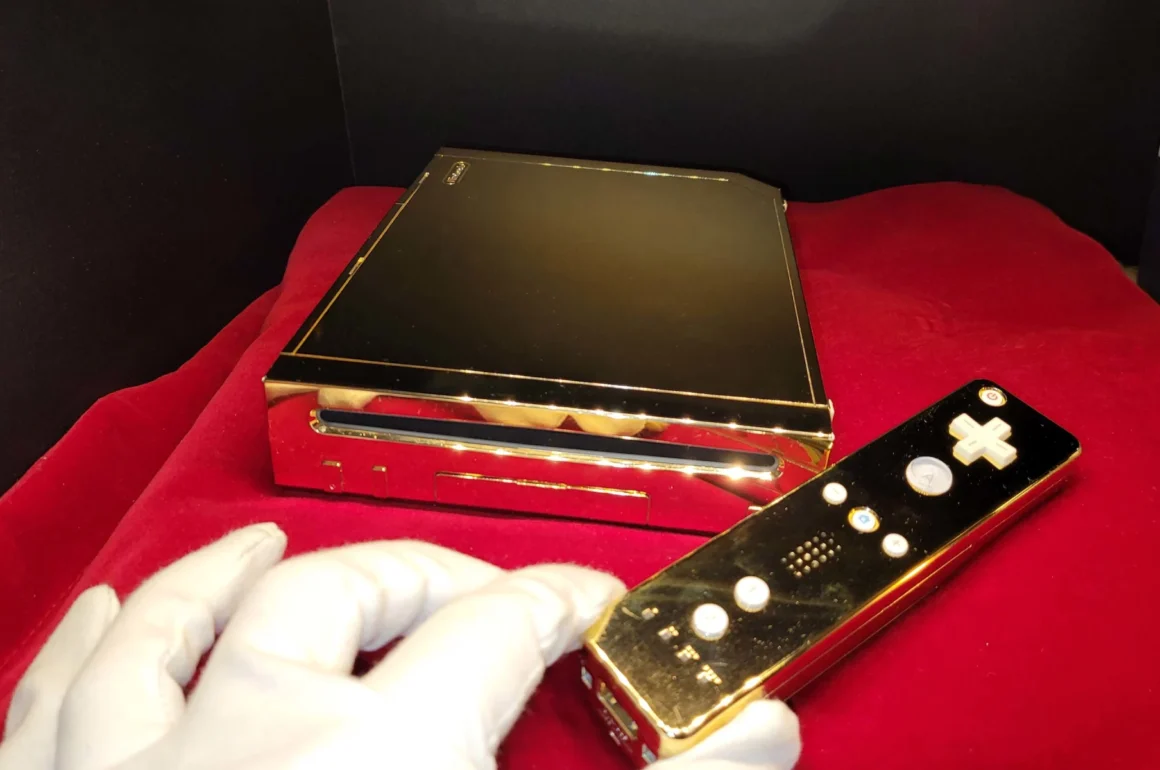
What does Queen Elizabeth II have in common with playing Wii Sports in the evening? It sounds like the setup for a joke, but the story of the golden Nintendo console proves that reality can be stranger than fiction.
Picture, for a moment, a scene at Buckingham Palace. The monarch, after a full day of official duties, picks up a Wii Remote. It might sound absurd, but in 2009, such a situation could have actually happened. At least in theory.
Golden Nintendo Wii console – family and monarchy
Nintendo Wii changed the way people perceive video games. Its 2006 launch was a breakthrough—the console sold over “101.64 million units worldwide, making it one of the most popular gaming platforms in history”.
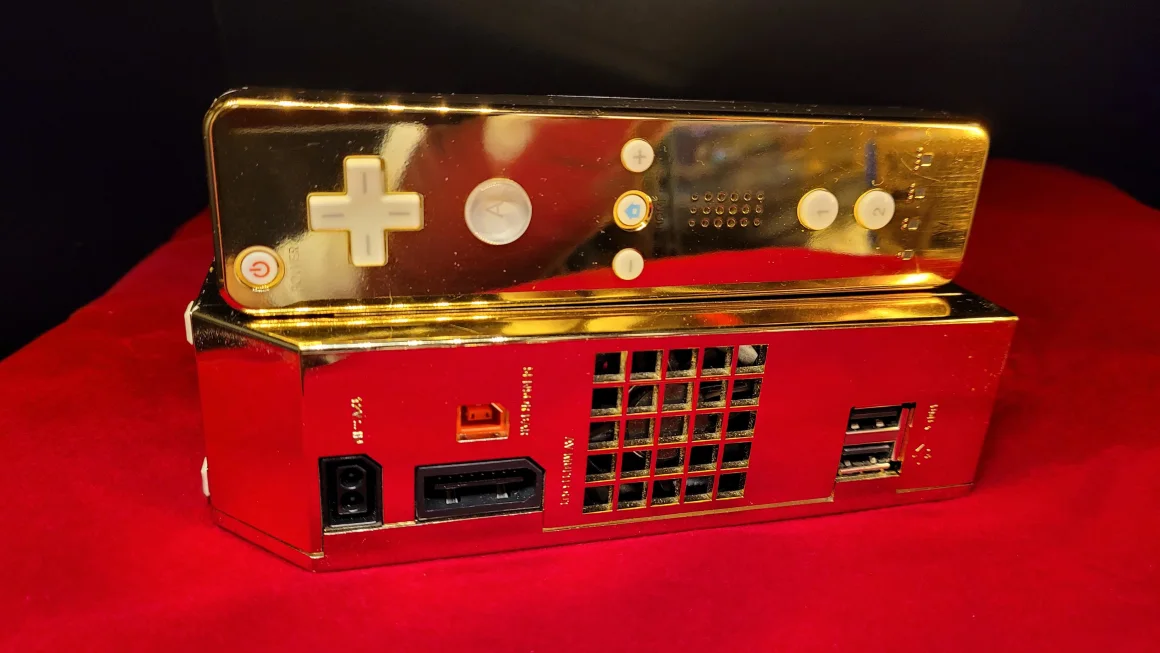
photo: edition.cnn.com
But it wasn’t just about the numbers. Wii Sports brought grandparents and grandchildren together, and parents stopped seeing games as a waste of time. The motion-sensitive controller felt like magic anyone could experience.
Gold in the service of family entertainment
But one Wii console was truly unique. Nintendo decided to create a unit covered in 24-carat gold. Sounds crazy—why cover a family gaming device in a precious metal?
The answer lies in the very nature of this console. The Wii broke down barriers between generations and social classes. The gold version became a symbol of that breakthrough. Luxury met democratic entertainment.
The story of this extraordinary console revolves around three key threads. First, the bizarre circumstances of its creation and journey to a British palace. Second, the reactions and consequences of this unusual diplomatic gift. Third, the later fate of the device, which became legendary among collectors.
This golden console is more than just a gadget. It’s a symbol of the moment when video games stopped being niche and became part of mainstream culture. Even for monarchs.
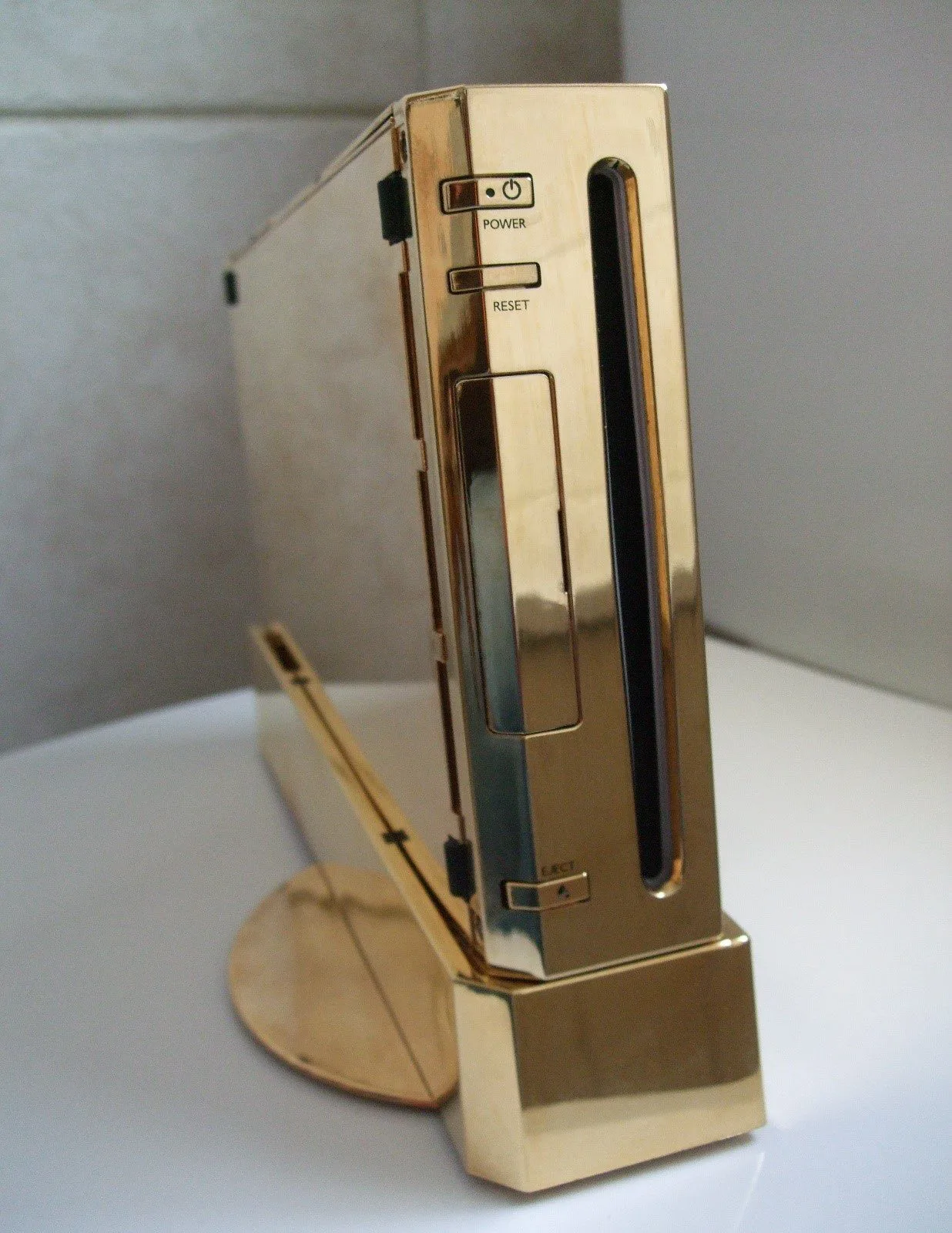
photo: goldgenie.com
Behind the scenes and the journey to Buckingham Palace
In October 2009, THQ made a decision that would create one of the most controversial gadgets in gaming history. But honestly, who came up with the idea of gold-plating a console for the queen?
| Date | Event |
|---|---|
| 2004 | Big Family Games Edition – the perfect logic game for families |
| 2006 | Nintendo Wii launch, a revolution in motion controllers |
| October 2009 | THQ commissions the creation of a golden Wii as a gift for Elizabeth II |
| November 2009 | The console is coated with 24-carat gold at a London-based company |
| December 2009 | Gift sent to Buckingham Palace |
| December 2009 | Console return due to royal protocol |
| December 2012 | THQ announces bankruptcy |
The gilding process was quite complex. A London-based company specializing in electronics customization received a standard white Wii console weighing around 1,200 grams. After being coated with real 24-carat gold, its weight increased by approximately 150 grams—like adding a heavy DVD disc to the console.
Technical specification: Genuine 24K gold was used, applied using the electroplating method. The layer thickness was approximately 0.1 mm, ensuring durability and a luxurious appearance.
THQ didn’t choose Big Family Games by accident. This title was aimed at all age groups, featuring simple puzzles and quizzes. The marketing team hoped the Queen might actually play it with her grandchildren. A bit naive, perhaps, but who knows?
The delivery process turned out to be a real problem. The console arrived at Buckingham Palace in an elegant, engraved box. However, royal protocol was unforgiving—the court does not accept gifts from commercial companies. The Golden Wii was returned to the sender faster than you could say “God Save the Queen.”
Things got even more complicated in December 2012. THQ declared bankruptcy, which meant that officially, no one owned the console anymore. The company’s assets were sold off, but this particular Wii vanished somewhere in the chaos of liquidation.
Ironically, the gift rejected by the Queen later became a coveted item among collectors from around the world. THQ wanted to create a marketing buzz, but ended up making one of the rarest gaming gadgets in history.
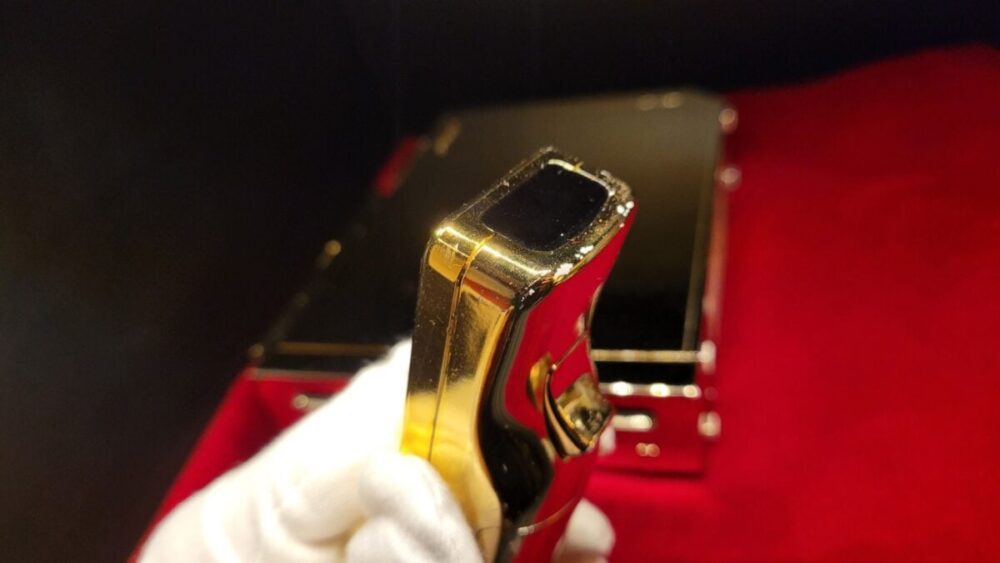
photo: kotaku.com
Collector’s Holy Grail – value, auctions, controversies
When an eBay auction in December 2021 reached 1.5 million views in just three days, even seasoned collectors admitted they had never seen anything like it. The seller listed the item for £300,000 (around $400,000 at the time), but the final transaction took place off-platform. The amount remains undisclosed.
Tracking the transaction history reveals an interesting dynamic. In 2019, a similar copy changed hands for $87,000 at Heritage Auctions. A year later, a private sale reached $180,000. Experts estimate the current value at $500,000–$1,000,000 for 2025, though these figures are highly controversial.
The main issue is the lack of official confirmation from Nintendo. The company consistently refuses to comment on the authenticity of individual copies.
Pros/Cons – Arguments for and against authenticity:
Pros: Technical documentation confirms unique code elements, witnesses from the development period, metallographic analysis of the cartridge
Cons: No official Nintendo documents, possibility of modern modification, condition is suspiciously good for a 30-year-old prototype
Heritage Auctions appraiser Mike Cisneros explains: “We’re seeing a classic rarity premium phenomenon. Collectors pay not just for the object, but for its mythology and the social perception of rarity.”
This ties into collection economics research, where rarity premium can reach as much as 400–800% of an object’s base value. Academic literature describes this mechanism as a “speculative spiral of perceived value.”
However, the price inflation is drawing criticism. Some experts warn of a speculative bubble in the gaming collectibles segment. The average annual increase in retro game values is 15–20%, but this particular item has been appreciating at a rate of 150–200% per year since 2019.
The mechanism is simple—each subsequent sale sets a new benchmark, and social media fuels the legend. Is this a healthy market, or an artificial bubble?
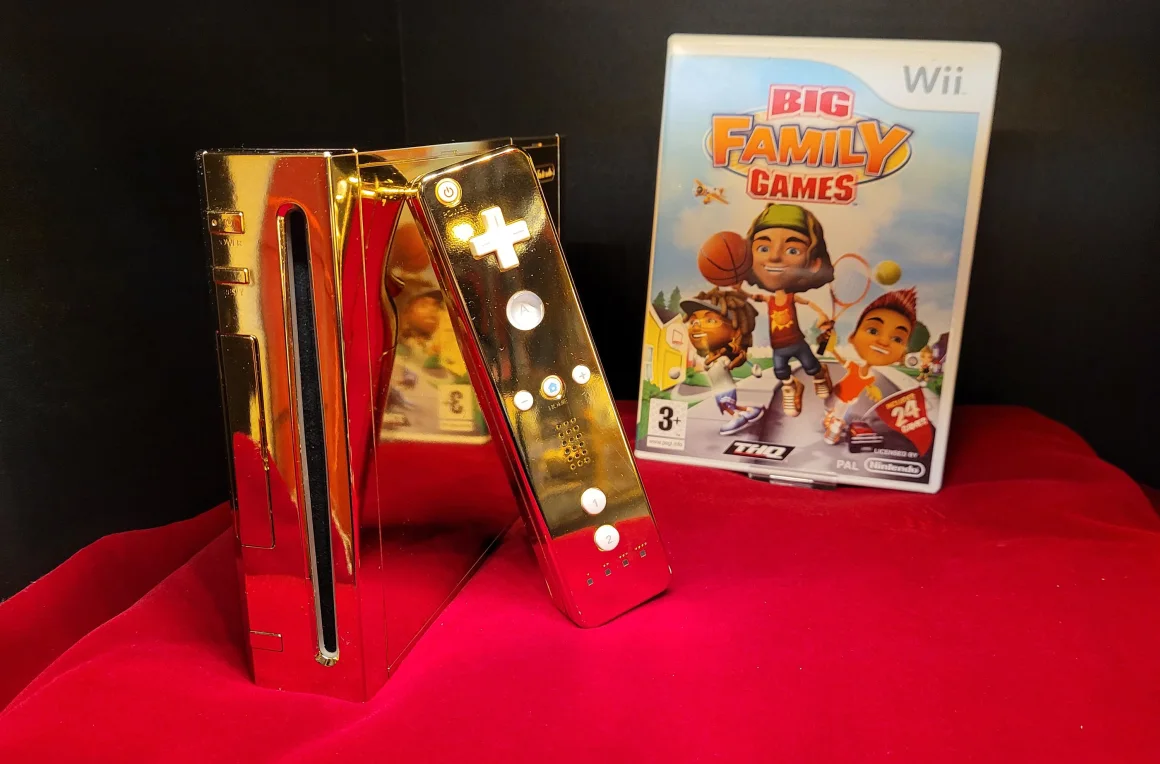
photo: edition.cnn.com
What’s next for the legend? Trends and forecasts for the golden Wii
The Golden Wii has become something of a collector’s holy grail. But what’s next for this legend?
Experts predict a real explosion in value over the coming years. By 2025, the price could reach $1,200,000, and forecasts for 2030 even mention $2,000,000. Does that sound abstract? Maybe. But looking at the pace of retro gaming price growth, it’s not unrealistic at all.
An interesting trend is the museumization of unique consoles. Nintendo is planning to open its own museum in Kyoto, where the Golden Wii will likely find its place. It’s not just about prestige—it’s also a way to protect it from further degradation.
Technology is joining the game as well. AR and VR already allow for virtual tours of rare exhibits without the risk of damage. Collectors can share their treasures with a wide audience without exposing them to physical contact.
And what about preservation? The gold-plated surface requires special care. Humidity should remain constant—around 45-50%. Light is enemy number one. Direct sunlight can destroy even the best-protected surface within a few years.
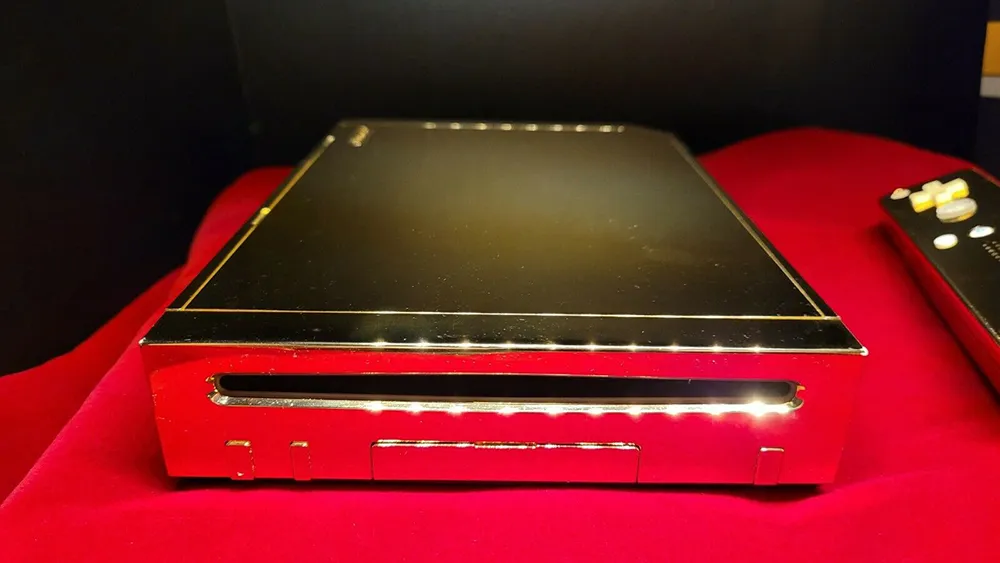
photo: robbreport.com
Retro gaming is no longer just a hobby for geeks. It’s becoming a serious alternative investment. Brands like Nintendo are starting to recognize the value of their heritage and are actively protecting it.
The Golden Wii is more than just a piece of metal and plastic—it’s a symbol of an era when video games became mass art. Its future depends on how seriously we take its preservation for future generations.
Don’t wait—act today, because tomorrow might be too late.
DANI
lifestyle editorial
Luxury Blog





Leave a Comment