

Exclusive mirrors – the most famous brands in the world

In the 16th century, a Venetian mirror could cost more than a painting by Raphael. Sounds absurd? Maybe. But something from that story remains true today: truly exclusive mirrors are still objects at the intersection of art and craftsmanship, transforming interiors into something more than just functional spaces.
What sets luxury mirrors apart? The materials, to be honest. Low-lead glass, brass gilded with 18 or 24 carat gold, hand-carved crystal. These are things that simply can’t be produced cheaply. Limited editions signed by artists. Craftsmanship where a single piece is created over months.
And here’s the catch: the smart mirror market with LED lighting reached USD 4.8 billion in 2023, with a projected annual growth of 15.2%. Technology meets tradition. You see them in the finest hotels, on yachts, in the homes of people who take interior design seriously.

boca do lobo
Later in the article, you’ll discover the brands that have set the standards (Boca do Lobo, Murano, Philippe Starck) and the trends for 2024-2026. But first, it’s worth understanding why we’re even talking about this.
Exclusive mirrors: the history and evolution of luxury mirrors
Mirrors have accompanied humanity for thousands of years, but their journey to becoming a symbol of luxury is a fascinating story of technological breakthroughs and cultural obsessions.
Venetian mystery and royal splendor
The earliest “mirrors” were polished obsidian around 8,000 BCE in Anatolia, followed by bronze and copper (Egypt, China, around 4,000 BCE), and the Romans were the first to blow glass (1st century CE). But the true revolution began in 1291, when Venice moved its glassmakers to Murano. The masters there perfected the technique of mercury-tin amalgam on cristallo, creating mirrors so expensive they were sometimes valued higher than Raphael’s paintings. The trade was strictly guarded, and revealing the secret was punishable by death.
The peak moment? The year 1678, the Hall of Mirrors in Versailles. Louis XIV ordered 357 mirrors from the Saint-Gobain manufactory, which became symbols of absolute power and prestige. Guests gazed at their multiple reflections in the candlelight and were simply left speechless.
From silver plating to original design
The year 1835 marked a breakthrough: chemical silvering replaced dangerous mercury and democratized production. But luxury endured thanks to the setting, rococo frames, and the Chippendale style. In the 20th century, mirrors became a tool of design: Eileen Gray “Satellite” (1927), later Philippe Starck for XO (1985). Belgian Deknudt (founded 1946), Portuguese Boca do Lobo (launched 2005), and Brabbu (2011) proved that craftsmanship can converse with technology. Today, it’s not just a reflection—it’s a sculpture of light.
The most famous brands and designers in the world
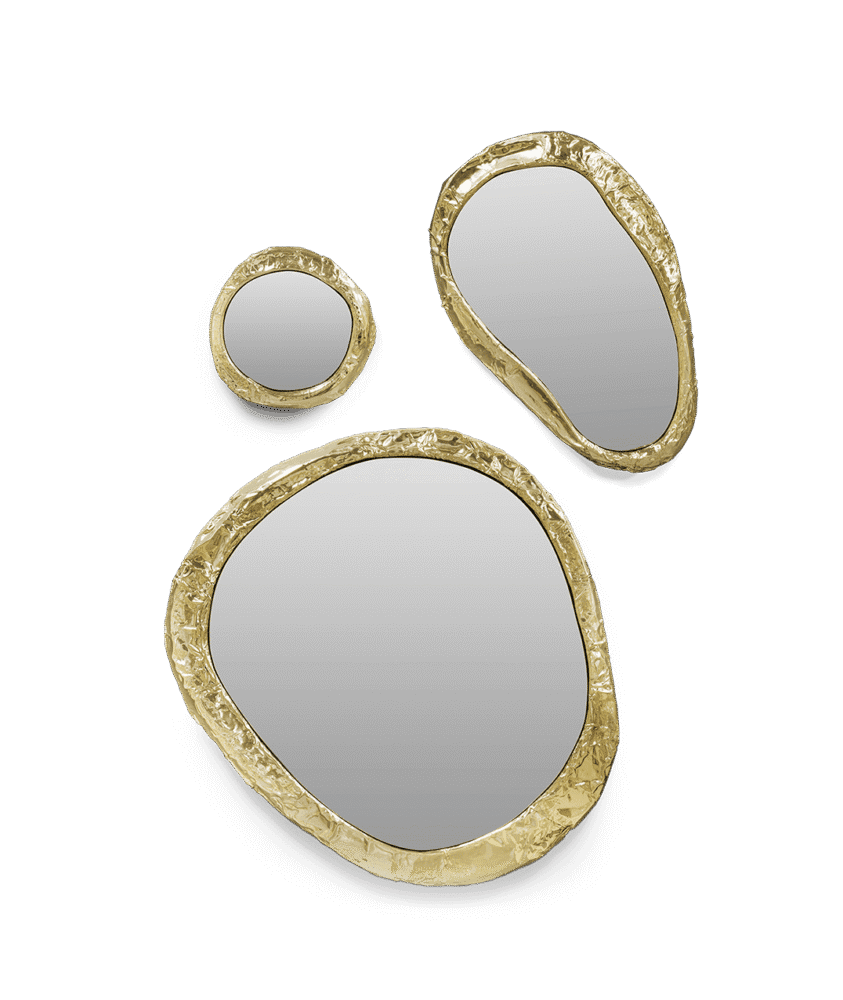
Portugal is an interesting spot on the map of luxury mirrors, though few would expect it. Boca do Lobo (since 2005) is a true phenomenon—models like Filigree and Halo, hand-inlaid with gilded brass, have made their way into collections around the world. Their style? Baroque extravagance meets contemporary forms. Meanwhile, Brabbu (since 2011) plays the “urban luxury” card, drawing inspiration from nature—think textures, organic shapes, and a bold, almost wild design.
boca do lobo
Belgium focuses on solidity. Deknudt Mirrors (since 1946) is a family business that exports to over 60 countries, and their facility is equipped with around 2,500 photovoltaic panels, so sustainability is no stranger to them. The “CALCO” model (designed by Esther Everaert) is a great example of their style— minimalism with character. Italy? Well, here you have to mention Murano and Venetian crystal craftsmanship. Historical techniques are still alive, ateliers work by hand, and each mirror is essentially a work of art.
Designers and quality background
France gave us Philippe Starck – his creations for XO (since 1985) and surreal forms in hotels (e.g., Fasano) are classics. Lalique adds crystal details, pure luxury. The USA? Jonathan Adler with his glamour and metallic frames.
And glass? Here are the giants: AGC, Saint-Gobain, Pilkington – they supply the substrates for high-end mirrors. Without them, everything else wouldn’t make sense. In the media, Qeeboo “Unuka” (Marco Oggian) often appears – a recognizable design everyone knows.
In Poland, distributors like Luxury Products make sure these brands reach customers. Quality of workmanship? More on that in a moment.
Materials, craftsmanship, and parameters that define class
Let’s start with a simple truth: the price of a premium mirror is not just about the brand. Above all, it’s about the materials and the precision of craftsmanship that you see (or don’t see) every day.

boca do lobo
Glass that does not distort the image
In luxury mirrors, premium float glass is used, often low-iron glass. The difference? Standard glass has a slight greenish tint that distorts colors. Low-iron glass provides a crystal-clear reflection. AGC Mirox 4Green is a good example: anti-corrosive silvering that will last for years, even in a bathroom. Beveled edges (that is, gently polished edges) are another detail that reveals quality. Cheap mirrors have sharp edges and sometimes visible distortions at the borders.
Precious metals and frame craftsmanship
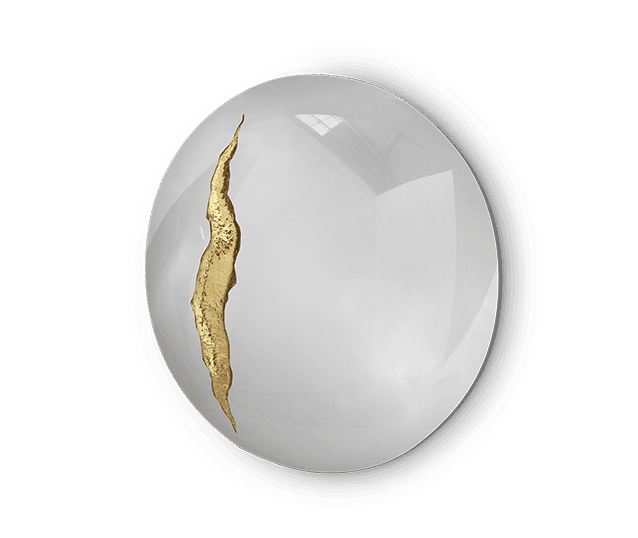
The frame is not just a decoration. In the luxury segment, you’ll find gold-plated brass 18k or 24k, exotic wood veneers, mother-of-pearl, Murano crystal, and even Swarovski applications. But the material is just one aspect—precision of joints and uniformity of finishes are equally important. The human eye catches imperfections, so premium craftsmen inspect every millimeter. If the joints are visible or the gilding is uneven, it’s not premium class, no matter what the label says.
boca do lobo
Light, steam, and IP ratings
Functions also have their own hierarchy. The LED in premium mirrors has a lifespan of around 50,000 hours, adjustable color temperature, and a high CRI (color rendering index). An anti-fog heating mat (demister) is standard in wet zones, as is an IP44 or higher protection rating. Cheap mirrors? Dark spots quickly appear along the edges (the so-called black edge), because the silvering is of poor quality. In premium products, this simply doesn’t happen.
Design, technology, and sustainable luxury
The premium mirror industry is evolving faster than we can keep up with the latest trends from Milan. Clients who just a year ago were seeking classic designs are now asking about organic shapes and smart features. What is really happening?
boca do lobo
Organic forms and soft geometry
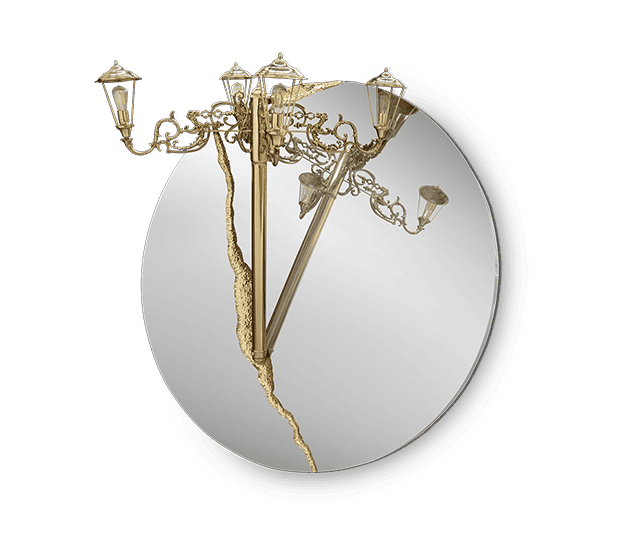
Hard frames are becoming a thing of the past. Designers are opting for arches, “melted” contours, and biophilic design, meaning wood, boucle, and natural textures. Vogue and AD Polska are promoting collections like the “Satellite Mirror” series, where geometry becomes almost sculptural. In fact, these are no longer just mirrors on the wall—they’re a statement. The trend is based on the idea that interiors should soothe, not overwhelm with sharpness.
Smart and LED: a feature that shines with data
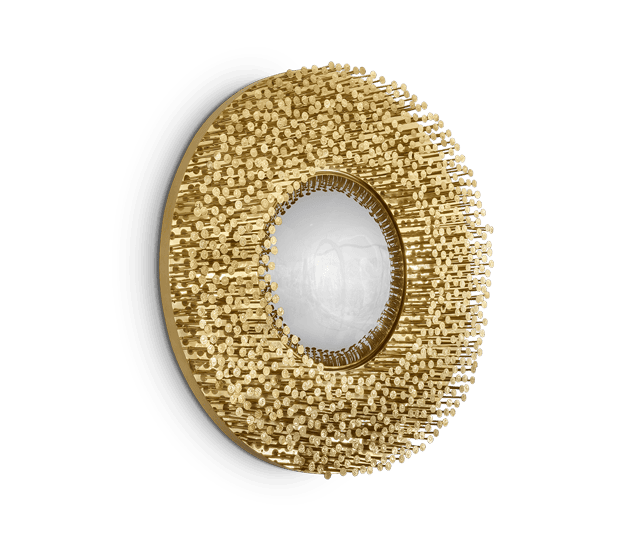
The LED mirrors market was valued at USD 4.8 billion in 2023, with a projected CAGR of over 15.2% annually. Smart mirrors? USD 2.86 billion (2026) → USD 6.09 billion (2035). Companies like Electric Mirror and Grand Mirrors already offer anti-fog features, dimming, and mobile apps for controlling light color. This is not a gadget—it’s a standard in the luxury segment. IoT and smart home integration are driving sales, especially in North America, where the decorative and illuminated mirrors market alone is expected to jump from USD 449.61 million (2025) to USD 524.51 million (2030).
boca do lobo
In the mirror of time and craftsmanship
Exclusive mirrors combine everything we’ve talked about: traditional Murano glass craftsmanship, modern premium materials, environmental awareness, and bold design. This is a space where history meets technology, and beauty does not exclude responsibility. Brands like Boca do Lobo and Fiam prove that a mirror can be a functional work of art that lasts for decades.

boca do lobo
In the end, it’s not just about the reflection. It’s about what you see when you look deeper: the quality of the materials, the precision of the craftsmanship, a design that doesn’t get boring after a single season. An exclusive mirror is an investment in an object that makes sense. And has a story.
Stevv 89
editorial team




Leave a Comment