

Christian Dior – a revolutionary in the world of fashion

The power of dreams is just as great as the power of money. While one can argue about which is more important—and whether other, smaller factors also contribute to a person’s success—one thing is certain: to get anywhere, you have to take the first step.
Childhood
The story of Christian Dior begins on February 21, 1905, in Normandy, in the town of Granville. In many ways, one could say that luck was on his side from the very beginning. Surrounded by a large family—he had two brothers and two sisters—and born into the household of a wealthy fertilizer manufacturer, he drew his first lucky ticket. On top of that, he was gifted from the start with artistic talent, which he knew how to appreciate and would later put to use.
First challenges
True to his passion, Dior wanted to attend art school, but his parents always hoped he would become a diplomat and shaped his education accordingly. However, he didn’t stay long at the Institute of Political Science in Paris, and the anticipated compromise—studying musical composition—also fell through.
That’s why in 1928, Dior’s father bought him an art gallery, which he ran together with a friend. During these years, he was in close contact with works by Jean Cocteau and Pablo Picasso. Unfortunately, during the Great Depression, the Dior family went bankrupt, and in 1931 he was forced to close the gallery. However, drawing on his experience, a year later he opened a second gallery with a partner.
Getting Started in the Fashion World
In the following years, Dior sells individual sketches to fashion houses, but the true beginning of his career is considered to be 1938, when he starts working for designer Robert Piguet. It might seem that once he encountered real fashion, nothing could stop him from pursuing his goals. Eventually, he fulfills his dreams and does so in the best way possible. Unfortunately, his path is interrupted by the outbreak of World War II. Christian Dior is drafted into the army.

After completing military service
Dior leaves the service in 1942 and immediately joins the fashion house of Lucien Lelong, where, together with other employees, he designs dresses for both the wives of German Nazis and the wives of French collaborators. However, this surprises no one, as it was the only way to stay in business at the time. The fashion houses that survived the war all share this chapter in their history.
In 1946, Dior receives an offer to collaborate from the renowned fashion house Phillipe et Gaston, but he is already focused on developing his own brand. A year later, the world is stunned by his debut collection.
Corolle and Huit – the two lines of Christian Dior’s first collection
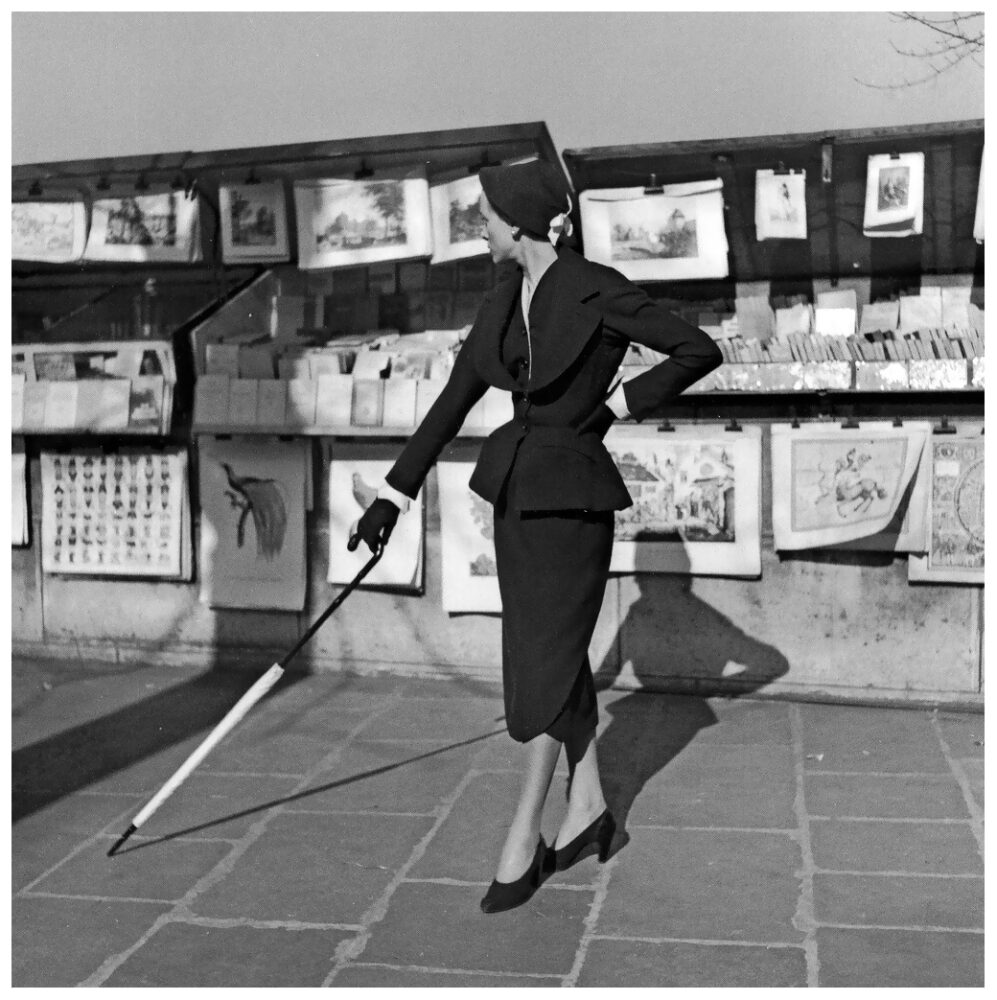
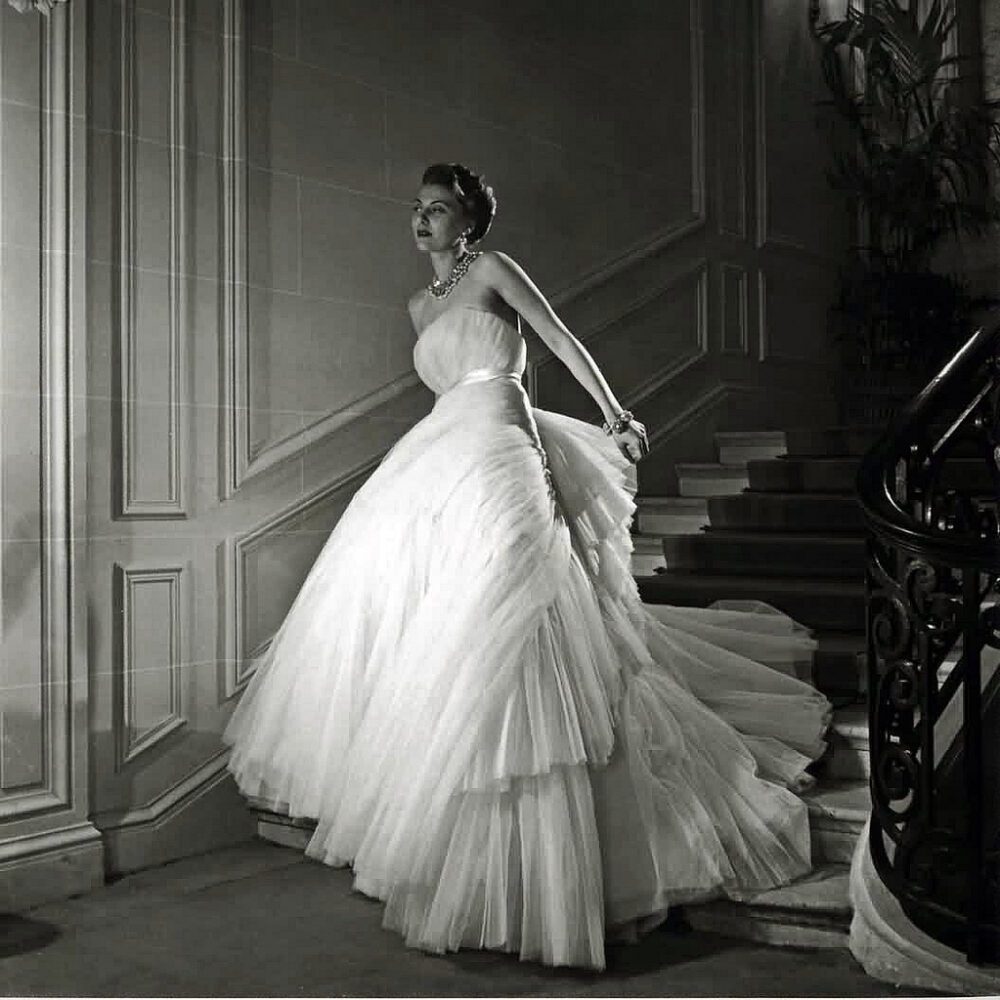
The fashion world is still reeling with surprise and admiration after Dior’s first show. Circle skirts with a diameter of 20 meters were deemed almost wasteful and sparked outrage for their extravagance, especially given the post-war shortages. The previously boxy dresses are replaced by flared, mid-calf skirts and jackets that accentuate a narrow waist. The use of percale, petticoats, and corsets means women stop wearing shapeless clothes and begin to look truly feminine. The lines of the female body are highlighted, and the garments give women a sense of lightness, airiness, and delicacy.
Dior’s designs are so innovative that one of the editors at Harper’s Bazaar dubbed them the “New Look”—a term quickly picked up by the American press and still used today to describe that unforgettable fashion revolution.
An intense decade
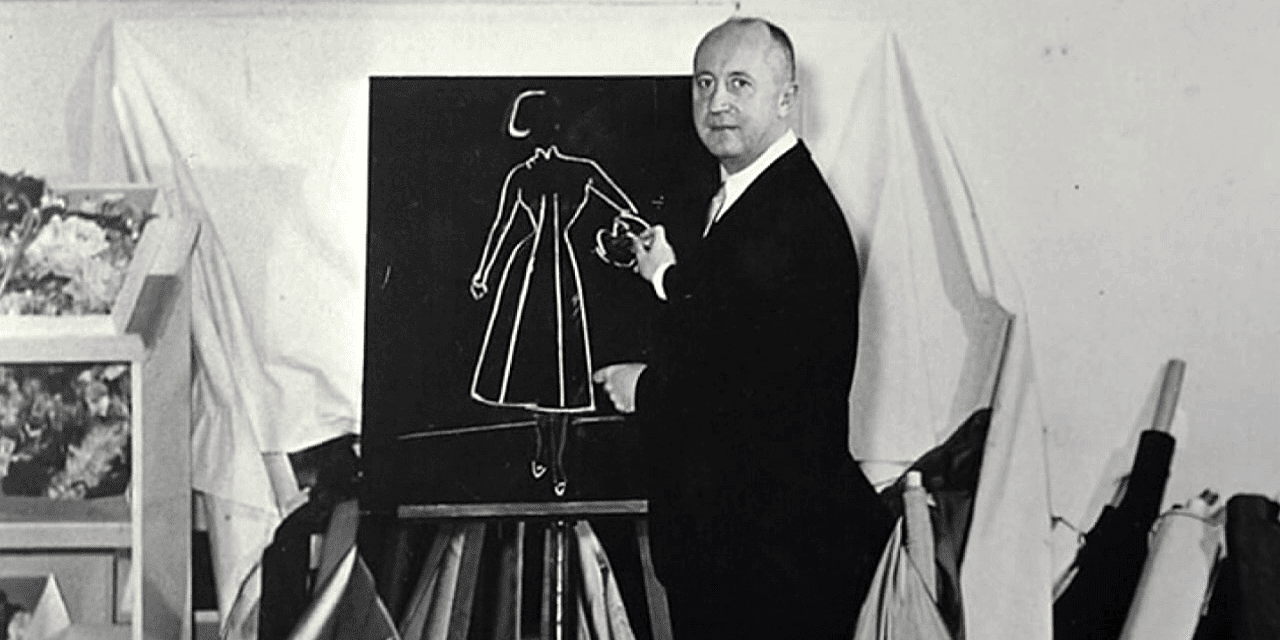
Christian Dior’s adventure with the world of fashion and perfumes bearing his own name lasted just ten years. In 1952, Dior died—reportedly of a heart attack, possibly triggered by choking or during a card game. Yet those were years of intense creative work that completely transformed the way fashion was perceived, shaping the industry for decades and inspiring countless designers. It was a milestone in the art of fashion, now as self-evident as any other historical event. Could the world have existed without Dior? Can we even imagine what fashion would look like today without his contribution to the art of design?
What was behind Dior’s success?
All we can do is speculate about whether—and what—helped Christian Dior achieve such an unimaginable career and shake the entire fashion world. Is talent alone enough? What if he had been born into a poor family, if he had listened to his relatives and become a diplomat, if he had been seriously wounded in the war, if he hadn’t wanted to create his own brand? What if, in the end, his collection had debuted during a time of fabric shortages… What if, what if, what if.
However, it’s important to note one thing: if he hadn’t taken the first step in his career, if he hadn’t trusted himself and his talent, if he hadn’t tried—nothing would have happened. We’re far from making sweeping statements like “you can do anything.” Still, we admit that every revolution is driven by an idea and by action. If you lack the first and aren’t willing to pursue the second, the revolution will never happen.






Leave a Comment