

Beluga albino caviar – the gold of the Caspian Sea
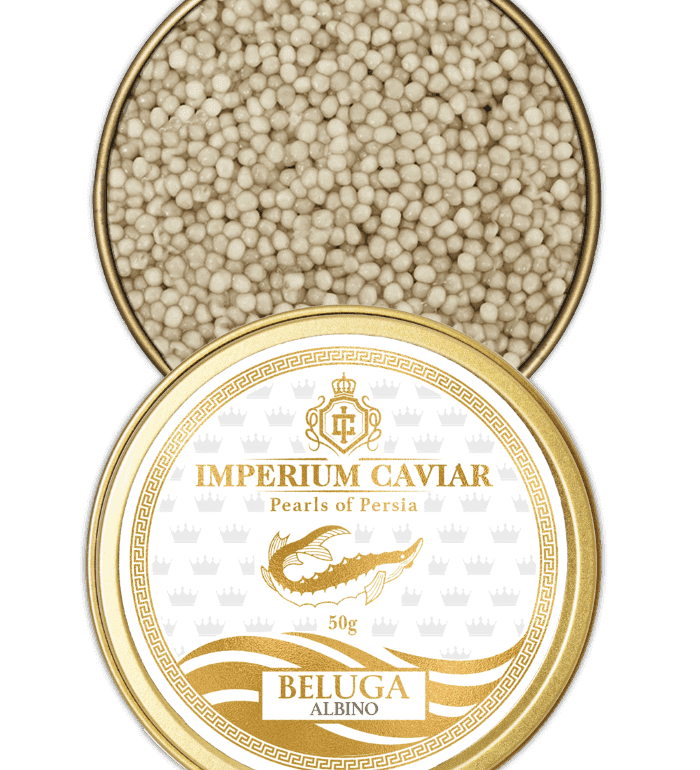
Imagine the rays of the morning sun reflecting off the surface of the Caspian Sea, illuminating the water with golden highlights. This is exactly how Almas albino beluga caviar appears—known as the “golden diamond of the sea,” it is the rarest and most expensive delicacy in the world.
Almas caviar comes from extremely rare albino beluga sturgeons, whose light pigmentation gives the roe its distinctive creamy-golden hue. This unique color reflects not only the rarity of the fish but also its extraordinary flavor. A delicate, creamy note with subtle nutty accents makes tasting this caviar an unforgettable culinary experience.

photo: doyycaviar.nl
Beluga albino caviar – price is no object!
The rarity of albino beluga sturgeons and the lengthy maturation process of the fish make Almas caviar exceptionally exclusive. Its price can reach up to 25,000 euros per kilogram, making it the most expensive caviar in the world. To emphasize its luxurious character, this caviar is often packaged in tins made of 24-carat gold.
“The price per kilogram of Almas caviar can reach up to 25,000 euros.”
Why is it worth exploring this topic?
Almas caviar is not only a symbol of luxury, but also a fascinating subject that intertwines history, biology, and culinary art. In the following sections of the article, we will explore the historical background of this extraordinary delicacy, the process of its harvesting, and the controversies surrounding its production. We invite you to read on and discover the secrets of the “golden diamond of the sea.”
Rarity and history: from Persian tables to modern luxury
Beluga albino caviar, known as Almas, is one of the most exclusive and rare delicacies in the world. Its history dates back to ancient times, and its unique qualities make it a symbol of luxury and sophistication.
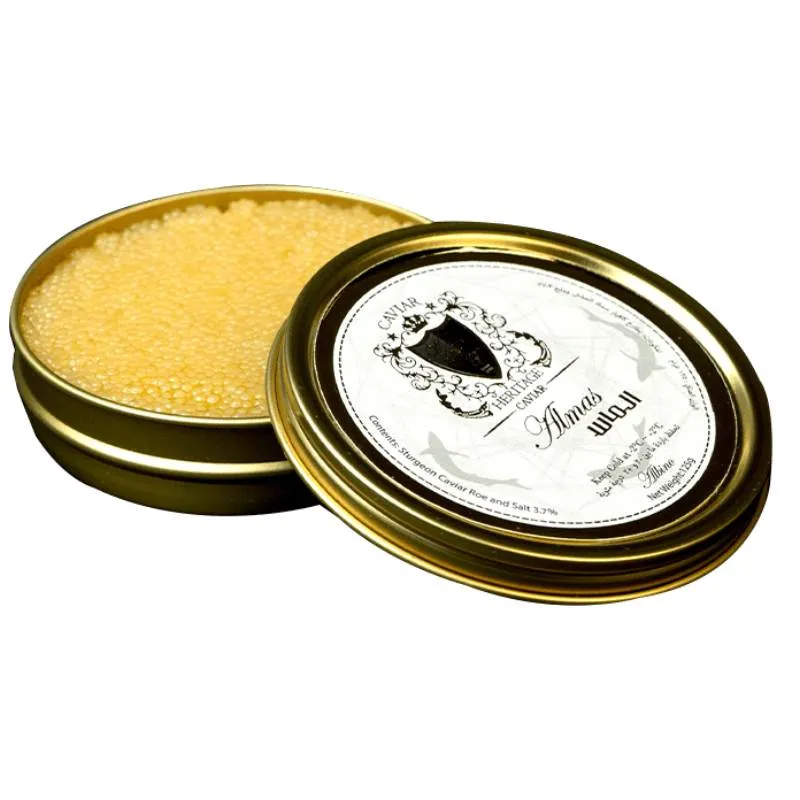
photo: wnfcaviarheritage.com
Beginnings in ancient Persia
- 4th century BC: Aristotle mentions sturgeons in his writings, indicating their importance in the cuisine of that era.
- Ancient Persia: Caviar was prized on Persian tables as a delicacy, symbolizing wealth and social status.
The boom in the 19th century
- 19th century: Along the Volga River and in the United States, a “caviar rush” broke out. Intensive fishing led to a decline in sturgeon populations, which increased the value of caviar.
The emergence of Almas caviar
- 1920s: The first documented cases of albino belugas. Their caviar, with its golden hue, was named “Almas,” which means ” diamond ” in Persian.
- Fun fact: Almas caviar comes from albino beluga sturgeons aged between 60 and 100 years, making it exceptionally rare and valuable.
The impact of international regulations
- 2005-2006: Introduction of bans on wild sturgeon fishing due to their critically endangered status.
- After 2006: The shift from wild fishing to aquaculture, aimed at protecting the species as well as meeting the demand for caviar.
The history of Almas caviar reflects the evolution of human taste and the impact of human activity on the natural environment. Its rarity and uniqueness make it a symbol of luxury, while also serving as a reminder of the need to protect endangered species.

photo: culturecaviar.com
Acquisition and breeding process: from albinism genetics to “no-kill” methods
The breeding of albino beluga sturgeon is a key element in caviar production, combining advanced biological knowledge with modern aquaculture techniques. This process involves understanding the genetics of albinism, providing optimal environmental conditions, and selecting roe harvesting methods, including both traditional and “no-kill” approaches.
Genetics of albinism and breeding selection
Albinism in beluga sturgeon results from a genetic mutation that leads to a lack of melanin, the pigment responsible for the coloration of skin and eyes. In selective breeding, individuals with this mutation are identified to preserve albino traits in subsequent generations. This process requires precise genetic control and careful selection of breeding pairs, allowing for the production of fish with the desired phenotypic characteristics.
Key environmental conditions in aquaculture
Effective breeding of albino beluga requires meeting specific environmental parameters:
- Water temperature: Keeping it within the range of 10-15 °C is optimal for fish growth and health.
- Salinity: A level of 10-30 ppt (parts per thousand) mimics the natural habitat of beluga, supporting its well-being.
- Maturity period: Belugas reach sexual maturity between 8 and 25 years of age, depending on farming conditions and genetics.
Providing these conditions is essential for the health of the fish and the quality of the harvested roe.
Comparison of roe harvesting methods: traditional slaughter vs. “milking”
There are two main methods used to obtain roe in caviar production:
| Method | Advantages | Disadvantages | Impact on fish welfare |
|---|---|---|---|
| Traditional slaughter | – High-quality roe – Proven and widely used techniques | – The necessity of killing the fish – Impact on the beluga population | – Negative; the fish is killed to obtain the roe |
| “Milking” | – Harvesting roe without killing the fish – Possibility of collecting roe multiple times from the same fish – Potential increase in caviar production | – Risk of infection and infertility in fish – Possible changes in the texture and taste of roe – Requires advanced techniques and experience | – Positive; the fish remains alive, which supports species conservation |
The “milking” method involves gently massaging the fish’s belly to extract the roe without having to kill it. Although this technique is more sustainable, it requires precision and experience to avoid negatively affecting the quality of the caviar.
Specialized breeding centers and their procedures
There are several centers around the world specializing in breeding albino beluga and producing caviar:
- Florida, : Facilities in the USA use advanced aquaculture methods, focusing on sustainable roe harvesting.
- Iran: A traditional caviar producer that combines centuries-old expertise with modern farming techniques.
- China: A rapidly developing aquaculture sector with an increasing focus on sustainable production methods.
Each of these centers has developed its own breeding procedures and methods for obtaining roe, tailored to local conditions and regulations.
Understanding the biology of the albino beluga, as well as applying appropriate breeding techniques and roe extraction methods, is crucial for producing high-quality caviar. In the next section, we will discuss the economic and market aspects related to this exclusive product.
Market and price: the economics of the world’s most expensive caviar
Almas caviar, sourced from the roe of the albino beluga, is considered the most expensive caviar in the world. Its price can reach up to 25,000 euros per kilogram, making it a symbol of luxury and exclusivity.
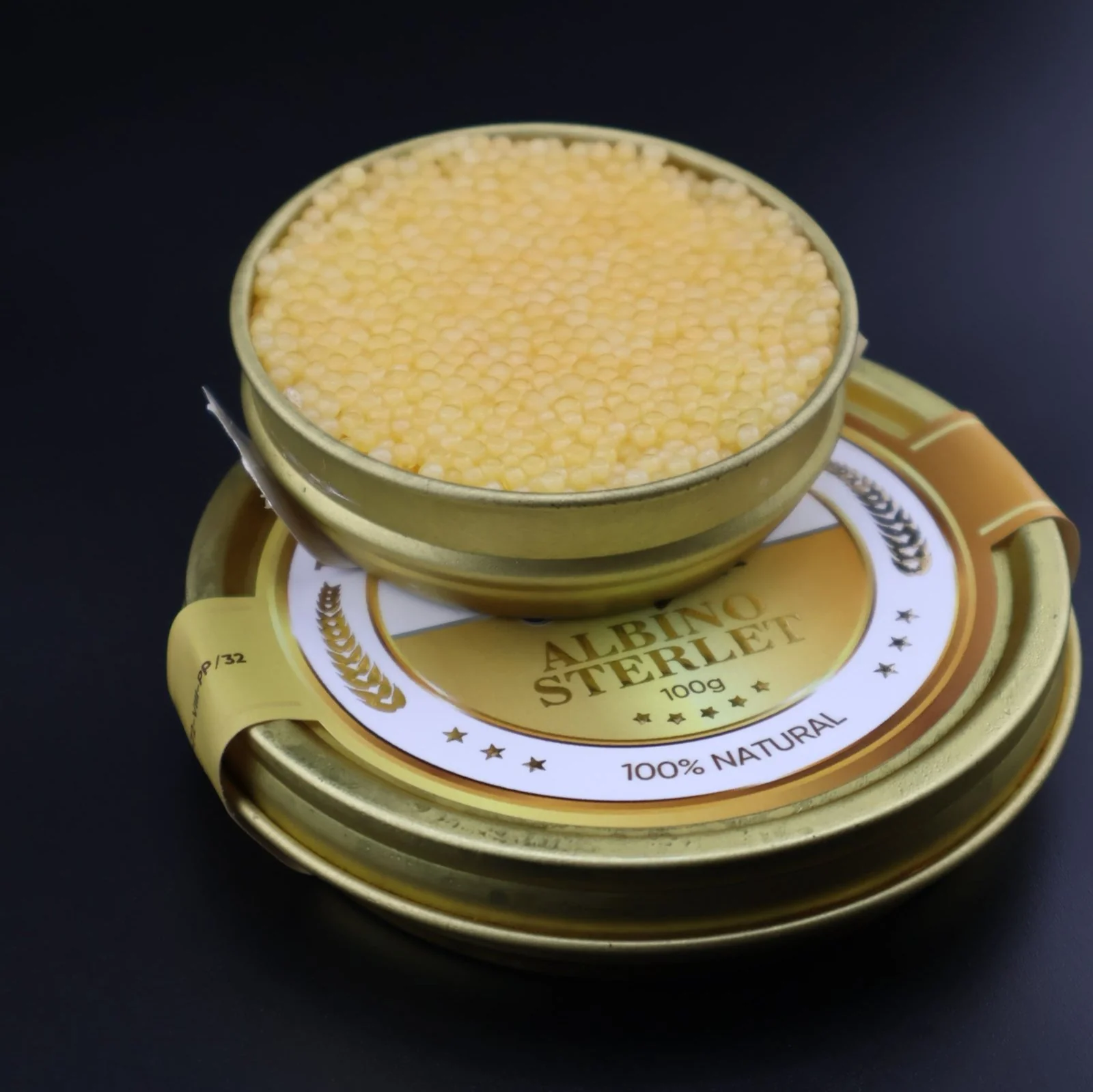
photo: caviarluxe.net
Supply and demand for Almas caviar
The production of Almas caviar is extremely limited due to the rarity of the albino beluga and the long maturation period of these fish, which is around 20 years. It is estimated that the annual global caviar production is between 300 and 400 tons, with Almas caviar accounting for only a tiny fraction of this amount. The high price of this product results from its limited supply and the growing demand among connoisseurs and luxury restaurants.
Main markets and distribution channels
Almas caviar is available in select locations around the world, such as Tehran, Moscow, Dubai, and exclusive European e-boutiques. Sales are conducted primarily through specialty delicatessen stores and luxury restaurants that offer this rare delicacy to their clientele.
Premium packaging and logistics
To emphasize the exclusivity of Almas caviar, it is often packaged in tins coated with 24-karat gold and accompanied by certificates of authenticity. The distribution process requires the highest logistical standards to ensure the product’s freshness and quality during transport to customers around the world.
Price vs. market segment
Below is a table comparing the prices of various types of caviar depending on the source and distribution channel:
| Type of caviar | Source | Average price (USD/kg) | Distribution channel |
|---|---|---|---|
| Standard | Sturgeon | 7,000–22,000 | Delicatessen stores, restaurants |
| Almas | Albino beluga | Up to 34,500 | Exclusive e-boutiques, specialty stores |
It is worth noting that caviar prices can vary depending on the region. For example, in Poland, retail caviar prices range from $75.68 to $195.60 per kilogram, while in the USA, the range is from $29.46 to $104.54 per kilogram.
The high price and exclusivity of Almas caviar raise controversies related to species protection and the ethics of sourcing this product, which will be discussed in the next section.
Controversies and prospects for species protection
Caviar from the albino beluga, considered one of the most luxurious delicacies in the world, raises serious controversies regarding the ethics of its sourcing and the protection of endangered species. The beluga (Huso huso), from which this exclusive product is obtained, is classified by the International Union for Conservation of Nature (IUCN) as a critically endangered species, and its population has declined by 90% since the 1970s.
Legal framework and effectiveness of trade bans
In response to the dramatic decline in beluga sturgeon populations, a series of regulations were introduced to protect this species. In 2005, the United States banned the import of beluga caviar, and a year later, the Convention on International Trade in Endangered Species of Wild Fauna and Flora (CITES) imposed restrictions on trade in this product. Despite these measures, the effectiveness of the bans remains limited. Illegal fishing and caviar trade continue to pose a serious threat to the survival of the beluga, especially in the Danube region, where illegal fishing is still widespread.
Ethical aspects of caviar harvesting methods
Traditional caviar harvesting methods require killing the fish, which raises serious ethical concerns, especially regarding critically endangered species. An alternative is “no-kill” methods, which involve collecting roe without killing the fish. However, the effectiveness of these methods and their impact on animal welfare remain subjects of debate. Research published in 2024 in the journal “Frontiers” highlights divided opinions among scientists and breeders regarding both the efficiency and ethics of these practices.
Perspectives on beluga conservation
Scientists predict that without decisive conservation efforts, the wild beluga population could become extinct by 2050. To prevent this, comprehensive strategies are needed, including:
- Strengthening the enforcement of existing bans: Increasing inspections and imposing harsher penalties for illegal fishing and caviar trade.
- Habitat protection and restoration: Restoring the natural habitats of beluga, especially in key rivers such as the Danube.
- Promoting sustainable farming methods: Developing aquaculture using “no-kill” techniques and researching alternative sources of caviar, such as caviar from genetically modified fish.
Protecting the beluga requires global cooperation and the involvement of governments, non-governmental organizations, and consumers alike. Only by combining efforts to enforce the law, restore habitats, and promote ethical caviar production methods can we ensure the survival of this unique species for future generations.
Towards a Future of Ethical Taste
In the face of growing ecological and ethical awareness among consumers, the future of caviar is moving toward more sustainable and innovative production methods. Traditional sturgeon farming, while valued for its quality, raises concerns about animal welfare and environmental impact. In response to these challenges, scientists and entrepreneurs around the world are intensifying efforts to develop alternative solutions, such as lab-grown caviar and genetic engineering.
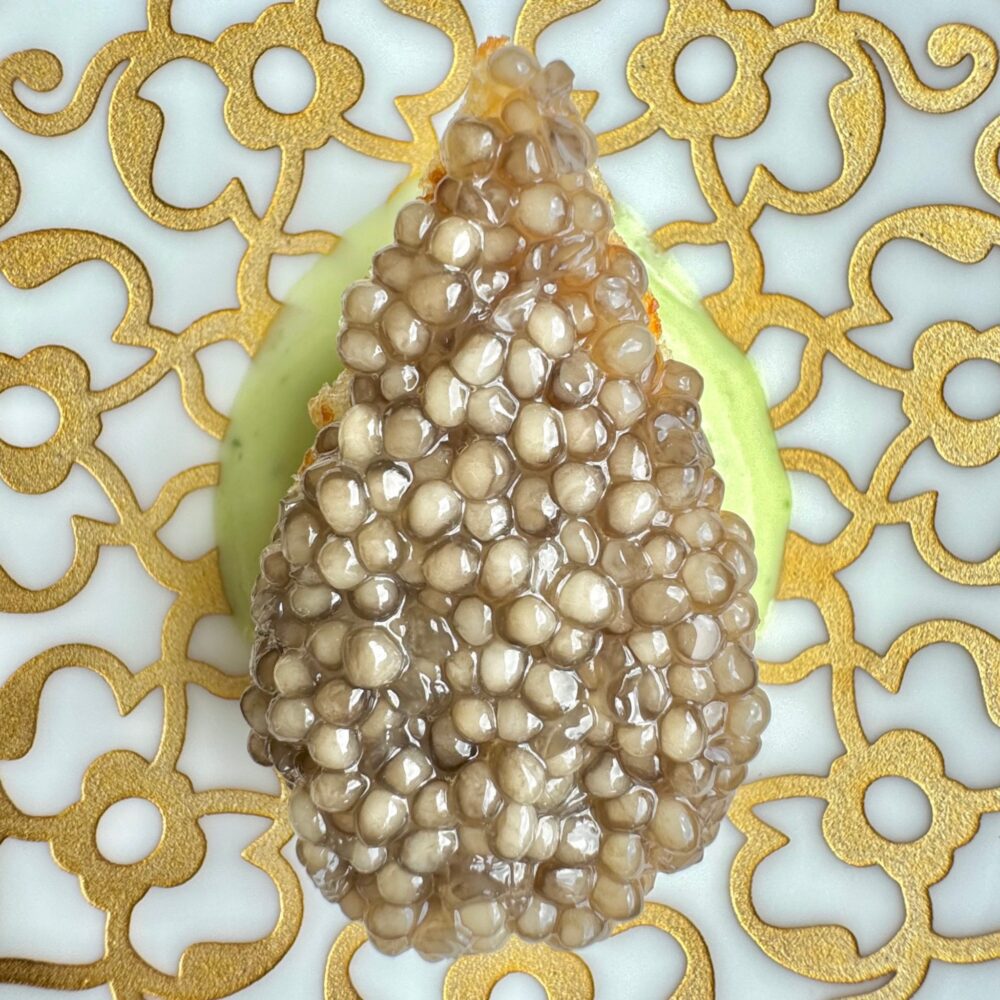
photo: caviar.nu
Rarity, technology, and ethics: key observations
- Rarity: Natural sturgeon populations are at risk of extinction due to overfishing and habitat degradation. As a result, traditional caviar is becoming increasingly scarce and expensive.
- Technology: Advances in biotechnology are making it possible to produce caviar in laboratory conditions. Companies like the British Caviar Biotec are working on creating caviar from sturgeon cells, as well as vegan alternatives that do not require the use of animals.
- Ethics: Consumers are increasingly seeking products that align with their ethical values. Lab-grown caviar offers the opportunity to enjoy a luxury product without the need to kill fish, meeting the growing demand for cruelty-free options.
Trends in Lab-Grown Caviar Production and Genetic Engineering
Laboratory caviar production involves cultivating sturgeon cells in controlled conditions, allowing for the extraction of roe without the need to raise whole fish. This process is not only more sustainable but also enables precise control over the quality and flavor of the product. Additionally, genetic engineering technologies are being developed that could make it possible to produce caviar with desired taste and texture characteristics, without the use of animals.
What you can do today
- Choose certified products: Buy caviar from certified farms that adhere to sustainability and animal welfare standards.
- Support innovation: Take an interest in and support companies and initiatives working on alternative methods of caviar production, such as cell cultivation or genetic engineering.
- Education: Expand your knowledge about the impact of traditional caviar production on the environment and animals to make informed consumer choices.
Your choices have the power to shape the future of ethical taste. If you love the authentic flavor of fish roe, albino beluga is the perfect choice. We are passionate about the finest things, which is why every connoisseur of this delicacy should try this extraordinary dish at least once in their lifetime.




Leave a Comment