

Basic rules of table setting
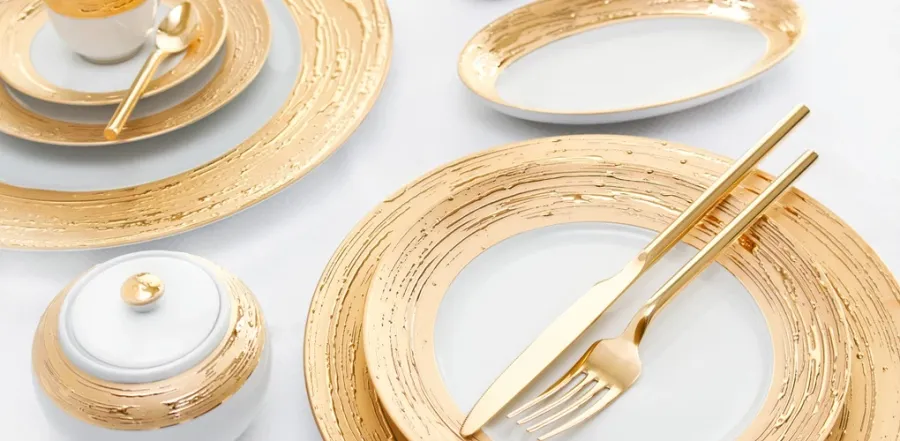
Proper table setting is not only a matter of aesthetics, but also an element of etiquette that affects the comfort and well-being of your guests. Discover the basic rules of table setting. An elegant table demonstrates the host’s attention to detail, and a correct table setting requires knowledge of several key rules. Whether you are preparing the table for a family gathering, lunch, or breakfast, the basic principles remain unchanged. Setting the table requires planning, taking into account the size of the table, its width, and the nature of the occasion. Below, we present the most important steps to help you prepare a table setting step by step — in accordance with the rules.
Table of contents:
- Basic table setting rules how to arrange dishes on the table?
- How to arrange cutlery on the table?
- On which side of the plate are napkins placed?
- Glasses, decoration, and table arrangement – basic rules for an elegant table setting
- Most frequently chosen table decoration elements
- Table setting matched to the occasion – harmony, functionality, and style
- The most important table setting rules
Basic table setting rules – how to arrange dishes on the table?
It’s a good idea to start setting the table by choosing the right textiles. A classic white tablecloth is the safest and most elegant option, especially for formal gatherings. The tablecloth should hang evenly and end about 2 cm from the edge of the table, which ensures an aesthetic appearance and comfortable seating.
The central element of each place setting is the large flat plate, which is placed directly in front of the guest’s seat. The plate should be positioned a few centimeters below the edge of the table, in accordance with etiquette rules. In the classic arrangement, the plate serves as a base—it is where subsequent dishes used for serving courses, including the main course, are placed. The tableware should be stylistically consistent and suited to the nature of the gathering. Traditional table settings are based on symmetry and subdued colors, while modern table settings allow for more freedom in form and decoration. Regardless of the style, the dishes and cutlery must be clean, complete, and arranged in a logical order.
How to arrange cutlery on the table?
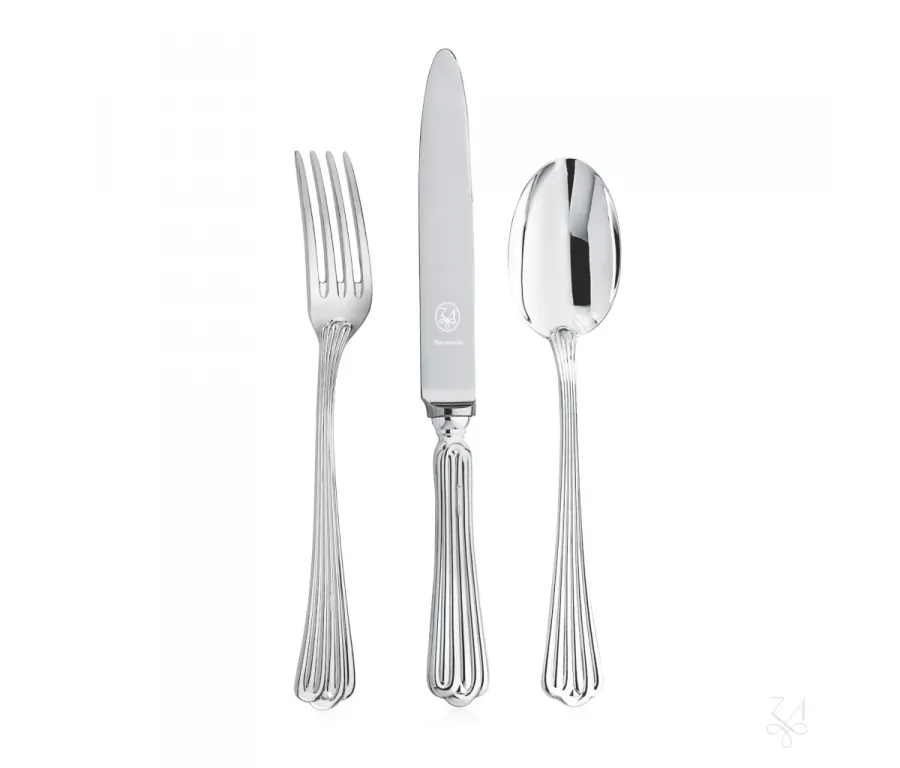
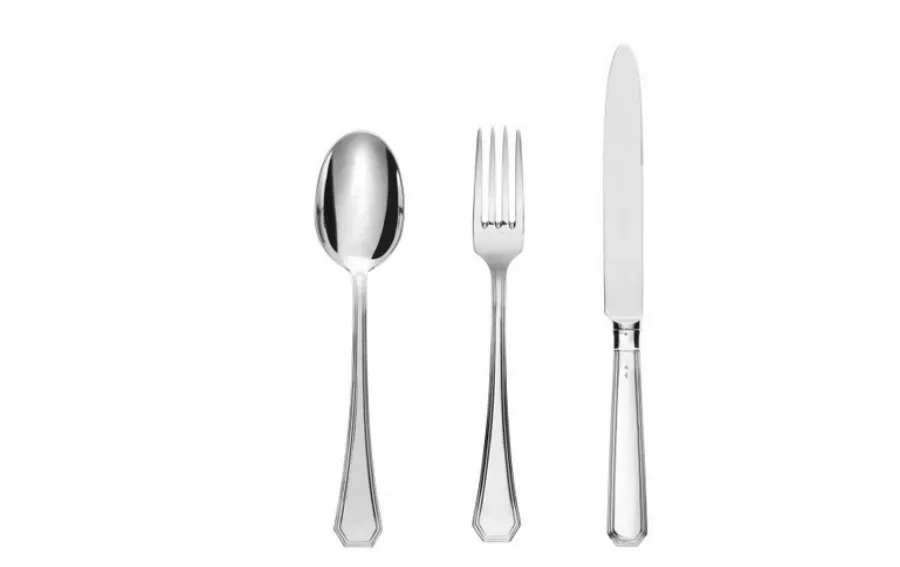
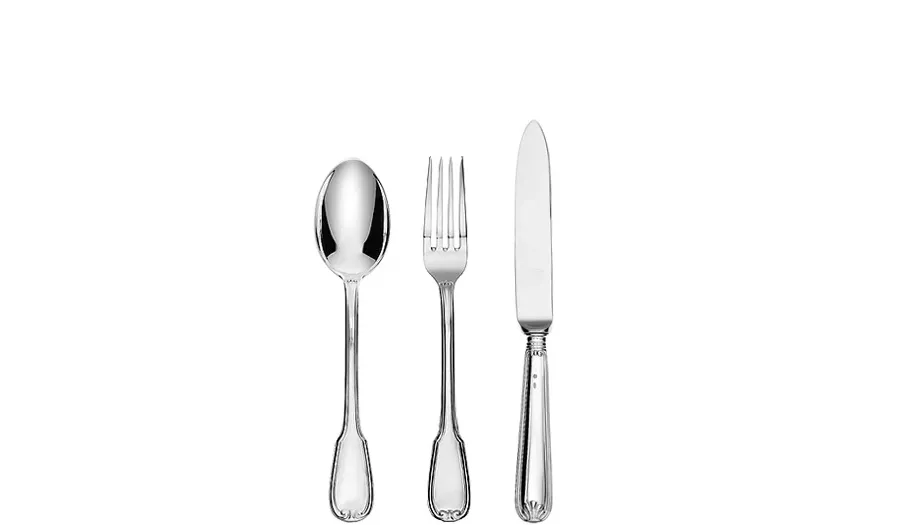
The correct arrangement of cutlery is one of the key elements of table setting. Cutlery is placed on the table in the order in which it will be used—the ones you use first are positioned farthest from the plate.
On the left side of the plate, the fork is placed, while on the right side of the plate, the knife and soup spoon are positioned. The knife blade should always face the plate, which is a fundamental rule of elegant table setting. If the menu includes several courses, the cutlery should be arranged parallel to each other, maintaining equal spacing.
Dessert cutlery is placed above the plate—horizontally, parallel to the edge of the table. The fork and spoon should form a cohesive set with the rest of the table setting. In more elaborate arrangements, fish cutlery may also appear, but it is always important to remember that cutlery should be clearly arranged and intuitive for guests to use.
On which side of the plate should napkins be placed?
A napkin is an element that combines both practical and decorative functions. In classic table settings, the napkin is placed to the left of the plate or directly on the charger plate. In modern arrangements, more creative ways of folding and placing the napkin are acceptable, as long as the overall setup remains in line with the rules. Fabric napkins are perfect for elegant gatherings, highlighting the stylish table setting. The color and folding style of the napkin should be matched to the tablecloth and the overall table decor. This detail has a significant impact on the perception of the entire arrangement.
Glasses, decoration, and table arrangement – basic rules for an elegant table setting
The glass is placed above the knife, slightly to the right of the plate, maintaining the coherence of the entire table setting. Depending on the nature of the gathering, there may be a single glass or a set of several, intended for serving different beverages such as water, wine, or champagne. It is important that the glasses are arranged symmetrically and do not take up too much space, especially when the table is narrower. Their placement should be intuitive, so that guests can easily reach for the appropriate glass without hesitation. Well-chosen and properly arranged glasses emphasize the elegant character of the table and enhance the comfort of the entire event.
Most commonly chosen table decoration elements:
- Fresh flowers in low vases
- Candles or candle holders
- Minimalist seasonal accessories
- Consistent color scheme of napkins and tablecloth
- Decorations that do not obstruct guests’ visibility
Table decoration should be subtle, aesthetic, and functional so that it does not overpower the tableware and cutlery. Ideally, it should be placed in the center of the table and not obstruct eye contact between the participants. Flowers, candles, or small decorative elements perfectly complement the table arrangement, giving it a unique atmosphere. It is important to remember that the table decoration should harmonize with the tablecloth, napkins, and the overall style of the interior. Skillfully chosen accessories make the table setting look cohesive and elegant, without an overwhelming effect.
Table setting tailored to the occasion – harmony, functionality, and style
The table is set differently for dinner, differently for coffee and cake, and differently still for Easter or a formal gathering. Each occasion requires the appropriate selection of dishes, cutlery, and decorations that highlight its character. However, the basic table setting always relies on the same principles—harmony, symmetry, and user comfort. These are the elements that make the table look elegant and intuitive for guests. Adapting the setting to the occasion helps create an atmosphere conducive to celebrating meals together.
Proper table setting requires thoughtful preparation and consideration of the number of guests and the type of dishes being served. Each element should have its place and a clearly defined function. An elegant table setting is not created by an excess of accessories, but by coherence and attention to detail. Even a simple setting can look impressive if it is executed consistently and with a sense of style. It is moderation and aesthetic balance that determine the final impression.
The most important table setting rules
Proper table setting is a skill worth mastering, no matter the occasion. The table should be treated as the host’s calling card, as its appearance influences the first impression and the overall atmosphere of the gathering. Setting the table according to the principles of etiquette shows guests respect and care for their comfort. A well-prepared table makes serving dishes easier and ensures the meal takes place in a pleasant, relaxed atmosphere. It is the details that determine whether the meeting will be remembered as a success.
By following basic principles, you can easily set a table that is both functional and aesthetically pleasing. Thoughtful arrangement of dishes, cutlery, and decorations enhances the comfort and overall impression of the event. An elegant table does not have to be overly lavish to make an impact. Consistency, harmony, and knowledge of the rules are all it takes. It is the well-planned table setting that gives every gathering its unique character and class.






Leave a Comment