

Aura Blockchain Consortium – digital product passports in luxury
Have you ever stood in front of a boutique mirror, holding a ten-thousand-zloty handbag in your hands and wondering—how can I be sure this isn’t a fake? I had that moment in Milan. The salesperson told me everything I wanted to hear, but somehow I just couldn’t shake my doubts.
It turns out my suspicions weren’t unfounded. The counterfeit market swallows up $500 billion every year—that’s more than the GDP of most European countries. That money disappears from the pockets of genuine producers, and we as customers often don’t even realize we’ve been deceived.
Aura Blockchain Consortium – digital passport?
Anyway, times are changing. People buying luxury goods no longer want just a pretty box and a salesperson’s smile. Research shows that 70% of luxury buyers expect full transparency regarding the origin of the product. They want to know everything—from where the leather comes from, to who made the bag, right down to the working conditions in the factory.
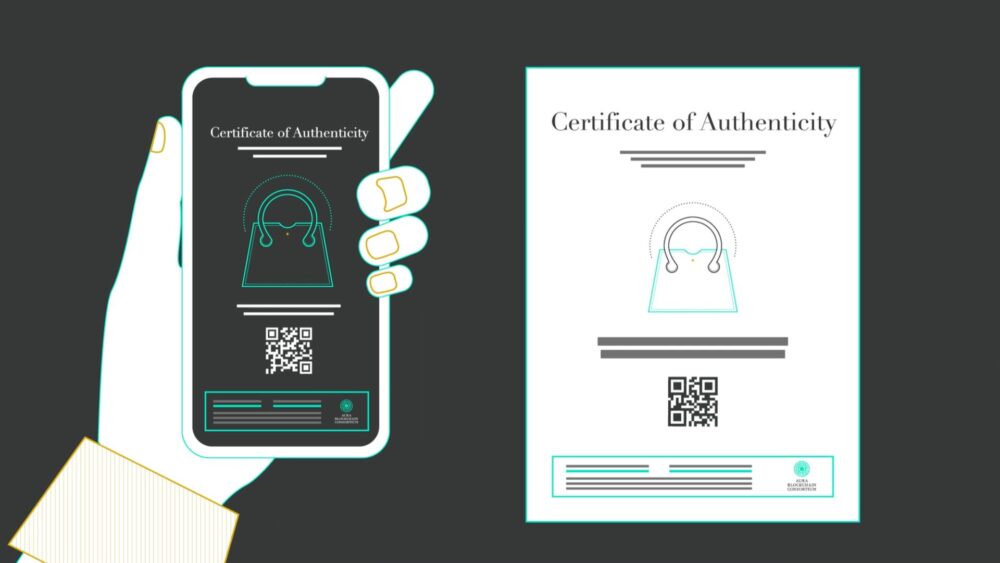
photo: auraconsortium.com
And this is where digital passports come in. It sounds like science fiction, but it’s already happening. In the following sections, you’ll find out:
– Who is behind the Aura consortium and why the biggest fashion houses are joining forces
– How blockchain technology actually works in luxury product applications
– What benefits and challenges come with digitizing authenticity
– Which legal changes will force the industry to embrace transparency in the coming years
It might sound complicated, but the truth is, the revolution has already begun. The world’s biggest brands wouldn’t be investing millions in something that’s just a trendy gadget.
Who is behind Aura Blockchain Consortium?
I’ve always wondered who’s really behind all these modern initiatives in luxury. Aura Blockchain Consortium isn’t a coincidence—it’s the result of frustration among the industry’s biggest players.
| Date | Event |
|---|---|
| 24/04/2021 | The establishment of a consortium by LVMH, Prada Group and Cartier |
| 2022 | Joining the first external members |
| 2023 | Extension with OTB Group |
| 2024 | The entry of as the first brand from outside luxury fashion |
It must be said that the founders’ motivations were purely practical. LVMH Moët Hennessy Louis Vuitton, the French giant, was fed up with fighting counterfeits of its bags and watches. Bernard Arnault and his team were looking for a solution that would work on a large scale. Prada Group, on the other hand, wanted to reinforce its technological credibility—the Italians have always cared about craftsmanship, but now it was time for digital proof of authenticity. Cartier, part of Richemont Group, simply couldn’t afford to lag behind the competition when it came to innovation.
Setting up headquarters in Geneva was actually a clever move. Switzerland has that reputation for neutrality, which matters in the luxury industry. No one can claim the consortium favors French or Italian interests.
The non-profit model sounds noble, but I think it was also about making sure none of the members felt exploited. Each brand pays dues, but profits don’t end up in competitors’ pockets. Protocol changes are decided democratically—one company, one vote, regardless of size.
By 2025, they already have over 30 members. OTB Group, owner of Diesel and Maison Margiela, joined relatively quickly. But the real breakthrough was when Mercedes-Benz came on board—suddenly, blockchain in luxury wasn’t just about bags and watches anymore.
The management structure is based on a members’ council and a technical team. Decisions are made collectively, which sometimes slows things down, but ensures stability. After all, no one wants a single player to take control of the entire infrastructure.
It’ll be interesting to see how this democratic structure holds up in practice when it’s time to make serious technical decisions.
How do digital product passports work?
A digital product passport is essentially an electronic ID card for every item you buy. It might sound like science fiction, but I’ve seen it in action myself—and I have to admit, it’s impressive.
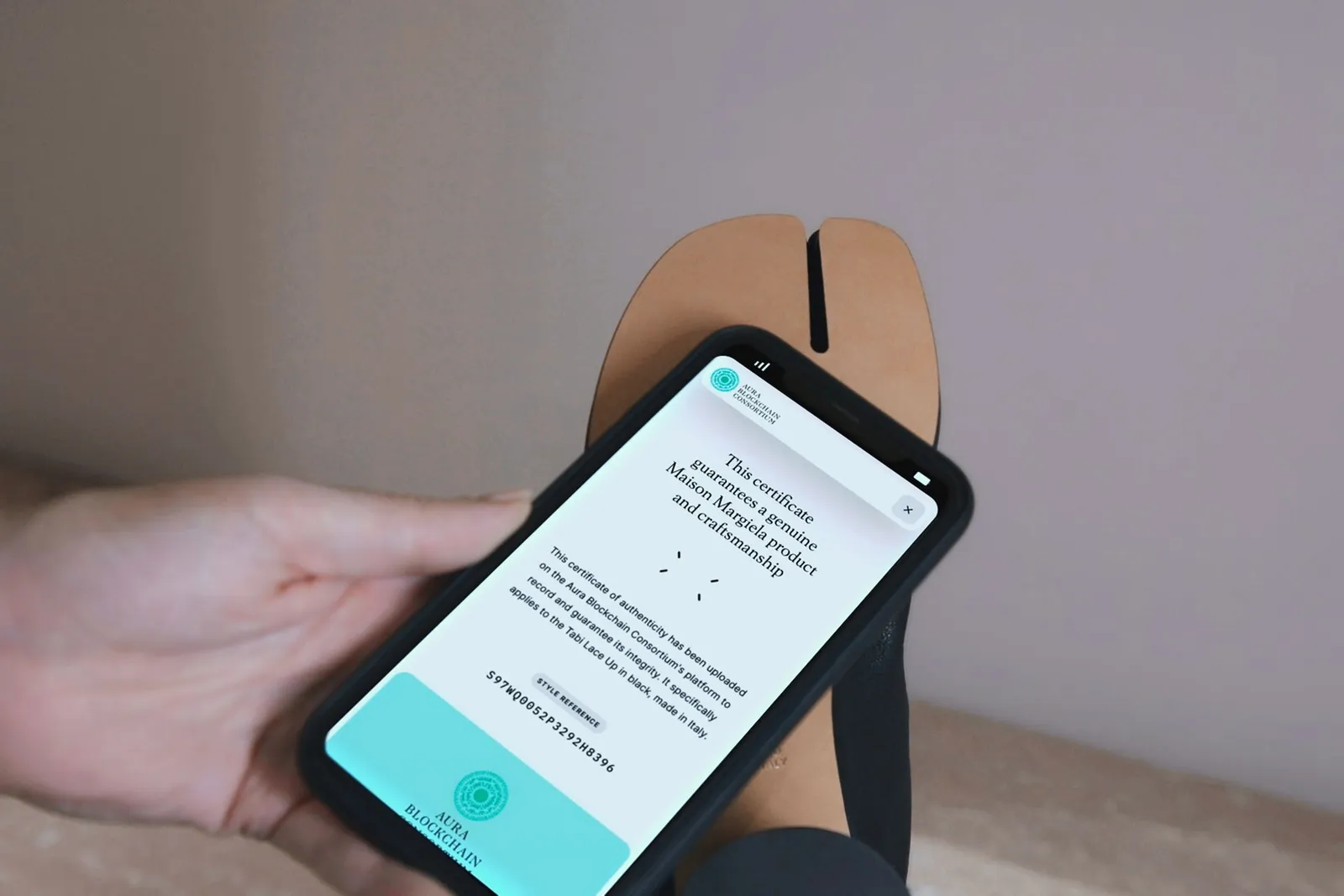
photo: voguebusiness.com
The Aura platform operates on three fundamental layers. The first is blockchain—they use Quorum, which is a modified version of Ethereum. This isn’t an open blockchain like Bitcoin, where anyone can join. Here, they use proof-of-authority, so only selected entities can validate transactions. This allows for greater control and speed.
The second layer is smart contracts. These manage all the logic behind the passports—who can do what, which data is accessible, and when it can be updated. The third layer is the interface that we, as consumers, interact with. We scan a QR code on the product and see its history.
The connection between the physical product and its digital record is made via NFC, RFID, or those QR codes. Each product gets a unique identifier that links it to an NFT on the blockchain. It sounds complicated, but in practice, it’s as simple as scanning a barcode.
An interesting aspect regarding privacy—they use zero-knowledge proofs. This means you can prove certain facts about a product without revealing all the details. For example, you can confirm a handbag is authentic without showing how much you paid for it.
The lifecycle of a digital passport looks like this:
- Release – the manufacturer creates a passport for the new product, entering basic information such as model, production date, and materials
- Update – you can add information about services, repairs, and certificates at any time during use
- Verification – you can check the authenticity and history of the product at any time
- Resale – when sold, the passport is transferred to the new owner along with its complete history
The system is truly fast—over 1,000 transactions per second with latency below 400 ms. Creating a single passport costs between $0.50 and $2, which is quite affordable for this kind of technology.
{
 "productId": "LV-2024-BAG-001",
 "brand": "Louis Vuitton",
 "model": "Neverfull MM",
 "manufacturingDate": "2024-03-15",
 "materials": ["leather", "canvas"],
 "certifications": ["sustainable_leather"],
 "ownership": [
 {
 "owner": "0x1234...abcd",
 "from": "2024-03-20",
 "to": "2024-08-10"
 }
 ]
}
I remember the first time I saw such a passport in action—I scanned the code on the watch and suddenly had access to its entire history. Who made it, where the materials came from, whether it had undergone any servicing. Kind of like CSI, but for products.
Of course, not everything is perfect. Sometimes connectivity fails, and some older phones have issues with NFC. But overall, the technology works reliably.
This whole infrastructure opens up completely new possibilities for the entire industry and changes the way we think about ownership.
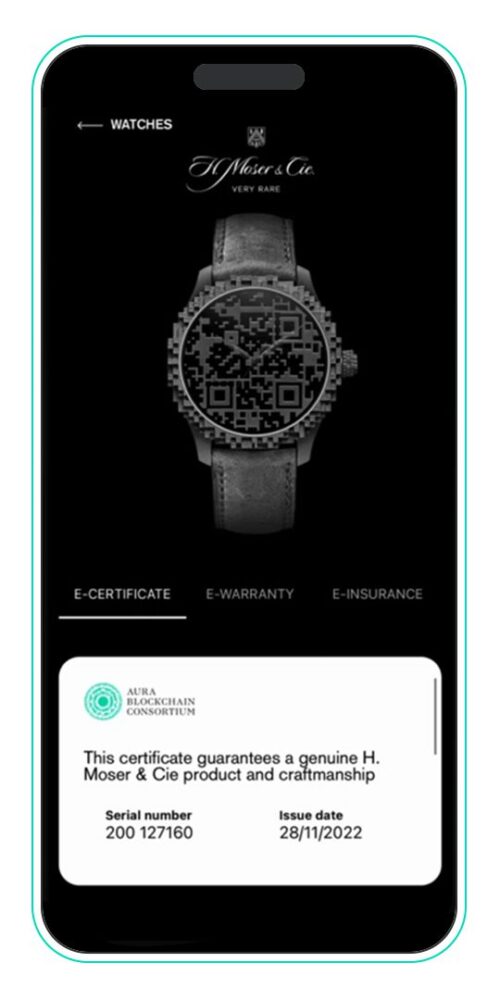
photo: auraconsortium.com
Benefits and challenges for brands and consumers
Digital product passports in the luxury segment have become an increasingly common topic in conversations with clients. I see a clear division here between the benefits and challenges that affect both brands and their customers.
| Benefits | Challenges |
|---|---|
| Reduction of counterfeits to for participating brands | Integration costs of burdening smaller companies |
| Increase in resale value by thanks to documented authenticity | Privacy vs. transparency debate – who has access to data |
| Greater customer trust in online shopping | The need to educate consumers about new technologies |
| The ability to track a product’s history throughout its entire lifecycle | The risk of digital exclusion among older customers |
I have to admit, the numbers are impressive. When a customer buys a handbag for several thousand zlotys, an extra 50 groszy for a digital passport seems almost laughable. The problem arises, however, for smaller jewelry or accessory makers. For them, every zloty counts.
Louis Vuitton introduced the system back in 2021, and the results are tangible. One of their clients told me, “Now I can confidently buy second-hand, because I know it’s authentic.” The resale value of their handbags has actually increased by an average of 8% wherever digital verification is used.
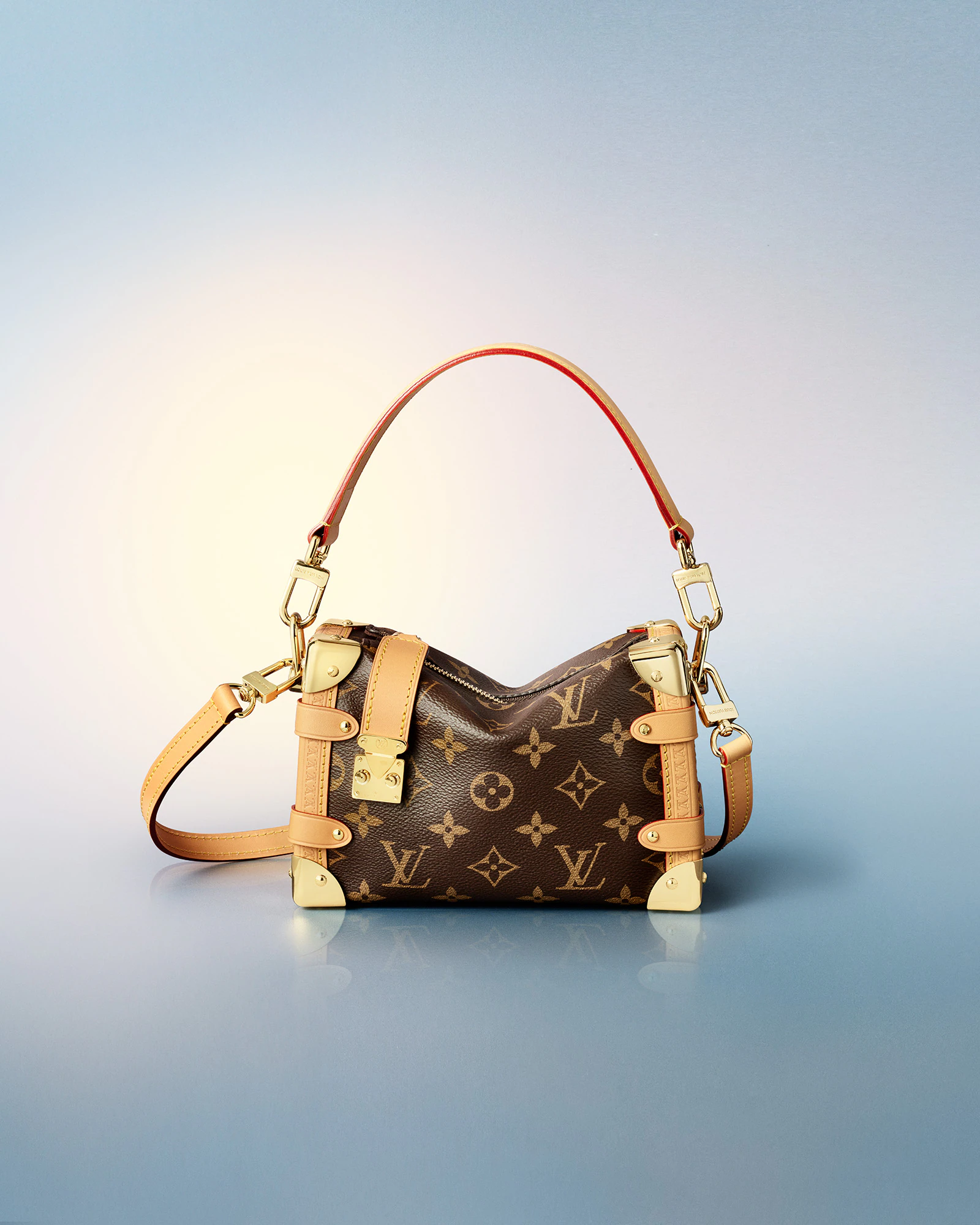
photo: eu.louisvuitton.com
But there’s a catch—the issue of privacy. Some customers feel uneasy knowing that every QR code scan might be recorded somewhere. Who has the right to know I sold my watch? Where does that data go?
On the other hand, brands gain an incredible edge over counterfeiters. They simply can’t keep up with replicating complex authentication systems. It’s a bit like an arms race, only in the fashion world.
The problem of digital exclusion is also not insignificant. My aunt is 70 and still buys luxury perfumes. Will she be able to use a verification app? I doubt it.
All these issues, however, will take on a new dimension once the upcoming EU regulations come into force.
What’s next? Regulations and trends through 2030
At the Vogue Business panel this September, one of the Chanel directors said something that surprised me. He stated that in five years, every one of their products will have a digital passport. At the time, it seemed like an exaggeration, but now I see that maybe it’s not.
Here are the key dates worth remembering:
| Date | Event |
|---|---|
| 07.2025 | Publication of the UN/ISO standard for DPP |
| 01.2027 | The launch of the EU Digital Product Passport (ESPR) requirement |
| 12.2030 | Forecast: 50% of luxury goods with DPP |
EU regulation is a game changer. Starting in 2027, manufacturers will be required to equip their products with digital passports in accordance with ESPR. This isn’t optional—it’s mandatory. Companies that don’t comply simply won’t be able to sell in the EU.
The UN/ISO standard is set to be published as early as July next year. This means technical standards will be clearly defined two years before the regulations take effect. Smart planning on the part of regulators.
Forecasts predict 50% penetration in the luxury segment by 2030. Sounds like a lot? I think it could be even higher. Customers are increasingly asking about product origins and authenticity—especially younger consumers.
Technology trends are going even further. AI will predict when a handbag or watch needs maintenance. Tokenization of RWA—Real World Assets—will make trading pre-owned luxury goods much easier. This could completely transform the secondary market.
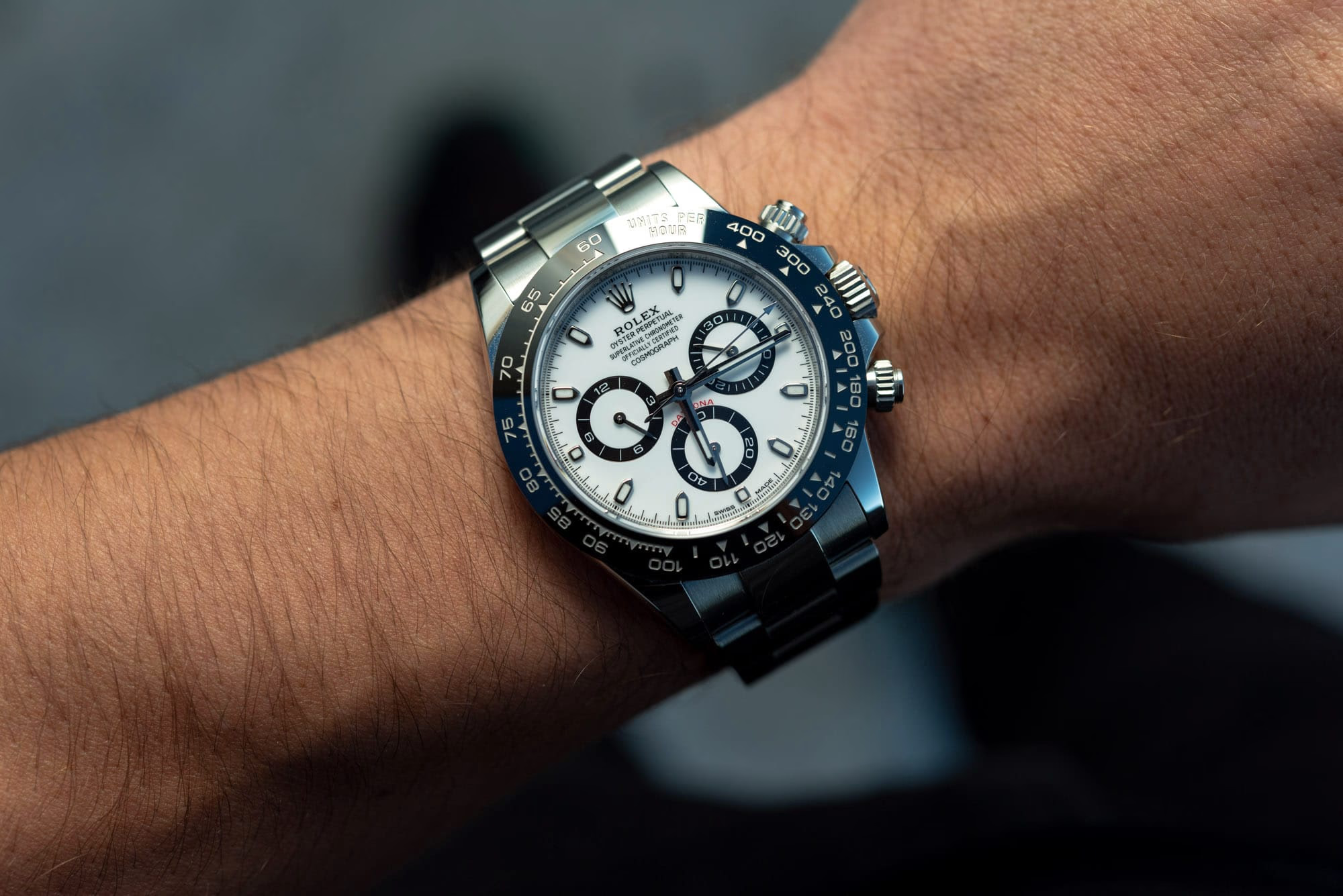
photo: velloy.com
“Digitization isn’t the future, it’s the present” —said the CEO of one of the largest Swiss watch brands.
What if companies can’t keep up? They’ll lose access to the European market. What if the technology isn’t ready in time? Regulatory chaos could ensue. But what if everything goes according to plan? Then we have a chance for the most transparent luxury market in history.
I believe the next five years will be a fascinating period. Some brands are already testing solutions, others are still considering their options. But the time for deliberation is running out.
From Authenticity to a Sustainable Tomorrow
Authenticity is like an aura surrounding a brand—you can sense it, but it’s hard to define. Today, that aura needs to be backed by real actions.
Four key lessons from our journey: transparency builds trust more powerfully than the best marketing campaigns. Technology can serve ethics—if we know how to use it. Consumers are willing to pay more for honest products, but only when they’re certain of what they’re buying. European regulations aren’t an obstacle—they’re an opportunity for competitive advantage.
I remember a conversation with the owner of a small textile company from Łódź. He said that for years, he was afraid to reveal his suppliers, fearing competitors might “poach” them. Today, he knows openness is his greatest asset. Customers come precisely because they can see the entire story behind the product.
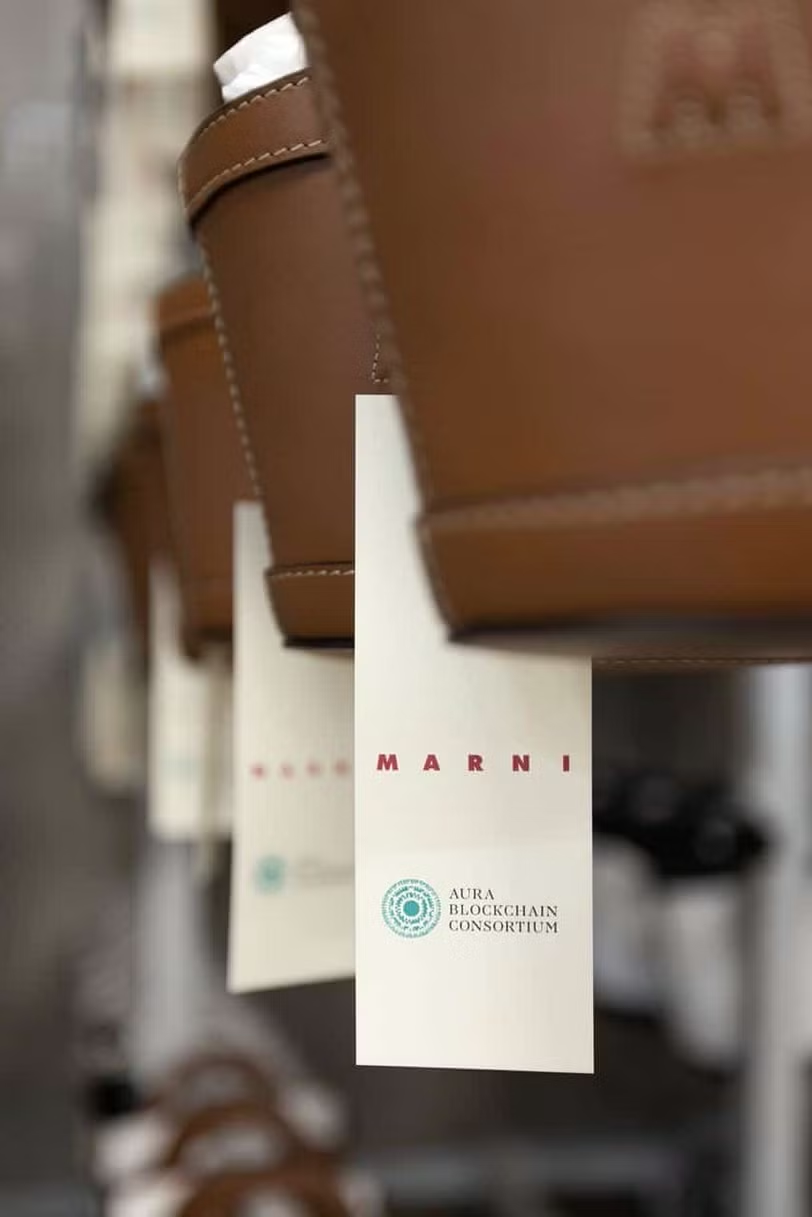
photo: luxus-plus.com
Here are three steps you can take as soon as tomorrow:
- Audit your supply chain—even if you’re a solo entrepreneur, check where your materials come from and whether your suppliers share your values.
- Educate your customers through storytelling – share the stories behind your products, showcase the creation process, and talk about your challenges and successes.
- Join industry initiatives or local business groups focused on sustainability—Poland is now seeing the formation of the first working groups at the Ministry of Digital Affairs, which will shape the implementation of digital product passports.
I imagine Poland in 2030, where every product has its own digital identity. Where a consumer in a store scans a code and instantly knows whether the cotton in a T-shirt was produced ethically, and whether electronics were made with respect for the environment. This isn’t science fiction. This is our near future.
The truth is—we don’t have to wait for perfect solutions. We can start with small steps. With the questions we ask our suppliers. With the stories we tell our customers.
Tomorrow begins with the decisions we make today.
Mario
lifestyle & business editor
Luxury Blog






Leave a Comment